
 Nila Kartika Wati
From the venomous, ocean-dwelling sea snakes that navigate vast aquatic territories to the diminutive, fossorial species that spend their lives burrowing through soil in pursuit of ants and termites, the serpent represents one of nature’s most successful adaptive experiments. With approximately 4,000 recognized species inhabiting almost every corner of the globe—excluding the most extreme polar regions—snakes have cemented their status as a dominant group of reptiles. Yet, for decades, evolutionary biologists have grappled with a fundamental question: how did this lineage of legless reptiles manage to diverge so rapidly, filling such a vast array of ecological niches compared to their closest relatives, the lizards?
New research published in the journal Science offers a compelling, data-driven answer. The study suggests that snakes possess an "evolutionary clock" that ticks significantly faster than that of lizards. This accelerated rate of biological innovation has allowed snakes to develop specialized physiological traits, pivot their dietary habits, and capitalize on fleeting environmental opportunities with a speed that few other vertebrate groups can match.
The Mechanism of Rapid Diversification
Daniel Rabosky, an evolutionary biologist at the University of Michigan and the lead author of the study, characterizes the disparity between the two groups as a matter of velocity. "If you compare them to lizards, snakes have undergone relatively rapid changes and have continued to do so throughout their entire existence," Rabosky explains.
To quantify this phenomenon, the research team focused on the order Squamata, which comprises both snakes and lizards. The study was massive in scope, involving the genomic analysis of nearly 1,000 species. To understand the ecological drivers behind these genetic shifts, the researchers examined the dietary contents of over 60,000 specimens preserved in museum collections, supplemented by extensive field observations. By synthesizing this genomic data with phenotypic records, the team constructed a robust evolutionary tree—a phylogenetic roadmap that tracks how the bodies and feeding behaviors of these reptiles have shifted over tens of millions of years.
The results, processed through sophisticated mathematical and statistical models, were stark: snakes have experienced multiple "evolutionary bursts," diversifying at a rate approximately three times faster than their lizard counterparts.
A Chronology of Success: From the Cretaceous to the Modern Era
The success of snakes is not a recent development; it is rooted in deep geological time. The data suggests that the ancestors of modern snakes emerged approximately 128 million years ago. During the Cretaceous period, the group began to show the first signs of an accelerated evolutionary trajectory. However, the most significant "burst" occurred in the wake of the K-Pg (Cretaceous-Paleogene) extinction event.
When the non-avian dinosaurs vanished roughly 66 million years ago, the global ecosystem was thrown into a state of flux. This mass extinction effectively cleared the stage, creating a vacuum in various ecological niches. As mammals began to diversify and expand into the spaces once occupied by larger reptiles, snakes were uniquely positioned to capitalize on these shifts. They did not merely survive the extinction; they accelerated their diversification to fill the newly opened roles in the food web. This period marked the beginning of a long-term trend where snakes transitioned into a wide array of specialized predators.
Morphological Innovation as an Evolutionary Catalyst
The rapid evolution of snakes is largely attributed to a suite of "key innovations"—anatomical and physiological traits that granted them unparalleled flexibility. The most obvious of these is the loss of limbs, which allowed for the exploration of narrow tunnels and crevices, effectively unlocking an entirely new subterranean habitat.
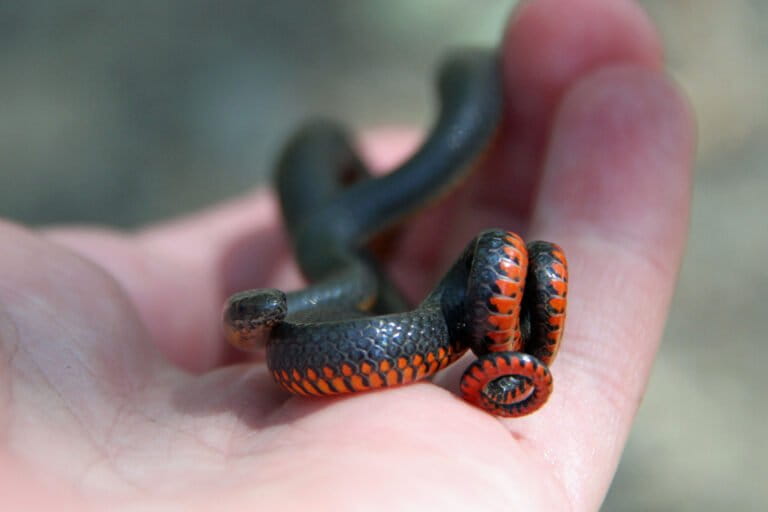
Beyond the lack of legs, the snake’s skull architecture is a marvel of evolutionary engineering. Their highly flexible, kinetic skulls allow them to consume prey significantly larger than their own heads—a trait that provides a distinct survival advantage in environments where food availability may be intermittent or seasonal. Furthermore, their sophisticated chemical detection systems, centered on the vomeronasal organ (Jacobson’s organ) and the flicking tongue, allow them to track prey with a precision that far exceeds many other predators.
These foundational traits acted as a "force multiplier." Because they already possessed the tools to consume a diverse range of prey, snakes were not tethered to a single ecological niche. As environmental conditions changed, the "fast clock" of their evolution allowed them to fine-tune these traits for specific habitats—whether it be the aquatic specialization of sea snakes or the arboreal agility of vine snakes.
The Persistence of the Evolutionary Mystery
Despite the clarity of the data regarding the rate of snake evolution, the cause remains a significant mystery in the biological sciences. Researchers still do not fully understand why the snake genome or the selective pressures acting upon them were fundamentally different from those affecting lizards from the very beginning.
"We cannot fully explain this yet," notes Rabosky. "In science, solving one mystery almost always results in the emergence of several new, more complex questions." The study highlights that while we can map the trajectory of evolution, the underlying genetic or environmental triggers that "switched on" this high-speed evolutionary mode remain elusive. Some researchers speculate that the loss of limbs itself may have been the primary catalyst, as it forced a total reorganization of the snake’s body plan, which in turn unlocked a higher ceiling for morphological change. Others look to potential changes in gene regulatory networks that allowed for rapid skull remodeling.
Future Implications and Ecological Outlook
A critical question arising from this study is whether this rapid pace of evolution is sustainable. Could the "clock" eventually slow down? Rabosky and his team caution that any predictions regarding the future of snake evolution remain speculative. However, their analysis shows no evidence that the pace is currently decelerating.
This finding carries profound implications for modern ecology. If snakes are, by nature, "evolutionary opportunists," they may be better equipped than many other vertebrate species to handle the current anthropogenic shifts in climate and habitat. While many species are struggling to adapt to the rapid pace of human-induced environmental change, the inherent evolutionary flexibility of snakes suggests they may be more resilient than previously thought.
The diversity of snakes observed today is not an evolutionary endpoint; it is merely a snapshot of a continuous, high-speed journey. As the climate shifts and global biodiversity faces unprecedented challenges, the ability of snakes to innovate and adapt remains a subject of intense interest. The "fast clock" that once allowed them to rise to prominence after the fall of the dinosaurs may well be the same mechanism that allows them to endure the challenges of the Anthropocene.
Ultimately, this research serves as a reminder that evolution is not always a slow, gradual crawl. Under the right conditions, with the right set of biological tools, life can accelerate into new forms with remarkable speed. The 4,000 species of snakes that grace our planet today are the living evidence of a long, rapid, and ongoing narrative—a story that is far from its final chapter. As scientists continue to untangle the genetic mechanisms behind this evolutionary velocity, we gain not only a better understanding of the natural history of reptiles but also deeper insight into the processes that drive the biodiversity of our planet.









