Nila Kartika Wati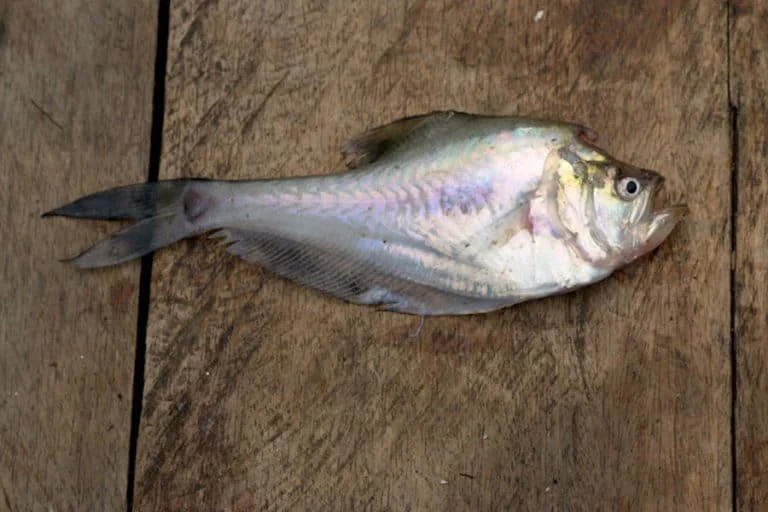
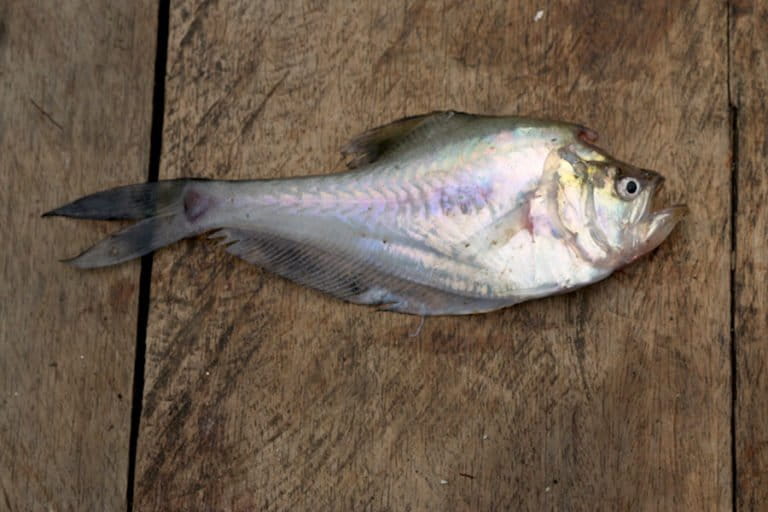
In the tea-colored, tannin-rich rivers and brackish mangrove swamps of southern Papua, a biological anomaly swims through the murky depths, defying simple classification. The Nurseryfish, known scientifically as Kurtus gulliveri, possesses a morphology that is as striking as it is bizarre. With a body that is laterally compressed and deep, resembling a shimmering, elongated diamond, the fish earns its local moniker, "ikan kaca" or glass fish, from the silvery, translucent quality of its scales. However, its physical appearance is secondary to its extraordinary reproductive strategy. In a rare display of paternal devotion, the male Nurseryfish carries its offspring not in a nest or a mouth, but on its head, attached to a prominent, hook-like bony protrusion on its forehead.
This unique behavioral trait has earned the species two distinct common names: the glass fish, for its aesthetic brilliance, and the nurseryfish (or ikan perawat), for the male’s steadfast commitment to guarding the eggs until they hatch. Beyond its biological quirks, Kurtus gulliveri serves as a living testament to the ancient geological history of the Indo-Pacific region, bridging the gap between the island of New Guinea and the Australian continent.
The Biogeographical Legacy of Sahulland
The scientific history of Kurtus gulliveri dates back to 1878, when it was first described based on specimens collected by Thomas Allen Gulliver. Gulliver, an official for the Australian post and telegraph service stationed near the Norman River in the Gulf of Carpentaria, recognized the fish as something entirely distinct. The discovery of the same species in both Northern Australia and the southern reaches of Papua provides a crucial piece of evidence for the existence of Sahulland, a prehistoric landmass.
According to Hari Suroto, a senior archaeology researcher at the National Research and Innovation Agency (BRIN), the distribution of the Nurseryfish is a direct result of the Pleistocene epoch. Approximately 17,000 years ago, global sea levels were significantly lower—by as much as 120 meters—than they are today. During this period, Australia, Papua, and the Aru Islands were fused into a single continuous landmass known as Sahul. This land bridge allowed for the free movement of freshwater and estuarine fauna across regions that are now separated by the Arafura Sea.
The Nurseryfish is one of the few extant species that remains as a biological "relic" of this era. While the rising seas eventually submerged the land bridge, the populations of Kurtus gulliveri remained, evolving in parallel in the Adelaide River of Australia’s Northern Territory and the sprawling river systems of southern Papua. Today, the fish is found across a wide geographic range in Papua, spanning the Digul, Maro, and Mappi rivers, as well as the wetlands of Boven Digoel, Merauke, Asmat, and Fakfak.
Biological Adaptation and Reproductive Strategy
The most distinctive feature of the male Kurtus gulliveri is the supraoccipital hook, a modification of the skull bone that curves forward over the forehead. For decades, this structure was a source of mystery for ichthyologists. Modern research suggests that this hook is an evolutionary adaptation to the harsh, low-oxygen environments of peat-swamp rivers and silt-heavy mangroves.
The reproductive process begins when the female lays a cluster of eggs, which are then fertilized by the male. Instead of abandoning the eggs to the mercy of the current or predators, the male attaches the egg mass—often containing hundreds of individual eggs—to his forehead hook. The eggs, which measure between 2.1 and 2.5 millimeters in diameter, are held together by a network of chorionic filaments, forming a structure that looks remarkably like a bunch of grapes.
By carrying the eggs on his head, the male ensures they remain in highly oxygenated water near the surface and are protected from bottom-dwelling predators. This "forehead brooding" continues until the larvae hatch. Upon emerging, the larvae are nearly transparent, possessing a large yolk sac for initial nourishment and a disproportionately large head. They remain near the water’s surface, blending into the glare of the sun to avoid detection by predators.
In ecological surveys conducted in the Digul River and the Maro River estuary, researchers found that the Nurseryfish is not merely a curiosity but a dominant component of the local ecosystem. In the Maro River, the species recorded a relative abundance of 23.08 percent, the highest among all fish species documented in the area. This high density suggests that the Nurseryfish plays a critical role in the food web, serving as both a predator of small invertebrates and a primary food source for larger riverine predators and local human populations.
Socio-Economic Importance to Indigenous Communities
For the indigenous Suku Asmat, Muyu, and Marind tribes of southern Papua, the Nurseryfish is a staple of their traditional diet and local economy. Known by various local names, such as "giti-giti" in the Mitimber village of Fakfak, the fish is harvested using traditional methods including hand-woven nets and bamboo fishing rods.
The Muyu people, residing primarily in the Boven Digoel Regency, have developed a localized industry around the fish. Given the abundance of the catch during certain seasons, the fish is often preserved as salted fish (ikan asin). This processed product is then transported and sold in the markets of Merauke, providing a vital source of income for remote inland communities. The high protein content and the relative ease of capture make it an essential resource for food security in the region.
However, the cultural and economic reliance on the Nurseryfish means that any decline in its population has immediate and severe consequences for these communities. The fish is more than a biological specimen; it is a thread in the social fabric of southern Papua, connecting the people to the rivers that have sustained them for millennia.
Environmental Degradation and Emerging Threats
Despite surviving for thousands of years since the breakup of Sahulland, the Nurseryfish now faces a suite of modern threats that are moving at an unprecedented pace. The primary driver of this decline is the rapid degradation of Papua’s riverine ecosystems due to human activity.
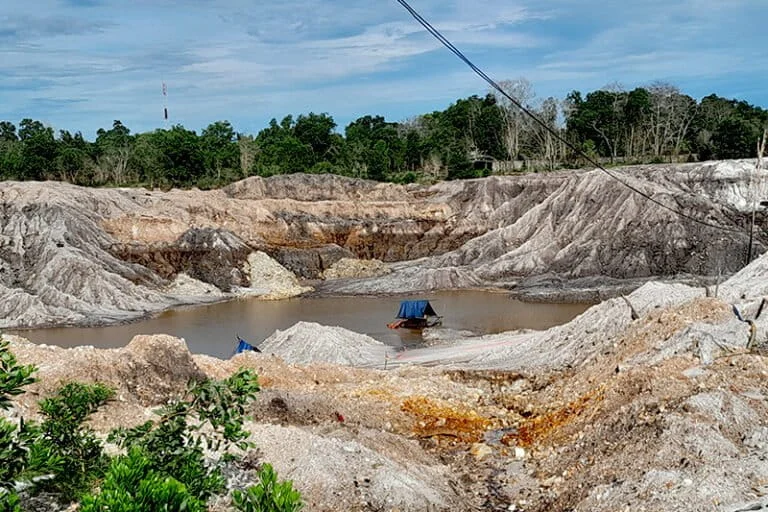
Illegal gold mining, known locally as PETI (Pertambangan Emas Tanpa Izin), has become a pervasive issue in the headwaters of Papua’s major rivers. These operations frequently use mercury to extract gold from ore, a process that results in the discharge of toxic heavy metals directly into the water system. As a predatory species, the Nurseryfish is susceptible to bioaccumulation, where toxins become more concentrated as they move up the food chain. This poses a dual threat: it endangers the survival of the fish and presents a significant health risk to the indigenous people who consume them.
Furthermore, large-scale logging and land clearing for industrial plantations have led to increased soil erosion. Without the protective root systems of the rainforest, heavy tropical rains wash vast quantities of silt and mud into the rivers. This increased turbidity chokes the delicate gill systems of the Nurseryfish and smothers the aquatic vegetation where they forage. The "glass-like" clarity of the water that once defined their habitat is increasingly being replaced by thick, brown sludge.
Scientific Analysis and Future Outlook
The plight of the Nurseryfish is a microcosm of the broader environmental crisis facing Papua. Conservationists argue that the loss of this species would be more than just a local tragedy; it would be the loss of a unique evolutionary lineage.
"The Nurseryfish is a specialist," says an independent ecological consultant familiar with the region. "It has evolved to fit a very specific niche in a very specific environment. Unlike more generalist species, it cannot simply adapt to a mercury-laden, silt-choked river. If the habitat goes, the species goes."
To protect the Kurtus gulliveri, experts suggest a multi-pronged approach:
- Stricter Enforcement against Illegal Mining: The government must address the root causes of illegal mining in the interior of Papua, providing alternative livelihoods for locals while cracking down on the supply chains of mercury.
- Riparian Buffer Zones: Establishing protected corridors along riverbanks can help reduce sedimentation and maintain the natural temperature and chemistry of the water.
- Community-Led Conservation: Empowering the Asmat, Muyu, and Marind tribes to manage their traditional fishing grounds can ensure that harvests remain sustainable.
- Further Research: While the Nurseryfish is abundant in some areas, there is a lack of long-term data on population trends. Increased funding for BRIN and local universities like Universitas Musamus Merauke is essential to monitor the species’ health.
The story of the Nurseryfish is a reminder of the deep connections between geology, biology, and human culture. Having endured the rising of the seas and the shifting of continents, this silver inhabitant of the Papuan swamplands now waits to see if it can survive the current era of human expansion. Its disappearance would signal the end of a 17,000-year-old legacy, a silent casualty of a changing world. For the male Nurseryfish, still faithfully carrying his eggs on his head amidst the darkening waters, the struggle for the next generation has never been more precarious.