Nila Kartika Wati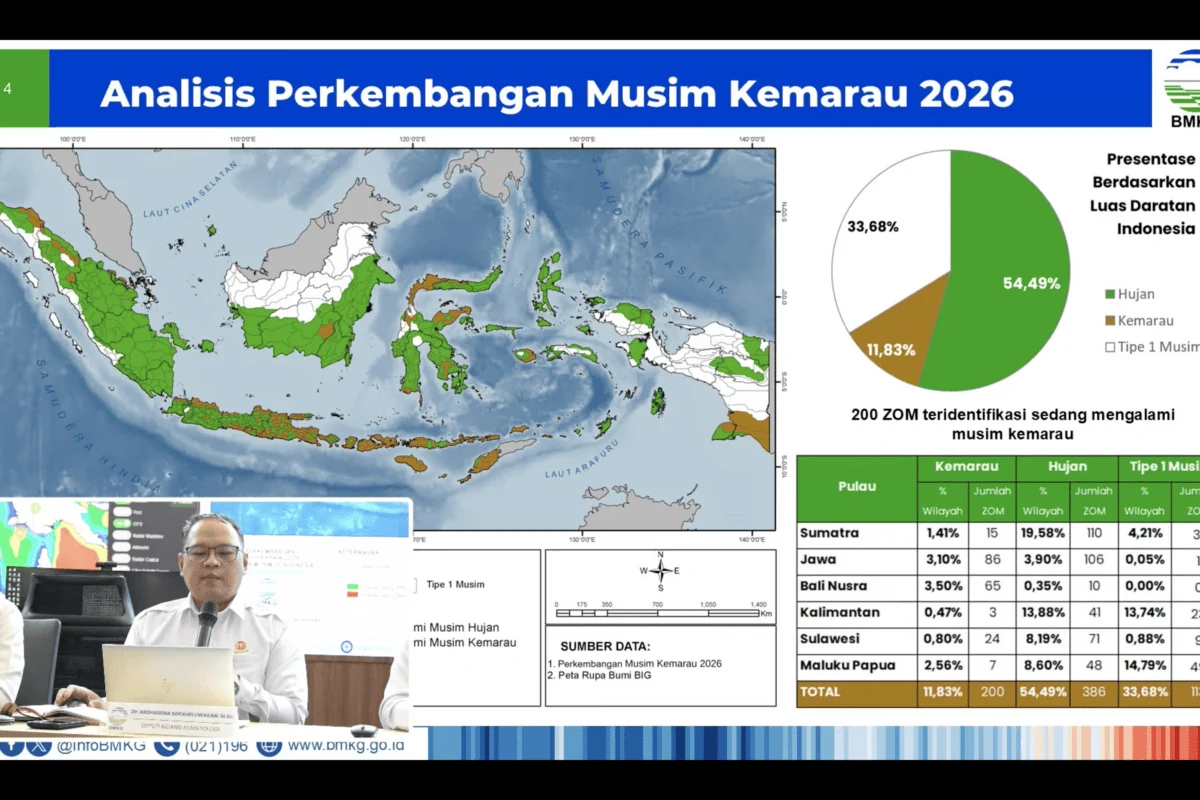
The Indonesian Archipelago is facing one of its most significant climatic challenges in recent history as the Meteorology, Climatology, and Geophysics Agency (BMKG) issues a high-level alert regarding the 2026 dry season. According to the latest monitoring of atmospheric and oceanic dynamics, the country is entering a period characterized by a "double phenomenon"—the simultaneous strengthening of El Niño in the Pacific Ocean and a positive Indian Ocean Dipole (IOD) in the Indian Ocean. This rare convergence is expected to result in a dry season that arrives earlier, lasts longer, and is significantly more severe than historical norms, potentially extending its influence into early 2027.
Ardhasena Sopaheluwakan, Deputy for Climatology at BMKG, confirmed during a press conference on Wednesday, June 10, 2026, that there is a 50% to 60% probability of El Niño reaching a moderate to strong category starting mid-year. "The 2026 dry season is predicted to be much drier than usual," Sopaheluwakan stated, noting that the combination of these global phenomena will drastically suppress cloud formation and slash rainfall across the majority of the Indonesian territory.
The Mechanics of a Climatic Convergence
The severity of the 2026 outlook is rooted in the interaction between two major climate drivers. El Niño, a warming of the central and eastern tropical Pacific Ocean, typically leads to reduced rainfall in Indonesia. Simultaneously, a positive IOD—often referred to as the "Indian El Niño"—occurs when the western Indian Ocean becomes warmer than the eastern part, further drawing moisture away from the Indonesian archipelago.
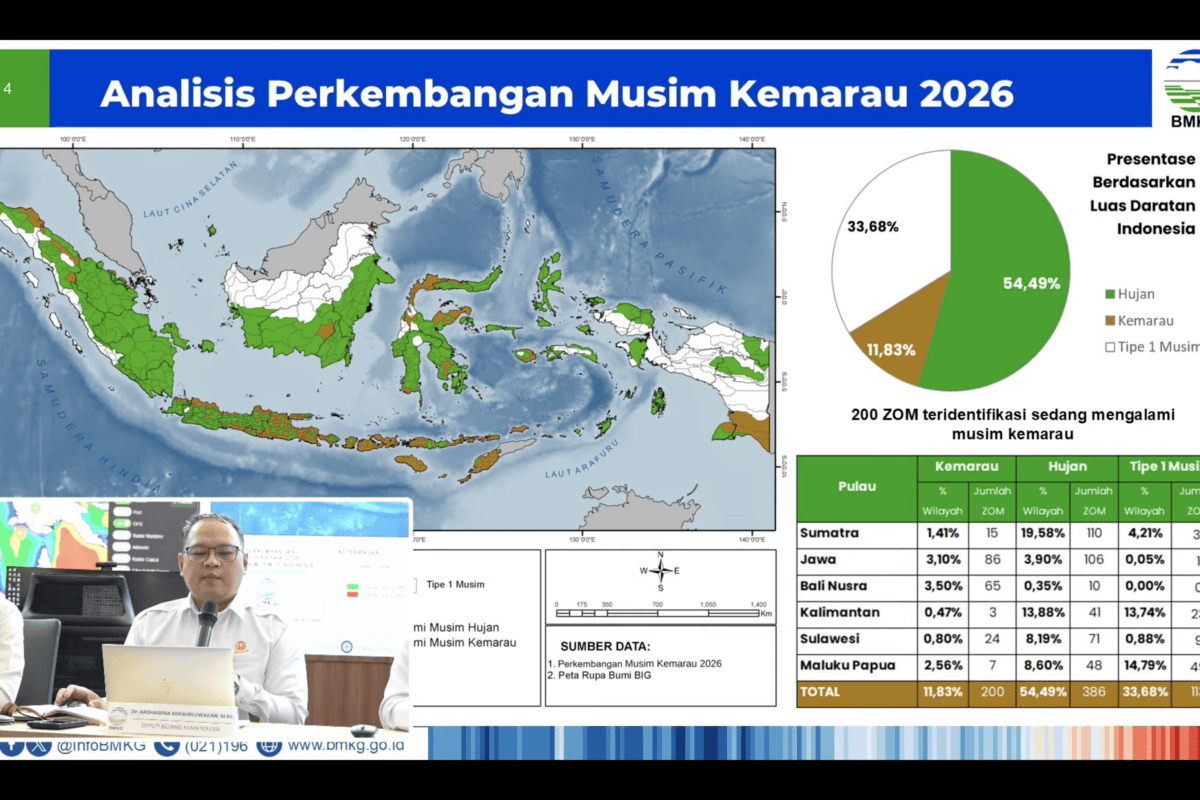
Analysis of the Seasonal Zones (ZOM)—units used by BMKG to categorize regions with homogeneous rainfall characteristics based on the 1991–2020 climatological reference—indicates that the onset of the dry season has accelerated. Approximately 308 seasonal zones, representing nearly 40% of Indonesia’s land area, experienced an early start to the dry season. By the end of May 2026, over 200 zones spanning from Sumatra to Papua had already entered the dry phase. BMKG data suggests that by the end of July, the vast majority of the country will be under the grip of extreme aridity.
Chronology and Peak Crisis Periods
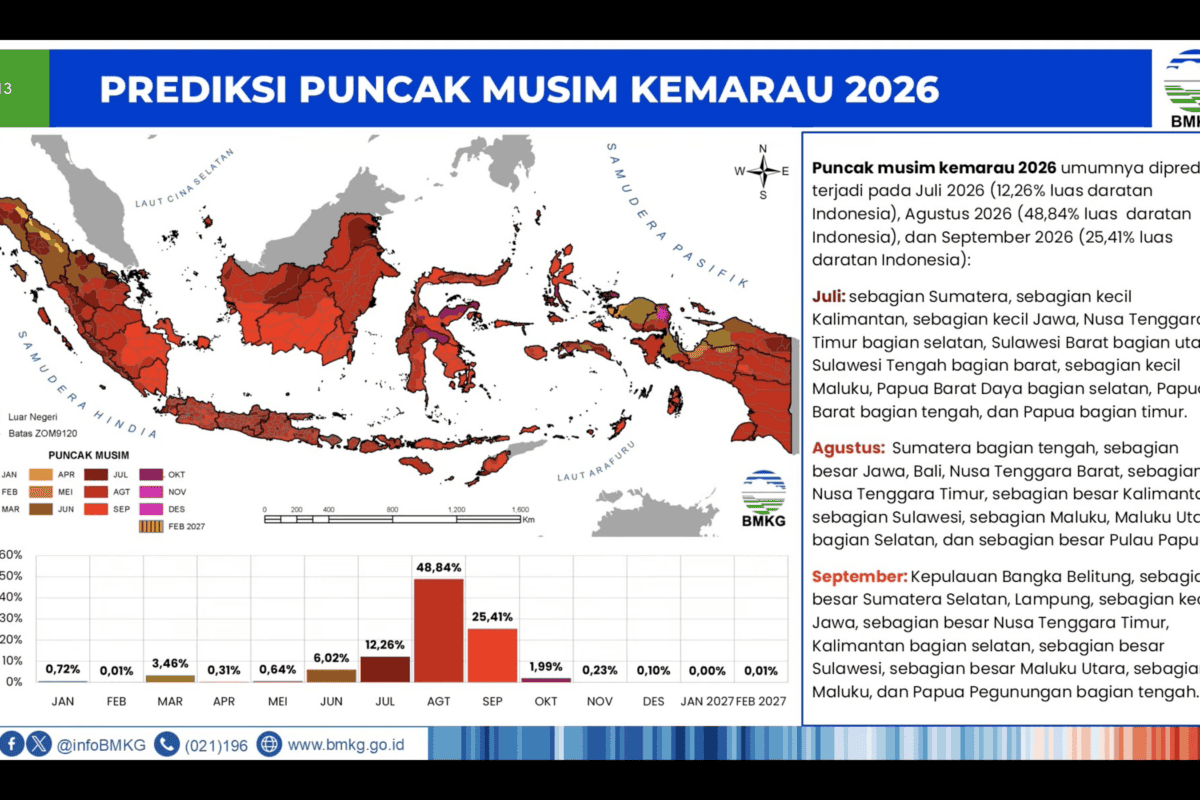
Meteorological modeling indicates that the most critical period of this dry cycle will occur during the third quarter of 2026. The peak of the drought is expected to manifest in August and September, covering nearly 75% of the country’s landmass.
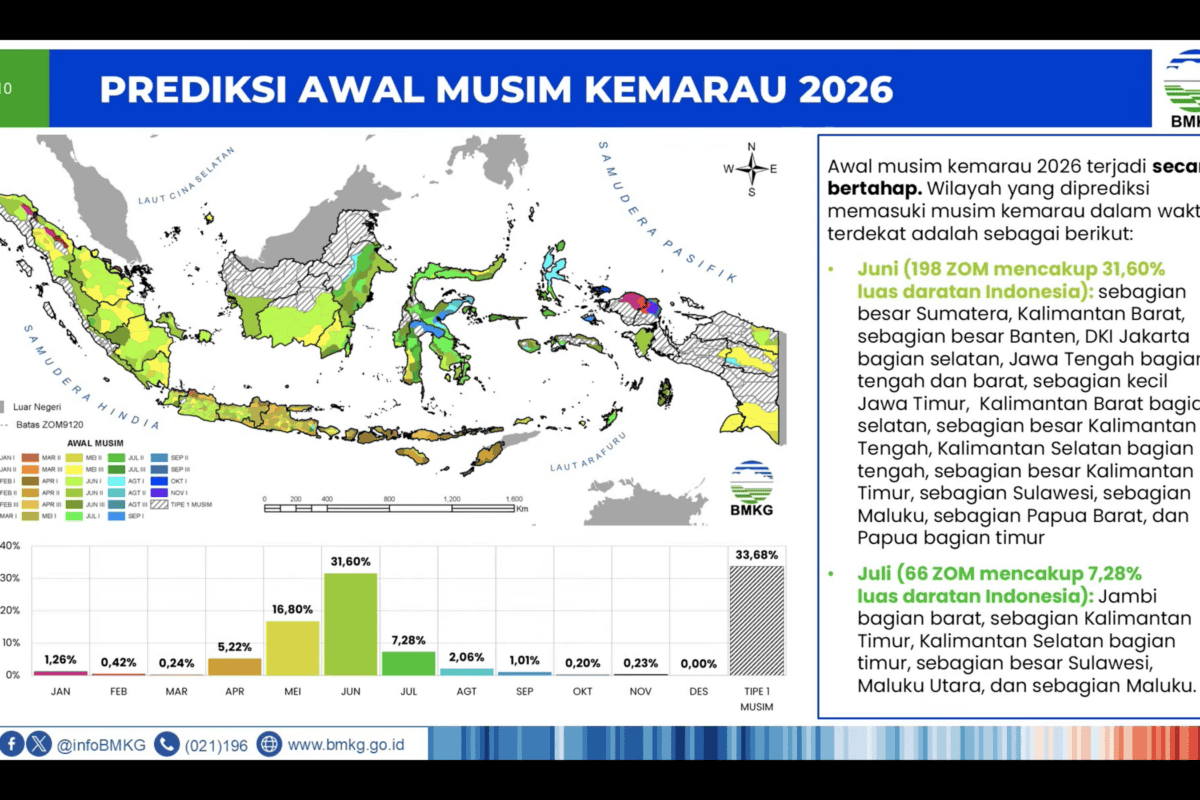
The timeline for the 2026 dry season follows a worrying trajectory:
- May 2026: 11.83% of the land area (200 ZOM) entered the dry season.
- June 2026: An additional 198 ZOM transitioned into the dry phase.
- July 2026: Peak drought conditions begin to settle in for 83 ZOM.
- August 2026: The most intense period, with 369 ZOM (48.84% of the land) reaching the height of the dry season.
- September 2026: Continued crisis for 169 ZOM (25.41% of the land).
While some relief is expected in October 2026 as the monsoon begins to return to western Sumatra and parts of Jambi, the El Niño influence is projected to persist. BMKG predicts that the phenomenon will remain active through early 2027, with a 98% probability of maintaining moderate intensity and a 62% chance of escalating to a "strong" or "Godzilla" category.
Regional Vulnerabilities and Forest Fire Escalation
The geographic scope of the drought is nearly universal, affecting the entirety of Java, most of Sumatra, Kalimantan, Bali, West Nusa Tenggara (NTB), East Nusa Tenggara (NTT), Sulawesi, Maluku, and Papua. This widespread aridity has already triggered a surge in forest and land fires (Karhutla).
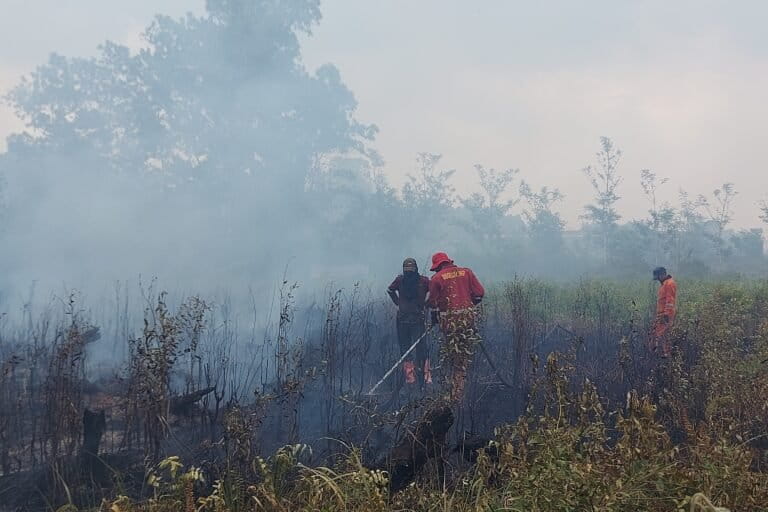
Data from the Ministry of Environment and Forestry’s Sipongi system reveals that as of May 2026, more than 81,000 hectares of forest and land have already been incinerated across 35 provinces. This represents a sharp increase from the 55,324 hectares burned in the first quarter of the year. The most affected provinces include:
- West Kalimantan: 28,200 hectares burned.
- Riau: 15,300 hectares burned.
- Riau Islands: 5,690 hectares burned.
A particularly alarming statistic involves peatland ecosystems. Between January and April 2026, 26,484 hotspots were detected within Peat Hydrological Units (KHG), with the majority concentrated in protected peatland functions. Wahyu Perdana, Campaign Manager at Pantau Gambut, highlighted that these fires are often the result of corporate land clearing. "When peatlands are drained via canals for monoculture plantations like oil palm or sugar cane, they become a ticking time bomb," Perdana warned.
The chemical nature of dried peat adds a layer of toxicity to the crisis. When peat is drained, pyrite (iron sulfide) contained within the soil oxidizes, releasing toxins. If these areas catch fire, the result is a "double threat" of ecological destruction and severe respiratory health crises (ISPA) due to dense, toxic smoke.
Food Security and Economic Implications
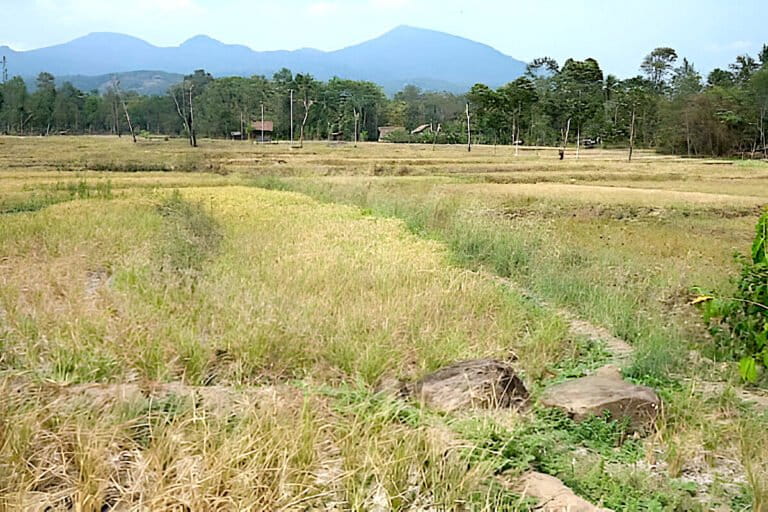
The 2026 drought poses a direct threat to Indonesia’s food sovereignty. Historically, El Niño events have correlated with significant drops in agricultural output. During the 1997/1998 El Niño, rice production fell by 6%, contributing to a national economic crisis. More recently, in early 2024, rice production dropped by over 17% during the January-April period compared to the previous year.
Musdalifah, a food security campaigner at WALHI (The Indonesian Forum for Environment), noted that Indonesia’s reliance on food imports remains high, with over 13,000 tons of food commodities imported in the first quarter of 2025 alone. "The current extractive development model has converted productive agricultural land into monoculture plantations and infrastructure projects, leaving us vulnerable," she said.
In response, the National Food Agency has prepared a Government Rice Reserve (CBP) of 4.6 million tons. However, experts argue that availability does not guarantee accessibility for lower-income populations who face rising prices during supply shortages.
Government Mitigation and Strategic Recommendations
Teuku Faisal Fathani, Head of BMKG, stated that the government has shifted its fire management paradigm from reactive to preventive. This includes monitoring groundwater levels in peatlands and utilizing Weather Modification Operations (OMC) to "saturate" vulnerable areas with artificial rain before fires can take hold.
BMKG has issued several urgent recommendations for various sectors:
- Agriculture: Farmers are urged to adjust planting schedules and switch to drought-resistant, short-cycle crop varieties.
- Water Resources: Revitalization of reservoirs and repair of distribution networks are essential to ensure drinking water and hydropower stability.
- Health: Local governments must prepare for a surge in respiratory illnesses due to increased dust and pollution.
- Disaster Management: Increased patrols in high-risk zones, particularly in August and September.
Critical Analysis: A Systemic Crisis
While the government emphasizes technical solutions like weather modification, environmental advocates argue that the root cause—climate change and land-use policy—is being ignored. Patria Rizky Ananda of WALHI National asserted that the "Godzilla El Niño" is not merely a natural anomaly but a consequence of a global ecological crisis fueled by extractive industries.
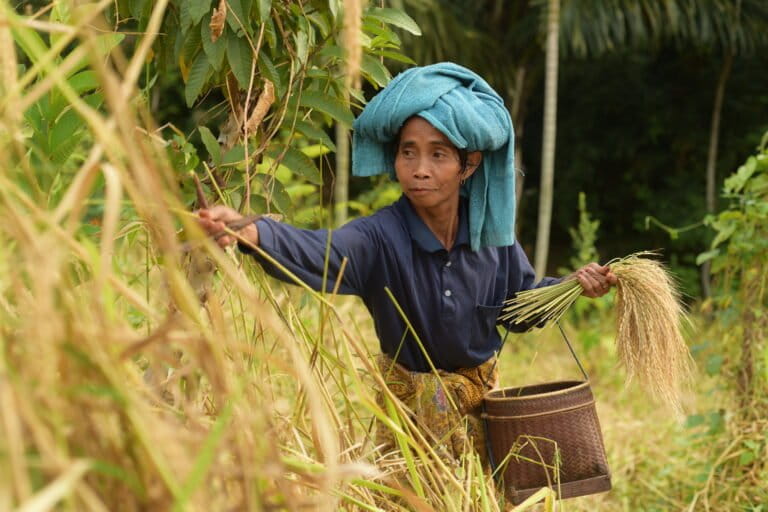
"B disasters that were once considered rare, occurring every 100 to 200 years, are now appearing in cycles of 20 to 50 years," Ananda noted. WALHI has called for a moratorium on permits that damage forests and peatlands, arguing that the protection of upstream ecosystems like mangroves, karst, and primary forests is the only sustainable way to mitigate the impacts of El Niño at its source.
The debate highlights a tension between immediate emergency response and long-term systemic change. As Indonesia enters this period of extreme heat and dryness, the resilience of its infrastructure, the stability of its food supply, and the health of its citizens will be put to a rigorous test. The 2026 dry season serves as a stark reminder that in an era of climate instability, "normal" weather patterns may be a thing of the past, requiring a fundamental shift in how the nation manages its natural resources and protects its most vulnerable populations.