Nila Kartika Wati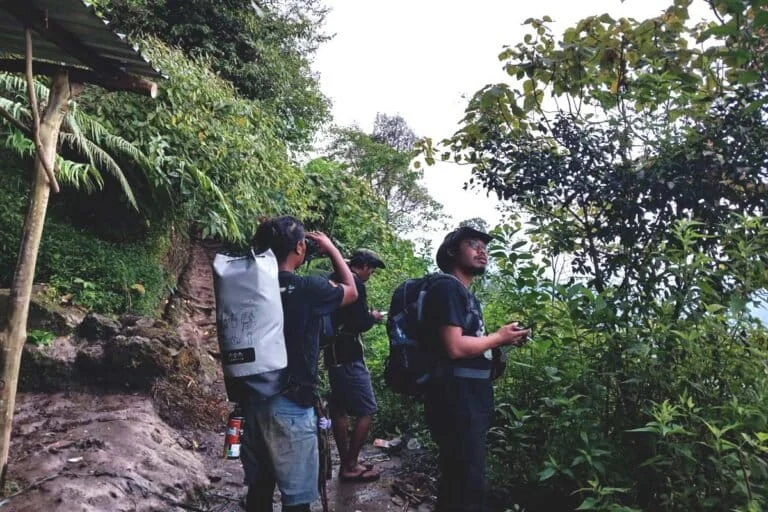
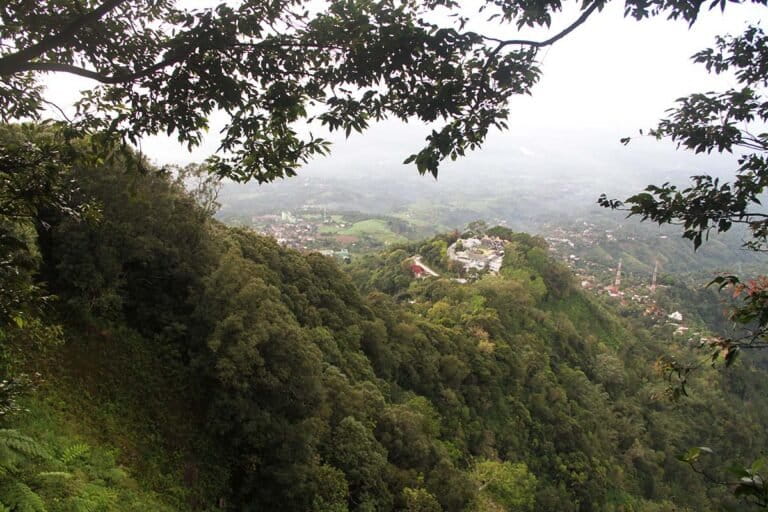
Deep within the verdant slopes of Mount Muria in Central Java, Setyawan Rahayu, a 38-year-old conservationist, often finds himself caught between two conflicting emotions: a fleeting sense of joy and a lingering weight of guilt. The joy stems from the rare, high-pitched warble of the Javan White-eye, locally known as the Pleci, which still echoes occasionally through the mist-covered trees. The guilt, however, is rooted in a darker chapter of his past. Before becoming a guardian of the forest, Setyawan was once part of the very force that nearly silenced it. As a former bird hunter, he spent years trapping the same creatures he now fights to protect, contributing to a commercial frenzy that saw the population of these small, vibrant birds plummet toward local extinction.
The story of the Pleci on the northern slopes of Central Java is more than a tale of avian biology; it is a complex narrative involving human greed, the cultural nuances of bird-keeping in Indonesia, and the arduous path toward ecological redemption. In the village of Tempur, located in the Keling District of Jepara Regency, the sound of the White-eye is no longer the ubiquitous background noise it once was. A decade ago, the forest was a cacophony of life. Today, a single chirp is treated as a precious victory. Setyawan, who now serves as a staff member for the Nature Conservation division of Peka Muria, recalls a time when the birds were so abundant that one did not even need to step foot into the forest to hear them. By 2010, however, the "Pleci-mania" trend had transformed these birds from common garden visitors into high-value commodities, setting the stage for an ecological crisis that is only now being addressed.
The Rise of the Dakun Maput Craze
The Javan White-eye, belonging to the family Zosteropidae and the genus Zosterops, is a small passerine bird characterized by a distinctive ring of white feathers around its eyes. While various species of White-eyes exist across the Indonesian archipelago, the population inhabiting Mount Muria gained a legendary reputation among avian enthusiasts, or "Kicau Mania." Known specifically as the "Dakun Maput"—an abbreviation for Dada Kuning, Mata Putih (Yellow Chest, White Eye)—the Muria variety is prized for its unique vocal clarity, physical stamina, and perceived intelligence in mimicking other bird calls.
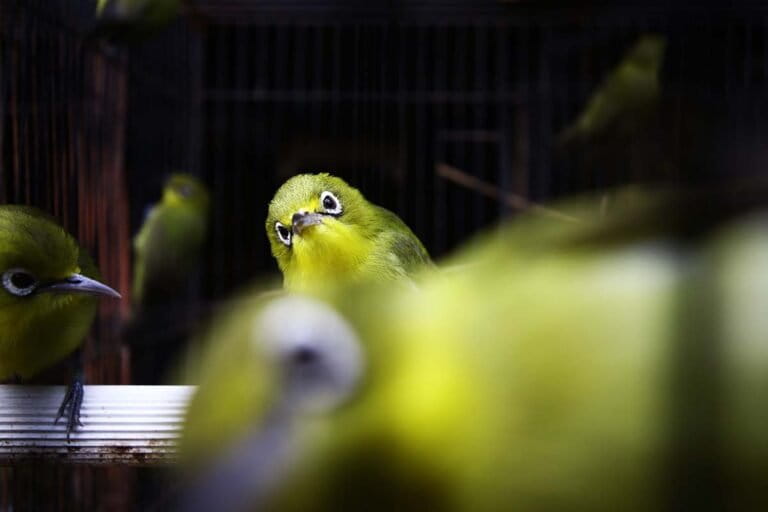
During the height of the bird-singing competition trend in the early 2010s, the demand for Muria Pleci skyrocketed. In Indonesian culture, particularly on the island of Java, keeping songbirds is a tradition that dates back centuries, often associated with status and masculinity. However, the modern commercialization of this hobby, fueled by organized competitions with significant prize money, turned a cultural pastime into an extractive industry. The Muria Pleci became a "premium" product. This status was a death knell for the local population. As prices rose, the incentive for local villagers to abandon traditional farming in favor of bird trapping became irresistible.
The Mechanics of Depletion: How the Forest Fell Silent
The biological social structure of the Pleci made them tragically easy targets for mass exploitation. These birds are highly gregarious, moving through the forest in large, tight-knit flocks. When a flock discovers a fruiting or flowering tree, hundreds of individuals may congregate in a single location. Hunters like Setyawan exploited this behavior with surgical efficiency. Using "pulut"—a powerful, sticky adhesive made from tree sap—trappers would coat the branches of trees where the birds were known to land.
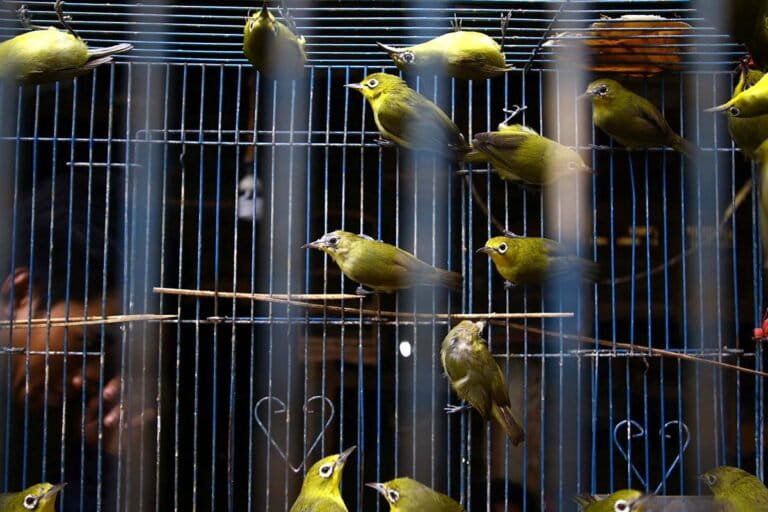
The process was devastatingly effective. A single hunter could ensnare hundreds of birds in a single day. Setyawan recalls the era with a sense of somber reflection, noting that during the peak of the craze, the volume of birds being removed from the mountain was unsustainable. The birds were packed into small crates and shipped to major bird markets in Semarang, Yogyakarta, and Jakarta. Because the Pleci is a delicate species that suffers high stress levels during transport, it is estimated that a significant percentage of captured birds died before ever reaching a cage. This high mortality rate only increased the pressure on wild populations, as hunters had to catch more birds to compensate for the losses in the supply chain.
By the mid-2010s, the consequences of this unchecked extraction became impossible to ignore. The "Silent Forest" syndrome began to take hold of Mount Muria. Areas that once vibrated with the energy of thousands of wings became eerily still. For Setyawan, this was the turning point. The realization that he was presiding over the death of his own backyard led him to renounce hunting and join Peka Muria, a local conservation group dedicated to preserving the unique biodiversity of the Muria peninsula.
A Tragedy of the Commons
The plight of the Pleci is not unique to Mount Muria; it is a phenomenon mirrored across Southeast Asia. Achmad Ridha Junaid, a Biodiversity Conservation Officer at Burung Indonesia, explains that the decline of the White-eye is a classic example of the "tragedy of the commons." Because the bird was once considered common and was not listed as a protected species under Indonesian law, there were few legal barriers to its exploitation.
"When there is high market demand and no regulation, the wild population becomes the easiest source to exploit," Junaid stated in a recent briefing. He points out that while charismatic megafauna like the Javan Leopard receive significant international attention and funding, small birds like the Pleci often slip through the cracks of conservation priority. This lack of oversight allows populations to collapse entirely before the scientific community or the government can intervene.
While comprehensive census data for the Muria Pleci is difficult to obtain due to the rugged terrain and the birds’ small size, anecdotal evidence from local communities and field observations by Burung Indonesia suggest a catastrophic decline. In many parts of Java where the White-eye was once a staple of the ecosystem, it has virtually disappeared. The pressure remains high because captive breeding programs have struggled to meet the specific demands of the competition market, which favors wild-caught birds for their "purer" and "stronger" songs.
Ecological Implications and the Role of the White-eye
The disappearance of the Pleci is not merely a loss for birdwatchers; it is a fundamental threat to the health of the Mount Muria ecosystem. As nectar-feeders and insectivores, White-eyes play a critical role in pollination and seed dispersal. They are the "gardeners" of the high-altitude forest, ensuring that various species of native flora can reproduce and spread.
When these birds are removed, the natural cycle of forest regeneration is disrupted. Furthermore, the Pleci serves as a vital link in the food chain, providing a food source for smaller raptors and carnivorous mammals. The "alarm" mentioned by Junaid refers to the fact that the health of the Pleci population is a proxy for the health of the forest itself. A forest without birds is a forest that is slowly losing its ability to sustain life.
From Extraction to Ecotourism: The Path Forward
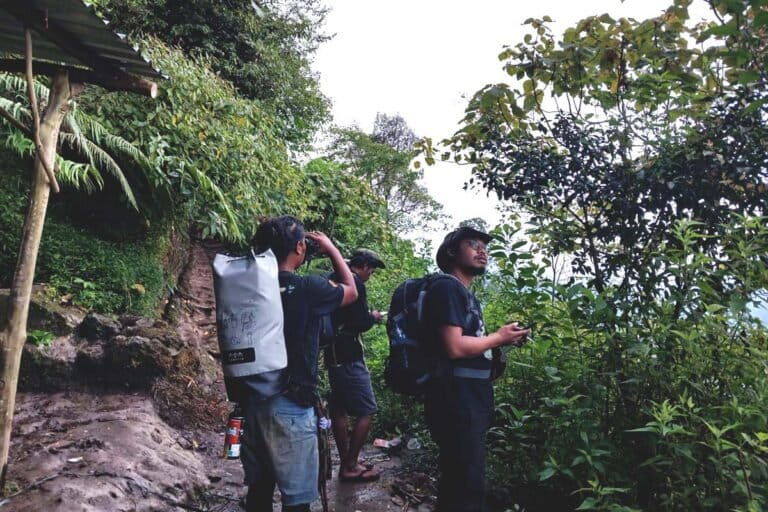
Today, Setyawan Rahayu and his colleagues at Peka Muria are working to change the economic incentives that drive bird trapping. They recognize that simply telling villagers to stop hunting is ineffective if there are no alternative livelihoods. Instead, they are promoting "Avitourism"—bird-watching tours that bring domestic and international tourists to Mount Muria to see birds in their natural habitat.
"A bird flying free has a far greater long-term value than a bird in a cage," Setyawan often tells his neighbors. By training former hunters to be bird-watching guides, Peka Muria is turning poachers into protectors. These guides use their intimate knowledge of bird behavior and forest geography—skills once used for trapping—to help tourists spot rare species. This model creates a sustainable economy where the local community benefits directly from the presence of live birds in the forest.
In addition to ecotourism, Peka Muria conducts environmental education programs for schools in the Jepara and Kudus regencies. They aim to instill a new cultural value in the younger generation: one that appreciates birds for their ecological role rather than their market price. The group is also advocating for stronger local regulations (Peraturan Desa or Perdes) that would ban bird trapping within village boundaries, creating a patchwork of "safe zones" across the mountain.
Analysis of Policy and Future Outlook
The survival of the Javan White-eye in Mount Muria depends on a multi-pronged approach involving government intervention, market regulation, and community-led conservation. Experts suggest that the Indonesian government needs to reassess the protected status of several "common" songbirds that are currently being decimated by the bird trade. By placing species like the Pleci on the protected list, law enforcement would have the mandate to crack down on large-scale trapping and illegal trade in bird markets.
However, top-down regulation must be matched by bottom-up community engagement. The success of Setyawan Rahayu’s transformation proves that change is possible when individuals are given the tools to see their environment differently. The challenge remains the sheer scale of the "Kicau Mania" culture. As long as there is a prestige associated with owning a wild-caught "Dakun Maput," the temptation to trap will persist.
As the sun sets over the peaks of Muria, the occasional trill of a White-eye serves as a reminder of what is at stake. The battle for the Muria Pleci is a microcosm of the global struggle for biodiversity. It is a test of whether humanity can move past a relationship of extraction toward one of stewardship. For Setyawan, every day spent in the forest is a step toward making amends with the birds he once pursued, ensuring that future generations will hear the song of the Muria not from a cage, but from the high branches of a thriving, living forest.