Tata Titiana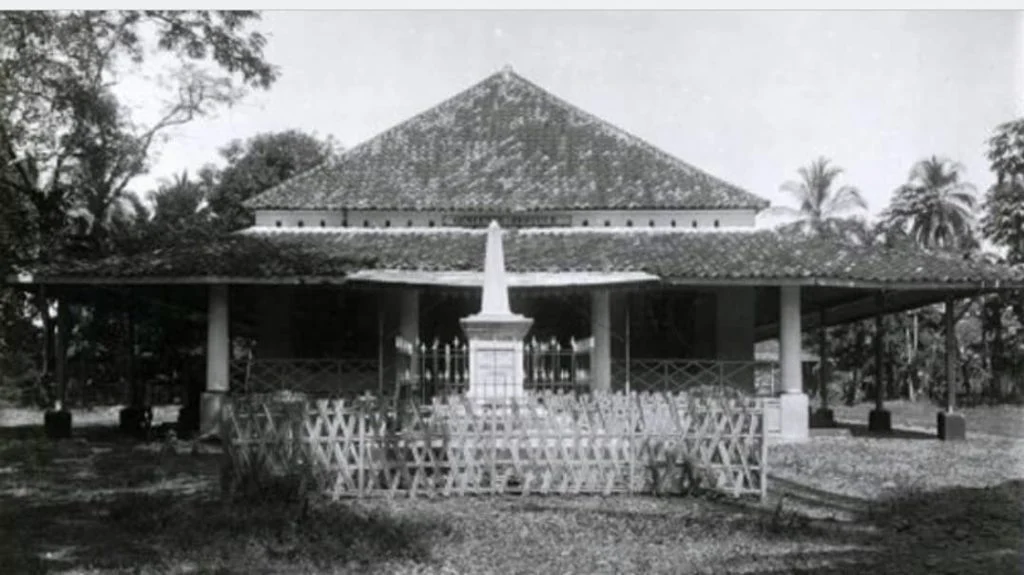
Depok, a city that now stands as a significant administrative region within West Java province, Indonesia, boasts a history far richer and more complex than its current status might suggest. Before its official formation as a municipality on April 27, 1999, Depok was merely a district under the Kabupaten Bogor. However, this modern administrative entity was once the seat of its own independent nation, complete with a president as head of state and government. This extraordinary chapter in Depok’s past remains largely unknown to many, a testament to the city’s enduring and surprising historical trajectory.
The genesis of this unique state can be traced back to the late 17th century when Cornelis Chastelein, a prosperous Dutch merchant, acquired a substantial tract of land in Depok, spanning approximately 12.44 square kilometers. The transaction, valued at a significant Rp 2.4 million, was for a particuliere land (private land), meaning it operated outside the direct administrative control of the Dutch East Indies government. By the 18th century, Depok had evolved into a distinct administrative territory governed by its own gemeente bestuur, or civilian administration. Cornelis Chastelein emerged as its first ruler and the visionary founder of this nascent state.
At the time of its acquisition, the Depok region was largely untamed wilderness. Chastelein, with the labor of his enslaved individuals, who hailed from diverse ethnic backgrounds, embarked on the arduous task of clearing the dense forests to establish agricultural lands. The scope of this private domain was remarkably extensive, encompassing not only the present-day Depok area but also extending to Pasar Minggu in South Jakarta and Gambir in Central Jakarta. The very first inhabitants of Depok were, in fact, the enslaved people owned by Chastelein.
A profound act of benevolence marked the end of Chastelein’s life. A devout Catholic, he harbored deep compassion for his enslaved laborers. In his will, dated June 28, 1714, Chastelein bequeathed his land, houses, livestock, and farming equipment to his enslaved people. Crucially, he also granted them their freedom upon his death. To preempt any potential disputes over inheritance and leadership, he designated Jarong van Bali to guide and organize the newly freed community.
The liberated individuals, while grateful for their freedom and Chastelein’s generosity, harbored concerns about future power struggles after Jarong van Bali’s tenure. To ensure stability and prevent internal conflict, they collectively agreed to institute a democratic system for selecting their leader. This led to the establishment of a presidential system, with a president elected every three years. The administrative structure notably lacked a vice president; instead, the president was supported by a secretary in executing his duties. This unique form of governance, conceptualized by a Batavia-based lawyer, was formally implemented in 1913, marking the official establishment of the "Het Gemeente Bestuur van Het Particuliere Land Depok" – the Municipality Administration of the Private Land of Depok.

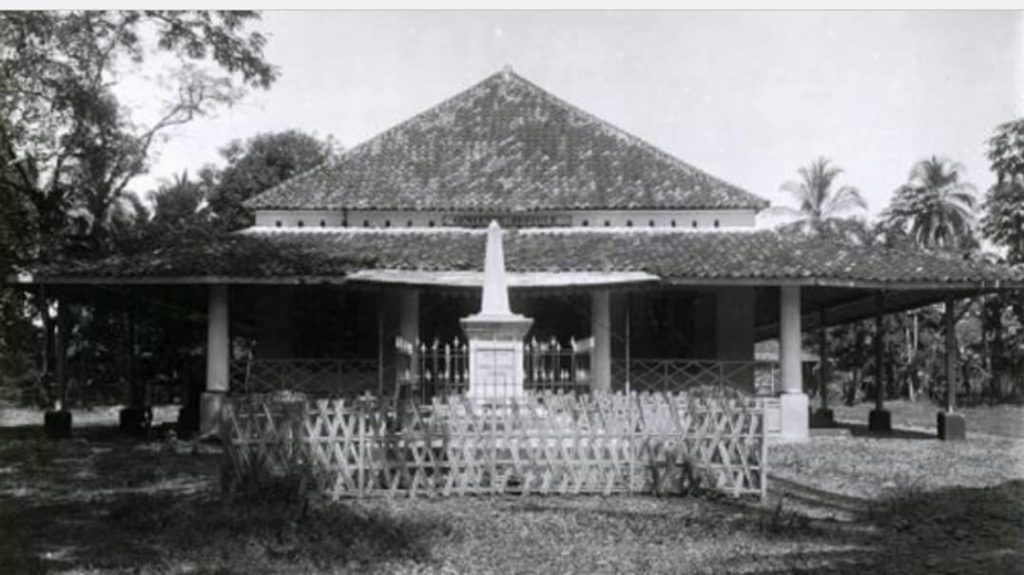
The year 1913 heralded the inauguration of Depok’s first president, Gerrit Jonathans. This marked the beginning of a unique period where Depok functioned as an independent entity, governed by democratically elected leaders. The administrative heart of this nation was situated at Kilometer 0, symbolized by the Depok Monument (Tugu Depok). Nearby stood the former government building, which has since been repurposed into the Harapan Hospital. The presidential term was limited to three years, a measure likely designed to ensure regular rotation of leadership and prevent the consolidation of power.
Following Gerrit Jonathans, three other presidents led Depok through its independent phase. Martinus Laurens served in 1921, followed by Leonardus Leander in 1930, and finally, Johannes Matjis Jonathans, who held the presidency in 1952. Regrettably, detailed historical records or in-depth accounts of the specific achievements or challenges faced during each president’s term are scarce, leaving much of their leadership shrouded in historical ambiguity.
The Evolution from Private Estate to Sovereign Entity: A Timeline
The journey of Depok from a privately owned parcel of land to an independent administrative entity and finally to its current status as a municipality within Indonesia can be outlined as follows:
- Late 17th Century: Cornelis Chastelein, a Dutch merchant, purchases a vast tract of land in Depok, establishing it as a particuliere land.
- 18th Century: Depok functions as a distinct administrative territory with its own civilian government (gemeente bestuur) under Chastelein’s leadership.
- June 28, 1714: Cornelis Chastelein passes away, leaving his estate and freedom to his enslaved laborers in his will.
- Post-Chastelein Era: The freed community, under the initial guidance of Jarong van Bali, grapples with establishing a stable governance structure.
- 1913: The "Het Gemeente Bestuur van Het Particuliere Land Depok" is formally established, adopting a democratic presidential system with three-year terms. Gerrit Jonathans becomes the first president.
- 1921: Martinus Laurens is elected president.
- 1930: Leonardus Leander assumes the presidency.
- 1952: Johannes Matjis Jonathans, the last president of Depok, oversees the official handover of the private land to the Indonesian government.
- 1952 – 1999: Depok is integrated into the administrative structure of the Indonesian government, initially as part of Kabupaten Bogor.
- April 27, 1999: Depok is officially recognized as a municipality (kotamadya), gaining its current administrative status.
Legacy of Benevolence and Self-Governance
Chastelein’s vision extended beyond mere land ownership; it was rooted in a desire to provide for the well-being and future of those who served him. His will was a remarkable document for its time, reflecting a progressive and humanitarian outlook. By granting freedom and resources, he empowered his former enslaved people to build their own society and govern themselves. This act of emancipation and the subsequent establishment of a democratic republic laid the foundation for Depok’s unique identity.
The decision to adopt a democratic presidential system was a forward-thinking response to the potential for anarchy. The establishment of a three-year presidential term, coupled with the role of a secretary, suggests a deliberate effort to create a balanced and accountable governing structure. This system, though seemingly modest in scale, represented a significant step towards self-determination for the community.
The Formal Handover and Integration into Indonesia
The year 1952 marked a pivotal moment in Depok’s history. Johannes Matjis Jonathans, the last president of the private land, formally ceded ownership and governance of Depok to the Indonesian government through an official deed of transfer. This act symbolized the end of Depok’s independent existence and its full integration into the national framework of Indonesia.
While Depok as a municipality is relatively young, having celebrated its 22nd anniversary in 2021, its historical lineage stretches back over three centuries. The period of its existence as a self-governing entity, predating Indonesia’s own independence, is a significant aspect of its heritage. This long and layered history underscores Depok’s unique place in the archipelago’s past.
Broader Implications and Historical Significance
The story of Depok offers a fascinating case study in colonial-era land ownership, emancipation, and the formation of independent communities. It challenges the often-monolithic narrative of Dutch colonial rule by highlighting instances where private initiative and the agency of local populations shaped distinct political and social landscapes.
The existence of a democratically elected president and a structured government in Depok, even within the confines of a private estate, demonstrates an early adoption of self-governance principles in the region. This pre-dates many formal movements for independence across the archipelago, offering a glimpse into diverse forms of political organization that existed during the colonial period.
The legacy of Cornelis Chastelein, a figure who transitioned from landowner to benevolent emancipator, is intertwined with the very fabric of Depok. His will not only freed individuals but also provided them with the means to establish a functioning society, laying the groundwork for their future political aspirations.
The eventual handover of Depok to the Indonesian government in 1952 represents the broader process of national consolidation and the absorption of former private domains into the newly formed republic. While this marked the end of Depok’s unique political experiment, it ensured its continued development and integration within the larger Indonesian nation.
The historical narrative of Depok serves as a reminder that the history of Indonesia is not solely defined by grand national movements but also by localized experiences, individual acts of vision, and the enduring spirit of communities striving for self-determination. The story of this private land that became a nation, and then rejoined the larger Indonesian family, is a compelling chapter in the nation’s rich and multifaceted past.