Nasution Nanang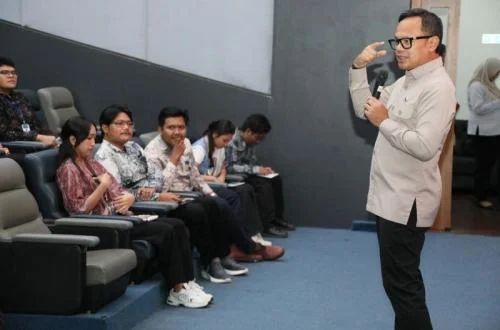
JAKARTA – Vice Minister of Home Affairs, Bima Arya Sugiarto, underscored the paramount importance of character development as a decisive factor in an individual’s journey towards success. This crucial message was delivered during the closing ceremony of the Ministry of Home Affairs (Kemendagri) Internship Program in Jakarta on a recent Wednesday. The event marked the culmination of a period of practical learning and professional exposure for a cohort of young participants, where Sugiarto’s address served as a powerful capstone, redirecting their focus from mere technical skills to the foundational values that underpin true achievement.
Sugiarto elaborated on his perspective, defining character as a deeply ingrained set of values that individuals not only believe in but actively embody and practice. He cited honesty, discipline, diligent work ethic, and resilience as prime examples of these indispensable traits. According to the Vice Minister, character accounts for a remarkable 80 percent of an individual’s overall success, with mere competency contributing only the remaining 20 percent. This stark ratio presented a compelling argument to the graduating interns, challenging conventional wisdom that often prioritizes academic credentials and technical proficiency above all else. His assertion posits that while skills can be acquired and refined, it is the internal moral compass and strength of will that ultimately propel individuals forward, particularly in demanding environments like public service.
"Character is those values that you believe in. When you are honest, when you are disciplined, when you become fighters, when you become warriors – that is character," Sugiarto articulated with conviction, his words resonating with the young audience. He further posited that an individual possessing ordinary skill sets can, in fact, surpass those deemed more intellectually gifted, provided they cultivate superior discipline and an unyielding mental fortitude. "You will be able to overtake your genius friends when you are more disciplined," he added, emphasizing that persistent effort and unwavering commitment often triumph over inherent talent when the latter lacks the scaffolding of strong character. This perspective offers a profound re-evaluation of what constitutes a competitive edge in an increasingly complex and competitive world.
The formation of character, Sugiarto stressed, is not an instantaneous event but a continuous, iterative process demanding consistent practice and unwavering dedication. He highlighted the necessity of venturing beyond one’s comfort zone and cultivating a readiness to confront and manage risks as integral components of this developmental journey. True character, he implied, is forged in the crucible of challenge and uncertainty, where individuals are tested and learn to adapt, persevere, and grow. This proactive approach to self-development, he argued, prepares individuals not just for career success but for life’s broader exigencies.
The Nexus of Character and Competence: A Paradigm Shift
Sugiarto’s 80/20 principle regarding character versus competence is not merely an anecdotal observation but echoes a growing body of research in psychology, organizational behavior, and leadership studies. While technical skills (competence) are undoubtedly crucial for entry-level positions and specific tasks, studies consistently show that "soft skills" or "power skills" – which are intrinsically linked to character – become increasingly critical as individuals ascend leadership hierarchies. Traits such as integrity, adaptability, communication, teamwork, and emotional intelligence, all facets of a strong character, are often cited by employers as the most difficult to find and the most valuable to retain.
For instance, research by the Stanford Research Institute International and the Carnegie Mellon Foundation found that 75% of long-term job success depends on soft skills, while only 25% depends on technical knowledge. Similarly, Google’s Project Oxygen, a multi-year initiative to identify what makes effective managers, concluded that technical expertise ranked last among the eight most important qualities. The top qualities included being a good coach, empowering the team, expressing interest in team members’ success and well-being, and being a good communicator – all attributes rooted in strong character and interpersonal skills. Sugiarto’s emphasis therefore aligns with contemporary understanding that while one needs a baseline of competence to perform, it is character that differentiates, elevates, and sustains success.
Beyond Innate Talent: The Power of Discipline and Grit
The Vice Minister’s assertion that discipline can enable individuals to "overtake their genius friends" finds significant resonance in concepts like "grit" and "deliberate practice." Angela Duckworth, a prominent psychologist, defines grit as the combination of passion and perseverance towards long-term goals. Her research indicates that gritty individuals, even those without extraordinary talent, often achieve more than their more talented but less persistent peers. Grit entails an unwavering commitment to effort, learning from failures, and maintaining focus over extended periods – all manifestations of discipline and resilience, which Sugiarto identified as core character traits.
Furthermore, the concept of "deliberate practice," popularized by K. Anders Ericsson, highlights that expert performance is not solely a product of innate talent but rather the result of sustained, focused effort aimed at improving specific aspects of performance. This involves regular, disciplined training, often outside one’s comfort zone, with immediate feedback and targeted adjustments. In essence, the ability to engage in deliberate practice, to consistently push boundaries and refine skills, is a testament to an individual’s discipline and tenacity – character traits that Sugiarto champions. This scientific backing reinforces the profound implications of his message, suggesting that character development is not merely a moral imperative but a strategic one for personal and professional excellence.
Forging Character: A Journey of Consistent Effort
The notion that character is "formed through process and consistent practice" is a cornerstone of developmental psychology. Character development is understood as a lifelong journey, influenced by experiences, role models, education, and personal reflection. Sugiarto’s call to embrace discomfort and risk-taking aligns with experiential learning theories, which posit that significant growth often occurs when individuals are challenged to navigate unfamiliar situations and overcome obstacles. Stepping out of one’s comfort zone fosters adaptability, problem-solving skills, and resilience – attributes that are integral to a robust character.
For young professionals entering the public service, this message is particularly pertinent. The demands of governmental roles often involve complex ethical dilemmas, bureaucratic hurdles, and the need for unwavering commitment to public welfare. The ability to make tough decisions, adhere to ethical standards even under pressure, and persist in the face of political or systemic challenges requires a deeply embedded character. The Kemendagri Internship Program, by design, offers a controlled environment for interns to encounter such realities, thereby initiating or furthering their character development through practical engagement.
The Kemendagri Internship Program: A Crucible for Future Leaders
The Ministry of Home Affairs Internship Program is a vital initiative designed to cultivate the next generation of public servants and leaders in Indonesia. While the exact duration of the specific program concluded on that Wednesday was not detailed, such government internships typically span several weeks to a few months, providing participants with hands-on experience in various departments and functions of the ministry. The program’s core objectives include:
- Practical Exposure: Offering interns a firsthand understanding of the workings of national governance, policy formulation, and implementation at the local and national levels.
- Skill Development: Enhancing participants’ administrative, analytical, communication, and teamwork skills relevant to public administration.
- Networking: Connecting young talents with seasoned public officials and peers, fostering a professional network.
- Character Building: Instilling values pertinent to public service, such as integrity, accountability, diligence, and a commitment to serving the nation.
The closing ceremony, therefore, serves as more than just a formal farewell; it is a critical juncture for reflection and reinforcement of the program’s deeper lessons. By inviting prominent figures like Vice Minister Bima Arya Sugiarto, Kemendagri underscores its commitment not just to technical training but to the holistic development of its interns, emphasizing that their future roles in shaping Indonesia will require more than just knowledge – they will demand unwavering character. The program itself, through its structure of tasks, teamwork, and adherence to bureaucratic protocols, inherently provides opportunities for interns to practice discipline, responsibility, and ethical decision-making, thus serving as a practical ‘crucible’ for character formation.
The Strategic Importance of Character in Public Service
In a nation like Indonesia, where public service integrity and efficiency are constant areas of focus, the emphasis on character by a high-ranking official like Sugiarto carries significant weight. Strong character in public servants translates directly into good governance, reduced corruption, and enhanced public trust. Officials with integrity are less susceptible to graft and undue influence, ensuring that policies are implemented fairly and resources are managed responsibly. Discipline and a strong work ethic lead to greater efficiency and responsiveness in government operations, directly impacting citizens’ lives.
Furthermore, resilience and a ‘fighter’ mentality are crucial for navigating the often-complex and politically charged landscape of public administration. Public servants frequently encounter resistance, criticism, and setbacks. A strong character enables them to persevere in their commitment to public welfare, even when faced with adversity, ensuring continuity and stability in governance. Sugiarto’s message, therefore, is not just about individual success but about fortifying the very foundations of the nation’s administrative machinery.
National Imperatives: Character Building for Indonesia’s Future
Indonesia has long recognized the critical role of human resource development in achieving its national aspirations, encapsulated in initiatives like "SDM Unggul, Indonesia Maju" (Superior Human Resources, Advanced Indonesia). The focus extends beyond academic excellence to encompass character, moral values, and civic responsibility. The nation’s foundational philosophy, Pancasila, itself places strong emphasis on ethical and moral values as guiding principles for individual and collective life.
However, challenges persist. Issues such as corruption, declining ethical standards in some sectors, and the pressures of globalization on youth identity underscore the ongoing need for robust character education. Government programs, educational curricula, and youth development initiatives like the Kemendagri Internship are crucial instruments in this national endeavor. By integrating character development into professional training, Indonesia aims to produce a generation of leaders and professionals who are not only competent but also possess the integrity and resilience necessary to steer the nation towards its ambitious development goals, including becoming a developed country by 2045.
Voices from the Program: Intern Perspectives
While direct quotes from interns were not provided in the original dispatch, it is plausible to infer their reactions. Participants in such programs often express a profound shift in perspective. An intern might reflect: "Coming into this program, I was focused on gaining technical skills in policy analysis. But Vice Minister Bima Arya’s address really opened my eyes to the deeper values required in public service. Learning about the importance of honesty and discipline, not just in theory but seeing how it applies to real-world governance, has been transformative." Another might add, "The internship has been challenging, pushing me out of my comfort zone, and I now understand how those struggles are actually building my resilience – exactly what he meant by character being formed through process." Such experiences underscore the practical impact of the program and the Vice Minister’s message.
Official Endorsements and Institutional Commitment
The presence of the Vice Minister at the closing ceremony, along with other Kemendagri officials, implicitly signifies the ministry’s strong institutional commitment to holistic youth development. A program coordinator or another high-ranking Kemendagri representative might have reiterated this commitment, stating, for example: "We believe that the future of Indonesia rests on the shoulders of our youth. This internship program is meticulously designed not only to impart critical administrative knowledge but, more importantly, to cultivate the foundational character traits that will enable these young individuals to become ethical, resilient, and effective public servants. Vice Minister Sugiarto’s powerful message today serves as a vital reminder of this overarching mission." Such statements would affirm the strategic alignment of the internship’s goals with national human resource development priorities.
Broader Implications: Fostering a Resilient and Ethical Generation
The implications of prioritizing character building, as advocated by Sugiarto, extend far beyond individual career success. On a societal level, fostering a generation grounded in strong character contributes to greater social cohesion, trust, and ethical conduct across various sectors. An emphasis on values like honesty and discipline can help combat systemic issues such as corruption and inefficiency, leading to more transparent and accountable institutions.
Economically, a workforce characterized by resilience, strong work ethic, and integrity is more productive, innovative, and competitive on a global scale. In an era of rapid technological change and complex global challenges, the ability to adapt, learn continuously, and persevere through adversity – all facets of character – becomes an invaluable national asset. Furthermore, such a focus helps to build a stronger civil society, where citizens are more engaged, responsible, and committed to collective well-being.
In conclusion, Vice Minister Bima Arya Sugiarto’s address at the Kemendagri Internship Program’s closing ceremony served as a powerful reminder that while competence is essential, character is the ultimate differentiator. His emphasis on honesty, discipline, hard work, and resilience, coupled with the assertion that character accounts for 80 percent of success, provides a compelling framework for youth development. By positioning the internship program as a vital platform for character formation, Kemendagri is not merely training future bureaucrats but actively shaping a generation of ethical and resilient leaders prepared to navigate the complexities of public service and contribute meaningfully to Indonesia’s progress. The message resonates as a call to action for every young Indonesian to cultivate their inner strength, recognizing that true success is built on the bedrock of an unshakeable character.