Nasution Nanang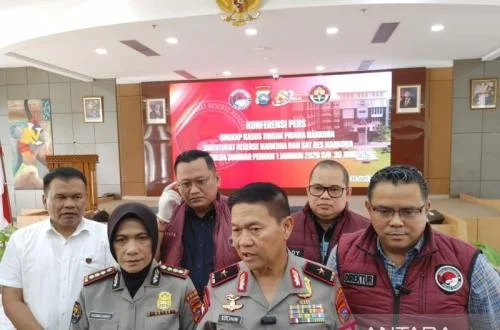
PADANG – The West Sumatra Regional Police Command (Polda Sumbar) has unequivocally reaffirmed its unwavering commitment to purge its institution of drug abuse, a critical step underscored as integral to bolstering professionalism and enhancing public service delivery across the province. This decisive stance comes as part of a sustained nationwide effort by the Indonesian National Police (Polri) to cultivate a force known for its integrity, discipline, and unwavering dedication to its mandate. The declaration signals a renewed focus on internal accountability, recognizing that the efficacy of external law enforcement is inextricably linked to the moral and professional standing of its officers.
Brigadier General Pol Solihin, the Deputy Chief of Polda Sumbar, articulated this firm position in Padang on Wednesday, emphasizing that the command would not countenance any personnel found to be involved in drug abuse. His statement is a testament to the ongoing "war on drugs" that the police force is waging, not only against external criminal networks but also within its own ranks. "Polri continues to improve and pursue the war on drugs in West Sumatra; if any member (of Polri) is involved, there will be no tolerance," Brigjen Pol Solihin asserted. He further elaborated that it is paramount for all personnel to be entirely free from narcotics, enabling them to singularly focus on their fundamental duties of protection, guardianship, and delivering prime services to the community without compromise. This internal cleanup is seen as a foundational prerequisite for earning and maintaining public trust, which is the bedrock of effective policing.
A Broader Mandate: Strengthening Police Professionalism and Public Trust
The commitment from Polda Sumbar resonates deeply with the broader strategic objectives of the Indonesian National Police, which has, for years, grappled with the imperative of internal reform and the restoration of public confidence. Instances of police misconduct, including involvement in drug-related activities, have historically cast a shadow over the institution’s image, undermining its credibility in the fight against crime. Consequently, initiatives aimed at strengthening internal integrity and accountability have become a top priority for the national police leadership. This drive for professionalism extends beyond mere disciplinary action; it encompasses a holistic approach to ethical conduct, adherence to standard operating procedures, and a profound respect for human rights. The objective is to cultivate a police force that not only enforces the law but also embodies the principles of justice and public service, setting an unimpeachable example for society.
The public’s perception of law enforcement significantly influences cooperation in crime prevention and reporting. A police force perceived as corrupt or compromised by internal issues like drug abuse struggles to gain the trust essential for community policing. Therefore, Polda Sumbar’s initiative is not merely about internal discipline but also about rebuilding and reinforcing the bond between the police and the communities they serve. This aligns with national efforts to transition Polri into a more modern, responsive, and accountable institution, capable of meeting the complex security challenges of the 21st century.
West Sumatra’s Drug Landscape: A Regional Challenge
West Sumatra, with its strategic geographical location and diverse socio-economic landscape, is not immune to the pervasive threat of drug trafficking and abuse. The province, like many others in Indonesia, faces significant challenges from both the supply and demand sides of the illicit drug trade. Common drugs encountered include methamphetamine (locally known as "sabu-sabu"), ecstasy, cannabis, and various synthetic narcotics. These substances often find their way into the province through intricate distribution networks, sometimes exploiting land and sea routes that connect West Sumatra to other parts of the archipelago and beyond.
The socio-economic impact of drug abuse in West Sumatra is profound, affecting public health, productivity, and social stability. Young people, in particular, are vulnerable to drug addiction, leading to detrimental long-term consequences for their personal development and the future of the region. The presence of drug abuse within law enforcement agencies directly compromises efforts to combat this societal scourge. Officers involved in drug use or trafficking can become conduits for corruption, provide intelligence to criminal organizations, and ultimately betray the public trust placed in them. This regional context underscores the urgency and critical importance of Polda Sumbar’s internal cleansing initiative, making it not just a matter of institutional integrity but also a vital component of public safety and well-being.
Unwavering Internal Oversight: The Mechanism of Deterrence
To ensure the integrity of its ranks, Polda Sumbar has significantly intensified its internal oversight mechanisms. A cornerstone of this strategy is the implementation of sudden and random urine tests for personnel. These unannounced screenings are conducted immediately following morning roll call, minimizing the possibility of manipulation or evasion. The random nature of these tests serves as a powerful deterrent, creating an environment where any officer could be subjected to scrutiny at any given time. This unpredictable element is crucial for maintaining constant vigilance and discouraging drug use.
Brigjen Pol Solihin highlighted the comprehensive scope of these tests, underscoring that no rank is exempt. "After roll call, random urine tests are conducted, not only on members but also on me, the Chief of Police, and principal officials of Polda Sumbar," he stated. This commitment from the highest echelons of the command sends an unequivocal message: the rules apply equally to everyone, irrespective of their position or seniority. This top-down approach to accountability is vital for fostering a culture of compliance and trust within the organization. When leaders willingly submit to the same scrutiny as their subordinates, it reinforces the principle of equality before the law and strengthens the moral authority of the command. This transparent and inclusive testing protocol is designed to ensure that the fight against drugs starts from within, creating a clean and credible force capable of leading the external battle effectively.
Dual Approach to Accountability: Discipline and Criminal Justice
Polda Sumbar’s policy outlines a dual approach to dealing with officers found to be involved in drug-related activities, emphasizing both internal disciplinary measures and external criminal prosecution. Brigjen Pol Solihin unequivocally stated that any member proven to have consumed drugs would face strict sanctions in accordance with prevailing regulations. These internal sanctions can range from administrative penalties, such as demotion or suspension, to dishonorable discharge from the police force, depending on the severity and frequency of the offense. The aim is to send a clear message that drug abuse will not be tolerated and will have severe career-ending consequences.
Beyond mere consumption, the involvement of officers in drug trafficking networks will trigger a far more stringent response. If an officer is found to be complicit in the distribution or sale of illicit narcotics, they will be subjected to criminal legal proceedings. This means they will be treated as any other civilian offender, facing charges under Indonesia’s stringent anti-narcotics laws, which often carry heavy penalties, including lengthy prison sentences. "We do not want to play around with this drug problem, especially considering its negative impact on the younger generation," Solihin remarked, underscoring the gravity of the situation. This zero-tolerance stance for trafficking underscores the police’s commitment to eradicating any internal elements that could undermine their broader mission to protect society from the perils of drugs. It also serves to prevent the corruption of law enforcement, ensuring that those tasked with upholding the law are not themselves breaking it.
The Human Cost: Protecting the Youth and Society
The emphasis on the "negative impact on the younger generation" by Brigjen Pol Solihin highlights a critical dimension of Polda Sumbar’s commitment. Drug abuse among youth is a growing concern across Indonesia, with devastating consequences for individuals, families, and the nation’s future. Young people who fall victim to drug addiction often face severe health problems, impaired cognitive development, educational setbacks, and increased vulnerability to other criminal activities. The long-term societal costs include reduced productivity, increased healthcare burdens, and social instability.
When law enforcement officers, who are supposed to be protectors and role models, are involved in drug abuse, it sends a deeply troubling message to the youth and erodes the moral fabric of society. It creates a perception of hypocrisy and undermines the very authority needed to educate and deter young people from drug use. Therefore, cleaning up the police force internally is not just an organizational imperative; it is a profound societal responsibility. By ensuring its officers are drug-free, Polda Sumbar aims to strengthen its moral authority to educate, prevent, and prosecute drug-related offenses, thereby safeguarding the younger generation from this destructive menace. This commitment transforms the internal cleanup into a broader public health and social welfare initiative, directly contributing to the creation of a safer, healthier environment for West Sumatra’s youth.
Momentum for Change: Hari Bhayangkara and Beyond
The timing of this reinforced commitment is strategically aligned with the upcoming 80th anniversary of Hari Bhayangkara, the Indonesian National Police’s Day. This significant milestone is being leveraged as a powerful momentum to elevate professionalism, discipline, humanistic conduct, and responsiveness among all personnel. Hari Bhayangkara is traditionally a period for reflection on past achievements and challenges, as well as a forward-looking commitment to future improvements. By using this occasion to reiterate and intensify the anti-drug stance, Polda Sumbar is signaling that internal integrity is central to its vision for a stronger, more respected police force.
The anniversary serves as a public declaration of the police’s dedication to self-improvement and accountability. It is an opportunity to showcase a renewed commitment to ethical policing and to demonstrate that the institution is serious about addressing its internal shortcomings. This symbolic timing helps to galvanize support within the force for these stringent measures and communicates to the public that the police are evolving to meet contemporary demands for transparency and integrity. The focus on humanistic attitudes and responsiveness, alongside professionalism and discipline, indicates a holistic approach to police reform, aiming to foster a force that is not only effective in enforcing the law but also empathetic and accessible to the communities it serves.
Echoes from the Community: The Call for Public Vigilance
Recognizing that institutional reform is a shared responsibility, Polda Sumbar has proactively extended an invitation to the public to play an active role in its oversight efforts. Citizens are strongly encouraged to report any suspected disciplinary violations or instances of drug abuse involving police officers. This appeal for public vigilance is a crucial component of the accountability framework, transforming ordinary citizens into partners in ensuring police integrity. By providing avenues for reporting misconduct, Polda Sumbar aims to foster greater transparency and build a stronger bond of trust with the community.
The establishment of clear channels for public reporting—whether through hotlines, official complaint mechanisms, or direct communication with senior officers—is essential for the success of such initiatives. Public reports serve as an external check on internal processes, helping to identify and address issues that might otherwise go unnoticed. This collaborative approach recognizes that effective policing relies on a foundation of mutual trust and shared responsibility between law enforcement and the communities it protects. Such initiatives are generally welcomed by civil society organizations and human rights advocates, who often emphasize the importance of external oversight in promoting police accountability and reducing instances of abuse. The call for public participation reinforces the idea that the police belong to the people and are ultimately accountable to them.
The National Imperative: Polri’s Commitment to Integrity
Polda Sumbar’s stringent measures are not isolated to the province but are rather a localized manifestation of a broader, national imperative within the Indonesian National Police. The national Polri headquarters has consistently articulated a vision for a modern, professional, and incorruptible police force. Various national programs and directives have been implemented over the years, targeting internal misconduct, corruption, and specifically, drug involvement among officers. These national strategies emphasize the importance of internal clean-up as a prerequisite for effective external law enforcement and for regaining public trust.
The push for integrity within Polri is driven by a recognition that the institution’s credibility directly impacts national security and stability. A compromised police force cannot effectively combat terrorism, organized crime, or drug trafficking, all of which pose significant threats to the nation. Therefore, the actions taken by Polda Sumbar align perfectly with the overarching national agenda for police reform, serving as an example of how regional commands are translating national directives into concrete, actionable policies. This synchronization between regional and national efforts reinforces the comprehensive nature of Polri’s commitment to internal purity and professional excellence, signaling a unified front against internal and external threats to law and order.
Challenges and the Path Forward: Sustaining Internal Purity
While the commitment articulated by Polda Sumbar is resolute, sustaining such a high level of internal purity and vigilance presents considerable challenges. Maintaining constant oversight, conducting regular and truly random tests, and consistently applying strict sanctions require significant resources, unwavering political will, and a resilient internal culture. There is always the potential for complacency to set in or for individuals to seek ways to circumvent regulations. Moreover, addressing the root causes of drug involvement among officers, which can include stress, personal problems, or vulnerability to criminal influence, requires a more holistic approach that extends beyond punitive measures.
To ensure long-term success, Polda Sumbar will need to implement continuous training programs on ethics and integrity, provide psychological support and counseling services for officers facing personal difficulties, and foster a strong peer-support system. Rehabilitation pathways for officers who genuinely seek help for addiction, rather than just facing punishment, could also be considered to create a more comprehensive approach. The journey towards a fully drug-free and professional police force is ongoing and demands continuous effort, adaptation, and unwavering commitment from all levels of the organization. The engagement of external stakeholders, including government agencies, NGOs, and the community, will also be crucial in monitoring progress and providing constructive feedback.
Conclusion: A Resolute Stance for a Drug-Free Force
In conclusion, the West Sumatra Regional Police Command’s emphatic declaration of a zero-tolerance policy against drug abuse within its ranks signifies a profound commitment to institutional integrity and public service. Led by Deputy Chief Brigjen Pol Solihin, the command is implementing rigorous internal oversight mechanisms, including unannounced random urine tests for all personnel, from the highest-ranking officials to junior officers. This initiative, reinforced by stringent disciplinary actions for users and criminal prosecution for traffickers, is a critical step towards building a professional, disciplined, and humanistic police force. By aligning its efforts with national police reform agendas and leveraging significant events like Hari Bhayangkara, Polda Sumbar aims to not only cleanse its own house but also to set an example for the broader community, particularly the vulnerable younger generation, in the fight against the devastating impact of drugs. The call for public participation underscores a collaborative vision for accountability, reinforcing the belief that a truly effective police force is one that is clean, transparent, and deeply connected to the people it serves. This resolute stance marks a pivotal moment in West Sumatra’s ongoing battle against narcotics, both within and beyond the bounds of law enforcement.