Bambang Pamungkas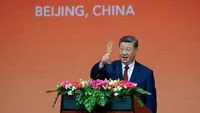
Jakarta, Indonesia – A confluence of diplomatic maneuvers, military actions, and economic warnings has underscored the escalating complexities of the US-Iran conflict in the Middle East. Recent developments, including a high-stakes meeting between the American and Chinese presidents, renewed diplomatic efforts between Israel and Lebanon, and a stark economic outlook from the International Monetary Fund (IMF), paint a picture of a region on the brink, with global ramifications. The latest updates, as of Friday, May 15, 2026, reveal a volatile landscape where major powers are increasingly drawn into a protracted standoff.
The Looming Economic Shadow: IMF’s Dire Global Growth Warning
The International Monetary Fund (IMF) has issued a sobering assessment of the global economic outlook, attributing a significant portion of its pessimism to the persistent disruptions emanating from the US-Iran conflict. The international financial institution warned that the world economy is steadily moving towards an "adverse scenario," characterized by decelerating growth and heightened inflationary pressures. This grim forecast reflects a deep concern over the conflict’s ripple effects on international trade, energy markets, and investor confidence, threatening to derail the fragile post-pandemic recovery.
Last month, the IMF’s World Economic Outlook report had projected global growth to slow to 3.1% in 2026 under a "reference scenario." However, the institution simultaneously cautioned about a "gloomier" prospect should the conflict intensify or prolong. In its latest update, the IMF elaborated on a "severe scenario" where the protracted nature of the US-Iran hostilities leads to persistently high oil prices, a destabilization of inflation expectations, and a significant tightening of global financial conditions. Under this more pessimistic scenario, the IMF now predicts global growth could further slump to a mere 2.5%.
This projected slowdown, a significant downgrade from earlier optimism, would represent the lowest growth rate outside of the 2008 financial crisis and the 2020 pandemic downturn. The IMF highlighted several transmission mechanisms for this economic distress. Foremost among them is the volatility in global energy markets. With the Strait of Hormuz, a critical chokepoint for global oil transit, under threat, crude oil prices have surged, impacting production costs, consumer spending, and the profitability of energy-intensive industries worldwide. Beyond oil, the conflict has disrupted shipping routes, increased insurance premiums for maritime transport, and introduced immense uncertainty, leading to deferred investments and supply chain bottlenecks across various sectors. Emerging markets and developing economies, often more susceptible to external shocks and commodity price fluctuations, are expected to bear the brunt of this economic downturn, potentially exacerbating poverty and social unrest in vulnerable regions.
China’s Diplomatic Gambit and the Hormuz Lifeline
A significant diplomatic breakthrough, or at least a notable gesture, emerged from the meeting between US President Donald Trump and Chinese President Xi Jinping in Beijing. President Trump announced that President Xi had offered China’s assistance in reopening the Strait of Hormuz, the vital maritime passage that has become a flashpoint in the US-Iran confrontation. Crucially, Trump also stated that Xi had explicitly committed not to provide military equipment to aid Iran in its conflict with the United States and Israel.
"He said he would not give military equipment… he said it strongly," Trump told Fox News’ "Hannity" program following their discussions. This statement, if upheld, marks a potentially pivotal shift in China’s role, signaling a desire to de-escalate rather than fuel the regional conflict, at least militarily. "He wants to see the Strait of Hormuz open, and said ‘if I can help in any way, I want to help,’" Trump added, underscoring China’s vested interest in the free flow of global trade and energy.
The Strait of Hormuz is arguably the world’s most critical oil transit chokepoint, with approximately 20-30% of the world’s petroleum liquids passing through it daily. Any disruption to this narrow waterway, strategically located between Iran and Oman, has immediate and profound implications for global energy prices and economic stability. Iran’s threats to blockade the strait in response to perceived aggressions have historically sent shockwaves through international markets. China, as the world’s largest crude oil importer and a major trading partner with Middle Eastern nations, including Iran, has an immense economic stake in maintaining the strait’s navigability.
Adding weight to Beijing’s apparent commitment, Iranian media reported on Thursday that its navy had permitted a group of Chinese vessels to traverse the Strait of Hormuz. "Following the decision of the Islamic Republic, a number of Chinese vessels have been allowed to pass through the Strait of Hormuz under Iran-managed transit protocols," Tasnim news agency stated. AFP further quoted an Iranian official explaining, "The journey, requested by Beijing, commenced on Wednesday night after an understanding on Iran’s management protocols was reached." This facilitated passage, coming amidst heightened tensions, could be seen as a tangible demonstration of China leveraging its diplomatic ties with Iran to ensure the passage of its own commercial interests, while also potentially signaling a de-escalation mechanism for other international shipping. This move could also be interpreted as China attempting to position itself as a neutral arbiter or a responsible stakeholder in regional stability, distinct from the direct military involvement of other powers.
Rekindled Tensions on the Israel-Lebanon Front: A Fragile Diplomacy
The intricate web of regional conflicts saw another layer of complexity with the announcement of renewed peace talks between Israel and Lebanon in Washington. These discussions aim to solidify a new ceasefire, even as Israel contends that previous agreements remain valid despite hundreds of casualties from recent Israeli strikes. The involvement of Hezbollah, a powerful Lebanese Shiite militant group and political party backed by Iran, directly links this front to the broader US-Iran conflict.
The history between Israel and Lebanon is fraught with conflict, including the devastating 2006 Lebanon War. Hezbollah, established with Iranian support in the 1980s, has evolved into a formidable military and political force, wielding significant influence within Lebanon and posing a direct security threat to Israel. Israel views Hezbollah as a proxy for Iran, using Lebanese territory to project Iranian influence and potentially launch attacks.
On the ground, military actions continued despite the diplomatic overtures. The Israeli military reported striking Hezbollah targets in southern Lebanon on Thursday. These strikes followed warnings issued to residents of several towns and villages in southern and eastern Lebanon to evacuate, indicating a significant pre-emptive or retaliatory operation. Simultaneously, Israel claimed a Hezbollah drone had crashed in Israeli territory, injuring several civilians. This exchange of hostilities underscores the immense challenges facing any peace negotiations. The fundamental disagreements over borders, the status of disputed territories, and the disarmament of Hezbollah remain deeply entrenched. Any ceasefire or peace agreement would necessitate a complex balancing act, addressing Israel’s security concerns while respecting Lebanon’s sovereignty and the political realities shaped by Hezbollah’s entrenched position. The resumption of talks, however fragile, represents an international effort to prevent the Lebanon front from erupting into a full-scale conflict that could further destabilize the entire region.
Geopolitical Realignments: Iran’s Stance on the UAE
The US-Iran conflict has also exposed deepening fissures within the Arab world, particularly highlighted by Iran’s strong condemnation of the United Arab Emirates (UAE). Iranian Foreign Minister Abbas Araghchi explicitly accused the UAE of playing an "active role" in what he termed the "US-Israel aggression" against Iran. This accusation comes after the UAE, a key Arab nation, officially normalized diplomatic relations with Israel through the Abraham Accords.
"The UAE is an active partner in this aggression, and there is no doubt about that," Araghchi stated while attending the BRICS Summit in India. He further elaborated, "It also became clear that they are participating in these attacks and may even be acting directly against us." These statements reflect Iran’s perception of a growing regional alliance aimed at isolating and confronting Tehran, an alliance that includes the United States, Israel, and several Gulf Arab states.
The Abraham Accords, brokered by the US in 2020, significantly reshaped the geopolitical landscape of the Middle East. By establishing diplomatic ties with Israel, the UAE and other signatory Arab nations signaled a shift in regional priorities, moving away from a unified stance on the Palestinian issue to prioritize shared concerns over Iran’s regional influence and nuclear program. From Iran’s perspective, this normalization constitutes a betrayal of Arab and Islamic solidarity and an alignment with its principal adversaries. The UAE’s geographic proximity to Iran, its strategic ports, and its economic ties make it a critical player in any regional confrontation. Iran’s accusations, while not detailing specific actions, suggest that Tehran views the UAE as actively facilitating intelligence sharing, military logistics, or even direct operational support for US and Israeli actions against Iranian interests. This escalating rhetoric between Iran and the UAE further inflames regional tensions, raising the specter of proxy conflicts or even direct confrontations in the Gulf, which could severely impact global oil supplies and maritime security.
Broader Implications and the Path Forward
The developments converging on May 15, 2026, underscore a moment of profound uncertainty for the Middle East and the global community. The US-Iran standoff, fueled by deep historical grievances, ideological differences, and strategic competition, continues to be the central axis around which regional and international dynamics revolve.
Economically, the IMF’s warnings serve as a stark reminder that geopolitical instability has tangible costs for every citizen, manifesting in higher prices, slower job growth, and increased financial insecurity. The world’s interconnectedness means that a conflict in one vital region can swiftly cascade into a global economic crisis.
Geopolitically, China’s reported intervention in the Strait of Hormuz, while seemingly aimed at de-escalation and protecting its own economic interests, also signifies a growing assertiveness of Beijing on the world stage. Its ability to negotiate transit protocols with Iran, even as the US and Iran remain locked in a confrontation, highlights a complex multipolar world order where traditional alliances are being tested and new spheres of influence are emerging. However, the true test of China’s commitment will be its sustained pressure on Iran to adhere to international norms and its willingness to act as a genuine mediator rather than merely safeguarding its own energy supply lines.
Regionally, the renewed Israel-Lebanon talks, juxtaposed with ongoing military actions, illustrate the immense difficulty of achieving lasting peace in a landscape dominated by entrenched actors and external influences. The accusations leveled by Iran against the UAE further complicate these dynamics, revealing a fragmented regional security architecture where alliances are shifting and mistrust runs deep. The Abraham Accords, once hailed as a pathway to regional stability, are now seen by Iran as an enabling factor for its adversaries.
The path forward remains precarious. Sustained diplomatic efforts, backed by credible international pressure, are crucial to prevent further military escalation. The de-escalation in the Strait of Hormuz is paramount for global economic stability. Ultimately, a comprehensive resolution to the US-Iran conflict, addressing both security concerns and economic sanctions, will be essential to unlock the Middle East’s potential and mitigate the growing risks to global peace and prosperity. Without such a resolution, the region and indeed the world, will continue to navigate a landscape fraught with economic peril and geopolitical instability.