Nasution Nanang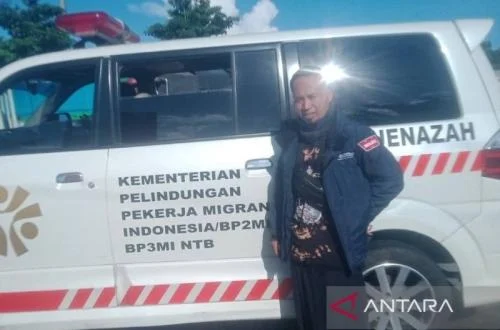
The West Nusa Tenggara (NTB) Provincial Regional House of Representatives (DPRD) and the Indonesian Migrant Worker Protection Service Agency (BP3MI) NTB have successfully coordinated the repatriation of the remains of Supardi, an Indonesian migrant worker (PMI) who passed away in Malaysia. This humanitarian effort ensured Supardi’s body was returned to his hometown in Alas Barat, Sumbawa Regency, facilitating a smooth transfer from Lombok International Airport (BIL) on Friday, May 22nd. The collaborative initiative underscores the vital role of government bodies and specialized agencies in providing crucial support to Indonesian citizens working abroad, particularly in times of profound family tragedy.
The intricate process of repatriating a deceased national from a foreign country often presents significant logistical, financial, and bureaucratic challenges for grieving families. In Supardi’s case, the family reached out directly to Fakhruddin Rob, a member of the NTB DPRD, seeking assistance. This direct appeal activated a rapid response mechanism involving multiple government sectors, demonstrating a commitment to alleviating the burden on the bereaved. Fakhruddin Rob promptly coordinated with the local government, the NTB Provincial General Hospital (RSUD Provinsi NTB), and BP3MI NTB to expedite the necessary procedures, ensuring the family incurred no costs for the repatriation services.
"I immediately coordinated with all sectors such as the Regional Government, Provincial Hospital, and BP3MI. In this instance, BP3MI served as the leading sector and responded swiftly to process the deceased’s data," Fakhruddin Rob explained, emphasizing the comprehensive and free nature of the assistance provided. This inter-agency collaboration is a testament to the established frameworks designed to protect and support Indonesian migrant workers and their families, even in the most difficult circumstances.
Kadir, the Head of BP3MI NTB, reiterated the agency’s commitment to facilitating such repatriations with speed and cross-sectoral coordination. "We facilitated the repatriation of Supardi’s remains and handed them over to the family," Kadir stated, highlighting the agency’s role in the critical final phase of the process. The family, represented by Lukman, expressed profound gratitude to both Fakhruddin Rob and BP3MI NTB, acknowledging that they were initially unaware of the procedures and channels available for such assistance. "We are very grateful to Mr. Fahrudin Rob and BP3MI," Lukman conveyed, underscoring the invaluable relief provided during their time of loss.
The Broader Context: Challenges Faced by Indonesian Migrant Workers
The case of Supardi is a poignant reminder of the inherent risks and challenges faced by millions of Indonesian migrant workers (PMI) who seek livelihoods abroad. Malaysia, due to its geographical proximity and economic opportunities, remains a primary destination for Indonesian workers. Estimates vary, but it is widely believed that millions of Indonesians reside and work in Malaysia, a significant portion of whom may be undocumented, exacerbating their vulnerability. The informal sector, particularly in plantations, construction, and domestic work, often employs these workers under conditions that can be precarious, lacking adequate legal protections, health benefits, and social security.
The death of a migrant worker overseas presents a unique set of complications. Families back home often struggle with limited information, language barriers, and a lack of financial resources to navigate the complex international legal and logistical processes required for repatriation. Causes of death among PMIs can range from workplace accidents, illness, and natural causes to more tragic circumstances, sometimes involving exploitation or violence. Each case requires meticulous handling, coordination between diplomatic missions, local authorities in the host country, and relevant agencies in Indonesia.
The Indonesian government, through various ministries and agencies, has intensified efforts to protect its migrant workers, both documented and undocumented. The enactment of Law No. 18 of 2017 concerning the Protection of Indonesian Migrant Workers significantly strengthened the legal framework, outlining the responsibilities of the state, private recruitment agencies, and migrant workers themselves. This law mandates comprehensive protection from pre-departure to post-arrival, including provisions for repatriation in cases of illness, injury, or death.
Chronology of Support and Repatriation
The successful repatriation of Supardi’s body on May 22nd was the culmination of a multi-stage process initiated by the family’s distress call. While the exact date of Supardi’s passing in Malaysia was not disclosed, the sequence of events leading to the family’s request for assistance likely began shortly after official notification of his death.
-
Family’s Initial Distress and Contact: Upon learning of Supardi’s death in Malaysia, his family in Alas Barat, Sumbawa, faced immediate hurdles regarding the logistics and costs of bringing his body home. Unfamiliar with the formal procedures, they directly contacted Fakhruddin Rob, a local DPRD member known for his accessibility and community engagement. This highlights the critical role of local representatives as a first point of contact for constituents facing extraordinary challenges.
-
Fakhruddin Rob’s Immediate Coordination: Upon receiving the family’s plea, Fakhruddin Rob swiftly initiated coordination efforts. His first step was to reach out to key governmental and health institutions in NTB:
- Local Government (Pemda): To ensure political will and administrative support for the process.
- RSUD Provinsi NTB: The provincial hospital’s involvement is crucial for any medical documentation, handling, and potential transfer logistics within the province, especially upon arrival at the airport.
- BP3MI NTB: Recognized as the "leading sector" for migrant worker protection and services, BP3MI’s immediate involvement was paramount.
-
BP3MI NTB as the Leading Sector: BP3MI NTB quickly took charge, leveraging its mandate and expertise in handling migrant worker affairs. Their responsibilities would have included:
- Data Verification: Confirming Supardi’s identity, his status as a PMI, and coordinating with Indonesian diplomatic missions in Malaysia (e.g., the Embassy in Kuala Lumpur or Consulate General in Johor Bahru, depending on Supardi’s location) to ascertain the details of his death and the preparation of his remains for transport.
- Document Processing: Ensuring all necessary permits, death certificates, and customs clearances from both Malaysian and Indonesian authorities were in order for international transfer.
- Logistical Arrangement: Collaborating with airlines and ground transportation services for the safe and dignified transfer of the coffin. This often involves specialized cargo handling for human remains.
-
Arrival at Lombok International Airport (BIL): On Friday, May 22nd, Supardi’s remains arrived at BIL. The seamless transfer from the airport to Sumbawa was a direct result of the meticulous planning and coordination between BP3MI, the provincial hospital, and local government units.
-
Handover to Family: Upon arrival and completion of all necessary checks, BP3MI NTB officially handed over Supardi’s body to his grieving family. This critical moment provided closure and allowed the family to proceed with traditional burial rites in their hometown.
The Role of Key Institutions in Migrant Worker Protection
The success of Supardi’s repatriation highlights the indispensable roles played by various institutions within Indonesia’s migrant worker protection ecosystem.
DPRD NTB: Advocating for Constituents
The involvement of Fakhruddin Rob from the NTB DPRD is a clear example of how local legislative bodies can directly serve as advocates for their constituents. While the primary legislative function of the DPRD is to formulate regional regulations and oversee the executive branch, individual members often act as community liaisons and problem-solvers. In cases like Supardi’s, a DPRD member can use their influence and network to cut through bureaucratic red tape and mobilize resources across different government agencies, ensuring that the needs of the most vulnerable are met. This direct engagement fosters trust between the public and their elected representatives.
BP3MI NTB: The Frontline of Protection
BP3MI, operating under the National Agency for the Protection of Indonesian Migrant Workers (BP2MI), is the central pillar for the protection and service of PMIs. Its mandate encompasses pre-departure orientation, placement assistance, monitoring conditions abroad, and post-arrival services, including critical support during crises such as illness, accidents, or death. BP3MI NTB, specifically, is responsible for workers originating from or returning to West Nusa Tenggara. Their functions include:
- Information and Counseling: Providing guidance to prospective PMIs and their families.
- Case Handling: Addressing complaints, disputes, and emergencies involving PMIs.
- Repatriation Services: Facilitating the return of PMIs who are sick, injured, or deceased, ensuring dignified handling and transfer.
- Coordination: Acting as the primary liaison between families, local governments, diplomatic missions, and other relevant agencies.
The agency’s prompt and effective response in Supardi’s case demonstrates its operational efficiency and critical importance in the protection framework. Without a dedicated agency like BP3MI, families would face immense difficulties in navigating the complex procedures of international repatriation.
Other Supporting Entities
- Local Government (Pemda): Provides crucial administrative support, local resources, and ensures coordination within the regency/province. Their involvement ensures a holistic approach to supporting the family.
- RSUD Provinsi NTB: The provincial hospital’s role is primarily logistical and medical, assisting with any necessary medical documentation, storage, or preparation of remains upon arrival, adhering to health and safety protocols.
- Indonesian Embassy/Consulate in Malaysia: Although not directly mentioned in the local report, these diplomatic missions are invariably the first point of contact and primary facilitators for any Indonesian national’s death abroad. They work with local Malaysian authorities to process death certificates, ensure legal compliance, and prepare remains for international transport. Their coordination with BP3MI in Indonesia is seamless and essential.
Implications and Broader Impact
The successful repatriation of Supardi’s remains carries several significant implications, both for the immediate family and for the broader framework of migrant worker protection.
Reinforcing Trust and Government Accountability
For Supardi’s family, the free and facilitated repatriation provided immense relief during a period of profound grief. It demonstrates that the government, through its various arms, is responsive to the needs of its citizens, especially those who contribute significantly to the national economy through remittances. Such cases reinforce public trust in government institutions and elected officials, proving that mechanisms for support are active and accessible.
Highlighting the Importance of Inter-Agency Coordination
The efficiency with which Fakhruddin Rob, BP3MI, and other entities collaborated underscores the critical value of inter-agency coordination. Complex issues like international repatriation cannot be solved by a single entity. It requires seamless communication, shared responsibility, and a common goal among legislative, executive, and specialized service agencies. This model of collaboration serves as a blueprint for addressing other multi-faceted challenges faced by PMIs.
A Call for Continued Vigilance and Support
While Supardi’s case ended with a successful repatriation, it also serves as a stark reminder of the continuous need for robust migrant worker protection policies. Many challenges persist, including:
- Undocumented Workers: A significant portion of PMIs in Malaysia are undocumented, making them highly vulnerable to exploitation and complicating official assistance in times of crisis.
- Access to Information: Many families, like Supardi’s, are unaware of the procedures and assistance available. Enhanced public awareness campaigns are crucial.
- Prevention: Proactive measures to ensure safe migration, including comprehensive pre-departure training, legal literacy, and robust monitoring of recruitment agencies, remain vital.
- Financial Strain: Even with free repatriation services, families often incur other costs related to their loved one’s death abroad. Ongoing financial support mechanisms could be further strengthened.
Policy Recommendations and Future Outlook
Building on successes like Supardi’s repatriation, policymakers can consider several enhancements:
- Strengthening Diplomatic Outreach: Ensuring Indonesian diplomatic missions abroad are adequately resourced and trained to handle complex migrant worker cases, including death and repatriation.
- Digitalization of Services: Developing more accessible digital platforms for families to report cases, track progress, and access information, reducing geographical barriers.
- Bilateral Agreements: Continuing to strengthen bilateral agreements with host countries like Malaysia to ensure better protection, working conditions, and dignified treatment for PMIs, regardless of their documentation status.
- Community Engagement: Empowering local community leaders and organizations to act as additional points of contact and support for migrant worker families, working in conjunction with official channels.
The repatriation of Supardi’s remains is more than just an administrative success; it is a humanitarian triumph that underscores the enduring commitment of Indonesian government institutions to their citizens. It highlights the often-unseen work involved in protecting millions of Indonesians who contribute to the nation’s economy from afar, ensuring that even in death, they are returned with dignity to their homeland and families. The gratitude expressed by Supardi’s family is a powerful testament to the impact of dedicated public service and collaborative governance in action.