Nasution Nanang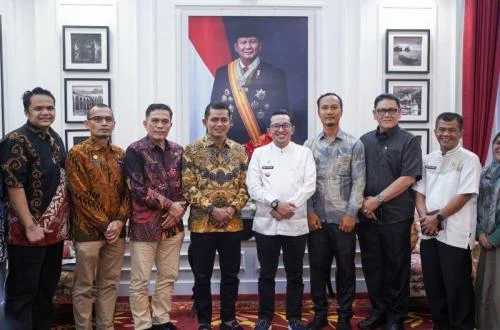
SOLOK, West Sumatra – In a significant move aimed at strengthening regional stability and fostering sustainable development, the governments of Solok Regency and Tanah Datar Regency in West Sumatra have formally agreed to enhance their synergy, particularly concerning the management of their shared border areas. This accord, solidified during a high-level meeting on Saturday at the Solok Regent’s Official Residence Guest House, underscores a mutual commitment to ensuring public security and order, while simultaneously accelerating development initiatives beneficial to both administrations and their respective populations. The meeting brought together key regional leaders, including Solok Regent Jon Firman Pandu and Tanah Datar Regent Eka Putra, signaling a proactive approach to addressing long-standing inter-regional issues through dialogue and collaboration.
Regent Jon Firman Pandu emphasized the crucial role of local government in mediating potential community frictions. "The regional government is present to find the best solutions to prevent friction in society and to maintain the familial relationship that has been established," he stated, highlighting the deep-rooted historical, social, and cultural ties binding the two regencies. These intrinsic connections, spanning generations, necessitate a shared responsibility in upholding unity, tranquility, and the overall welfare of their citizens. The focus remains on pragmatic solutions that prioritize community harmony over administrative contention, ensuring that the progress of one region does not inadvertently impede the other.
Historical Context and Enduring Ties
The relationship between Solok and Tanah Datar is deeply intertwined with the rich tapestry of Minangkabau culture and history. Both regencies are integral parts of the Minangkabau heartland, sharing common adat (customary law), language dialects, and a matrilineal social system that defines much of their societal structure. Historically, the territories now comprising Solok and Tanah Datar were part of the vast Minangkabau Kingdom, with Pagaruyung in Tanah Datar often considered its historical center. This shared heritage means that many families have relatives across the administrative boundaries, making any border dispute not merely a geographical or legal matter, but a deeply personal and communal one.
Over centuries, these regions have evolved, with administrative divisions being drawn and redrawn under various colonial and post-colonial administrations. Despite these demarcations, the flow of people, goods, and cultural practices has largely transcended these lines, fostering a sense of shared identity. This historical interconnectedness forms the bedrock of the current cooperative efforts, providing a powerful incentive for leaders to seek amicable solutions rather than allowing disputes to fester. The emphasis on "kekeluargaan" (familial relationship) is not merely rhetorical; it reflects a tangible reality where communities on both sides of the border often share common ancestry, traditions, and economic dependencies.
Addressing the Nexus of Border Demarcation
A primary catalyst for this strengthened synergy is the ongoing public attention surrounding border demarcation. Jon Firman Pandu stressed that the resolution of these sensitive issues must be achieved through comprehensive communication, meticulous coordination, and inclusive musyawarah (deliberation). He underscored the imperative of prioritizing community interests throughout this process and respecting the ongoing procedures managed by the central government. Border disputes, common across Indonesia, often arise from ambiguities in historical maps, conflicting local claims, and the practical challenges of delineating boundaries in complex terrains. These disputes can impact land ownership, resource access, and even local governance.
Echoing this sentiment, Regent Eka Putra expressed his appreciation for the warm reception from the Solok Regency administration, characterizing the visit as a vital step in reinforcing inter-regional silaturahmi (fellowship) and coordination. He urged all stakeholders to maintain a conducive environment and to entrust the final resolution of border issues to the central government, specifically through the Ministry of Home Affairs. "We hope that all parties can exercise restraint and surrender the resolution process to the central government. The most important thing is to maintain unity and tranquility among the communities in both regions," Eka stated, highlighting the potential for social unrest if these matters are not handled with utmost care and transparency.
The Role of the Central Government in Boundary Resolution
The Indonesian legal framework, particularly Law No. 23/2014 concerning Regional Government, assigns the central government, through the Ministry of Home Affairs, the ultimate authority and responsibility for resolving inter-regional boundary disputes. This process typically involves a multi-stage approach:
- Identification and Verification: Teams from the Ministry of Home Affairs, often involving surveyors and legal experts, review historical documents, colonial maps, local customary claims, and conduct ground surveys using modern geospatial technology.
- Mediation and Deliberation: The Ministry facilitates meetings between the disputing regional governments, often involving provincial authorities, to present findings and seek consensus.
- Recommendations and Legal Decree: Based on the evidence and deliberations, the Ministry issues recommendations, which are then formalized through a Ministerial Decree or even a Presidential Regulation, establishing definitive boundary lines.
- Physical Demarcation: Once legally established, physical markers are installed on the ground.
The commitment from both Solok and Tanah Datar to defer to the central government’s process is critical. It prevents localized disputes from escalating into broader conflicts and ensures that resolutions are based on a consistent national framework, rather than purely local political pressures. This approach also helps to depoliticize what can often become highly charged issues, allowing technical experts and legal provisions to guide the outcome.
Enhancing Regional Security: The TNI Battalion Project
Beyond border issues, the two regents also voiced strong support for the planned establishment of a new Indonesian National Armed Forces (TNI) battalion by the Kodam I/Bukit Barisan (Bukit Barisan Regional Military Command I). Jon Firman Pandu articulated his belief that such a development would yield significant positive impacts on regional security and economic growth. A military presence often deters criminal activity, enhances disaster response capabilities, and provides a sense of stability. The presence of a battalion also brings with it infrastructure development, local employment opportunities (e.g., construction, logistics, services), and increased demand for local goods and services, contributing to the regional economy.
Eka Putra further affirmed this support, emphasizing that while backing the program, local authorities would remain mindful of potential impacts on social conditions. He stressed the importance of continuous communication to avert misunderstandings on the ground, particularly concerning land acquisition, community resettlement (if any), and the integration of military personnel into local society. The Kodam I/Bukit Barisan, responsible for the security of Sumatra’s western regions, plays a vital role in national defense, territorial integrity, and civil-military cooperation. The establishment of a new battalion would likely be strategically determined based on a comprehensive security assessment of the region, considering factors such as potential threats, disaster-prone areas, and logistical needs. It also aligns with the TNI’s broader strategy of strengthening its territorial presence to support national development and resilience.
Economic Synergy: A Focus on Agriculture
The meeting also delved into expansive opportunities for collaboration across various development sectors, with a particular emphasis on agriculture. This sector is recognized by both administrations as holding immense potential for elevating community welfare. Both Solok and Tanah Datar possess rich agricultural landscapes, forming the backbone of their local economies.
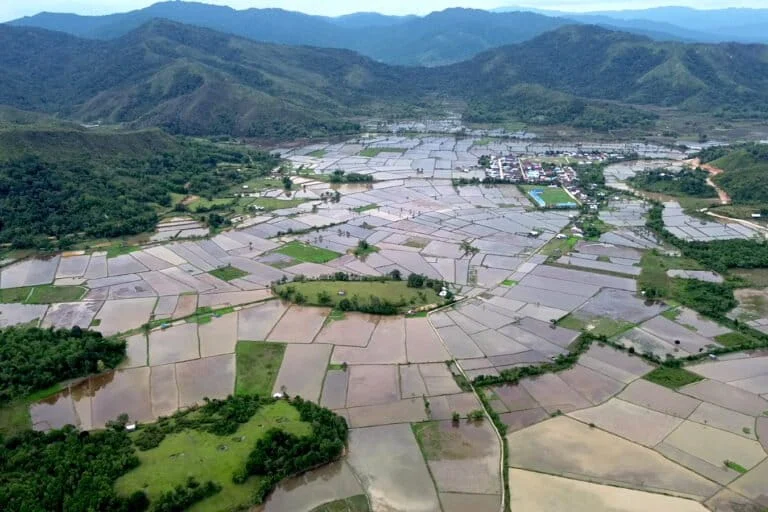
Solok Regency is renowned as one of West Sumatra’s primary rice-producing regions, particularly known for its premium Solok Rice (Beras Solok). Beyond rice, the regency cultivates diverse crops including coffee, tea (especially in higher altitudes like Alahan Panjang), various vegetables, and fruits. Its fertile volcanic soils and consistent rainfall create ideal conditions for high-yield farming.
Tanah Datar Regency, often called the "Granary of West Sumatra," also boasts significant rice production, alongside rubber, palm oil, and various horticultural products. Its mountainous terrain supports diverse farming practices, and its strategic location allows for efficient distribution of agricultural products to other parts of the province.
The regents’ agreement to strengthen cooperation in agriculture could manifest in several ways:
- Integrated Agricultural Planning: Joint planning for crop rotation, pest management, and water resource utilization across shared river basins or contiguous farming areas.
- Market Access and Distribution: Developing shared logistics hubs, improving road infrastructure connecting farming communities to markets, and coordinating market information to ensure fair prices for farmers.
- Technology Transfer and Training: Sharing best practices in modern farming techniques, agricultural technology, and post-harvest processing to increase productivity and add value to raw produce.
- Value-Added Processing: Collaborating on establishing processing facilities for agricultural products, turning raw materials into higher-value goods (e.g., packaged rice, processed coffee, fruit preserves) for broader market reach.
- Food Security: Joint initiatives to ensure food self-sufficiency and resilience against climate change or market fluctuations, benefiting a larger population base.
- Agro-tourism: Developing combined agro-tourism packages that highlight the unique agricultural heritage and natural beauty of both regions, attracting more visitors and diversifying local economies.
By pooling resources and expertise, both regencies can achieve economies of scale, reduce duplication of efforts, and create a more robust and resilient agricultural sector that directly translates into improved livelihoods for thousands of farmers and their families. This collaborative approach recognizes that agricultural challenges and opportunities often transcend administrative boundaries, requiring a holistic regional strategy.
Broader Implications for Regional Development and Stability
The commitment from Solok and Tanah Datar to foster deeper communication and coordination carries significant implications for regional development and overall stability in West Sumatra. Such inter-regional synergy sets a positive precedent for other regencies facing similar challenges. It demonstrates that cooperative governance can effectively navigate complex issues like border disputes, resource allocation, and infrastructure development.
- Improved Public Services: Coordinated planning can lead to better provision of public services, such as shared waste management facilities, integrated public transport routes, and harmonized educational and health services for communities residing near the border.
- Sustainable Resource Management: Many natural resources, like rivers and forests, span multiple administrative units. Collaborative efforts ensure more sustainable and equitable management of these shared resources, preventing conflicts over water rights or environmental degradation.
- Investment Attraction: A stable and cooperatively governed region is more attractive to investors, both domestic and foreign. The assurance of a coordinated regulatory environment and reduced inter-regional friction makes business operations more predictable and efficient.
- Community Empowerment: When local governments work together effectively, it empowers communities by providing clearer channels for participation and ensuring that their concerns are addressed in a broader regional context.
- Provincial Cohesion: Strong bilateral cooperation between regencies contributes to the overall cohesion and development goals of West Sumatra Province, aligning local efforts with broader provincial strategies.
This meeting is more than just a ceremonial handshake; it represents a strategic pivot towards integrated regional governance. It underscores the understanding that in a complex and interconnected world, isolated development is often inefficient and prone to conflict. By committing to continuous dialogue, problem-solving, and mutually beneficial development initiatives, the governments of Solok and Tanah Datar are laying a robust foundation for enduring peace, prosperity, and progress for their respective populations and for West Sumatra as a whole. The success of this synergy will serve as a model for inter-regional cooperation across the Indonesian archipelago, demonstrating the power of collaborative leadership in building a more harmonious and developed nation.