Nasution Nanang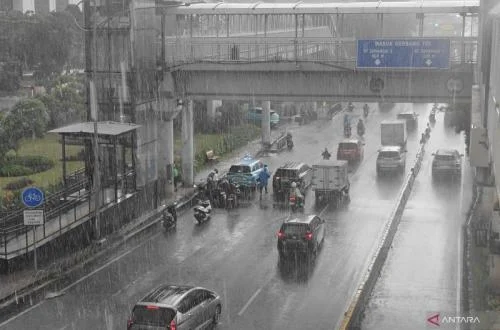
JAKARTA – The Indonesian Agency for Meteorology, Climatology, and Geophysics (BMKG) has issued a comprehensive weather forecast for Saturday, indicating that most regions across the archipelago will experience conditions ranging from cloudy skies to light, moderate, and even heavy rainfall, often accompanied by lightning. This immediate forecast comes as the nation navigates its dynamic weather patterns, underscored by the BMKG’s continuous efforts to provide critical information for public safety and national planning. The agency’s advisories are particularly crucial given Indonesia’s geographical vulnerability to extreme weather events, which can significantly impact daily life, infrastructure, and key economic sectors.
The BMKG, a vital national institution responsible for meteorological, climatological, and geophysical observations and services, regularly disseminates these forecasts to ensure public awareness and preparedness. Its work is foundational to disaster risk reduction efforts, providing the earliest possible warnings for potential floods, landslides, and other weather-related hazards that frequently challenge the archipelagic nation. The forecast for Saturday paints a picture of diverse atmospheric conditions, necessitating vigilance from citizens across its vast expanse.
National Weather Outlook: A Region-by-Region Breakdown
For the western part of Indonesia, the BMKG predicts predominantly cloudy weather for several major cities. This includes Banda Aceh, Pekanbaru, Jambi, and the capital city, Jakarta. While cloudy conditions might seem benign, they often precede or accompany sudden, localized showers, particularly in tropical climates where atmospheric instability can develop rapidly. Residents in these areas are advised to remain aware of potential shifts, even if immediate heavy rain is not forecasted.
A significant number of cities across Sumatra, Java, and Kalimantan are expected to experience light to moderate rainfall. This extensive list includes Medan, Padang, Tanjung Pinang, Pangkal Pinang, Palembang, Serang, Bandung, Semarang, Yogyakarta, Surabaya, Pontianak, Tanjung Selor, Samarinda, and Palangka Raya. Such rainfall, while not typically severe, can still lead to localized ponding, slippery roads, and minor traffic disruptions. For agricultural regions, moderate rain can be beneficial, but prolonged periods or increased intensity could pose risks to crops and local infrastructure.
Of greater concern are the forecasts for Bengkulu, Bandar Lampung, and Banjarmasin, which are predicted to face heavy rainfall accompanied by lightning. These severe weather conditions carry elevated risks, including flash floods, riverine flooding, and landslides, especially in areas with susceptible topography or inadequate drainage systems. Lightning strikes also pose a direct threat to life and property, necessitating extreme caution and avoidance of open spaces or tall structures during storms.
Central and Eastern Archipelago: Varied Conditions
Moving eastward, the forecast indicates light to moderate rain for Denpasar, Mataram, Makassar, Kendari, Mamuju, Palu, Gorontalo, and Ternate. These regions, popular for tourism and significant for local economies, will need to account for these weather patterns. Such conditions can affect outdoor activities, maritime transport, and local commerce.
In stark contrast, Kupang is expected to enjoy partly cloudy skies, suggesting more stable and pleasant weather compared to other parts of the country. However, Manado, another key city in the eastern region, is bracing for heavy rain accompanied by lightning, mirroring the severe weather warnings issued for parts of Sumatra and Kalimantan. This highlights the localized and often unpredictable nature of weather systems across Indonesia’s vast geography.
Further east, cities like Ambon, Sorong, Manokwari, Nabire, and Jayawijaya are also projected to experience light to moderate rain. Meanwhile, Jayapura and Merauke are anticipated to have generally cloudy conditions, similar to parts of Western Indonesia. These varied forecasts across the eastern archipelago underscore the immense challenge of comprehensive weather prediction in a region characterized by numerous islands, diverse topographies, and complex atmospheric interactions.
BMKG’s Urgent Public Advisory
In light of these varied and often challenging weather predictions, the BMKG has strongly urged the public to exercise caution during outdoor activities. This is not merely a standard warning but a critical call to action, emphasizing the potential for sudden changes in weather conditions and their associated hazards. The agency recommends that individuals stay informed by regularly monitoring the latest weather updates through the official Info BMKG application or its accredited social media channels, @infobmkg.
Beyond general caution, the advisory implicitly extends to specific preparedness measures. Residents in areas prone to heavy rainfall should take proactive steps, such as clearing drainage systems, securing loose objects that could become airborne in strong winds, and identifying safe evacuation routes if living in flood or landslide-prone zones. Local disaster management agencies (Badan Penanggulangan Bencana Daerah – BPBD) across affected provinces are expected to be on high alert, coordinating with communities to mitigate potential risks and respond swiftly to emergencies. The potential for traffic disruptions, localized power outages, and impacts on public services are also considerations that authorities and the public should be prepared for.
The Intricate Science of Indonesian Climate Prediction
The complexity of Saturday’s forecast serves as a timely reminder of the profound challenges inherent in predicting weather and climate patterns across Indonesia. BMKG officials frequently emphasize that the country’s unique geographical position and the interplay of several large-scale oceanic phenomena make its climate modeling exceptionally intricate. Deputy for Climatology at BMKG, Ardhasena Sopaheluwakan, highlighted these factors, providing crucial insights into the science underpinning their forecasts.
Sopaheluwakan elaborated on three primary oceanic drivers that significantly influence Indonesia’s weather and climate, alongside the critical role of local geography. Understanding these interactions is paramount for developing accurate and timely predictions, which in turn inform national policy, disaster preparedness, and sectoral planning.
Unpacking the Oceanic Drivers: SST, IOD, and ENSO
-
Sea Surface Temperature (SST) Anomalies:
The condition of sea surface temperatures in Indonesian waters is a fundamental factor, often influencing weather patterns one to two months in advance. Warmer SSTs can increase evaporation, leading to higher atmospheric moisture content and thus a greater likelihood of rainfall. Conversely, cooler SSTs can suppress convection and reduce precipitation. These localized SST variations interact with broader atmospheric circulation patterns, dictating the intensity and distribution of rainfall across the archipelago. BMKG closely monitors these temperatures using a network of buoys, satellites, and oceanographic observations, translating this data into short-term climate outlooks. -
The Indian Ocean Dipole (IOD) Phenomenon:
The Indian Ocean Dipole (IOD) refers to an irregular oscillation of sea surface temperatures in the Indian Ocean, where the western part of the ocean becomes alternately warmer and then colder than the eastern part. A positive IOD typically sees warmer waters in the western Indian Ocean and cooler waters in the east, which can lead to reduced rainfall in Indonesia, particularly in its western regions, by altering atmospheric circulation and moisture transport. Conversely, a negative IOD, characterized by warmer eastern Indian Ocean waters, often results in increased rainfall across Indonesia. The IOD operates on an inter-annual scale and significantly influences the onset and intensity of Indonesia’s monsoon seasons, especially impacting Sumatra and Java. Its influence can often be distinct from, or interact with, the Pacific Ocean’s ENSO phenomenon. -
El Niño-Southern Oscillation (ENSO): El Niño and La Niña:
The El Niño-Southern Oscillation (ENSO) is perhaps the most well-known and impactful global climate phenomenon, originating in the Pacific Ocean. ENSO has two main phases: El Niño and La Niña. El Niño is characterized by warmer-than-average sea surface temperatures in the central and eastern equatorial Pacific, which typically leads to suppressed rainfall and drier conditions across much of Indonesia, often resulting in prolonged droughts and increased risk of forest fires. La Niña, on the other hand, involves cooler-than-average SSTs in the same region, generally leading to increased rainfall and wetter conditions across Indonesia. These inter-annual climate drivers have profound implications for Indonesia’s agricultural sector, water resources, and disaster risk profile, making their accurate prediction a critical task for BMKG.
The Crucial Role of Indonesia’s Unique Geography
Beyond these large-scale oceanic forces, Indonesia’s distinct geographical characteristics further amplify the complexity of climate prediction. As an archipelagic nation comprising over 17,000 islands, its climate is heavily influenced by local topography, creating numerous microclimates and localized weather phenomena that are difficult to model.
-
Archipelagic Complexity and Microclimates:
The sheer number of islands, each with varying sizes, elevations, and coastal orientations, contributes to highly localized weather patterns. Sea breezes and land breezes interact with topography, generating convective systems that can lead to sudden, isolated downpours. This fragmentation means that a forecast for a large region might not accurately reflect conditions in a specific valley or on a particular coast, necessitating high-resolution modeling and dense observational networks. -
Orographic Effects: The Case of Bukit Barisan:
Sopaheluwakan specifically highlighted the impact of mountain ranges, citing the Bukit Barisan mountain range in Sumatra as a prime example. These mountains create significant orographic effects, where moist air is forced upwards, cools, and condenses, leading to heavy rainfall on the windward side. Conversely, the leeward side experiences a rain shadow effect, resulting in much drier conditions. For instance, the western coast of Sumatra, facing the Indian Ocean, often receives significantly more rainfall due to the orographic lift provided by the Bukit Barisan, while areas on its eastern side, such as Riau and Jambi, exhibit contrasting rainfall characteristics. This localized phenomenon is critical for understanding regional climate variability and its impact on agriculture and water management.
Challenges in Forecasting and Technological Advancements
The inherent complexity of Indonesia’s climate demands continuous investment in advanced meteorological infrastructure and scientific research. BMKG faces the challenge of integrating vast amounts of data from diverse sources – satellite imagery, radar networks, ground-based weather stations, and oceanographic sensors – into sophisticated numerical weather prediction (NWP) models. These models require immense computational power and constant refinement to improve accuracy at both national and local scales.
BMKG actively collaborates with international meteorological organizations, such as the World Meteorological Organization (WMO), and engages in regional scientific partnerships to enhance its forecasting capabilities. This includes sharing data, expertise, and best practices in climate modeling and early warning systems. The agency is also continually upgrading its technology, including deploying more advanced Doppler radars and high-resolution satellite receivers, to better track severe weather events and provide more precise localized forecasts. These technological advancements are crucial for mitigating the impact of increasingly extreme weather events, potentially exacerbated by global climate change.
Broader Implications: Socio-Economic and Disaster Preparedness
The accuracy and dissemination of BMKG’s forecasts have far-reaching implications across various sectors in Indonesia.
-
Impact on Agriculture and Food Security:
Indonesia’s agrarian economy, heavily reliant on rice, palm oil, and other staple crops, is highly vulnerable to weather variability. Accurate rainfall predictions are vital for planting schedules, irrigation management, and anticipating potential crop failures or bumper harvests. Droughts caused by El Niño or excessive rains from La Niña can devastate agricultural output, impacting national food security and farmer livelihoods. -
Infrastructure and Transportation Resilience:
Heavy rainfall and associated flooding or landslides can severely disrupt transportation networks, including roads, railways, and air and sea travel. This impacts supply chains, economic activity, and emergency response efforts. Infrastructure planning, from road construction to urban drainage systems, increasingly incorporates climate projections to build greater resilience against extreme weather. -
Public Health Concerns:
During periods of heavy rain and flooding, there is an increased risk of water-borne diseases such as cholera and dengue fever. BMKG’s forecasts, therefore, play a role in public health advisories, enabling health authorities to prepare for potential outbreaks and implement preventive measures. -
Role of National and Local Disaster Management Agencies:
The National Disaster Management Agency (BNPB) and its local counterparts (BPBD) rely heavily on BMKG’s warnings to activate emergency protocols, mobilize resources, and coordinate rescue and relief operations. Timely forecasts allow for proactive measures, such as pre-emptive evacuations, deployment of emergency supplies, and public awareness campaigns, significantly reducing casualties and damages.
Adapting to a Changing Climate: Future Outlook
Looking ahead, the context of global climate change adds another layer of complexity to Indonesia’s weather patterns. Scientists predict that climate change may lead to more frequent and intense extreme weather events, including heavier rainfall, prolonged droughts, and more powerful storms. This makes the BMKG’s role even more critical in providing accurate, long-term climate projections and adapting its forecasting methodologies to anticipate these evolving risks. The nation’s ability to build resilience, adapt to new climate realities, and protect its vulnerable populations will increasingly depend on robust scientific understanding and effective early warning systems.
Conclusion
As Indonesia faces another day of dynamic weather, with widespread rain and localized severe storms predicted, the importance of the BMKG’s work is undeniable. Its detailed forecasts, coupled with the agency’s continuous efforts to unravel the intricate science of Indonesia’s climate, provide invaluable guidance for public safety and national planning. From the immediate need for caution during Saturday’s rain to the long-term imperative of understanding oceanic drivers and geographical influences, the nation’s well-being is intrinsically linked to its capacity to monitor, predict, and adapt to the forces of nature. Citizens are urged to heed the advisories, stay informed through official channels, and contribute to a collective culture of preparedness and resilience.