Nasution Nanang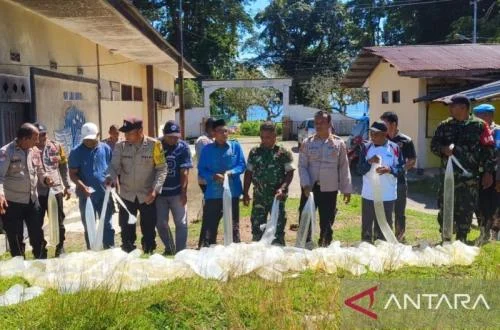
AMBON, REPUBLIKA.CO.ID – In a significant crackdown on illicit alcohol, the Salahutu Sector Police (Polsek Salahutu) in Central Maluku Regency, Maluku, successfully confiscated and destroyed 500 liters of sopi, a potent traditional alcoholic beverage, on Friday, May 22, 2020. This decisive action was undertaken as part of an intensified campaign aimed at mitigating security disturbances and curbing criminal activities prevalent in the region, which are frequently linked to the consumption and distribution of unregulated spirits. The destruction ceremony, held at the Salahutu Police Headquarters, underscored the authorities’ unwavering commitment to upholding public order and safeguarding community well-being.
The operation, spearheaded by Salahutu Police Chief AKP Aris, targeted various strategic entry points into Salahutu District, including critical transportation hubs such as the Hunimua Liang Port and several speedboat bases. These locations are often utilized as conduits for the clandestine distribution of illegal sopi into the wider Maluku Tengah area. Additionally, police intelligence led to raids on known illegal liquor selling points within the district, where substantial quantities of the illicit beverage were seized. The comprehensive nature of the raids reflects a proactive strategy to disrupt the supply chain of illegal alcohol from its source of entry to its points of sale.
The Menace of Unregulated Sopi: A Catalyst for Crime and Public Health Risks
AKP Aris reiterated the police’s firm stance, emphasizing that the proliferation of illegal alcoholic beverages, particularly sopi, serves as a primary instigator for various criminal acts and public security breaches across Ambon and Central Maluku. These incidents range from petty brawls and public disturbances to more severe forms of violence, including assaults and domestic disputes. The unregulated nature of sopi production and distribution poses significant risks, as it bypasses crucial health and food safety standards, lacks official permits, and operates outside formal distribution channels. This lack of oversight not only contributes to societal disorder but also presents serious public health hazards to consumers.
Sopi, a traditional spirit deeply rooted in Maluku’s cultural fabric, is typically distilled from the sap of palm trees (such as arenga or lontar palm). While traditionally consumed in certain cultural ceremonies or social gatherings, its commercial production and widespread illicit sale have transformed it into a contentious issue. Unregulated distillation often involves crude methods and equipment, leading to inconsistencies in alcohol content and, more alarmingly, the potential presence of toxic by-products like methanol. Methanol poisoning can cause severe health complications, including blindness, organ damage, and even death, making the consumption of unverified sopi a perilous gamble for unsuspecting individuals. Public health experts have consistently warned about these dangers, advocating for stringent control over its production and sale.
The economic landscape also plays a role in the prevalence of illegal sopi. For many in remote areas, producing and selling sopi offers a readily accessible, albeit illicit, source of income, often driven by economic hardship and limited legal employment opportunities. Its low production cost and high demand make it a lucrative trade for underground networks, further complicating enforcement efforts. Consumers, in turn, are drawn to its affordability compared to legally produced and taxed alcoholic beverages, inadvertently fueling the illegal market.
The Operation: From Intelligence Gathering to Public Destruction
The journey from initial intelligence gathering to the public destruction of the confiscated sopi involved several meticulous steps. Prior to the May 22nd operation, Polsek Salahutu dedicated considerable resources to intelligence gathering, identifying key transit routes and distribution networks utilized by illegal sopi traders. This included monitoring suspicious movements at ferry terminals, small port facilities, and remote coastal areas frequently used by speedboats to transport goods, including illicit cargo, between islands. Local informants and community feedback were crucial in pinpointing specific locations for raids.
On the day of the operation, police teams were strategically deployed to Hunimua Liang Port, which serves as a vital connection point between Ambon Island and Seram Island, and various speedboat docking areas. These locations are notorious for being entry points for goods smuggled from other parts of Maluku or produced in remote villages on Seram. The raids were swift and coordinated, resulting in the confiscation of numerous containers of sopi, ranging from large jerry cans to smaller plastic bottles, all intended for illegal distribution and sale. The accumulated volume of 500 liters represented a significant haul, indicative of the scale of the illicit trade.
The public destruction event itself served as a powerful visual deterrent and a transparent demonstration of law enforcement’s commitment. Held at the courtyard of the Salahutu Sector Police Headquarters in Tulehu Village, the ceremony was attended by various stakeholders, including elements of the Muspika (local leadership forum comprising district head, police chief, and military commander) of Salahutu District. This collective presence underscored the multi-agency approach to tackling the issue. The method of destruction—directly pouring the sopi from its containers onto the soil—was chosen for its simplicity, effectiveness, and symbolic impact, ensuring the complete neutralization of the seized contraband. The strong pungent odor of the alcohol permeating the air during the destruction was a stark reminder of the large quantity involved.
Broader Context: Alcohol Regulation in Indonesia and Maluku
Indonesia, as a predominantly Muslim nation, maintains a complex and often stringent regulatory framework for alcohol. While not fully prohibitionist, the production, distribution, and sale of alcoholic beverages are subject to strict laws enforced by the National Agency of Drug and Food Control (BPOM) and local government regulations (Perda). Legal alcohol producers must adhere to rigorous quality control standards, obtain various licenses, and comply with tax obligations. Imports are also heavily regulated and taxed. However, traditional beverages like sopi, tuak, or arak often exist in a legal grey area, with their production being deeply ingrained in local cultures but lacking official permits for commercial sale, especially across administrative boundaries.
In archipelagic provinces like Maluku, enforcing these regulations presents unique challenges. The vast maritime territory, numerous small islands, and often remote coastal communities make it difficult for authorities to monitor and control every potential point of entry or production site. The informal economy thrives in such environments, and illicit sopi production often occurs in secluded areas, away from the watchful eyes of law enforcement. This geographical complexity necessitates continuous, adaptive strategies from police and other regulatory bodies.
Moreover, the cultural acceptance of sopi in certain Malukan communities adds another layer of complexity. While authorities focus on the dangers of unregulated commercial distribution and the associated social ills, some argue for a nuanced approach that differentiates between traditional, controlled consumption and widespread illicit trade. However, the current legal framework largely prohibits the commercialization of such beverages without proper licensing and health standards, which sopi producers typically do not possess.
The Ongoing Battle Against Illicit Liquor: A Regional Perspective
The fight against illegal alcohol is not unique to Central Maluku. Across Indonesia, police forces regularly conduct raids and destroy illicit liquor, which is consistently identified as a significant contributor to crime and public health crises. Provinces like Bali, East Java, and even parts of Sumatra have frequently reported incidents of methanol poisoning from homemade arak or tuak, leading to fatalities. These events highlight the critical importance of police efforts in curbing the production and distribution of such dangerous substances.
In Maluku itself, such operations are a recurring necessity. Local media frequently report on similar seizures and destructions, indicating an ongoing cat-and-mouse game between law enforcement and illicit traders. The cyclical nature of these efforts underscores the persistent demand for cheap alcohol and the economic incentives for its production. Authorities often struggle to completely eradicate the trade, requiring a sustained, multi-pronged approach that goes beyond mere enforcement.
Data from the Indonesian National Police (Polri) and the Ministry of Health consistently link alcohol abuse to various social problems, including domestic violence, road accidents, public brawls, and even more serious crimes. While specific statistics for alcohol-related crime directly attributable to sopi in Central Maluku might be challenging to isolate, the general trend strongly supports AKP Aris’s assertion regarding its role as a crime catalyst. This broader context reinforces the strategic importance of operations like the one conducted by Polsek Salahutu.
Official Responses, Community Engagement, and Long-Term Implications
Following the destruction, AKP Aris firmly stated that the Salahutu Sector Police would continue to intensify its raids on illegal liquor distribution, particularly focusing on the key entry points into Salahutu District. This commitment signals an ongoing proactive stance against illicit alcohol, recognizing that sustained pressure is necessary to disrupt entrenched criminal networks.
Beyond police action, effective suppression of illegal sopi requires a concerted effort from various stakeholders. Local government officials, including the District Head (Camat) and representatives from the Public Health Department, often express their support for such law enforcement initiatives. They emphasize the importance of public awareness campaigns to educate communities about the health risks of unregulated alcohol and the legal consequences of involvement in its trade. These campaigns might involve distributing brochures, holding community meetings, and utilizing local media channels to disseminate information.
Community leaders and religious figures also play a vital role. In many parts of Maluku, traditional and religious norms frown upon excessive alcohol consumption, and these leaders can significantly influence public behavior by promoting responsible conduct and discouraging participation in illegal activities. Their sermons and community dialogues can reinforce the message of public safety and adherence to legal norms. Public participation, including the anonymous reporting of illegal sopi production and distribution sites, is crucial for assisting law enforcement in their ongoing efforts. A community-led intelligence network can provide invaluable insights that aid in more targeted and effective raids.
The long-term implications of these efforts extend beyond immediate crime reduction. From a public health perspective, reducing the availability of unregulated sopi can lead to a decrease in alcohol-related illnesses and fatalities, thereby easing the burden on local healthcare facilities. Societally, a reduction in alcohol-fueled violence can foster safer communities, improve family well-being, and create a more conducive environment for economic development and social harmony.
However, a sustainable solution also necessitates addressing the underlying socio-economic factors that drive the illegal sopi trade. This could involve exploring alternative livelihood programs for individuals currently dependent on sopi production, promoting legal and regulated production of traditional beverages under strict health guidelines, and providing better access to education and employment opportunities. While the immediate focus remains on enforcement and public safety, a comprehensive approach integrating economic development, public health initiatives, and community empowerment will be essential for achieving lasting change in Maluku Tengah and similar regions across Indonesia. The destruction of 500 liters of sopi by Polsek Salahutu stands as a firm declaration of the authorities’ resolve, yet it is also a stark reminder of the complex, multifaceted challenge that remains.