Nasution Nanang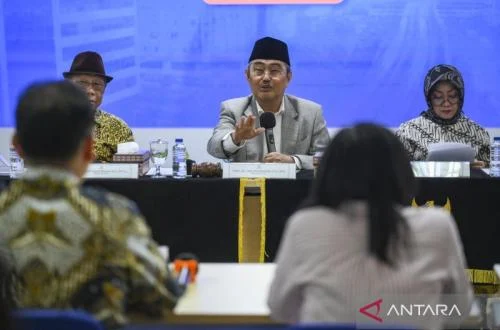
The Ethics Council of the Ombudsman of the Republic of Indonesia (ORI) has unequivocally declared that the ethical standards governing the conduct of Ombudsman personnel must be on par with the rigorous benchmarks set by the Corruption Eradication Commission (KPK). This critical assertion was delivered by Jimly Asshiddiqie, a distinguished member of the ORI Ethics Council, who underscored the indispensable role of high public trust in an institution tasked with overseeing the quality of public services and preventing maladministration. The statement comes at a challenging time for the ORI, an institution fundamental to good governance and public accountability in Indonesia, as it grapples with internal ethical controversies that threaten to erode its credibility.
For years, the Ombudsman of the Republic of Indonesia has been lauded for its significant strides in institutional development and the enhancement of its personnel’s quality. Established under Law No. 37 of 2008, the ORI serves as a state institution with the authority to oversee the implementation of public services by state administrators and government agencies, both central and regional, state-owned enterprises, and private entities that provide public services. Its primary mandate is to prevent maladministration, enhance the quality and transparency of public services, and ultimately protect the rights of the public. The institution’s vital role in mediating disputes between citizens and public service providers, investigating complaints, and issuing recommendations has historically garnered public respect and trust, positioning it as a crucial pillar in Indonesia’s democratic framework and its ongoing battle against corruption and bureaucratic inefficiency.
However, this positive trajectory has reportedly faced significant disturbances following the conclusion of the leadership term for certain Ombudsman RI members from the 2021-2026 period. These disruptions have brought into sharp focus the ethical fortitude of the institution and its members, prompting the Ethics Council to issue its stern warning and call for heightened standards. The comparison to the KPK is particularly poignant, given the latter’s reputation as one of Indonesia’s most trusted and effective anti-corruption bodies, known for its stringent internal ethics and unwavering stance against graft. The KPK, established under Law No. 30 of 2002, operates with broad powers to investigate, prosecute, and prevent corruption, and its high public approval ratings often serve as a benchmark for institutional integrity in the country. By aligning with the KPK’s standards, the ORI seeks to reaffirm its commitment to maintaining an unblemished reputation, which is paramount for an oversight body.
The Indispensability of Public Trust in Oversight Institutions
Jimly Asshiddiqie’s emphasis on "kepercayaan tinggi" (high trust) is not merely rhetorical; it is the bedrock upon which the effectiveness of any oversight body rests. The Ombudsman’s power is largely derived from its moral authority and the public’s belief in its impartiality, integrity, and competence. Without this trust, its recommendations might be disregarded, its investigations viewed with skepticism, and its overall impact on improving public services significantly diminished. When public officials, particularly those entrusted with upholding ethical standards and ensuring good governance, are themselves implicated in wrongdoing, it creates a crisis of confidence that extends beyond the individuals to the institution itself. This erosion of trust can lead to public apathy, decreased engagement with formal complaint mechanisms, and ultimately, a weakening of democratic accountability. Therefore, the call for ethical parity with the KPK highlights an urgent need for the ORI to reinforce its internal mechanisms for integrity, accountability, and transparency, ensuring that its members not only adhere to but embody the highest ethical principles.
Chronology of Ethical Challenges and Allegations
The recent ethical challenges confronting the Ombudsman RI are primarily linked to two high-profile cases involving its active and non-active members, casting a shadow over the institution’s otherwise commendable record.
The first incident involved Yeka Hendra Fatika, an Ombudsman RI member whose residence was reportedly searched by law enforcement authorities. The search was connected to allegations of obstruction of justice within the broader investigation into a significant corruption case involving the export of cooking oil. This national scandal, which unfolded in 2022, saw several high-ranking officials and corporate executives implicated in schemes that led to scarcity and price hikes of cooking oil across Indonesia, causing considerable public outcry. The alleged involvement of an ORI member in hindering such a critical investigation sent shockwaves through the public, raising serious questions about the integrity of those meant to safeguard public interest. While the specific details of Yeka Hendra Fatika’s alleged role and the ongoing legal proceedings remain subject to investigation, the incident itself underscored the vulnerability of even oversight bodies to external pressures or internal misconduct.
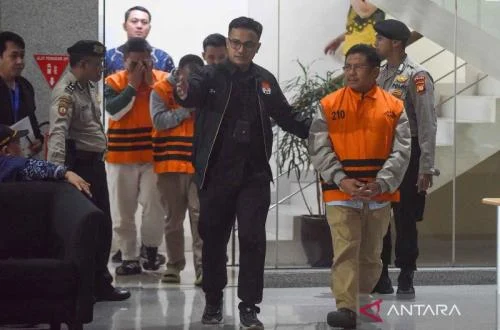
More recently and perhaps more critically, Hery Susanto, the non-active Chairman of the Ombudsman RI, was named a suspect in an alleged corruption case related to nickel mining. The Attorney General’s Office (AGO) confirmed Hery Susanto’s status as a suspect in late 2023, amidst an ongoing investigation into illicit nickel mining activities that have reportedly caused substantial state losses and environmental damage. Nickel, a crucial commodity for electric vehicle batteries, has seen a boom in Indonesia, but this growth has also been plagued by allegations of illegal mining, regulatory breaches, and corruption. The indictment of a sitting, albeit non-active, chairman of an institution dedicated to preventing maladministration for alleged involvement in such a scheme represents a profound crisis of legitimacy for the ORI. Hery Susanto’s non-active status indicates that institutional measures have been taken to separate him from his duties pending the resolution of the legal process, a necessary step to mitigate further reputational damage and ensure the impartiality of the institution’s operations.
The Role and Actions of the Ethics Council
In response to these grave allegations, the Majelis Etik (Ethics Council) of the Ombudsman RI has activated its internal mechanisms to address the ethical breaches. The Council, composed of seasoned legal and ethical experts like Jimly Asshiddiqie, is tasked with upholding the code of conduct for ORI members, investigating alleged violations, and recommending disciplinary actions.
Jimly Asshiddiqie clarified that a fundamental prerequisite for becoming an Ombudsman RI member is the absence of any "perbuatan tercela" (disgraceful acts). Should an individual be proven to have violated this core principle, they would automatically cease to meet the established qualifications for holding office. This stringent requirement highlights the high moral ground expected of individuals in such influential public positions.
Regarding Hery Susanto’s case, the Ethics Council has outlined a clear course of action. It intends to seek direct clarification from Hery Susanto himself, a standard procedure in ethical investigations to ensure due process and allow the accused to present their side. This clarification will follow a thorough process of gathering evidence and information from various relevant parties. These include his family, who may offer insights into the circumstances; the Attorney General’s Office, which holds the primary evidence from its criminal investigation; and the House of Representatives (DPR RI), which plays a role in the selection and oversight of ORI members.
Furthermore, the Ethics Council has taken the proactive step of approaching Hery Susanto’s family to facilitate his voluntary resignation. A voluntary resignation, while not absolving him of potential legal culpability, could mitigate some of the institutional damage and allow the ORI to move forward more swiftly in restoring its public image. However, Jimly noted that, as of the latest update, there has been no significant progress on this front, indicating the complexities and sensitivities involved in such high-stakes ethical dilemmas.
Inferred Statements and Reactions from Related Parties
While specific official statements from all parties were not provided in the original brief, logical inferences can be made regarding their likely reactions given the gravity of the situation:
-
Jimly Asshiddiqie (Ethics Council Member): Beyond his explicit statements, Jimly would likely reiterate the critical importance of maintaining public trust, emphasizing that the ORI’s efficacy hinges entirely on its moral authority. He would probably stress the council’s commitment to a fair yet firm process, ensuring that justice is served while protecting the institution’s integrity. His statements would likely reinforce the idea that no individual is above the ethical standards expected of public servants, particularly those in oversight roles.
-
Other Ombudsman RI Officials (Active Members/Secretariat): These officials would likely express deep concern over the allegations and their potential impact on the institution’s reputation. They would probably reaffirm their commitment to cooperating fully with all investigations, both internal and external, and underscore the majority of ORI personnel’s dedication to integrity and public service. Statements might focus on the need for internal reflection, strengthening ethical guidelines, and ensuring that the institution continues its mandate without distraction.
-
KPK Officials: While not directly involved in ORI’s internal ethics, KPK officials would likely emphasize the importance of all state institutions upholding strong ethical standards. They might subtly endorse the idea of using the KPK’s stringent framework as a benchmark, reiterating their own institution’s commitment to maintaining integrity as a non-negotiable principle in the fight against corruption. Their reaction would likely be one of solidarity in the broader anti-corruption ecosystem, urging decisive action against misconduct.
-
Attorney General’s Office (AGO): The AGO, being the prosecuting body, would likely maintain a professional stance, confirming their ongoing investigations into both cases. They would emphasize their commitment to due process, gathering evidence meticulously, and pursuing justice without fear or favor, regardless of the accused’s position. Their focus would remain on the legal aspects of the corruption and obstruction of justice charges.
-
DPR RI (House of Representatives): As the body responsible for selecting ORI members and overseeing state institutions, the DPR would likely express concern over the allegations. Individual members or commissions might call for a swift and transparent resolution, urging the Ethics Council to act decisively. There might be discussions about reviewing the vetting process for future Ombudsman candidates to prevent similar occurrences.
-
Civil Society Organizations and Anti-Corruption Watchdogs: These groups would likely voice strong disappointment and concern, viewing these incidents as a significant setback for good governance. They would demand full transparency, accountability, and swift action from the Ethics Council and law enforcement. They might also call for broader institutional reforms within the ORI to strengthen its resilience against corruption and ethical lapses, advocating for increased public participation and oversight.
Broader Impact and Implications
The ethical challenges faced by the Ombudsman RI carry profound implications for Indonesia’s governance landscape and its ongoing anti-corruption efforts.
Firstly, the most immediate impact is on ORI’s credibility and public trust. An institution designed to be the public’s last resort against maladministration and injustice cannot afford to have its own members embroiled in corruption scandals. Such incidents risk fostering cynicism among the populace, leading them to believe that even oversight bodies are susceptible to the very malpractices they are meant to combat. This erosion of trust could translate into fewer public complaints, reducing the ORI’s effectiveness as a channel for redress and accountability.
Secondly, these cases highlight the critical need for robust internal oversight and vetting processes. While the ORI has an Ethics Council, the fact that such high-profile members are facing serious allegations suggests that either the initial vetting was insufficient, or the internal ethical safeguards need significant strengthening. It underscores the perpetual challenge for institutions of power to remain vigilant against internal corruption and maintain a culture of integrity. This might necessitate a review of recruitment processes, continuous ethical training, and more rigorous financial disclosure requirements for all members.
Thirdly, the incidents could affect the broader anti-corruption landscape in Indonesia. When institutions like the ORI, which are part of the checks and balances system, face integrity issues, it complicates the collective fight against corruption. It can provide ammunition for those who seek to undermine anti-corruption efforts and make it harder for the nation to project an image of commitment to clean governance on the international stage.
Finally, the Ethics Council’s handling of these cases will set a critical precedent. A firm, transparent, and just resolution is essential not only to address the current issues but also to send a clear message that ethical violations will not be tolerated. Should the Council fail to act decisively, it could further weaken the institution’s moral authority and encourage future misconduct. Conversely, a strong response could serve as a powerful reaffirmation of the ORI’s commitment to its founding principles and help in its journey towards restoring public confidence.
In conclusion, Jimly Asshiddiqie’s call for the Ombudsman RI to elevate its ethical standards to par with the KPK is an urgent and necessary demand. The recent allegations against its members represent a significant test for the institution’s integrity and its ability to uphold the very principles it is mandated to enforce. The actions of the Ethics Council in the coming weeks and months will be crucial in determining the future trajectory of the ORI, influencing its capacity to effectively serve the public, prevent maladministration, and contribute meaningfully to good governance in Indonesia. Reaffirming an unwavering commitment to integrity, transparency, and accountability is not merely an institutional requirement but a fundamental imperative for the Ombudsman to regain and sustain the high public trust it so critically needs to fulfill its vital mission.