Eko Sulistyo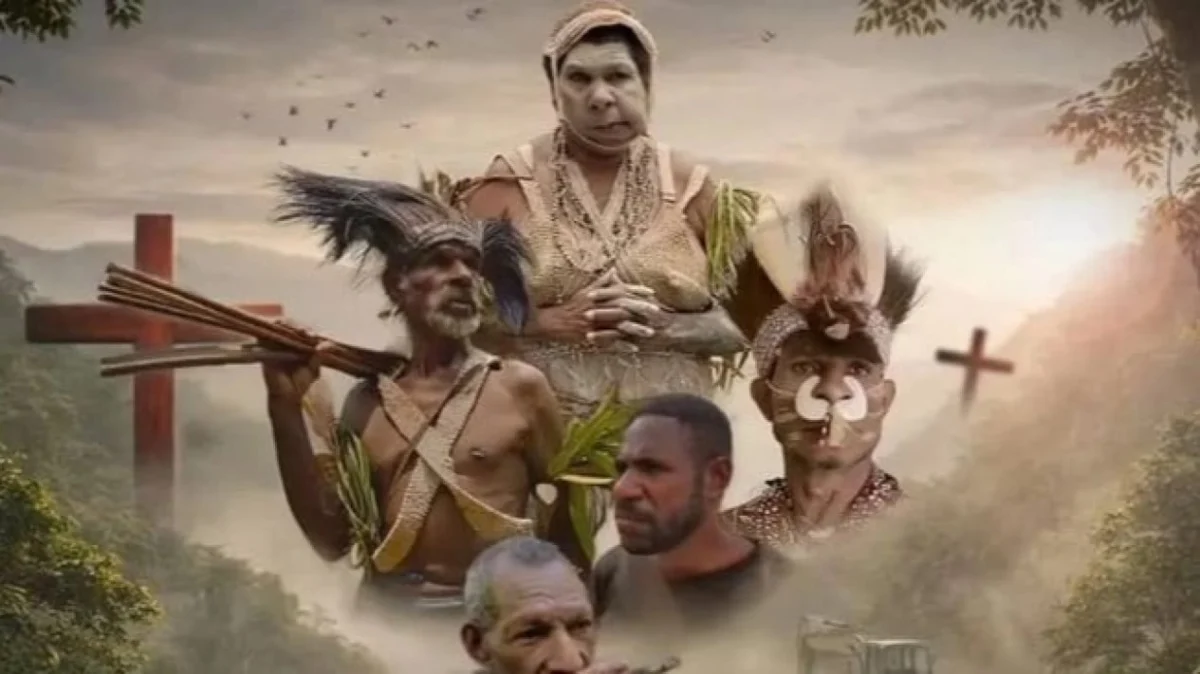
The production of the investigative documentary Pesta Babi has come under intense scrutiny following public allegations from a 61-year-old indigenous woman who claims her image and voice were used without her informed consent. Yasinta Moiwen, a resident of Wogekel Village in the Ilwayab District of Merauke, South Papua, expressed her profound disappointment and shock after discovering her prominent inclusion in the film, which has recently been screened in Jayapura. The controversy has ignited a broader debate regarding the ethical boundaries of documentary filmmaking, the necessity of informed consent when engaging with indigenous communities, and the potential for exploitation in advocacy-driven media.
The grievances voiced by Yasinta Moiwen first gained significant public traction through a viral video shared on social media platforms, including X (formerly Twitter). In the footage, Moiwen clarifies that while she may have interacted with individuals associated with the production or its accompanying advocacy groups, she was never informed that these interactions would be recorded for a commercial or public-facing film project. The realization that her identity was being used as a centerpiece of the documentary came as a surprise, leading her to question the motivations and methods of the production team.
The Allegations of Ethical Oversight
According to Moiwen’s testimony, her appearance in the documentary was not the result of a formal interview process. She stated emphatically that she was unaware of the film’s title, its scope, or the fact that her name would be featured in the opening credits. "It was without my permission, without my knowledge. I was shocked when they screened it in Jayapura; my name was displayed right at the front," Moiwen stated in the viral video. Her disappointment stems from a feeling of being objectified rather than being treated as a participant with agency.
The most poignant part of her statement compared her treatment to that of an inanimate object. "Am I a puppet or an Asmat carving to be displayed without my knowledge, without my permission? I am disappointed by that, even until now," she continued. This sentiment highlights a recurring issue in ethnographic and investigative journalism where the subjects—often from marginalized or indigenous backgrounds—feel that their narratives are being "harvested" to serve a larger political or environmental agenda without regard for their individual dignity or privacy.
Moiwen further clarified that she did not participate in any session she understood to be an official interview for a project titled Pesta Babi. She asserted that while she may have spoken to visitors or "facilitators" in her village, the context of a documentary film was never established. "I didn’t do that interview for Pesta Babi. I didn’t know; I swear to God I didn’t know they were making that film," she added, emphasizing the lack of transparency she experienced.
Background and Context: The Pesta Babi Documentary
The documentary Pesta Babi (translated as "Pig Feast") is an investigative work designed to highlight the socio-environmental impacts of large-scale land clearing and the government’s "food estate" projects in South Papua. The title itself is a reference to the traditional "Bakar Batu" or pig feast, a cornerstone of Papuan indigenous culture that symbolizes unity, communal gratitude, and the sustainable use of local food sources. By using this title, the filmmakers intended to contrast traditional indigenous food security with the industrial agricultural models currently being imposed on the region.
The film focuses heavily on the Merauke region, which has become a focal point for national strategic projects. For years, environmental activists and human rights groups have used documentary films as a tool to bring international attention to the plight of the Marind people and other indigenous groups in South Papua. These groups are often caught between the promise of economic development and the reality of losing their ancestral forests, which serve as their primary source of livelihood and spiritual identity.
However, the current controversy involving Yasinta Moiwen suggests a disconnect between the film’s mission to protect indigenous rights and its internal methodology regarding individual rights. The incident raises questions about whether the ends (raising awareness about land grabbing) justify the means (using individual likenesses without explicit, documented consent).
The "Food Estate" Controversy in South Papua
To understand the weight of the documentary and the sensitivity of the region, one must look at the history of agricultural expansion in Merauke. Since the inception of the Merauke Integrated Food and Energy Estate (MIFEE) in 2010, the region has seen millions of hectares of land earmarked for corporate agriculture, including rice, sugarcane, and palm oil.
Recent data suggests that the "Food Estate" program, revitalized as a National Strategic Project (PSN), aims to convert vast tracts of forest and savannah into industrial farmland to bolster national food self-sufficiency. While the government argues these projects are essential for security and economic growth, local communities have frequently reported that land acquisitions occur without "Free, Prior, and Informed Consent" (FPIC)—a standard mandated by international human rights law for indigenous territories.
In this high-stakes environment, indigenous voices like Yasinta Moiwen’s are incredibly valuable to filmmakers and activists. They provide the "human face" to abstract environmental data. However, when these voices are utilized without clear communication, it can lead to a sense of betrayal, as seen in this current case.
Chronology of the Dispute
The timeline of the controversy begins with the production phase of Pesta Babi, during which film crews and environmental advocates visited various districts in Merauke, including Ilwayab. It is during this period that the footage of Yasinta Moiwen was likely captured.
- Production Phase (Circa 2024-2025): Filmmakers conduct field research and gather footage in South Papua. Interactions with local villagers are recorded.
- Post-Production and Promotion: The film is edited and titled Pesta Babi. Promotional materials begin to circulate in activist and cinematic circles.
- The Jayapura Screening (May 2026): The film is screened for a public audience in Jayapura, the provincial capital. It is here that members of the community or Moiwen herself became aware of her prominent role in the narrative.
- The Viral Reaction (May 24-25, 2026): A video interview of Yasinta Moiwen expressing her grievances is uploaded to social media. The video quickly garners thousands of views, sparking a debate on journalistic ethics.
- Public Outcry: Netizens and human rights observers begin questioning the production ethics, demanding a response from the filmmakers and the organizations supporting the project.
Legal and Ethical Implications of Informed Consent
The case of Yasinta Moiwen touches upon significant legal frameworks in Indonesia, specifically Law No. 27 of 2022 concerning Personal Data Protection (UU PDP). Under this law, the use of a person’s "biometric data" or "identifiable image" for purposes other than those initially agreed upon can be a violation of privacy rights. While documentary films often operate under a "public interest" exemption, this exemption is not absolute, especially when the subject feels their likeness has been used deceptively.
In the realm of international documentary standards, "Informed Consent" requires that the subject understands:
- The nature and purpose of the film.
- Where and how the film will be distributed (e.g., film festivals, YouTube, television).
- The potential risks or consequences of their appearance (e.g., social backlash or government scrutiny).
For indigenous communities, the standard is even higher. The principle of FPIC (Free, Prior, and Informed Consent) suggests that consent should be a continuous process, not a one-time signature or a casual verbal agreement. In Moiwen’s case, the lack of a formal interview setting or a clear explanation of the "Pesta Babi" project suggests a failure in this ethical chain.
Reactions from the Filmmaking and Activist Community
While the producers of Pesta Babi have yet to issue a comprehensive formal rebuttal, the incident has sent shockwaves through the Indonesian documentary community. Historically, groups like Watchdoc and various environmental NGOs have been praised for their bravery in documenting sensitive issues in Papua. However, this incident serves as a reminder that the power dynamic between a filmmaker (often coming from an urban, educated background) and an indigenous subject is inherently unequal.
Independent film analysts suggest that this controversy might lead to a "chilling effect" or, conversely, a necessary reform in how documentaries are produced in sensitive regions. If indigenous people feel they are being used as "props" for a narrative they don’t fully understand, they may become less willing to speak to journalists or researchers in the future, ultimately harming the cause of transparency in Papua.
Broader Impact on Indigenous Advocacy
The controversy surrounding Pesta Babi is particularly damaging because it creates a rift within the movement for indigenous land rights. The documentary was intended to be a weapon for the people of Merauke to fight against land grabbing. Instead, it has become a source of internal conflict.
When an indigenous elder like Yasinta Moiwen publicly declares that she feels treated like a "boneka" (puppet), it undermines the credibility of the advocacy work. Critics of environmental movements may use this incident to claim that activists are "manipulating" local populations for their own agendas. To prevent this, experts argue that filmmakers must prioritize "visual sovereignty"—allowing indigenous subjects to have a say in how they are portrayed and ensuring they are the first to see the final product before it is released to the public.
Conclusion and Future Outlook
The case of Yasinta Moiwen and the Pesta Babi documentary serves as a critical case study for the future of investigative journalism in Indonesia. As the government continues to push for massive industrial projects in Papua, the role of documentary film as a watchdog remains vital. However, this role must be balanced with a rigorous adherence to ethical standards.
Moving forward, it is expected that the filmmakers of Pesta Babi will need to engage in a direct dialogue with Moiwen and the community of Wogekel to resolve the grievance. Whether through a public apology, a re-editing of the film, or a communal mediation process, the resolution of this conflict will be a benchmark for how the media treats indigenous subjects in the digital age.
The incident highlights a fundamental truth in journalism: the story of a community cannot be told effectively if the individuals within that community feel silenced or exploited by the very people claiming to tell their story. For the Marind people of South Papua, the fight for their land continues, but this controversy ensures that the fight for their personal dignity and the right to their own image will now take center stage alongside it.