Eko Sulistyo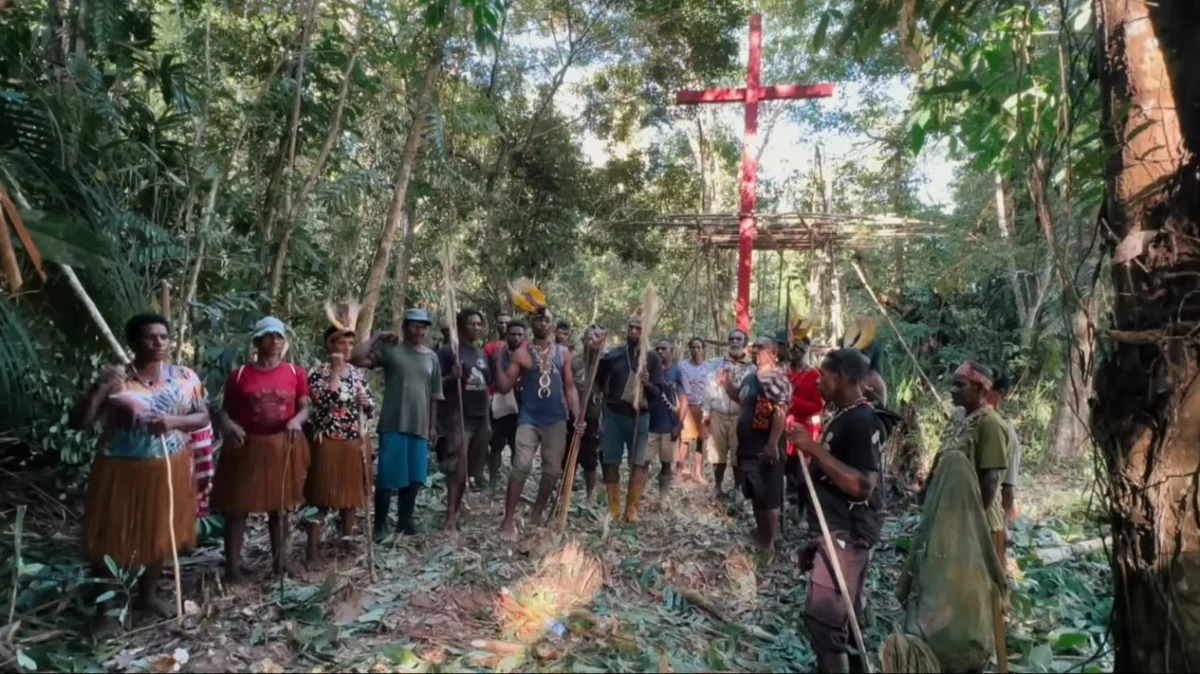
The documentary film Pesta Babi: Kolonialisme di Zaman Kita (Pig Feast: Colonialism in Our Time) has officially transitioned from grassroots community screenings to a global digital release, marking a significant moment in Indonesia’s independent media landscape. Released on Sunday, May 24, 2026, the film is now available for public viewing on YouTube, specifically through the Redaksi JubiTV channel. This strategic move follows a period of intense public discourse and reported attempts to suppress local screenings, which ironically served to amplify interest in the documentary’s exploration of indigenous rights, land dispossession, and the controversial food estate programs in South Papua.
The film, which runs for approximately 95 minutes, is the result of a collaborative production effort involving several prominent organizations, including Redaksi JubiTV, Watchdoc Documentary, Greenpeace Indonesia, Bentala Rakyat, Indonesia Baru, and LBH Papua Merauke. Its release on a free-to-access platform represents a commitment to democratizing information regarding the socio-environmental crises currently unfolding in the easternmost regions of the Indonesian archipelago. Within the first 24 hours of its digital premiere, the documentary garnered nearly two million views, a figure that surged past the four-million mark shortly thereafter, signaling a profound public appetite for narratives that challenge official developmentalist rhetoric.
A Narrative of Dispossession: Inside the 95-Minute Documentary
Pesta Babi: Kolonialisme di Zaman Kita is set against the backdrop of South Papua, focusing on the regencies of Merauke, Boven Digoel, and Mappi. These areas have become the frontline of the Indonesian government’s ambitious agricultural expansion projects. The title itself serves as a poignant metaphor, contrasting the traditional pig feasts of the indigenous Papuan people—which symbolize communal harmony, ritual significance, and sustainable resource management—with what the filmmakers characterize as a "feast" of land grabbing by corporate and state interests.
The documentary provides an intimate look at the lives of the Marind people and other indigenous groups whose ancestral domains are being transformed into industrial-scale plantations. Through a series of interviews and investigative footage, the film illustrates how the conversion of forests and sago groves into monoculture crops like sugarcane and oil palm has disrupted the local ecosystem and the traditional livelihoods of the inhabitants. The film argues that these projects, often framed under the banner of "national food security," frequently bypass the principle of Free, Prior, and Informed Consent (FPIC), leaving local communities marginalized in their own lands.
The Food Estate Program: A Controversial Legacy in Papua
To understand the context of the film, one must look at the history of the Merauke Integrated Food and Energy Estate (MIFEE) and subsequent iterations of the "Food Estate" program. Initially launched over a decade ago, these programs aimed to turn Papua into a national "breadbasket." However, the film highlights a recurring pattern of failure and environmental degradation. Critics featured in the documentary point out that the soil conditions in South Papua are often unsuitable for the intensive rice and corn farming envisioned by Jakarta-based planners.
Furthermore, the film delves into the "National Strategic Project" (PSN) status granted to many of these plantations. This legal designation allows for expedited land acquisition and reduced regulatory oversight, which the documentary suggests has been exploited to favor large-scale conglomerates at the expense of indigenous land rights. The documentary provides data suggesting that hundreds of thousands of hectares of primary forest have been earmarked for these projects, posing a severe threat to biodiversity and Indonesia’s international climate commitments.
Chronology: From Grassroots Screenings to Digital Viral Success
The journey of Pesta Babi to the digital screen is as much a story of civil society resilience as it is a cinematic achievement. The timeline of the film’s distribution reflects a growing tension between independent journalism and administrative control.
- Production and Initial Launch (Early 2026): After months of fieldwork in the remote interiors of South Papua, the production team, led by acclaimed director Dandhy Laksono, finalized the documentary. Initial screenings were planned as "community watch parties" (nobar) to foster local dialogue.
- The Rise of Community Screenings: Over a period of 40 days, the film became a phenomenon. The production team reported receiving over 11,000 requests from various organizations, student groups, and village collectives across Indonesia to host screenings.
- Reports of Suppression: As the film gained momentum, reports began to surface of local authorities and certain groups attempting to disband or prohibit screenings. These incidents occurred in several cities, citing a lack of permits or the "sensitive" nature of the content.
- The "Streisand Effect": Rather than silencing the film, the attempts to block it generated significant media coverage and social media buzz. The public’s curiosity grew, leading to an even higher volume of screening requests.
- Official Digital Release (May 24, 2026): In response to the overwhelming demand and the logistical challenges of physical screenings in a restrictive environment, the creators decided to release the film for free on YouTube. This ensured that the information could bypass physical blockades and reach a national and international audience.
The Role of Alternative Public Spaces
Director Dandhy Laksono, a figure synonymous with investigative documentaries in Indonesia, noted that the success of the film’s community-led distribution model signifies a shift in how the public consumes information. Laksono remarked that in an era where mainstream media is often consolidated under large conglomerates with specific political or economic interests, "small screens" in community centers, cafes, and campuses have become vital alternative public spaces.
"When public space is increasingly narrowed by media conglomeration, algorithms, and buzzers, these small screens transform into spaces for sharing ideas," Laksono stated in a release accompanying the YouTube launch. He emphasized that the 1,700 successfully held community screenings were a testament to the public’s desire for critical discourse that is often absent from television or state-sanctioned narratives.
Stakeholder Reactions and Civil Society Perspective
The release of Pesta Babi has elicited a range of reactions from various sectors of society. Environmental organizations like Greenpeace Indonesia, a partner in the production, have used the film to reiterate calls for a moratorium on large-scale land conversions in Papua. They argue that the "food estate" model is an outdated approach to food security that ignores the nutritional sovereignty provided by local sago forests.
Legal aid organizations, including LBH Papua Merauke, have pointed to the film as evidence of systemic legal failures. They highlight that the legal frameworks used to facilitate these projects often conflict with constitutional protections for indigenous communities. For many activists, the film serves as a visual "white paper" that documents potential human rights violations and ecological crimes.
While the government has not issued a formal rebuttal to the film’s specific claims as of late May 2026, proponents of the food estate programs typically argue that such projects are essential for national stability and regional development. They often claim that these initiatives bring infrastructure, jobs, and modernization to "underdeveloped" regions. However, the documentary counters this by showing that the "jobs" created are often low-wage plantation labor, and the "infrastructure" primarily serves the logistical needs of the companies rather than the local population.
Broader Implications and Analysis
The viral success of Pesta Babi: Kolonialisme di Zaman Kita has several implications for the future of Indonesian politics and environmental policy. First, it demonstrates the power of collaborative, independent media in setting the national agenda. By bypassing traditional gatekeepers, the filmmakers have forced a conversation about Papua into the mainstream digital consciousness.
Second, the film highlights a growing disconnect between the central government’s developmentalist goals and the lived realities of indigenous peoples. As Indonesia seeks to position itself as a leader in the global green economy, the contradictions inherent in large-scale deforestation for agriculture—even under the guise of food security—are becoming harder to ignore. The documentary suggests that a more sustainable path would involve supporting indigenous-led agricultural practices rather than replacing them with industrial models.
Finally, the sheer volume of views and the intensity of the "nobar" movement suggest a burgeoning "citizen-journalist" culture in Indonesia. The fact that thousands of citizens were willing to organize their own screenings despite potential pressure from authorities indicates a high level of civic engagement regarding social justice and environmental issues.
Conclusion: A Catalyst for Policy Debate
As Pesta Babi continues to rack up millions of views, it remains to be seen whether the public outcry it has generated will lead to tangible policy changes. Historically, documentaries by Watchdoc, such as Sexy Killers (2019), have influenced public opinion and political discourse during crucial election cycles. In 2026, Pesta Babi appears to be performing a similar function, serving as a catalyst for a broader debate on what "development" should look like in the 21st century.
The film concludes not with a sense of defeat, but with a call to action. By documenting the resilience of the Papuan people and the widespread support they have received from the Indonesian public, Pesta Babi underscores the idea that while land can be mapped and divided, the collective memory and cultural identity of a people remain much harder to displace. For now, the "Pig Feast" continues to serve as a mirror, reflecting the complex and often painful intersections of progress, power, and indigenous sovereignty in modern Indonesia.