Azin Asro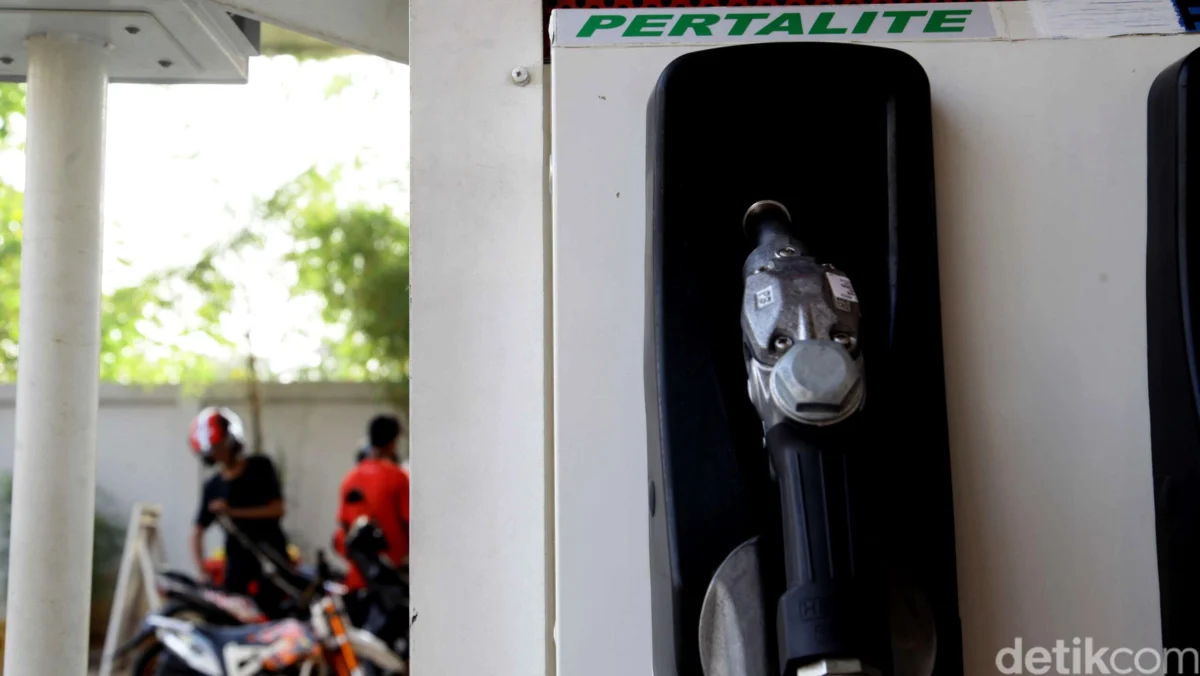
Pertalite remains the most widely consumed subsidized fuel across the Indonesian archipelago, serving as the primary energy source for millions of private and commercial vehicles. Produced by the state-owned energy giant Pertamina, this Research Octane Number (RON) 90 fuel occupies a critical middle ground between the now-phased-out Premium (RON 88) and the higher-tier Pertamax (RON 92). However, as engine technology evolves and environmental regulations tighten, the compatibility of various car models with Pertalite has become a subject of significant technical and regulatory discussion. Understanding which vehicles are officially supported for Pertalite usage requires a deep dive into engine compression ratios, manufacturer recommendations, and the specific legal frameworks governing the Indonesian automotive industry.
According to technical data provided by Pertamina, Pertalite is specifically engineered for internal combustion engines with a compression ratio ranging from 9:1 to 10:1. This fuel is characterized by its bright green, clear appearance and contains a sulfur content of less than 500 ppm. While it is marketed as being compatible with the majority of vehicles currently operating on Indonesian roads, the optimal performance of a vehicle is strictly tied to the manufacturer’s specifications. Using a fuel with an octane rating lower than what is recommended can lead to "knocking"—a phenomenon where the fuel-air mixture ignites prematurely—which can cause long-term damage to piston heads and reduce overall fuel efficiency.
Among the most popular vehicles in Indonesia that are technically cleared for Pertalite usage are the Toyota Avanza and the Mitsubishi Xpander. The Toyota Avanza, often referred to as the "Million People’s Car" due to its massive market dominance, has specific guidelines outlined in its manual for both the 1.3-liter and 1.5-liter engine variants. Toyota Astra Motor (TAM) specifies that these engines are designed to operate efficiently on unleaded fuel with an octane rating of 90 or higher. The official manual explicitly states that owners should select unleaded fuel with an octane rating of 90 or higher to achieve optimal engine performance. This makes the Avanza one of the primary consumers of Pertalite in the Multi-Purpose Vehicle (MPV) segment.
Similarly, Mitsubishi Motors Krama Yudha Sales Indonesia (MMKSI) provides similar recommendations for its flagship MPV, the Mitsubishi Xpander, and its rugged counterpart, the Xpander Cross. Mitsubishi suggests that these vehicles be fueled with unleaded gasoline with a minimum RON of 90. The engineering of the Xpander’s MIVEC (Mitsubishi Innovative Valve timing Electronic Control) engine allows for a degree of flexibility that accommodates the RON 90 threshold, provided the fuel quality remains consistent with national standards. For many Indonesian families, the ability to use Pertalite in these larger family vehicles represents a significant factor in managing monthly transportation costs.
However, a notable technical paradox exists within the Indonesian market regarding Low-Cost Green Cars (LCGC). Despite being positioned as entry-level, affordable vehicles, models such as the Toyota Agya, Toyota Calya, Daihatsu Ayla, and Daihatsu Sigra actually have higher fuel requirements than the more expensive Avanza or Xpander. While consumers might assume that a "budget" car would use "budget" fuel, the technical reality is the opposite. Most LCGC engines are designed with higher compression ratios, typically falling between 10:1 and 11:1, to maximize fuel efficiency and minimize carbon emissions.
In the manual for the Toyota Agya and Calya, it is clearly stated that these hatchbacks and mini-MPVs should utilize unleaded gasoline with an octane rating of 92 or higher. This recommendation aligns with the technical necessity of preventing engine knocking in high-compression environments. If an LCGC owner consistently uses Pertalite (RON 90) instead of Pertamax (RON 92), the engine’s electronic control unit (ECU) may retard the ignition timing to prevent damage, which inadvertently leads to a loss of power and an increase in fuel consumption, thereby defeating the purpose of an "economical" vehicle.
The requirement for LCGCs to use high-octane fuel is not merely a manufacturer suggestion but is rooted in Indonesian law. The Ministry of Industry Regulation (Permenperin) Number 36 of 2021, which concerns Low Carbon Emission Four-Wheeled Motor Vehicles, sets strict standards for the LCGC program. Article 4, Item 6 of this regulation stipulates that LCGC vehicles must feature clear information regarding fuel usage, specifically mandating a minimum octane number of 92 for gasoline engines or a cetane number of 51 for diesel engines. This information must be visibly displayed on the inside of the fuel filler cap and on the lower corner of the rear windshield. The regulation was designed to ensure that these vehicles meet the environmental targets set by the government, as higher-octane fuels burn more completely and produce fewer harmful emissions.
The chronology of fuel standards in Indonesia shows a steady progression toward higher quality and lower environmental impact. In the early 2000s, the market was dominated by Lead-Prted Premium (RON 88). By 2015, Pertalite was introduced as a cleaner, more efficient alternative to encourage a transition away from the lowest-grade fuels. The government eventually moved to adopt Euro 4 emission standards, which require vehicles to produce significantly lower levels of nitrogen oxides and particulate matter. This transition has put pressure on both fuel providers to improve sulfur content and on consumers to align their fuel choices with their vehicle’s technological needs.
Automotive experts and engineers in Indonesia have frequently raised concerns about the "subsidy trap," where owners of modern vehicles opt for cheaper Pertalite despite their engines being designed for Pertamax. Industry analysts suggest that while the immediate cost saving is attractive, the long-term maintenance costs associated with carbon buildup in the combustion chamber can be substantial. When a high-compression engine runs on lower-octane fuel, the incomplete combustion leaves behind deposits that can eventually foul spark plugs and degrade the catalytic converter.
From a broader economic perspective, the Indonesian government has been grappling with the massive fiscal burden of fuel subsidies. As of 2023 and 2024, there have been ongoing discussions regarding the restriction of Pertalite for certain classes of vehicles. Proposed plans have suggested that cars with engine displacements above 1,400cc or 1,500cc might eventually be prohibited from purchasing subsidized Pertalite at public refueling stations (SPBU). While these regulations are still being finalized and debated among stakeholders—including the Ministry of Energy and Mineral Resources (ESDM) and the House of Representatives (DPR)—the underlying goal is to ensure that subsidies reach the intended demographic: lower-income citizens and small-scale commercial operators.
The reaction from the public and automotive associations has been a mix of caution and pragmatism. The Association of Indonesian Automotive Industries (GAIKINDO) has consistently advocated for the use of fuels that match engine specifications to ensure vehicle longevity and to support the government’s emission reduction targets. Meanwhile, consumer advocacy groups have pointed out that the price gap between Pertalite and Pertamax is often wide enough to drive consumer behavior away from technical recommendations, especially during periods of high inflation.
In terms of market impact, the fuel compatibility of a vehicle has become a secondary but important consideration for prospective car buyers. Sales data indicates that while fuel efficiency remains a top priority, the "resilience" of an engine to various fuel qualities is a selling point in rural areas where higher-octane fuel may be less accessible. The Toyota Avanza’s ability to officially support RON 90 fuel is frequently cited by dealers as a reason for its continued dominance in the provinces outside of Jakarta.
As Indonesia moves further into the decade, the landscape of fuel consumption is expected to shift again. With the rise of electric vehicles (EVs) and the government’s push for bio-ethanol blends (such as Pertamax Green 95), the role of Pertalite may gradually diminish. For now, however, it remains the lifeblood of the Indonesian transport sector. The distinction between vehicles that "can" use Pertalite and those that "should" use higher-octane fuel remains a vital piece of knowledge for any vehicle owner.
Ultimately, the choice of fuel is a balance between immediate financial considerations and the long-term health of the vehicle’s engine. While the Toyota Avanza and Mitsubishi Xpander provide a manufacturer-backed pathway for using Pertalite, the owners of LCGC models like the Agya and Calya are technically and legally encouraged to opt for higher-grade fuels. As the government continues to refine its subsidy policies and environmental standards, the alignment between automotive technology and fuel quality will remain a cornerstone of Indonesia’s journey toward a more sustainable and efficient transport ecosystem. Ensuring that the public is well-informed about these technical nuances is essential for both protecting consumer investments and achieving national environmental goals.