Azin Asro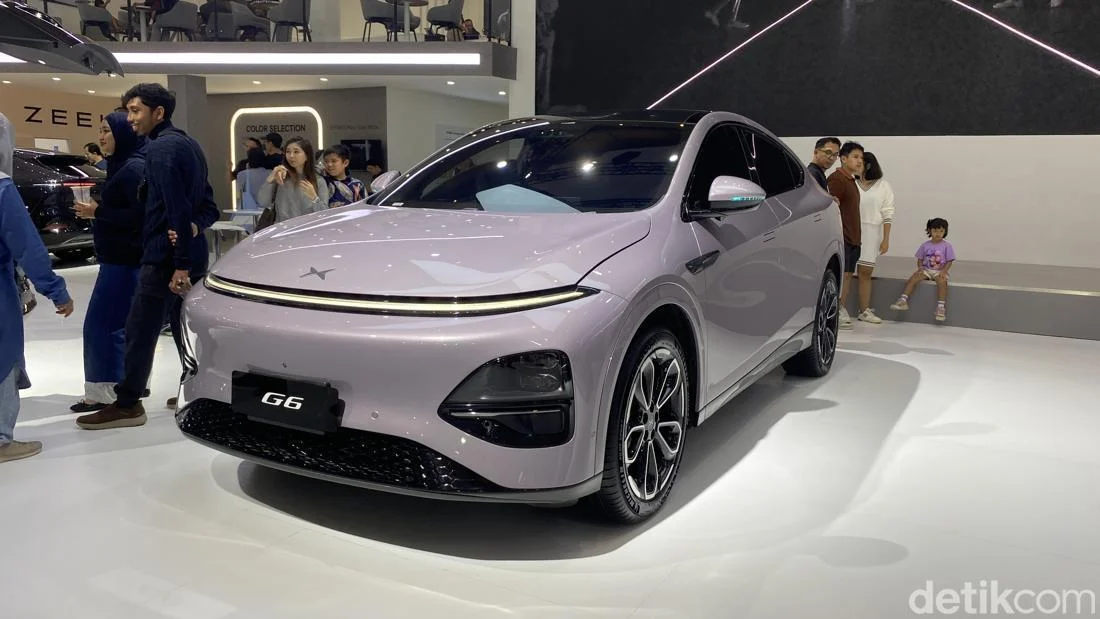
The Indonesian automotive landscape is undergoing a profound transformation as Chinese electric vehicle (EV) manufacturers solidify their presence in the archipelago. Leading this charge is Xpeng, a prominent smart electric vehicle company, which has recently reported a significant surge in sales for its flagship SUV, the Xpeng G6. Despite its positioning within the premium segment, the model has successfully captured the attention of Indonesian consumers, with wholesale figures reaching hundreds of units in a relatively short period. This performance underscores a shifting consumer preference toward high-tech, sustainable mobility solutions in Southeast Asia’s largest economy.
Iki Wibowo, the Chief Executive Officer of Xpeng Indonesia, recently shared insights into the brand’s commercial trajectory during an industry gathering in Bogor, West Java. According to Wibowo, the Xpeng G6 has recorded wholesale figures of approximately 300 units. Notably, this entire sales volume is attributed to a single variant: the G6 Pro. The company’s decision to streamline its offerings has played a pivotal role in this success, as the standard variant was phased out of the Indonesian market last year to focus on the higher-specification Pro model.
"In terms of wholesales, we have reached around 300 units for the G6 Pro," Wibowo stated. He clarified that the product lineup had been optimized to meet the specific demands of the Indonesian premium market, where consumers often prioritize long-range capabilities and advanced technological features over entry-level configurations. While a specific monthly breakdown of these sales was not provided, the figure represents a robust start for a brand competing in a segment traditionally dominated by established European and American marques.
Strategic Market Positioning and Pricing
The Xpeng G6 Pro is currently positioned as the sole representative of the G6 lineup in Indonesia, carrying a price tag of approximately Rp 670 million (on-the-road Jakarta). This pricing strategy places the G6 in the "mid-to-high" category of the Indonesian EV market. While it is more expensive than mass-market EVs from brands like Wuling or MG, it remains highly competitive when compared to other premium offerings, such as the Tesla Model Y or the Hyundai IONIQ 5.
The decision to focus exclusively on the Pro variant reflects a broader trend in the Indonesian automotive sector, where "premium-tech" vehicles are finding a dedicated audience. These buyers are typically early adopters who are less price-sensitive and more focused on the total value proposition, including software-driven features, charging speeds, and cabin luxury. By offering a high-spec vehicle at a sub-Rp 700 million price point, Xpeng has managed to create a "sweet spot" that bridges the gap between affordable city EVs and ultra-luxury electric cruisers.
Engineering and Design: A Direct Challenge to Global Rivals
The Xpeng G6 was engineered from the ground up to compete on a global stage, with its primary target being the world’s best-selling electric SUV, the Tesla Model Y. In terms of physical dimensions, the G6 is almost identical to its American rival, though it offers slightly more generous proportions in certain areas to enhance interior roominess. The G6 measures 4,758 mm in length, 1,920 mm in width, and 1,650 mm in height. In comparison, the Tesla Model Y stands at 4,750 mm long, 1,920 mm wide, and 1,624 mm high.
Beyond dimensions, the G6 distinguishes itself through a design philosophy that emphasizes aerodynamic efficiency. The vehicle boasts a drag coefficient of just 0.248 Cd, a figure achieved through a sleek, coupe-like silhouette, a smooth underbody, and active grille shutters. This focus on aerodynamics is not merely aesthetic; it is critical for maximizing the driving range of the battery. Visual signatures of the brand, such as the full-LED light bars and frameless doors, provide the G6 with a futuristic aesthetic that aligns with its "Smart EV" branding.
Advanced Powertrain and the 800V Revolution
One of the most significant technical advantages of the Xpeng G6 sold in Indonesia is its underlying architecture. The vehicle is built on the SEPA 2.0 (Smart Electric Platform Architecture), which utilizes an 800-volt Silicon Carbide (SiC) system. This high-voltage architecture is a rarity in the sub-Rp 700 million price bracket and offers tangible benefits to the end-user, particularly regarding charging efficiency.
The G6 Pro is equipped with a rear-wheel-drive (RWD) electric motor that produces 292 PS (approximately 215 kW) and a maximum torque of 440 Nm. This allows the SUV to accelerate from 0 to 100 km/h in a brisk 6.7 seconds, providing the linear and immediate performance characteristic of high-end electric vehicles.
The battery technology is equally impressive. Utilizing Lithium Iron Phosphate (LFP) chemistry, which is known for its thermal stability and longevity, the G6 offers a maximum driving range of 600 km on a single charge (based on specific testing cycles). Perhaps the most compelling feature for Indonesian consumers—who may be concerned about the nascent state of public charging infrastructure—is the charging speed. Thanks to the 800V system, the Xpeng G6 can replenish its battery from 10% to 80% in just 12 minutes when connected to a compatible ultra-fast DC charger. This capability significantly reduces "range anxiety" and makes long-distance travel across Java more feasible.
The Smart Tech Cabin and XPILOT 4.0
Inside the cabin, Xpeng has leveraged its background as a technology-first company to create what it calls the "Smart Tech Cabin." The interior is dominated by a Tri-Screen Interactive system, which includes a massive 15.6-inch 2K touchscreen for infotainment, a 10.25-inch digital instrument cluster for the driver, and an Augmented Reality Head-Up Display (AR HUD).
The multimedia experience is further enhanced by an 18-speaker Dynaudio sound system, providing an immersive audio environment that rivals luxury sedans. Comfort features are comprehensive, including a panoramic glass roof with smart dimming technology, heated and ventilated seats, and premium upholstery materials.
However, the true centerpiece of the Xpeng experience is the XPILOT 4.0 advanced driver assistance system (ADAS). This suite of features utilizes a sophisticated array of sensors and high-performance computing to provide Level 2+ autonomous driving capabilities. In the Indonesian context, this includes adaptive cruise control, lane centering, automated parking, and collision avoidance systems specifically tuned for complex urban environments.
The Broader Impact on Indonesia’s EV Ecosystem
The success of the Xpeng G6 is a significant indicator of the health of Indonesia’s electric vehicle ecosystem. The Indonesian government has been aggressive in its pursuit of becoming a regional hub for EV production, leveraging its vast nickel reserves—a key component in battery manufacturing. Through various incentives, including tax breaks for importers and subsidies for locally assembled units, the government has successfully attracted a wave of investment from Chinese automakers.
The arrival and subsequent sales success of Xpeng signal that the market is maturing beyond just entry-level "micro-EVs." There is a clear demand for "lifestyle" electric vehicles that can serve as a primary family car. Furthermore, the entry of brands like Xpeng forces established players to accelerate their own EV roadmaps, leading to better pricing and more choices for Indonesian consumers.
Industry analysts suggest that the 300-unit wholesale figure for the G6 Pro is a "proof of concept" for Xpeng in Southeast Asia. It demonstrates that Indonesian consumers are willing to trust newer Chinese brands if the product offers superior technology and specifications compared to traditional internal combustion engine (ICE) vehicles.
Future Outlook and Chronology of Growth
The journey of Xpeng in Indonesia began with a strategic partnership with local distributors to ensure a robust after-sales network, a critical factor for any new brand entering the market. Following its initial debut at major automotive exhibitions, the brand focused on building a "premium" image, distancing itself from the "budget" reputation sometimes associated with imported goods.
The timeline of Xpeng’s expansion in Indonesia can be summarized as follows:
- Phase 1 (Entry): Introduction of the brand and the G6 model, testing market appetite with both Standard and Pro variants.
- Phase 2 (Optimization): Analyzing sales data and consumer feedback, leading to the discontinuation of the Standard variant in favor of the high-demand Pro model.
- Phase 3 (Consolidation): Achieving the 300-unit milestone and expanding the charging network through partnerships with local malls and energy providers.
Looking ahead, Xpeng is expected to introduce more models from its global portfolio, possibly including the P7i sedan or the flagship X9 MPV, to cater to different segments of the Indonesian market. There is also ongoing speculation regarding the possibility of local assembly (CKD) operations, which would allow the brand to benefit from further government incentives and potentially lower the retail price even further.
Conclusion
The Xpeng G6’s performance in Indonesia is more than just a sales success for a single company; it is a bellwether for the future of the Indonesian automotive industry. By delivering a vehicle that combines 800V rapid charging, advanced autonomous features, and a competitive price point, Xpeng has challenged the status quo. As the wholesale numbers continue to climb and the brand expands its footprint across the country, the G6 stands as a testament to the fact that the era of the smart electric vehicle has officially arrived in Indonesia. With 300 units already accounted for, the momentum is clearly in favor of high-tech electrification, setting the stage for a highly competitive and innovative market in the years to come.