Nila Kartika Wati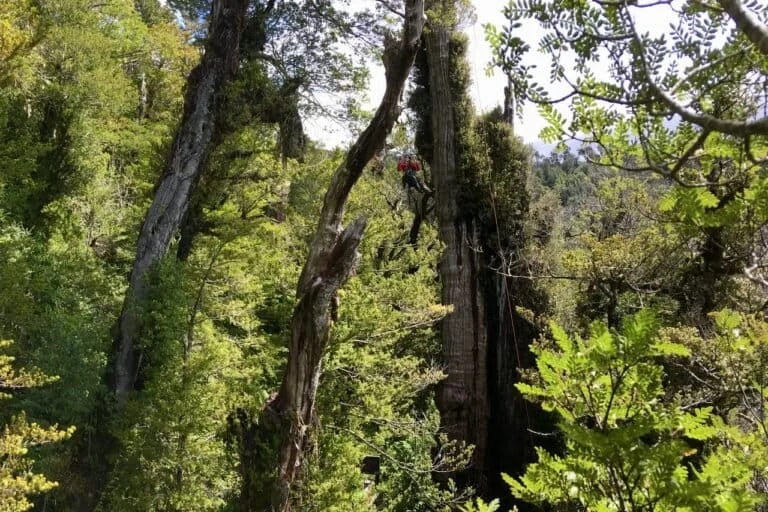
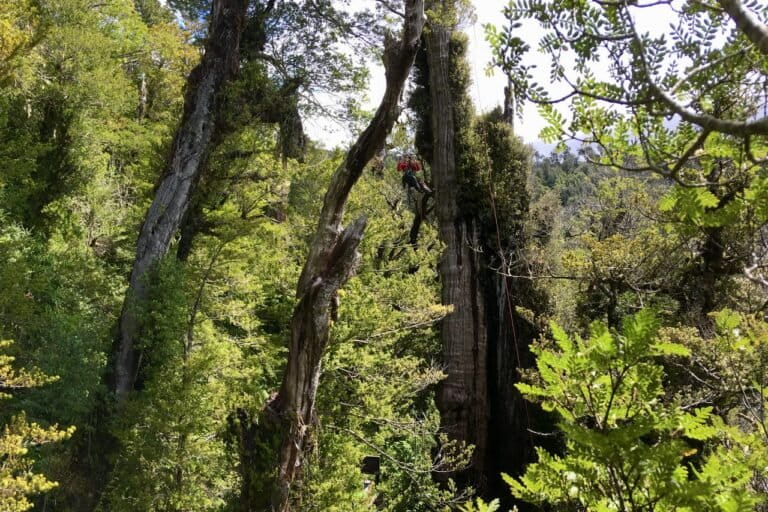
Deep within the ravines of the Alerce Costero National Park in southern Chile, a silent witness to human history stands amidst the mist of the Valdivian temperate rainforest. Known to the local Mapuche people as Lañilawal and to the scientific world as the "Great Grandfather" (Gran Abuelo), this ancient Alerce tree (Fitzroya cupressoides) is at the center of a groundbreaking scientific discovery and a desperate conservation plea. Recent estimates by researchers suggest that this conifer may be over 5,000 years old, a figure that would make it the oldest living individual organism on the planet, surpassing the current record holder by more than half a millennium. However, this monumental discovery is shadowed by a grim reality: the tree is dying, pushed toward the brink of extinction by a combination of unregulated tourism and a changing global climate.
The story of Lañilawal’s scientific recognition began decades ago, rooted in family heritage and local lore. In 1972, Aníbal Henríquez, a forest warden who would later become the first ranger of what is now Alerce Costero National Park, stumbled upon the massive tree while patrolling the dense, rugged valleys of the Los Ríos region. At the time, the tree’s immense size—boasting a diameter of four meters (13 feet)—was a source of wonder for Henríquez and his family, but its true chronological age remained a mystery. Decades later, Henríquez’s grandson, Jonathan Barichivich, a Chilean scientist and environmental researcher at the Laboratoire des Sciences du Climat et de l’Environnement in Paris, returned to his ancestral home to apply modern science to his grandfather’s discovery.
The Quest to Quantify Time: Methodology and Scientific Friction
Determining the age of an ancient tree is a process usually governed by the strict discipline of dendrochronology. Traditionally, scientists use an increment borer—a T-shaped tool—to drill into the trunk and extract a thin, pencil-sized core of wood. By counting the annual growth rings within this core, researchers can determine the tree’s age with near-perfect accuracy. However, Lañilawal presented a unique physical challenge. Because its trunk is so massive, the standard borers could not reach the center of the tree.
In 2020, Barichivich and his colleague Antonio Lara, a professor at the Austral University of Chile and a leading expert in the study of Alerces, managed to extract a partial core. This sample contained approximately 2,400 growth rings, an impressive figure on its own, yet it represented only about 40 percent of the tree’s total radius. To account for the remaining 60 percent of the tree’s growth, Barichivich turned to statistical modeling.
Using a computer model that incorporated the growth rates of other Alerce trees in the region, environmental data, and known climatic fluctuations over the past several millennia, Barichivich calculated a probability distribution for the tree’s age. The results were staggering: the model indicated an 80 percent probability that the tree is older than 5,000 years. The most likely age, according to the statistical median, is 5,484 years. If these findings are verified, Lañilawal would be significantly older than Methuselah, a Great Basin bristlecone pine in California’s White Mountains, which is currently recognized as the oldest tree at 4,855 years old.
Despite the excitement, the findings have sparked a heated debate within the scientific community. Many dendrochronologists remain skeptical of ages derived from statistical modeling rather than direct ring counts. Critics, such as Peter Brown, founder of Rocky Mountain Tree Ring Research, and Chuck Cannon of the Morton Arboretum, argue that tree growth is too variable to be predicted accurately through extrapolation. They point out that factors like "missing rings" (years where the tree did not grow due to stress) or "false rings" (multiple growth spurts in one year) can skew results by centuries. Furthermore, the inner heartwood of ancient trees often rots away, leaving a hollow center that makes a complete count impossible. As of 2024, Barichivich’s study is awaiting full peer review, a process that will determine whether Lañilawal officially takes the crown from Methuselah.
A Species Under Siege: The History and Ecology of the Alerce
The Alerce, or Patagonian Cypress, is a species of conifer native to the Andes mountains of Chile and Argentina. Often compared to the Giant Sequoias of North America, these trees are among the largest and longest-lived species on Earth. Their wood is prized for its extreme durability and resistance to rot, a quality that nearly led to the species’ demise.
Throughout the 19th and 20th centuries, Alerce forests were heavily logged to provide shingles for houses and masts for ships. The wood was so valuable it was often referred to as "red gold." It wasn’t until 1976 that the Chilean government declared the Alerce a "Natural Monument," making it illegal to cut down a living tree. Despite this protection, the species remains classified as endangered.
The ecology of the Alerce is defined by its slow growth. In some years, an Alerce may only add a fraction of a millimeter to its girth. This slow metabolism is precisely what allows them to live for thousands of years, as they slowly accumulate biomass in the cool, wet environment of the temperate rainforest. Lañilawal is a relic of this ancient ecosystem, a survivor of a world that existed before the rise of the Roman Empire or the construction of the Great Pyramids.
The Human Threat: Trampled Roots and Soil Compaction
While Lañilawal has survived millennia of natural challenges, its greatest threat now comes from the very people who admire it. Currently, only about 28 percent of the tree is actually alive. This living portion is concentrated in the outer layers of the trunk and, most importantly, in the sprawling root system beneath the forest floor.
The Alerce Costero National Park has become a popular destination for tourists eager to see the "Great Grandfather." However, the infrastructure designed to protect the tree has proven insufficient. Although a wooden platform was installed to keep visitors off the ground, it does not cover the entire area where the tree’s roots extend. Observations by Barichivich and park rangers have shown that many tourists frequently step off the platform to touch the bark or walk directly over the root zone.
This foot traffic causes soil compaction, a process where the air pockets in the soil are crushed. For a tree, this is catastrophic. Roots require oxygen and loose soil to absorb water and nutrients. When the soil is compacted, the roots are effectively suffocated, and the tree’s ability to sustain its remaining living tissues is severely compromised. Barichivich describes the situation as a slow strangulation, noting that the tree is being "killed by kindness" as thousands of admirers inadvertently damage its life-support system.
The Climate Crisis: A Thirst That Cannot Be Quenched
Compounding the physical damage from tourism is the broader, more systemic threat of climate change. Central and southern Chile have been gripped by a "mega-drought" that has lasted for over a decade. This prolonged period of low rainfall is unprecedented in the historical record and is directly linked to shifting global weather patterns caused by rising CO2 levels.
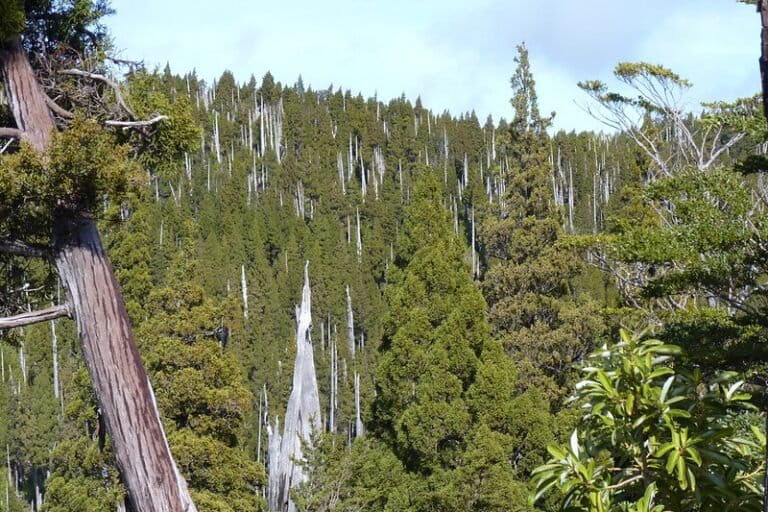
For a tree like Lañilawal, which evolved to thrive in a consistently damp, foggy rainforest, the lack of moisture is a death sentence. The tree’s ancient roots are struggling to find water in soil that is becoming increasingly desiccated. This environmental stress makes the tree more vulnerable to diseases and pests, further reducing its chances of survival. Barichivich warns that without immediate intervention, the tree that has survived for 50 centuries may not survive the next few decades.
Policy Responses and the Path to Preservation
The plight of Lañilawal has forced Chilean authorities to reconsider their management of the Alerce Costero National Park. Pablo Cunazza Mardones, head of the Protected Areas Department at the National Forest Corporation (CONAF), has acknowledged the vulnerability of the tree and stated that the government is looking into more stringent protection measures.
Proposed solutions include:
- Relocating the Tourist Path: Moving the pedestrian walkway much further back to ensure that no human weight is placed on any part of the root system.
- Implementing a Strict Quota: Limiting the number of daily visitors to the site to reduce the overall environmental footprint.
- Enhanced Fencing: Installing more robust physical barriers to prevent visitors from approaching the trunk.
- Scientific Monitoring: Increasing the frequency of health assessments to monitor the tree’s moisture levels and nutrient uptake.
Barichivich argues that the tree should be treated as a "natural monument" in the same way a historic cathedral or an archaeological site is protected. "The goal is to protect the tree, not to make it a circus for tourism," he told international media. He believes that the scientific value of the tree—not just as a record-breaker, but as a biological archive of past climates—is too great to lose.
Broader Implications: Why One Tree Matters
The potential loss of Lañilawal is more than just a sentimental tragedy; it is a scientific one. Trees of this age are living "time machines." Each ring in their trunk contains chemical signatures of the atmosphere from the year it was formed. By studying these rings, scientists can reconstruct past temperatures, rainfall patterns, and even volcanic eruptions with precise dating.
If Lañilawal dies, we lose a continuous 5,000-year record of the Southern Hemisphere’s climate history. This data is crucial for climate modelers trying to predict how the Earth will respond to current warming trends. Furthermore, the tree serves as a symbol of the "Anthropocene"—the current geological age where human activity is the dominant influence on climate and the environment. That a single organism could survive for five millennia only to be threatened by human footsteps and global carbon emissions is a powerful testament to the scale of modern environmental impact.
As the scientific community continues to debate the exact age of the Great Grandfather, the clock is ticking for the tree itself. Whether it is 4,000 or 5,400 years old, its status as a marvel of nature is undisputed. The fate of Lañilawal now rests in the hands of the Chilean government and the global community, serving as a reminder that even the most enduring giants of the natural world are fragile in the face of a rapidly changing world.