Azin Asro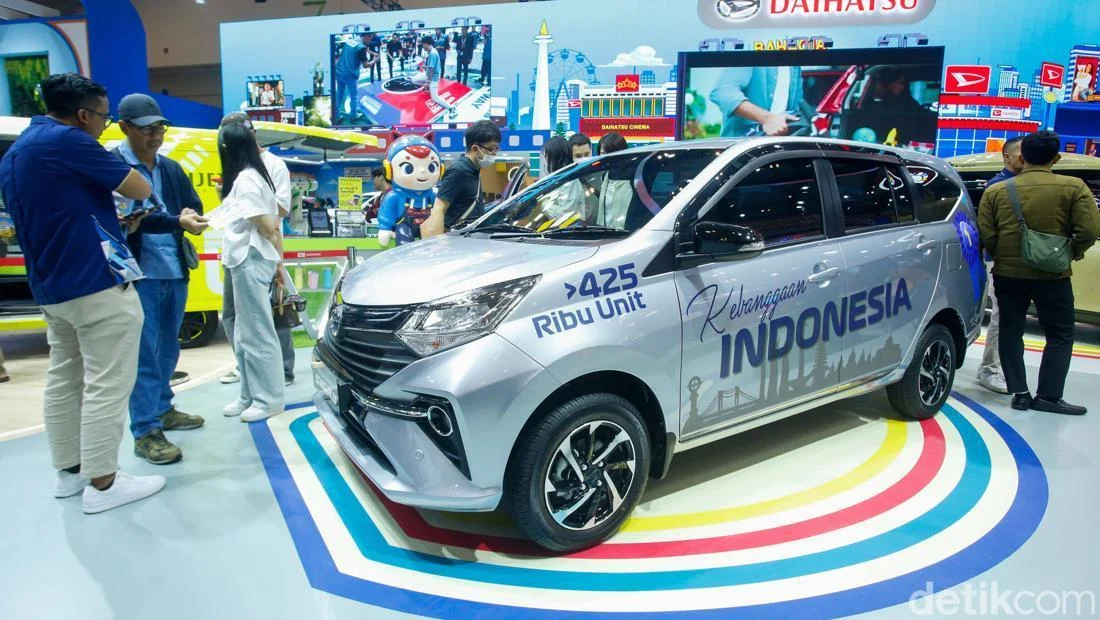
The Indonesian automotive market presents a unique landscape where the utility of a vehicle is often secondary to its projected value in the secondary market. For many Indonesian consumers, purchasing a car is not merely a transaction for a transportation tool but a significant financial move aimed at securing a liquid asset. This phenomenon, long observed by industry players, has been recently reaffirmed by internal data and expert analysis, highlighting a deep-seated cultural and economic mindset that prioritizes "resale value" above almost all other features, including advanced technology or aesthetic appeal.
At the center of this trend is PT Astra Daihatsu Motor (ADM), a brand that has carved out a dominant position in the Indonesian market by catering specifically to the entry-level and first-time buyer segments. According to Sri Agung Handayani, the Marketing Director and Corporate Planning & Communication Director at PT Astra Daihatsu Motor, a staggering 65 percent of Daihatsu’s customers are "first-car buyers." These are individuals or families transitioning from motorcycles to four-wheeled vehicles, or young professionals making their first significant lifestyle investment. For this demographic, the stakes of the purchase are exceptionally high, leading to a conservative approach to spending that emphasizes long-term financial safety.
The internal surveys conducted by Daihatsu over several years consistently point to a single, dominant conclusion: the Indonesian consumer is thinking about the exit strategy before they even sign the initial purchase agreement. Sri Agung Handayani noted during a recent industry gathering in BSD, Tangerang, that the primary reason first-car buyers prioritize certain brands is the assurance that the vehicle will not lose its value precipitously over three to five years. In the eyes of these consumers, a car is categorized as an asset rather than a consumable good. Unlike a piece of electronics or clothing that is expected to be used until it has zero value, a car is viewed as a "savings account on wheels" that can be liquidated in times of economic necessity or when upgrading to a newer model.
The Psychological and Economic Drivers of Resale Value
The preoccupation with resale value is often described by industry insiders through metaphors of significant life events. Sri Agung Handayani illustrated this by comparing the car-buying process to a marriage. She observed that many Indonesian consumers act as if they are already planning for a divorce—or in this case, a resale—before the "wedding" or the purchase is even finalized. This mindset is driven by a lack of financial safety nets for many middle-class families, where a vehicle represents a substantial portion of the household’s net worth. Consequently, the ability to sell the car quickly and at a high price provides a sense of financial security.
This "asset-first" mentality has forced automotive manufacturers to pivot their strategies. While global trends might emphasize autonomous driving or hyper-connectivity, the Indonesian market demands durability and a robust aftersales ecosystem. For a car to maintain a high resale value in the Indonesian used car market, it must meet two critical criteria: widespread availability of affordable spare parts and a network of service centers that spans the archipelago.
Manufacturers like Daihatsu and its partner Toyota have mastered this by ensuring that even in remote provinces, a mechanic can easily find components for a Sigra, Xenia, or Gran Max. This ubiquity creates a self-fulfilling prophecy for resale value; because the cars are easy to maintain, they remain in high demand in the used market, which in turn keeps their prices stable, further encouraging new buyers to choose these brands.
Generational Disparities in Vehicle Purchasing Criteria
The preference for resale value is not uniform across all age groups, though it remains a majority concern. Yannes Pasaribu, an automotive observer and academic from the Bandung Institute of Technology (ITB), has provided deeper insight into how different generations view car ownership. Based on research conducted by the ITB electric vehicle team, there is a clear divide between older, more established buyers and the younger generation.
According to Pasaribu, the "Baby Boomer" generation and "Gen X"—those aged 40 and above—are the most staunch proponents of the resale value philosophy. National surveys indicate that between 65 and 75 percent of respondents in these age brackets list resale value as their primary criterion when choosing Internal Combustion Engine (ICE) vehicles or Hybrid Electric Vehicles (HEV). These groups often see themselves as the financial anchors of their families, and their vehicle purchases are calculated moves to maintain family economic stability. For them, a car that depreciates too quickly is seen as a failed investment.
In contrast, younger buyers, such as Millennials and Gen Z, are beginning to show a slight shift in priorities, though they are not yet entirely untethered from the resale value concern. Younger demographics tend to place a higher value on fuel efficiency, carbon footprint, and integrated technology. However, as Pasaribu points out, the economic reality of the Indonesian market means that even these younger buyers eventually gravitate toward brands with proven track records because they often rely on financing and loans. A car with a high resale value represents a lower total cost of ownership over the life of the loan.
The Role of Aftersales and Durability in Maintaining Value
The Indonesian automotive ecosystem is heavily influenced by the "Astra effect," referring to the massive distribution and service network of PT Astra International. Brands under this umbrella, including Daihatsu and Toyota, benefit from a perceived reliability that is decades in the making. This perception is the bedrock of resale value.
Industry analysis suggests that the "durability of the engine" and "aftersales service" are the two pillars that support a vehicle’s price in the used market. In Indonesia’s harsh driving conditions—characterized by heavy traffic, high humidity, and occasional flooding—a vehicle’s mechanical resilience is tested daily. If a model gains a reputation for being "fragile" or having "expensive parts," its resale value will plummet, regardless of how many features it offers.
This creates a high barrier to entry for new players in the market, particularly those from China or Europe, who may offer more advanced technology at competitive prices but have yet to establish a sprawling service network. Consumers remain hesitant to switch to these brands because they fear the "invisible cost" of depreciation. If a consumer buys a car for Rp 250 million and can only sell it for Rp 100 million three years later, the "cost" of ownership was Rp 150 million. If they buy a Daihatsu for the same price and sell it for Rp 180 million, the cost was only Rp 70 million. In the Indonesian context, the latter is always the superior choice.
Implications for the Future of Electric Vehicles
The obsession with resale value poses a significant challenge for the adoption of Battery Electric Vehicles (BEVs) in Indonesia. Currently, the used market for electric vehicles is in its infancy, and there is significant uncertainty regarding the long-term health and replacement costs of EV batteries. Since the battery can account for up to 40 percent of a vehicle’s total cost, concerns over battery degradation directly impact the projected resale value.
Yannes Pasaribu’s research highlights that while the government is pushing for a transition to green energy, the "financial asset" mindset of the Indonesian consumer acts as a brake on this transition. Until a stable and predictable secondary market for EVs is established, the majority of Indonesian buyers—especially the Baby Boomers and Gen Xers who hold the most purchasing power—will likely remain cautious. To combat this, some manufacturers have begun offering "buy-back guarantees" to mimic the price stability of traditional ICE vehicles, essentially subsidizing the resale value to give consumers peace of mind.
Strategic Response from Manufacturers
For companies like PT Astra Daihatsu Motor, the strategy moving forward is clear: double down on the factors that drive resale value while slowly introducing modern efficiencies. The fact that 65 percent of their buyers are first-timers means that Daihatsu acts as the gateway to car ownership in Indonesia. By maintaining a price point below Rp 300 million and focusing on functional, durable designs, they align perfectly with the "car as an asset" philosophy.
The company’s focus on the "first-car buyer" is a long-term play. If a customer has a positive experience with their first car—meaning the car didn’t break down and was sold for a good price later—they are highly likely to stay within the same brand ecosystem for their second and third vehicles. This brand loyalty is built on a foundation of financial trust rather than emotional appeal.
Conclusion and Market Outlook
The Indonesian automotive market remains one of the most pragmatic in the world. The data provided by Daihatsu and the analysis from ITB experts confirm that for the foreseeable future, the "Resale Value King" will continue to dominate sales charts. As long as a car is viewed as a primary household asset and a hedge against economic instability, features like engine durability and aftersales support will outweigh the allure of the latest gadgets.
The challenge for the industry will be bridging the gap between this traditional "asset-based" purchasing behavior and the global shift toward "mobility as a service" and electrification. For now, however, the message from the Indonesian consumer is loud and clear: they are not just buying a car for today’s commute; they are buying it for the day they eventually have to sell it. Manufacturers who ignore this reality do so at their own peril, while those who master the art of value retention, like Daihatsu, continue to reap the rewards of a loyal and growing customer base.