Azin Asro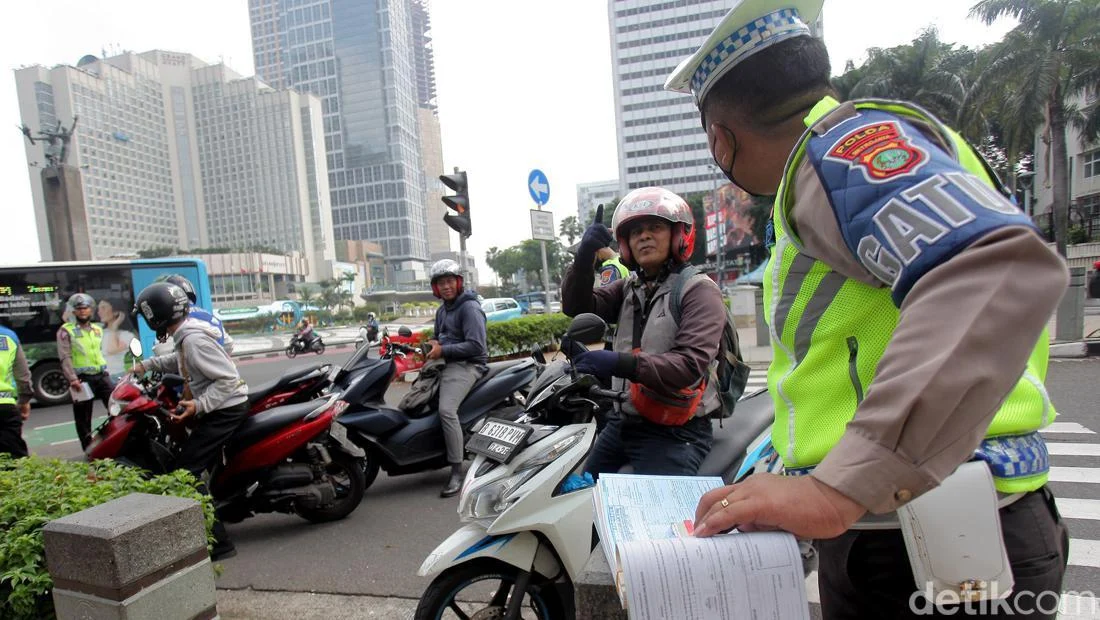
The National Police Traffic Corps (Korlantas Polri) has officially finalized the strategic framework for Operasi Patuh 2026, a comprehensive nationwide traffic enforcement initiative designed to bolster road safety and instill a culture of discipline among Indonesian motorists. Scheduled to run for two weeks from June 8 to June 22, 2026, this operation marks a significant evolution in the Indonesian National Police’s approach to traffic management, integrating cutting-edge surveillance technology with traditional field enforcement. In a move to balance efficiency with direct engagement, the police leadership has announced a hybrid enforcement strategy that utilizes both the Electronic Traffic Law Enforcement (ETLE) system and manual ticketing by officers on the ground.
Kakorlantas Polri, Inspector General Agus Suryonugroho, emphasized that the 2026 iteration of Operasi Patuh will be characterized by a "modern and measured" approach to law enforcement. According to the operational guidelines, the enforcement distribution is strictly categorized: 60 percent of penalties will be processed through the automated ETLE system, 30 percent will involve manual ticketing for high-risk visible violations, and the remaining 10 percent will focus on a "sympathetic" or humanist approach, involving warnings and public education. This tiered strategy is intended to ensure that while technology does the heavy lifting for routine monitoring, the physical presence of officers remains a deterrent for the most dangerous road behaviors.
The Strategic Shift: Balancing Automation and Human Intervention
The dominance of the ETLE system in the 2026 operation reflects a long-term commitment by the Indonesian National Police to modernize the justice system. By assigning 60 percent of enforcement to electronic means, the police aim to minimize direct friction between officers and the public, thereby reducing the potential for bribery or disputes at the scene of a violation. Inspector General Agus Suryonugroho noted that ETLE is a strategic pillar for ensuring that law enforcement remains objective, transparent, and accountable. The electronic system eliminates human bias, as the cameras record objective evidence of violations that are then verified by a centralized back-office team before a citation is mailed to the registered owner of the vehicle.
To support this high-tech mandate, Korlantas Polri will deploy a multi-layered electronic surveillance network. This includes static ETLE cameras positioned at major intersections and highways, mobile ETLE units mounted on patrol vehicles that can capture violations while in motion, and the increasingly prominent ETLE drones. These drones provide a "bird’s-eye view" of traffic flow, allowing the police to monitor congestion points and identify violators in areas that might be shielded from ground-level cameras. The drone technology is particularly effective for catching motorcyclists who weave through traffic or drivers who attempt to evade stationary cameras.
However, the decision to maintain a 30 percent quota for manual ticketing marks a notable pivot from previous years where the police attempted to move almost entirely toward electronic enforcement. Experience has shown that certain "visible" (kasat mata) violations require immediate intervention to prevent accidents. Manual enforcement allows officers to stop a vehicle in real-time, potentially preventing a fatal collision before it occurs. This is especially critical in cases involving highly aggressive driving or mechanical failures that pose an immediate threat to other road users.
Targeted Violations and Safety Priorities
Operasi Patuh 2026 has identified several "priority violations" that are historically linked to high fatality rates on Indonesian roads. The manual ticketing component of the operation will specifically target these behaviors to ensure immediate corrective action. The list of priority violations includes:
- Counter-flow Driving (Melawan Arus): One of the most dangerous behaviors on Indonesian roads, particularly in urban centers like Jakarta and Surabaya, where motorists frequently drive against the flow of traffic to avoid detours.
- Mobile Phone Use While Driving: Distracted driving remains a leading cause of rear-end collisions and lane departures.
- Underage Driving: Targeting minors who operate motor vehicles without a valid license, a common issue in suburban and rural areas.
- Failure to Wear SNI-Certified Helmets: For motorcyclists, the lack of a standardized helmet significantly increases the risk of traumatic brain injury during a crash.
- Seatbelt Non-compliance: Ensuring that drivers and front-seat passengers utilize safety restraints.
- Over Dimension and Over Loading (ODOL): Targeting heavy logistics vehicles that exceed weight and size limits, which not only damage road infrastructure but also have compromised braking and handling capabilities.
By focusing on these specific areas, Korlantas Polri aims to reduce the "fatality index" of road accidents. The "sympathetic approach," which constitutes 10 percent of the operation, will involve officers providing verbal warnings and educational brochures to motorists whose violations are deemed minor or unintentional, such as forgotten documents or slightly expired registrations, provided there is no immediate safety risk.
Combatting License Plate Tampering and ETLE Obstruction
A major focus of Operasi Patuh 2026, as highlighted by the Head of Operations for Korlantas Polri, Senior Commissioner (Kombes Pol.) Aries Syahbudin, is the rising trend of license plate manipulation. As ETLE becomes more prevalent, some motorists have resorted to creative but illegal methods to evade camera detection. These include removing license plates entirely, using fake plates, or obscuring the alphanumeric characters with stickers, reflective tape, or specialized paint.
Kombes Pol. Aries Syahbudin warned that such modifications are a direct obstruction of justice and a primary target for manual enforcement during the operation. "These violations are a major concern because they hinder the ETLE camera system’s ability to read and process the data necessary for enforcement," he explained. During Operasi Patuh 2026, officers on the ground are instructed to be particularly vigilant for modified plates. Vehicles found with obscured or missing plates may be subject to immediate impoundment until the owner can provide legal documentation and restore the vehicle to its original, compliant state.
Background and Statistical Context
The implementation of Operasi Patuh 2026 comes at a time when Indonesia is grappling with the challenges of rapid motorization. Data from the Central Bureau of Statistics (BPS) and previous Korlantas reports indicate that the number of motorized vehicles in Indonesia has grown consistently, leading to increased congestion and a higher probability of accidents. In previous years, traffic accidents in Indonesia have claimed over 25,000 lives annually, with a significant percentage of victims being of productive age.
The "Operasi Patuh" (Operation Obedient) series is a recurring national program, but the 2026 edition is set against a backdrop of increased infrastructure development. With the expansion of the Trans-Java and Trans-Sumatra toll roads, high-speed violations have become a more pressing concern. The integration of ETLE drones is specifically designed to address these long-distance corridors where stationary cameras are spaced too far apart to act as a consistent deterrent.
Historically, traffic operations in Indonesia have faced public scrutiny regarding the transparency of fines. The shift toward a 60 percent ETLE-based operation is a direct response to public demand for a more "clean" and professional police force. By utilizing digital records, the police can provide a clear trail of evidence, which is essential for maintaining public trust.
Chronology of the Operation
The rollout of Operasi Patuh 2026 follows a structured timeline designed to maximize both awareness and enforcement effectiveness:
- Pre-Operation Phase (June 1 – June 7, 2026): This week is dedicated to "Pre-Conditioning." Korlantas Polri will conduct a massive socialization campaign across television, radio, and social media platforms. Public service announcements will inform citizens about the upcoming operation, the types of violations being targeted, and the importance of road safety.
- Implementation Phase (June 8 – June 22, 2026): The core enforcement period. Traffic units across all regional police commands (Polda) will deploy personnel to high-risk areas. ETLE systems will operate at 100% capacity, and mobile units will increase their patrol frequency.
- Daily Evaluation: Every evening during the operation, regional commands will report data back to the National Command Center in Jakarta. This allows Korlantas to shift resources in real-time to areas showing high accident rates or frequent violations.
- Post-Operation Analysis (June 23, 2026, onwards): Following the conclusion of the operation, Korlantas Polri will release a comprehensive report detailing the number of citations issued, the reduction in traffic accidents compared to the previous year, and the overall impact on traffic flow.
Broader Implications and Analysis
The 2026 strategy suggests a maturing of Indonesia’s traffic management philosophy. The reintroduction of a significant manual ticketing component (30%) acknowledges the limitations of technology. While ETLE is excellent for "static" violations like running a red light or speeding, it often struggles to detect more "dynamic" issues like a driver’s physical condition (e.g., fatigue or intoxication) or the subtle modifications of a vehicle that might indicate illegal street racing.
Furthermore, the focus on ODOL (Over Dimension Over Loading) vehicles has significant economic implications. The Ministry of Public Works and Public Housing (PUPR) has previously stated that overloaded trucks cost the state trillions of rupiah annually in premature road repairs. By integrating ODOL enforcement into Operasi Patuh 2026, the police are supporting national economic goals by protecting public infrastructure.
From a social perspective, the "humanist" approach (10%) is a vital component of community policing. By engaging in education rather than just punishment, the police hope to change the mindset of the Indonesian driver from one of "evading the police" to one of "valuing safety." This psychological shift is necessary for long-term behavioral change that outlasts the two-week duration of the operation.
Official Expectations and Public Cooperation
As the start date for Operasi Patuh 2026 approaches, officials are urging the public to view the operation not as a "trap" for motorists, but as a necessary intervention for public health. "The goal of this operation is not to issue as many tickets as possible," Inspector General Agus Suryonugroho clarified. "The goal is to ensure that every citizen who leaves their home in a vehicle returns safely to their family."
Public reaction to the announcement has been a mix of support for increased safety and caution regarding the return of manual tickets. Transportation experts have noted that for the operation to be successful, the 30 percent manual enforcement must be carried out with the same level of integrity as the automated ETLE system. The use of body-worn cameras for officers performing manual tickets has been suggested as a way to further enhance the transparency that the Kakorlantas has promised.
As June 8, 2026, nears, motorists across Indonesia are advised to ensure their vehicles meet all legal requirements, their documentation is up to date, and most importantly, their driving habits align with the safety standards established by the law. Operasi Patuh 2026 stands as a major test for the synergy between Indonesian law enforcement and the technology of the future, all aimed at the singular goal of making Indonesia’s roads some of the safest in Southeast Asia.