Azin Asro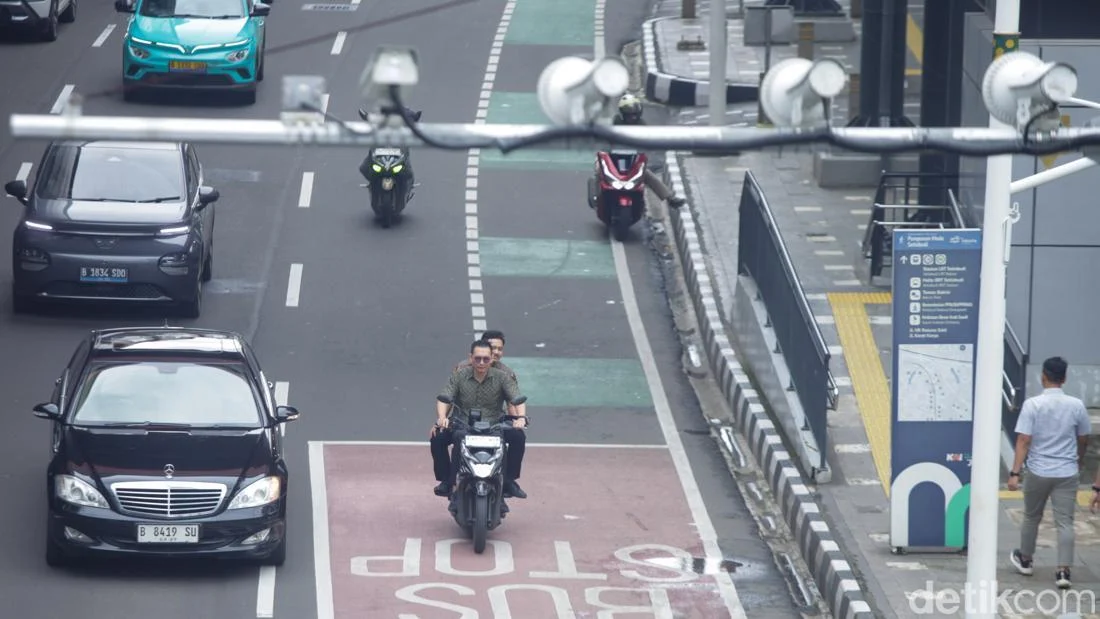
The Indonesian National Police Traffic Corps, known as Korlantas Polri, has officially announced a significant technological leap in its traffic management systems by integrating advanced facial recognition capabilities into the Electronic Traffic Law Enforcement (ETLE) framework. This strategic move is designed to address a growing trend among motorists—particularly motorcyclists—who have been intentionally obscuring, covering, or removing their license plates to evade automated detection systems. By leveraging ETLE Face Recognition, law enforcement officials can now identify individual violators through biometric data, ensuring that the absence of a visible license plate no longer serves as a loophole for escaping legal accountability.
The introduction of this technology marks a pivotal moment in Indonesia’s digital transformation of public safety. For months, traffic authorities in major urban centers like Jakarta have observed a surge in creative methods used by drivers to bypass ETLE cameras, ranging from the use of masks and stickers to cover plate numbers to the complete removal of the Tanda Nomor Kendaraan Bermotor (TNKB). The new system, which is directly integrated with the national database of the Directorate General of Population and Civil Registration (Dukcapil) under the Ministry of Home Affairs, allows the police to match the physical features of a driver captured on camera with the electronic identity records (E-KTP) of Indonesian citizens.
The Technological Shift: From Plate Recognition to Biometric Identification
The core of the ETLE system has traditionally relied on Automatic Number Plate Recognition (ANPR) technology. While highly effective in controlled environments, ANPR’s primary weakness lies in its dependence on the visibility and integrity of the license plate. When a motorist uses a fake plate, an expired one, or covers the digits with a physical obstruction, the traditional ETLE system fails to issue a citation. The ETLE Face Recognition system solves this by shifting the focus from the vehicle’s identification to the driver’s biological identity.
According to the National Police Public Relations Division (Humas Polri), the face recognition feature is triggered under specific conditions: when the vehicle’s license plate is unreadable due to tampering, when a vehicle is not yet registered in the police database, or when the vehicle’s physical characteristics do not match its registered data. This multi-layered approach ensures that the system remains robust even in the face of deliberate evasion tactics. The integration with Dukcapil provides a seamless flow of information, allowing for real-time or near-real-time identification of individuals based on facial geometry, which is then cross-referenced with the national identification database.
A Chronology of ETLE Development in Indonesia
The journey toward a fully automated traffic enforcement system in Indonesia has been a multi-year endeavor. The initial phase of ETLE was launched in 2021 as part of a broader vision by General Listyo Sigit Prabowo to modernize the police force and reduce physical interactions between officers and the public, thereby minimizing opportunities for bribery and corruption.
In the first year of its implementation, ETLE focused primarily on static cameras placed at major intersections in Jakarta and other provincial capitals. However, as motorists became aware of the camera locations, many began to engage in "evasive maneuvers," such as covering plates specifically when passing known ETLE zones. In response, the police introduced "ETLE Mobile," where cameras were mounted on police vehicles and handheld devices used by officers on patrol.
The current phase, the introduction of Face Recognition, represents the third generation of this evolution. It addresses the "last mile" of enforcement challenges: the identification of the person behind the wheel or on the saddle. This development follows a period of observation where traffic violations involving "anonymous" vehicles—those without plates—reached an all-time high, prompting the need for a more sophisticated deterrent.
Supporting Data: The Rising Trend of Plate Tampering
Data from various regional police departments indicates that since the reduction of manual ticketing in favor of electronic systems, there has been a noticeable increase in vehicles operating without proper identification. In Jakarta alone, traffic patrols have frequently intercepted dozens of motorcyclists daily who use masks, mud, or tilted plate brackets to hide their registration numbers.
The Indonesian Law on Traffic and Road Transportation (UU No. 22 Tahun 2009) is very clear regarding these violations. Article 68, Paragraph 1, mandates that every motorized vehicle operated on the road must be equipped with a valid Vehicle Registration Certificate (STNK) and a License Plate (TNKB). Furthermore, Article 280 stipulates that any person driving a vehicle without a properly installed license plate as determined by the National Police faces a maximum prison sentence of two months or a maximum fine of Rp 500,000.
Despite these penalties, the perceived low risk of being caught by a "blind" camera encouraged a culture of non-compliance. Internal police reports suggest that in some high-traffic corridors, up to 15% of detected violations could not be processed initially because of plate-related issues. The Face Recognition update is expected to reduce this "failure-to-process" rate significantly, potentially increasing state revenue from fines while simultaneously improving road safety.
Official Responses and Strategic Goals
The National Police have emphasized that this technological upgrade is not merely about increasing the number of tickets issued but about creating a more transparent and adaptive law enforcement environment. "This integration aims to improve the accuracy of identification and strengthen the data-based law enforcement system," stated a representative from Humas Polri. By utilizing integrated data systems, the police aim to provide a service that is "easier, transparent, and provides certainty for the community."
Transportation experts have largely welcomed the move, noting that it aligns with global best practices in "Smart City" management. By reducing the reliance on physical plates, the police can also better track stolen vehicles or vehicles involved in criminal activities, as the driver’s face can be identified even if they swap the plates. From a legal standpoint, the use of Dukcapil data is seen as a legitimate exercise of inter-agency cooperation allowed under Indonesian law for the purposes of law enforcement and national security.
Broader Implications for Public Safety and Privacy
The implementation of facial recognition in public spaces often sparks discussions regarding privacy and data security. However, the Indonesian National Police have reassured the public that the system is used strictly for law enforcement purposes within the legal framework of traffic violations. The data used is already part of the government’s existing biometric records, and the ETLE system acts as a verification tool rather than a mass surveillance mechanism.
One of the broader implications of this technology is its impact on the behavior of Indonesian motorists. The "psychological deterrent" of knowing that one’s face can be recognized regardless of the vehicle’s condition is expected to foster a higher degree of discipline. In the long term, this could lead to a reduction in traffic accidents, many of which are caused by reckless driving behaviors—such as driving against the flow of traffic or running red lights—that are often performed by those who believe they are untraceable.
Furthermore, the ETLE Face Recognition system plays a crucial role in the "Electronic Registration and Identification" (ERI) project. This project seeks to create a comprehensive digital "medical record" for every vehicle and driver in Indonesia. In the future, this data could be used by insurance companies to determine premiums based on driving history or by the government to streamline vehicle tax collection processes.
Conclusion and Future Outlook
As the Korlantas Polri continues to roll out ETLE Face Recognition across more provinces, the era of anonymous traffic violations in Indonesia is rapidly drawing to a close. The message from the authorities is clear: technological evasion will be met with technological solutions. For the average citizen, this means that compliance with traffic laws and the proper maintenance of vehicle identification is more important than ever.
The success of this program will depend on the continued reliability of the Dukcapil database and the maintenance of the high-definition camera infrastructure spread across the archipelago. As the system matures, it is likely that other features, such as the detection of seatbelt usage, mobile phone use while driving, and even helmet compliance for motorcycle passengers, will be further refined through similar AI-driven biometric and behavioral analysis.
Ultimately, the goal of the ETLE Face Recognition system is to create a safer, more orderly road environment where the law is applied fairly and accurately. By removing the "mask" of anonymity from traffic violators, the Indonesian National Police are taking a decisive step toward a future where technology and law enforcement work hand-in-hand to protect the public and uphold the rule of law on the nation’s streets.