Nila Kartika Wati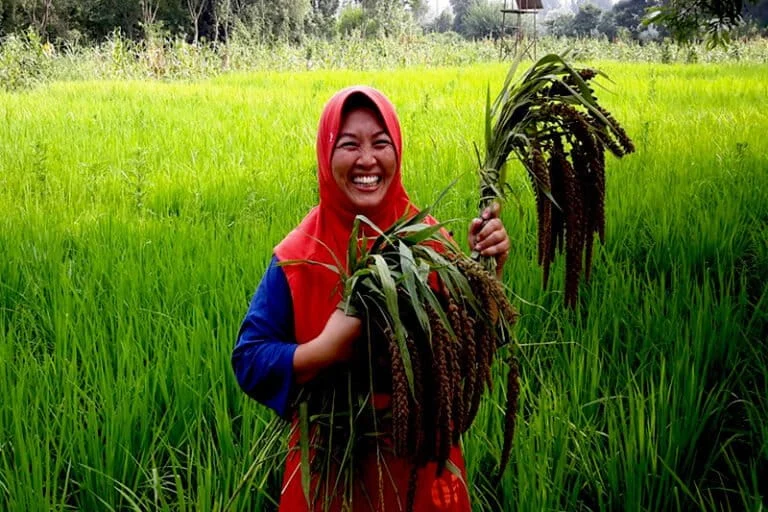
Indonesia’s vast archipelago, stretching across more than 17,000 islands, possesses one of the world’s most diverse portfolios of food sources. From the protein-rich bounty of its seas to an array of carbohydrates found in tubers, grains, and palms, the nation’s natural landscape is a literal pantry of biological diversity. However, for decades, this diversity has been overshadowed by a singular focus on rice. The legacy of the "New Order" era, which prioritized rice self-sufficiency above all else, fundamentally altered the Indonesian palate and agricultural landscape, leading to a nationwide dependency on a single staple. Despite this historical shift, a growing movement of indigenous communities and local farmers is working to reclaim their traditional food systems, viewing local staples not merely as alternatives, but as the key to climate resilience and cultural identity.
The Historical Context of Rice Dominance
The transition toward a rice-centric diet in Indonesia was not an accidental evolution but a result of deliberate state policy. During the mid-20th century, particularly under the administration of President Suharto, the "Green Revolution" was implemented with the goal of achieving national food security. While this period saw Indonesia briefly achieve rice self-sufficiency in 1984, the cost was the systemic marginalization of other indigenous staples.
Regions that traditionally relied on sago, corn, tubers, or sorghum were encouraged—and sometimes coerced—through subsidies and infrastructure development to switch to rice. This phenomenon, often described by sociologists as "gastro-colonialism," led to a cultural stigma where consuming local tubers or millets was associated with poverty, while rice became a symbol of modern, middle-class status. Today, as global supply chains face volatility and climate change threatens traditional rice paddies, the Indonesian government and environmental advocates are revisiting these "forgotten" foods as vital assets for national stability.
Ubi Banggai: The Karst-Grown Identity of Pulau Peleng
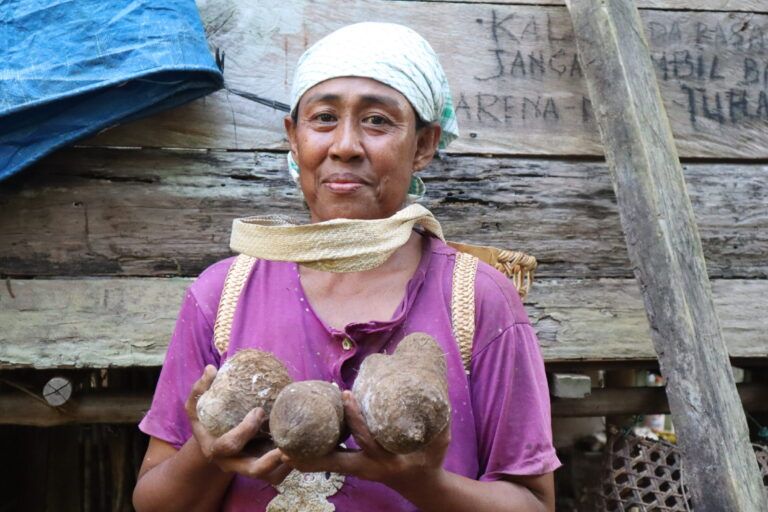
In the Banggai Islands of Central Sulawesi, specifically on Pulau Peleng, the Ubi Banggai (Banggai Yam) remains the cornerstone of local life. Unlike rice, which requires intensive irrigation and flat plains, Ubi Banggai thrives in the rugged, rocky karst soil characteristic of the region. These yams are versatile in form—some elongated like cassava, others rounded like potatoes—and are typically prepared through boiling, steaming, or frying.
For the people of Banggai, the yam is inseparable from their social fabric. The cultivation process follows a traditional system of shifting cultivation to maintain soil fertility, a practice that has preserved the karst ecosystem for generations. Planting is a communal activity, reinforcing village bonds. The significance of the crop is most visible during harvest season, when communities hold thanksgiving ceremonies, bringing the yams to places of worship to be blessed. However, this traditional food system faces modern threats; recent reports indicate that limestone mining expansions in the region pose a direct risk to the karst lands where these yams grow, potentially severing the community’s link to their primary food source and cultural heritage.
Sorghum: A Climate-Resilient Grain for the Arid East
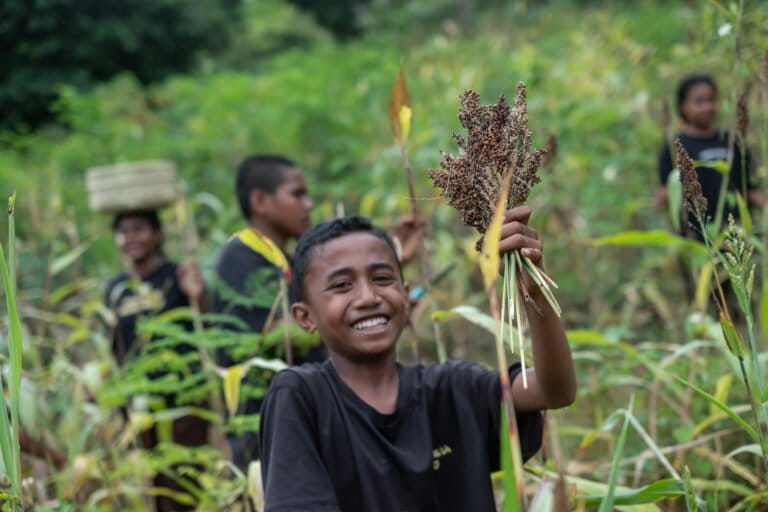
While rice dominates the wetlands of Java, the arid and rocky landscapes of East Nusa Tenggara (NTT) have historically been the domain of sorghum. This hardy cereal grain is remarkably drought-tolerant, requiring significantly less water than rice or corn, making it an ideal crop for a region increasingly affected by erratic rainfall and prolonged dry seasons.
Nutritionally, sorghum is a powerhouse. It is high in fiber, gluten-free, and has a low glycemic index, making it a superior option for managing diabetes—a growing health concern in Indonesia. Historically, sorghum is believed to have arrived in the archipelago from Africa, possibly during the colonial era or earlier. However, following the rice-push of the 1970s, its cultivation plummeted.
In recent years, a "sorghum renaissance" has taken place in NTT. Local NGOs and community leaders have reintroduced ancestral seeds to farmers. The emotional impact of this resurgence is profound; elderly farmers in places like Lembata have reportedly been moved to tears upon seeing the return of the grain that sustained their ancestors. The reintroduction of sorghum is now viewed by the provincial government as a strategic move to combat stunting and improve regional food sovereignty in the face of the global climate crisis.
Seaweed: The Blue Economy of Nusa Lembongan
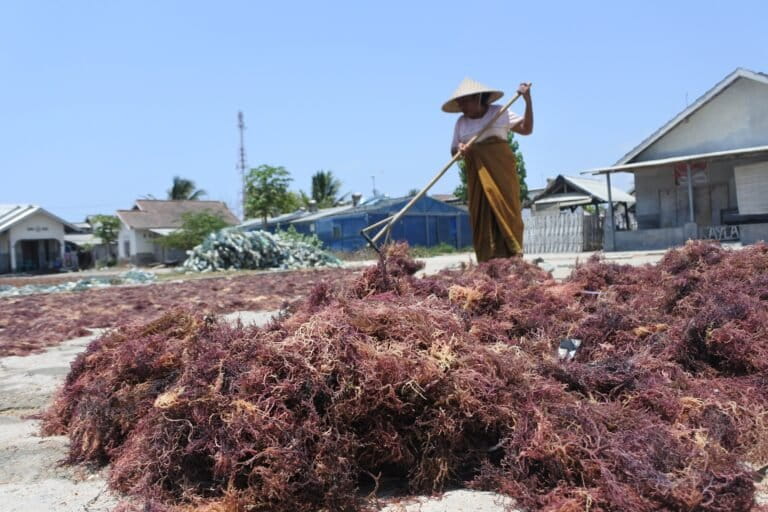
In the coastal waters of Bali, particularly Nusa Lembongan, food security is tied to the "blue economy." Seaweed farming has been a pillar of the community since the 1980s, pioneered by local figures such as the late Made Kawijaya, who transitioned from turtle hunting to sustainable aquaculture. This shift was supported by the Department of Agriculture as a way to provide a stable income when traditional fishing yields began to decline.
The trajectory of seaweed farming in Bali offers a unique look at the tension between tradition and modernization. As the tourism industry boomed in the 2000s, many farmers abandoned their seaweed plots to work in hotels and villas. However, the COVID-19 pandemic, which decimated Bali’s tourism sector, forced a massive "return to the sea." Thousands of residents went back to planting seaweed to survive the economic standstill. This era proved that indigenous food systems and traditional occupations serve as a critical safety net during global shocks. Today, seaweed is not only an export commodity but also a local food source, integrated into the Balinese coastal diet.
Sago: The Tree of Life in Papua and Maluku
For the indigenous peoples of Papua and Maluku, sago (Metroxylon sagu) is more than just a carbohydrate; it is the "tree of life." Sago palms grow naturally in the vast swampy forests of eastern Indonesia, requiring no fertilizers or pesticides, making it one of the most environmentally friendly food sources on the planet. One single sago palm can provide enough starch to feed a family for weeks.
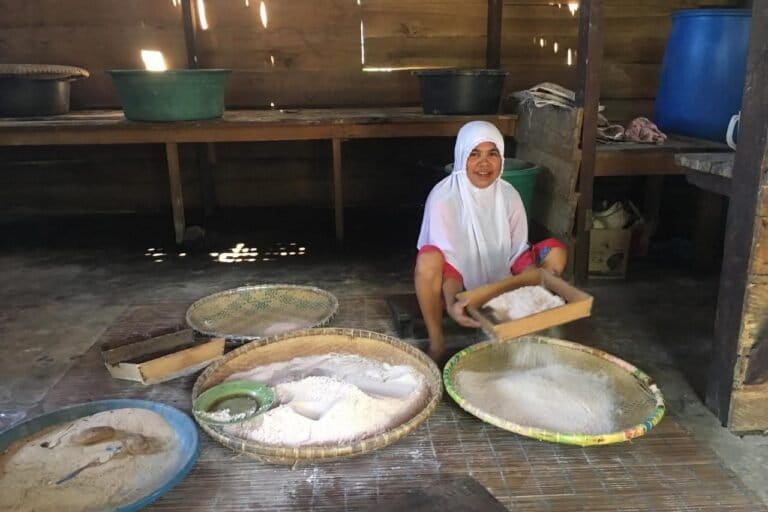
Despite its ecological and nutritional value, sago forests are under immense pressure. Land conversion for oil palm plantations, timber, and urban development has led to the clearing of thousands of hectares of sago groves. In the Teluk Wondama region and parts of Maluku, communities are struggling to balance modern development with the preservation of their sago-based culture. The traditional preparation of papeda (sago congee) remains a daily ritual, but advocates warn that if the forests disappear, the cultural identity of eastern Indonesia will be irreparably damaged. Experts suggest that protecting sago forests is not only a matter of cultural preservation but also a vital strategy for carbon sequestration and peatland conservation.
Jewawut: The Sacred Millet of the Meratus Mountains
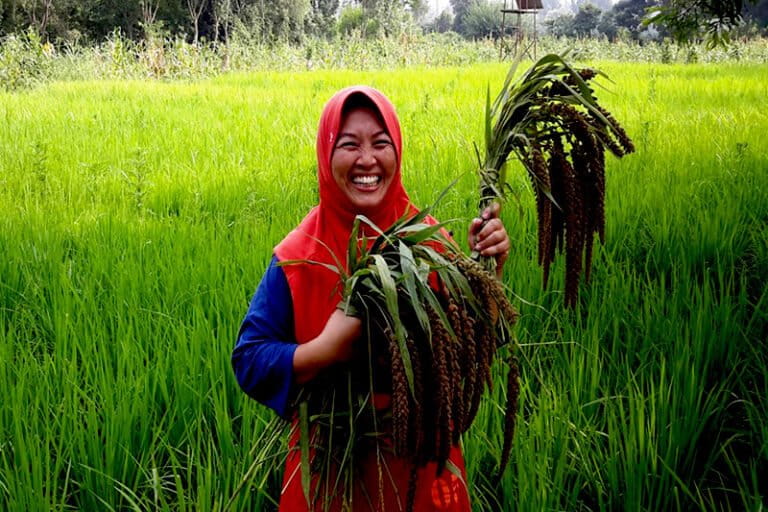
Jewawut, or foxtail millet, is perhaps one of Indonesia’s most overlooked ancient grains. Once common across Sulawesi, Buru Island, NTT, and Java, it is now rarely found in commercial markets. In the Lewouran village of NTT, farmers plant jewawut on the borders of their rice fields, where it acts as a "protector" plant, distracting birds and pests away from the main crop.
In the Meratus Mountains of South Kalimantan, the Dayak Meratus people regard jewawut as a sacred plant. While it is grown as a secondary crop, its harvest is marked by elaborate traditional ceremonies to express gratitude to the ancestors. The grain is rarely sold; instead, it is kept for domestic consumption, processed into porridges, snacks, or flour for traditional cakes. For the Dayak Meratus, maintaining jewawut cultivation is a form of "food sovereignty"—a refusal to let their ancestral seeds and the rituals associated with them be erased by the homogenization of the modern food industry.
Cassava: The Guardian Against Hunger
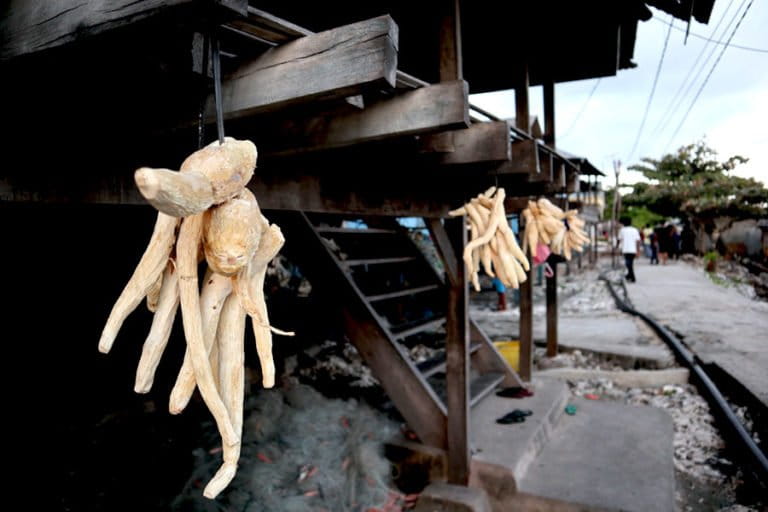
Cassava, or singkong, is often dismissed as a "poor man’s food," yet its role in Indonesian food security is unparalleled. Its ability to grow in poor soils and survive drought makes it the ultimate insurance policy against famine. In Buton, Southeast Sulawesi, cassava is processed into kasoami, a cone-shaped steamed dish that has served as a rice substitute for centuries, dating back to the era of the Buton Sultanate.
In Central Java, the Bonokeling indigenous community in Banyumas utilizes cassava as a central element of their survival strategy. During the paceklik (the pre-harvest lean season), the community relies on oyek—a dried, fermented cassava product that can be stored for long periods. For the Bonokeling people, choosing cassava over rice during these times is not a sign of lack, but a demonstration of wisdom. It is a calculated adaptation to the cycles of nature, ensuring that the community remains self-reliant regardless of market fluctuations or weather patterns.
Implications and the Path Toward Food Sovereignty
The stories of these six food sources highlight a critical reality: Indonesia’s path to a secure future may lie in its past. The reliance on a single staple—rice—has created a "monoculture of the mind" that leaves the nation vulnerable to climate change, pests, and international trade disruptions.
Data from the National Food Agency (Bapanas) suggests that diversifying the national diet to include more local tubers and grains could significantly reduce Indonesia’s carbon footprint and improve public health outcomes. Furthermore, the preservation of these crops is inextricably linked to the protection of indigenous land rights. Without the land and the traditional knowledge of the communities that tend it, these resilient food systems will vanish.
As Indonesia moves toward its "Golden Indonesia 2045" vision, the integration of local wisdom with modern agricultural science is essential. Reclaiming Ubi Banggai, sorghum, seaweed, sago, jewawut, and cassava is more than a culinary trend; it is a necessary act of resilience. By honoring the diversity of its islands, Indonesia can build a food system that is not only sustainable and healthy but also deeply rooted in the unique cultural identities of its people.