Nila Kartika Wati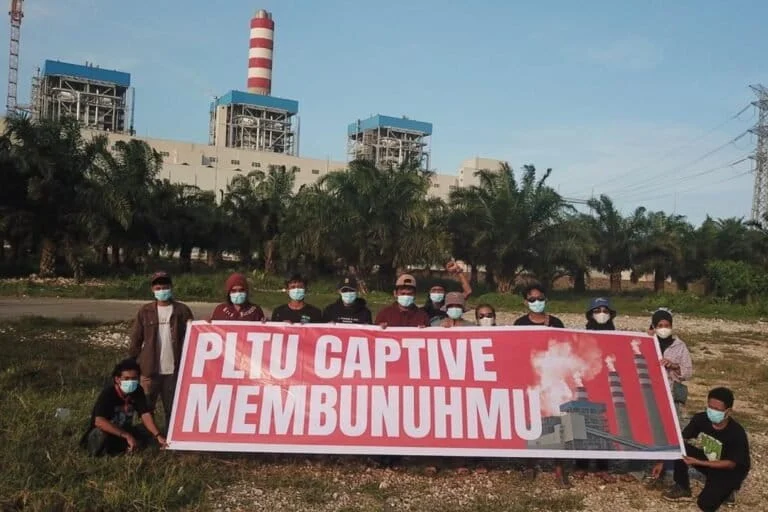
Civil society organizations in Indonesia are expressing deep-seated skepticism regarding the government’s genuine commitment to a sustainable energy transition, citing a persistent reliance on fossil fuels that threatens the nation’s target of achieving net-zero emissions (NZE) by 2060. Despite international pledges and high-profile diplomatic engagements, Indonesia’s national energy mix remains overwhelmingly dominated by fossil fuels, which currently account for between 85% and 86.71% of total consumption. Coal remains the primary architect of this carbon-heavy landscape, contributing approximately 60% to 65% of the national power generation.
The discrepancy between rhetoric and reality is further highlighted by production trends. Since 2018, coal production has seen a steady incline, reaching an estimated 368 million tons in 2024. In stark contrast, renewable energy sources continue to struggle, making up less than 15% of the total energy bauran (mix). Environmental advocates argue that without a radical systemic shift, the transition will remain a "formalistic exercise" rather than a meaningful environmental evolution.
The Geopolitical Urgency and the Coal Paradox
Jasmine Exa Kamilia, an environmental researcher at Action for Ecology and People’s Emancipation (AEER), emphasizes that the transition to renewable energy is no longer a choice but an urgent necessity dictated by global geopolitical vulnerabilities. Indonesia, as a significant importer of oil, is particularly susceptible to price fluctuations driven by tensions in oil-producing regions. For instance, instability in the Strait of Hormuz—a maritime chokepoint through which 20% of the world’s oil trade passes—exerts immense economic pressure on the Indonesian state budget.
However, instead of utilizing these pressures as a catalyst for renewable adoption, the industrial response has been a regression to old solutions. "The price pressure and geopolitical uncertainty should push us to pivot, but the industrial response has instead returned to the old solution: coal," Kamilia stated during a recent discussion titled "Pushing Indonesia’s Commitment to Exit Fossil Energy."
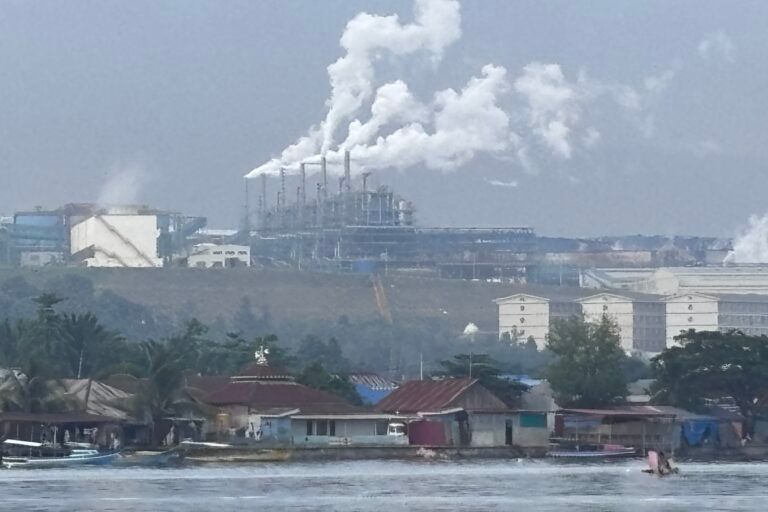
A significant phenomenon currently observed is the shift in consumption from oil to coal, largely fueled by the government’s massive industrial downstreaming (hilirisasi) agenda. To support the processing of raw minerals like nickel—crucial for the global electric vehicle battery supply chain—industrial sectors now require an estimated 35,000 Megawatts (MW) of electricity. This demand has triggered a massive expansion of "captive" coal-fired power plants (PLTU), which are built specifically to supply industrial zones and operate outside the national grid managed by the state utility, PLN.
The Rise of Captive Power Plants and Global Market Risks
The scale of captive power expansion presents a formidable barrier to decarbonization. According to a "Captive Power Study" associated with the Just Energy Transition Partnership (JETP) reports, the capacity of captive power plants in Indonesia reached approximately 25.6 Gigawatts (GW) in 2024. More than 75% of this capacity is coal-based. Projections suggest that an additional 11 GW of captive coal capacity could be added by 2030.
Kamilia warns that without aggressive dekarbonisasi (decarbonization) in the industrial sector, the NZE 2060 target is effectively unattainable. Beyond domestic environmental concerns, there are significant economic risks. Global markets, particularly the European Union, are beginning to implement strict emission standards through the Carbon Border Adjustment Mechanism (CBAM). This mechanism imposes a carbon price on imports of carbon-intensive goods.
"If we want to compete, our products must meet emission standards. However, at this moment, we are seeing coal PLTUs continue to expand through captive schemes," Kamilia noted. The irony of using coal—one of the world’s dirtiest fuels—to produce "green" minerals for the global energy transition is a point of contention that could eventually lead to Indonesian products being penalized or excluded from premium international markets.
Environmental Degradation and Systemic Failures
The expansion of the fossil fuel industry does not only impact the atmosphere but also causes direct physical degradation of Indonesia’s biodiversity. AEER records indicate that 29% of Indonesia’s forest cover, or approximately 448,546 hectares, currently falls within coal mining concessions. The potential carbon emissions from the loss of these forests are estimated at 176.64 million tons of CO2 equivalent (CO2e).
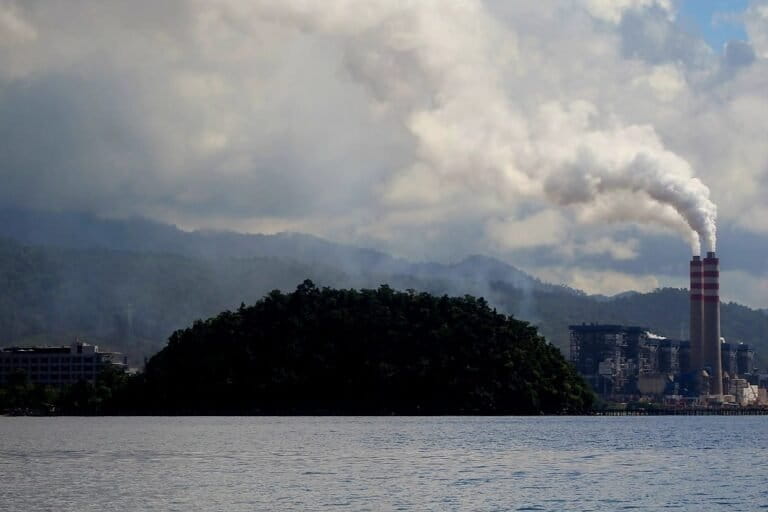
Critics argue that the Indonesian government’s focus is too narrow, prioritizing technological "fixes" while ignoring the need for systemic change. Current regulations, infrastructure, and financial incentives remain heavily weighted in favor of fossil fuels. Furthermore, the promotion of natural gas as a "bridge fuel" is viewed by many as a false solution, as both coal and gas are fossil fuels that contribute to global warming.
"Our hope is that the energy transition is not just about replacing energy sources, but about how the energy and industrial systems are systemically redesigned," Kamilia added. She urged the government to create an "integrated roadmap" that cuts total dependence on fossil fuels and removes subsidies and incentives that artificially extend the life of the coal industry.
Investment Protection vs. Climate Policy
The legal and financial architecture of international investment also plays a role in slowing the transition. Rabin Daniel Nainggolan, a researcher at the Indonesian Center for Environmental Law (ICEL), highlighted that investment protection mechanisms often clash with climate policies. Specifically, the Investor-State Dispute Settlement (ISDS) clauses in trade agreements allow corporations to sue sovereign states if environmental regulations negatively impact their economic interests.
"One of the crucial points that must be resolved in international cooperation schemes is the reform of the global governance architecture," Nainggolan said. As long as ISDS mechanisms allow corporations to challenge climate policies in international tribunals, the energy transition will remain under the shadow of significant legal and financial risks.
Furthermore, Indonesian diplomacy in international forums like the Conference of the Parties (COP) has been described as lacking progress. Iqbal Damanik, Climate and Energy Manager at Greenpeace Indonesia, noted that while global civil society is pushing for The Fossil Fuel Non-Proliferation Treaty (TFF), Indonesia remains stuck in a "compromise path." This path often utilizes technical jargon and expensive, unproven technologies like Carbon Capture and Storage (CCS) to justify the continued use of coal and gas.
"Indonesia is in a dilemmatic and biased position. We feel like a large land nation with full sovereignty to continue exploiting fossils for the sake of the economy," Damanik said. He argued that the government must realize that deforestation and the drainage of peatlands, which trigger climate crises, are direct threats to the stability of the economy and human life.
Policy Contradictions and the 2037 Peak Emission Delay
While President Prabowo Subianto has publicly committed to ambitious goals—including the phase-out of coal-fired power plants within 15 years and a target of 100% renewable energy within a decade—the existing regulatory framework tells a different story. Wicaksono Gitawan of Yayasan Cerah pointed out that the National Energy Policy (KEN) still accommodates coal and gas until 2060. Additionally, Presidential Regulation (Perpres) 112/2022 still permits the construction of new captive PLTUs under certain conditions, and the current Electricity Supply Business Plan (RUPTL) includes plans for 16 GW of new gas and coal capacity.
This policy mismatch has led to a significant revision of Indonesia’s climate milestones. Della Satya Guniastuti, Head of the Non-Land Planning and Monitoring Working Group at the Ministry of Environment, revealed that the "peaking" of emissions in the energy sector will likely be delayed from the original 2030 target to 2037 or 2038.
"To reach the peak in the energy sector, it will not be achieved by 2035 after we reviewed the RUPTL issued by the Ministry of Energy and Mineral Resources (KESDM)," Guniastuti stated. This delay is particularly concerning given that the energy sector is the second-largest contributor to emissions after the Forestry and Other Land Use (FOLU) sector.
Inter-Ministerial Coordination and the "Just" Transition
The challenge is exacerbated by a lack of transparency and coordination between government bodies. Guniastuti mentioned that the Ministry of Environment has found it increasingly difficult to obtain updated data regarding coal and power plant retirement plans from the Ministry of Energy and Mineral Resources (KESDM). "We find it relatively difficult lately to request updates regarding coal from them because it seems they have become somewhat closed off," she said.
Beyond technical and data issues, the transition faces a "just transition" hurdle. Moving away from coal involves complex social issues, particularly for workers in the mining sector. Most coal workers possess skills that are not easily transferable to the high-tech renewable energy sector. Moreover, the economic reality is that fossil fuels remain cheaper in the short term. In some regions, coal-generated power costs around $5 to $6 per unit, whereas renewable options like Waste-to-Energy (PSEL) can cost up to $20.
Finally, international funding mechanisms like the JETP have been criticized for their heavy reliance on loans rather than grants. Civil society groups argue that this risks burdening the state and regional finances in the future, making the transition "alive but unwilling to move." While some progress is being made in industrial dekarbonisasi to prepare for CBAM, the development of large-scale solar (PLTS) continues to face land-use challenges.
The path to 2060 remains fraught with contradictions. While the global community watches, Indonesia’s energy transition hangs in the balance between its massive coal reserves and the urgent necessity of a low-carbon future. Without a unified policy front and a shift away from captive coal expansion, the goal of net-zero emissions may remain an elusive aspiration.