Nila Kartika Wati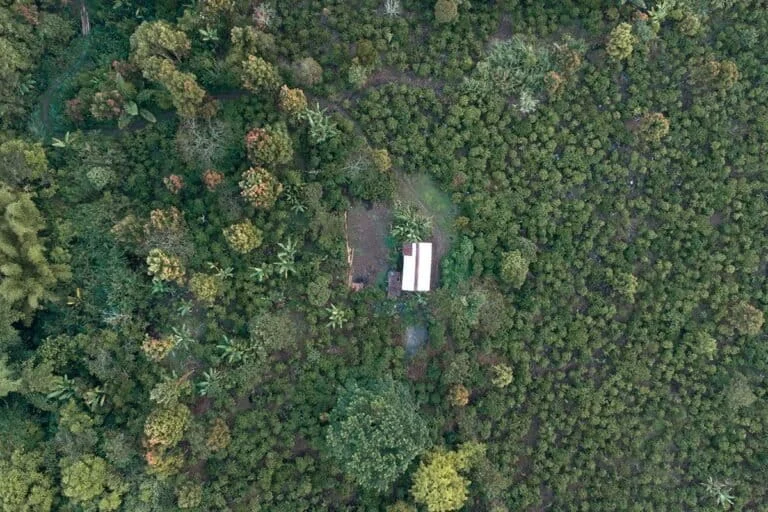
In the mist-shrouded highlands of South Sumatra, a profound and ancient social contract continues to govern the relationship between man and nature. For centuries, the Semende people have coexisted in remarkable harmony with the region’s diverse wildlife, most notably the siamang (Symphalangus syndactylus), a majestic, black-furred gibbon known for its haunting morning calls. While many parts of the Indonesian archipelago struggle with escalating human-wildlife conflicts driven by habitat loss and agricultural expansion, the Semende communities in Muara Enim Regency have maintained a stable equilibrium. This peace is not the result of modern conservation enforcement but is rooted in a sophisticated system of traditional ecological knowledge known as "Jalur Agung" and the strategic preservation of specific botanical species like the Semantung tree.
The Semende tribe’s approach to land management offers a masterclass in community-based conservation. By adhering to ancestral mandates that emphasize mutual respect between species, these farmers have created a landscape where high-yield coffee plantations sit side-by-side with the primary forests of the Bukit Barisan mountain range. The cornerstone of this coexistence is the "Jalur Agung," or the Great Path. This traditional concept designates specific forest corridors—often stretching along riverbanks and through valley folds—as exclusive territories for wildlife. According to local lore and practical experience, these paths are the sovereign routes of the Sumatran tiger, deer, barking deer, and the siamang. In these zones, the Semende people strictly forbid the clearing of land for gardens or the construction of dwellings, ensuring that animals can migrate and forage without encountering human interference.
The Jalur Agung: A Traditional Buffer Zone
The efficacy of the Jalur Agung was highlighted during a series of field observations in April 2026. Local residents in Muara Tenang Village, located in the Semende Darat Tengah District, emphasize that the few instances of wildlife "attacks" or conflicts usually involve outsiders. "Tiger encounters or attacks generally happen to migrants or newcomers who do not understand the Jalur Agung," explained Mang Zakaria, a veteran farmer. "They unknowingly open gardens or build houses directly on these ancestral paths. For the Semende people, we know where the boundary lies. If we do not disturb their path, they do not disturb ours."
This corridor system functions as a natural infrastructure project. By following the flow of rivers, the Jalur Agung preserves the most fertile and biodiverse sections of the forest. These areas are rich in native tree species that provide a year-round buffet for the forest’s inhabitants. Prominent among these are various members of the Dipterocarpaceae family, such as Meranti, as well as wild fruit trees like the Asam Kandis (Garcinia xanthochymus) and various wild figs (Ficus spp.). By leaving these food sources intact within the corridors, the community ensures that animals have little incentive to venture into human-managed agricultural lands.
The Semantung Tree: Tactical Botany in Coffee Landscapes
Perhaps the most ingenious aspect of the Semende conservation model is the use of the Semantung tree (Ficus padana). In the Datas Pagi area of Tanjung Tiga Village, a landscape dominated by lush coffee plantations and rice paddies, the Semantung tree serves as a living fence. Unlike modern farmers who might clear-cut all non-commercial vegetation, Semende farmers deliberately maintain Semantung trees at the boundaries of their gardens.
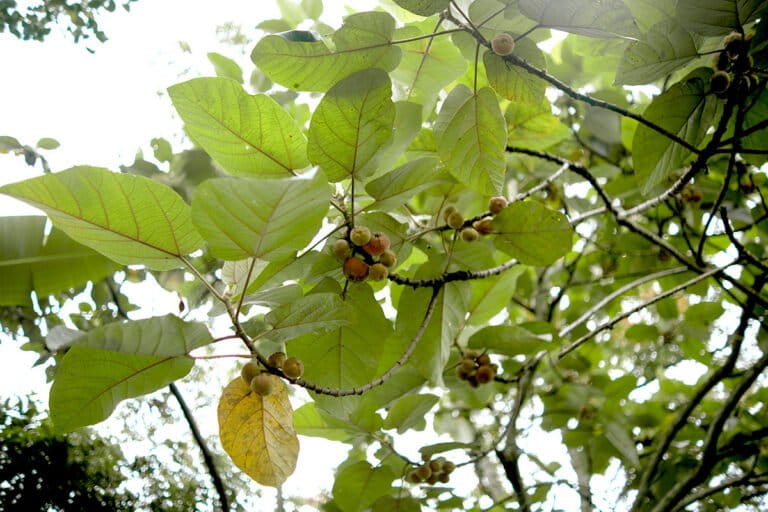
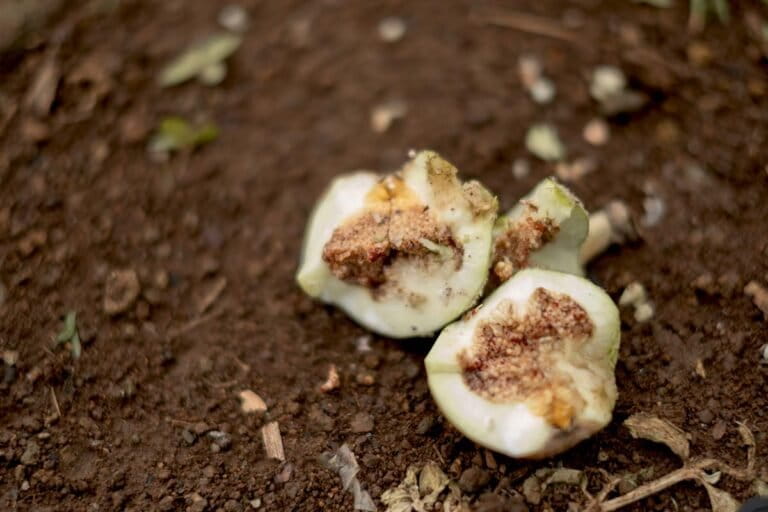
The Semantung tree is a favorite food source for the siamang and other primates, including the pig-tailed macaque (Macaca nemestrina) and the long-tailed macaque (Macaca fascicularis). Saptika, a female farmer in Datas Pagi, noted that these trees act as a biological distraction. "We never cut down the Semantung. Because the fruit is so beloved by the siamang, they stay at the edge of the forest to eat. They have everything they need right there, so they never feel the need to enter the coffee plots or disturb our crops," she said.
This observation is supported by the behavior of siamang groups in the Bukit Lumut Balai forest, which borders the Semende farmlands. At the break of dawn, around 6:00 AM, groups of five to six siamangs are often seen swinging through the Semantung branches at the garden’s edge. They feed in full view of the farmers who are beginning their day’s work harvesting coffee. There is a palpable sense of mutual observation without aggression—a rare phenomenon in a world where primates are often viewed as agricultural pests.
Ecological and Scientific Significance of Ficus Padana
The Semende tribe’s reliance on the Semantung tree aligns perfectly with modern ecological science. Belonging to the Moraceae family, Ficus padana is a keystone species in tropical ecosystems. Research conducted by Cut Malahayati and colleagues in the Leuser Ecosystem, published in the journal Kenanga (2025), confirms that the Moraceae family is the primary food source for siamangs. These trees are particularly valuable because they often produce fruit asynchronously, providing a consistent food supply even when other forest fruits are out of season.
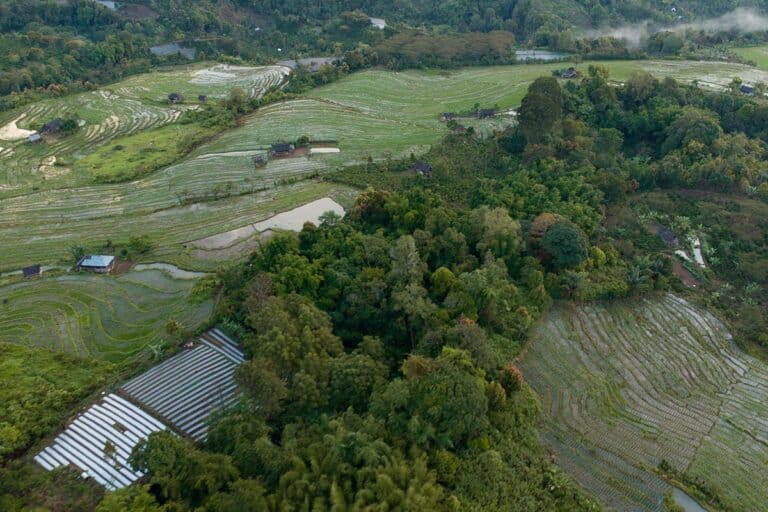
Furthermore, the Semantung tree plays a vital role in the physical structure of the forest. Its sprawling, irregular branch systems serve as "arboreal bridges," allowing siamangs—which are strictly arboreal and rarely descend to the ground—to navigate between fragmented forest patches. In the hilly terrain of Muara Enim, the deep and robust root systems of these trees also provide essential soil stabilization, preventing the landslides that frequently plague cleared slopes in Sumatra.
Syamsuardi, the Chairman of the Forest and Wildlife Network (PJHS), points out that the benefits of the Semantung tree extend far beyond primates. "It is a pioneer species that can thrive in degraded lands, making it essential for forest restoration," Syamsuardi stated. He also noted that the tree is a favorite of the Sumatran elephant. "If an elephant spots a Semantung, it becomes a prize. They eat everything from the leaves to the roots. Interestingly, the sap of the Semantung is known to help sick elephants regain their appetite, acting as a natural medicine."
The Siamang: An Endangered Icon Under Local Protection
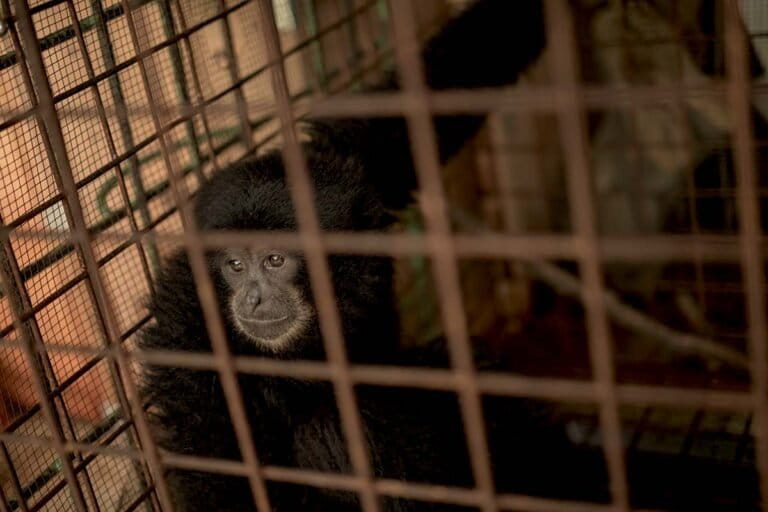
The siamang is the largest species in the gibbon family and is currently classified as Endangered (EN) on the IUCN Red List. Its survival is threatened across Sumatra by the relentless expansion of oil palm plantations and the illegal pet trade. However, in the Semende highlands, the population appears stable. Local estimates suggest that dozens of groups continue to thrive in the Bukit Lumut Balai landscape.
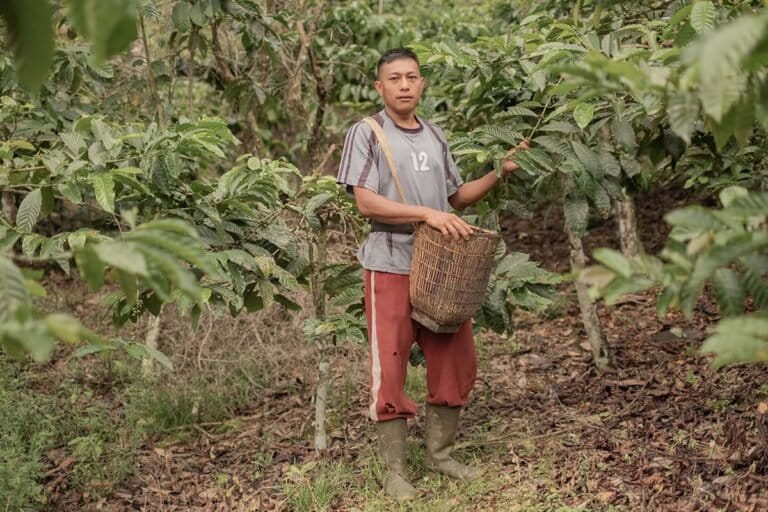
Mansir, another local farmer, recounted seeing many "families" of siamangs, often with young infants clinging to their mothers. The local taboo against hunting these primates is absolute. "The message from our ancestors is clear: they are residents of the forest just like we are residents of the village," Mansir said. "They don’t bother us, so why should we bother them? To hunt a siamang would be to break a sacred trust."
This cultural protection is vital because siamangs have a low reproductive rate, usually giving birth to a single offspring every two to three years. Without the active protection of the Semende people, these populations would likely have succumbed to the pressures that have wiped out gibbon populations in other parts of the Bukit Barisan range.
Analysis of Implications and Global Lessons
The Semende model of "sharing space" provides a compelling alternative to the "fortress conservation" model, which seeks to separate humans and wildlife through fences and patrols. Instead, the Semende approach utilizes:
- Spatial Zoning (Jalur Agung): Recognizing and respecting the natural movement patterns of apex predators and large mammals.
- Biological Buffering (Semantung Trees): Planting or preserving high-value wildlife food sources at the intersection of human and wild spaces to reduce crop raiding.
- Cultural Enforcement: Utilizing ancestral wisdom and social taboos to maintain conservation ethics without the need for constant state intervention.
As climate change and habitat fragmentation continue to accelerate, the integration of such traditional ecological knowledge into modern conservation strategies is becoming increasingly urgent. The Semende experience proves that agricultural productivity—specifically high-quality Sumatran coffee—does not have to come at the expense of biodiversity.
The preservation of the Semantung tree and the Jalur Agung corridors represents a living laboratory for sustainable development. For policymakers and conservationists, the lesson from Muara Enim is clear: the most effective way to protect endangered species like the siamang is to empower the local communities who live alongside them, honoring the ancient traditions that have kept the balance for centuries. In the "singing forests" of Semende, the morning chorus of the siamang remains a testament to the success of this enduring partnership.