Azin Asro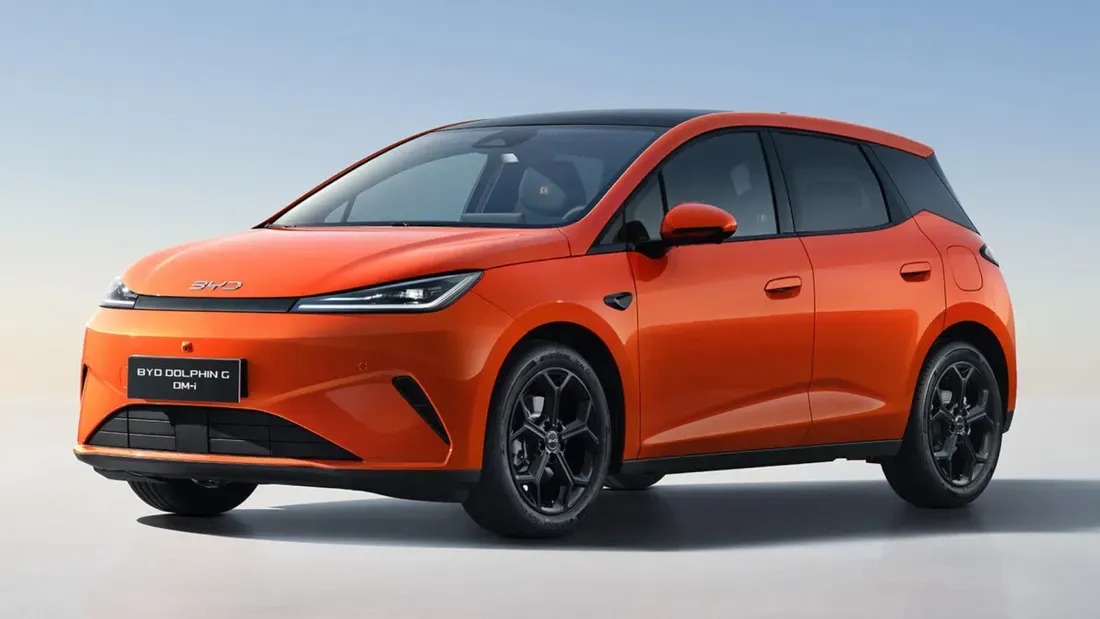
BYD, the world’s leading manufacturer of new energy vehicles (NEVs), has officially pulled back the curtain on its latest strategic offering for the European market, the BYD Dolphin G DM-i. As a plug-in hybrid (PHEV) variant of the popular Dolphin line, the Dolphin G represents a significant milestone for the Chinese automaker, marking its first model developed specifically with the European consumer in mind. The revelation of the vehicle’s design and preliminary specifications signals BYD’s intent to diversify its portfolio beyond battery-electric vehicles (BEVs) and capture a larger share of the continent’s competitive hatchback segment.
According to technical data and design details recently surfaced, the Dolphin G DM-i is positioned as a high-efficiency alternative to traditional internal combustion engines and pure electric vehicles. The vehicle is scheduled for a formal price announcement in June, with the first wave of customer deliveries projected for the autumn of 2026. This timeline aligns with BYD’s broader infrastructure development in the region, particularly its upcoming manufacturing capabilities on European soil.
A Design Language Tailored for European Sensibilities
The BYD Dolphin G DM-i introduces a distinct aesthetic that deviates slightly from the standard "Ocean Aesthetics" design language seen in its purely electric predecessors. The front fascia features a more aggressive and aerodynamic profile, characterized by thin, sharp LED headlights and an active air intake system. The inclusion of two prominent air ducts on the front bumper suggests a focus on thermal management for the hybrid powertrain, while also providing a sporty, modern silhouette.
Observers have noted that while the Dolphin G shares some visual DNA with the BYD Atto 1 (known in some markets as the Seagull), it is notably larger and more refined. The exterior is further accentuated by black-finished alloy wheels, semi-hidden door handles that balance aerodynamics with traditional accessibility, and a blackened D-pillar. This latter feature creates the popular "floating roof" effect, a design trend that has seen significant success in the European market.
To enhance safety and driver assistance, the Dolphin G is equipped with a comprehensive surround-view camera system. This is integrated with a suite of front and rear parking sensors, indicating that the model will likely feature high-level Advanced Driver Assistance Systems (ADAS), a prerequisite for achieving high safety ratings in Euro NCAP testing.
Dimensional Growth and Spatial Efficiency
One of the most significant revelations regarding the Dolphin G DM-i is its physical footprint. The vehicle measures 4,160 mm in length and 1,825 mm in width. When compared to the BYD Atto 1, which measures 3,925 mm in length and 1,720 mm in width, the Dolphin G offers a substantial increase in size. This extra length and width are expected to translate directly into improved cabin roominess and cargo capacity, positioning the car more firmly in the B-plus or C-segment hatchback category.
The interior design follows BYD’s philosophy of "technological minimalism." The cabin features a sophisticated black color palette, anchored by a signature floating touchscreen infotainment system centered on the dashboard. Early images also reveal a unique "G" emblem embossed on the headrests, reinforcing the sub-brand identity of this specific model. While full interior specifications remain under wraps, the use of premium-feel materials is expected to meet the expectations of European buyers who prioritize tactile quality.
The DM-i Powertrain: Bridging the Gap to Full Electrification
The core of the Dolphin G’s appeal lies in its DM-i (Dual Mode intelligent) technology. While BYD has not yet released the finalized technical sheet for the Dolphin G, industry analysts suggest the powertrain will mirror the configurations found in the Atto 2 DM-i. This system typically utilizes a 1.5-liter naturally aspirated engine optimized for high thermal efficiency, producing approximately 72 kW of power. This internal combustion unit works in tandem with a robust electric motor capable of delivering 145 kW.
The primary advantage of the DM-i system is its ability to operate primarily as an electric vehicle in urban settings, with the engine acting as a generator or providing direct drive during high-speed cruising. BYD has confirmed that the Dolphin G DM-i will offer a staggering combined range of 1,000 kilometers. This range capability is a direct response to "range anxiety," which remains a primary barrier to EV adoption for many consumers in regions with developing charging infrastructure. By offering a 1,000-km range, BYD is positioning the Dolphin G as a viable "only car" for families who require both daily city commuting and long-distance holiday travel.
Chronology of BYD’s European Expansion
The introduction of the Dolphin G DM-i is the latest step in a multi-year strategy by BYD to dominate the global NEV market. The chronology of this expansion provides context for the Dolphin G’s importance:
- 2021-2022: BYD entered the European market with a focus on Norway and later expanded to Germany, France, and the UK with models like the Atto 3, Han, and Tang.
- 2023: The launch of the BYD Dolphin EV and Seal EV established the brand’s "Ocean Series" in Europe, receiving critical acclaim for value and technology.
- Late 2023: BYD announced plans to build its first European passenger car factory in Szeged, Hungary. This move was designed to localize production, reduce logistics costs, and navigate potential trade barriers.
- Early 2024: Following the global success of its 5th-generation DM-i technology, BYD signaled a pivot to include more PHEV options in its European lineup to cater to diverse consumer needs.
- June 2026 (Scheduled): Official pricing and final European specifications for the Dolphin G DM-i will be announced.
- Autumn 2026 (Scheduled): The first units of the Dolphin G DM-i are expected to be delivered to customers, potentially being among the first models to roll off the assembly lines in Hungary.
Strategic Manufacturing in Hungary
The likelihood that the Dolphin G DM-i will be produced at the Szeged plant in Hungary is a critical factor for its market success. Localized production allows BYD to bypass the increasingly complex landscape of import tariffs on Chinese-made electric vehicles currently being debated by the European Commission. Furthermore, "Made in Europe" status carries significant weight with European consumers and institutional buyers, such as corporate fleets and government agencies.
The Hungary plant is expected to have an initial production capacity of 150,000 vehicles per year, with the potential to double that figure as demand grows. By producing the Dolphin G locally, BYD can also tailor the supply chain to meet European standards more effectively and provide faster turnaround times for parts and service.
Market Implications and Competitive Landscape
The arrival of the Dolphin G DM-i poses a direct challenge to established European automotive giants. In the hatchback segment, the Dolphin G will compete with the likes of the Volkswagen Golf GTE, the Toyota Corolla Hybrid, and the Peugeot 308 PHEV.
BYD’s competitive edge typically lies in its vertical integration. Unlike many of its competitors, BYD manufactures its own batteries, semiconductors, and electric motors. This control over the supply chain allows the company to offer high-technology features at a price point that often undercuts European rivals. If the Dolphin G DM-i can deliver a 1,000-km range and a premium interior at a price significantly lower than its hybrid competitors, it could force a major shift in the market’s pricing structure.
Furthermore, the introduction of a dedicated PHEV model suggests that BYD is taking a pragmatic approach to the energy transition. While the European Union has proposed a ban on the sale of new internal combustion engine vehicles by 2035, the current market shows a cooling of demand for pure BEVs in some regions due to high costs and infrastructure gaps. PHEVs like the Dolphin G serve as a "gateway" technology, allowing consumers to experience electric driving without the limitations of current battery technology.
Industry Reactions and Future Outlook
While official statements from European competitors have been guarded, industry analysts suggest that BYD’s aggressive move into the PHEV space is being watched closely. The Dolphin G DM-i represents more than just a new car; it represents a new philosophy of "Europeanized" Chinese manufacturing.
"BYD is no longer just exporting cars; they are becoming a local player," says an industry analyst specializing in Asian automotive trends. "By developing a car specifically for Europe and building it in Hungary, they are removing the ‘foreign’ stigma and focusing purely on the product’s merit. The 1,000-km range is a psychological masterstroke for the European market."
As the automotive world looks toward the June 2026 announcement, the Dolphin G DM-i stands as a testament to the rapid evolution of the industry. It reflects a shift toward highly efficient, multi-energy platforms that prioritize flexibility and long-range capability. For BYD, the success of the Dolphin G will likely determine the roadmap for future "G" designated models, potentially leading to a full suite of European-specific hybrids that complement their existing all-electric lineup.
With its blend of advanced DM-i technology, localized production, and a design geared toward European tastes, the BYD Dolphin G DM-i is poised to be a pivotal model in the next chapter of the global automotive transition. The coming months will reveal whether this ambitious hybrid can truly redefine the standards for the modern European hatchback.