Nila Kartika Wati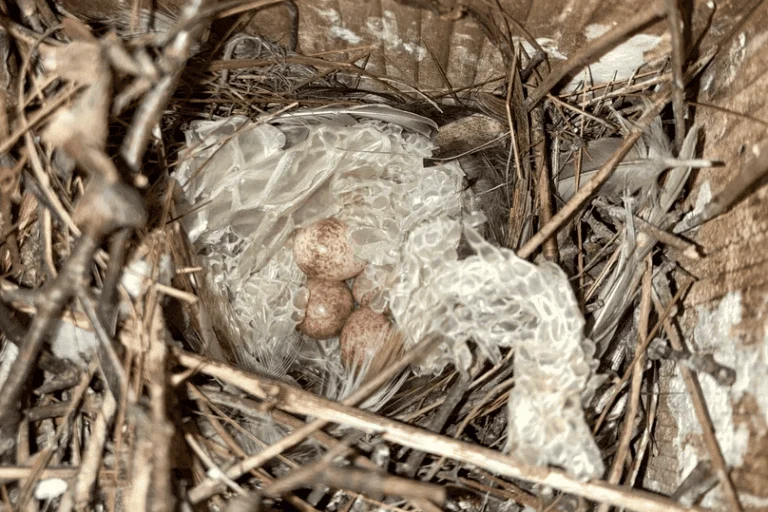
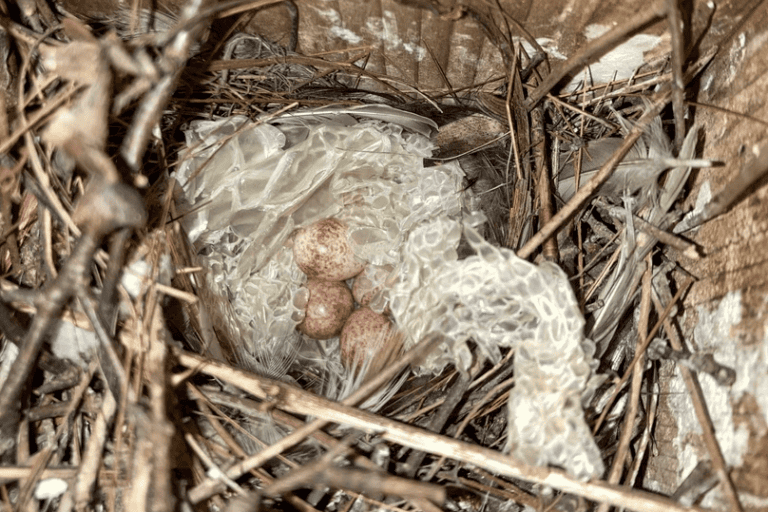
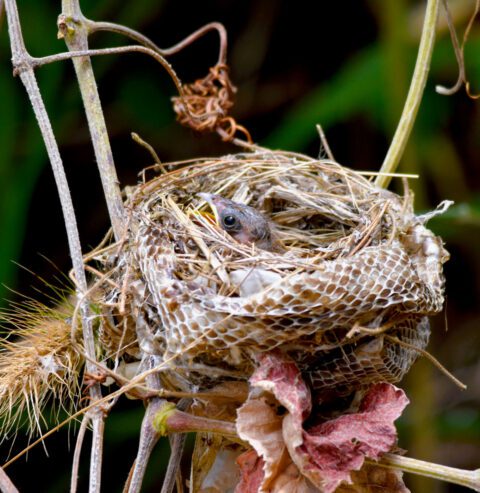
For more than a century, naturalists and ornithologists have observed a peculiar behavior among certain bird species: the intentional incorporation of discarded snakeskin into their nests. To the casual observer, these translucent, papery fragments might appear to be accidental debris or perhaps a strange choice of insulation. However, recent scientific inquiries have revealed that this behavior is far from random. It is, in fact, a sophisticated form of biological warfare and psychological deterrent. A comprehensive study led by Vanya Rohwer, a curator at the Cornell University Museum of Vertebrates, has finally decoded this mystery, demonstrating that for birds nesting in tree cavities, snakeskin serves as a vital tool for survival, acting as a "keep out" sign for potential predators.
The phenomenon of birds using snakeskin has been documented in scientific literature since at least the late 19th century. Early naturalists noted that species such as the Great Crested Flycatcher (Myiarchus crinitus) almost reflexively sought out the shed skins of snakes to line their nests. Despite the prevalence of these observations, the scientific community remained divided on the purpose of this behavior. Some hypothesized that the skin provided structural integrity or moisture control, while others suggested it was a form of "nest decoration" intended to attract mates. However, the most compelling theory—that the skin acted as a predator deterrent—remained difficult to prove due to inconsistent field data and the challenges of observing predation events in real-time.
The Cornell University Investigation
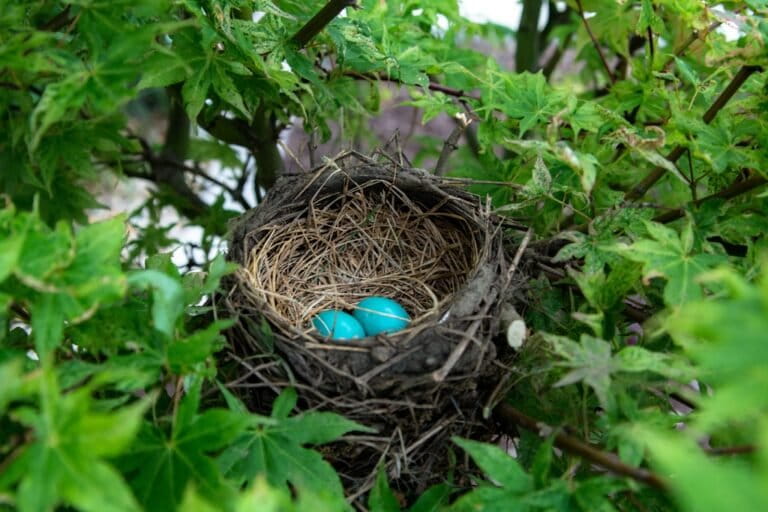
The breakthrough came through a meticulously designed study published in the journal The American Naturalist. Vanya Rohwer and his team sought to address the inconsistencies of previous research by examining the architecture of the nests themselves. They posited that the effectiveness of snakeskin as a deterrent depended heavily on the type of nest a bird built. Specifically, they distinguished between "open-cup" nesters, which build nests in the crooks of branches or on the ground, and "cavity" nesters, which utilize holes in trees or man-made nest boxes.
This distinction is crucial because the predator profiles for these two types of nests differ significantly. Open-cup nests are vulnerable to a wide array of predators, including larger birds like crows and jays, as well as climbing mammals. Cavity nests, while protected from larger threats by the narrowness of the entrance, are uniquely vulnerable to small, agile mammals like squirrels, weasels, and mice—creatures that are also the primary prey of many snake species.
Unlocking the Past: Oological Records as Scientific Data
To establish a broad historical context for their hypothesis, Rohwer’s team turned to an unconventional source of data: historical egg collection records, or oological cards. During the late 19th and early 20th centuries, egg collecting was a popular hobby and a serious scientific pursuit. Collectors would meticulously record the date, location, and—most importantly for this study—a detailed description of the nest materials.
By analyzing data from 78 different bird species, the researchers uncovered a striking pattern. They found that cavity-nesting birds were 6.5 times more likely to include snakeskin in their nests than those that built open-cup nests. This statistical disparity provided the first major clue that the use of snakeskin was a targeted evolutionary strategy rather than a general avian trait. The researchers noted that the descriptions on these vintage cards, often written in elegant cursive, provided a "window into the past," allowing them to aggregate decades of observations that would have been impossible to replicate in a single modern field season.
Field Methodology: Testing the "Scarecrow" Effect
With the historical data supporting their hypothesis, the team moved to the experimental phase. They conducted a rigorous field test to see if the presence of snakeskin actually reduced predation rates. The researchers set up two distinct types of experimental sites: 63 nest boxes designed to simulate tree cavities and 84 artificial open-cup nests.
In half of each nest type, they placed small pieces of shed snakeskin, while the other half remained as controls. To simulate a successful nesting attempt, the researchers placed quail eggs inside the nests. They then monitored the nests over a 14-day period—the typical incubation time for many small songbirds—to see which ones were raided by predators.
The results were stark and provided the "smoking gun" the scientific community had been seeking for over a hundred years. In the open-cup nests, the presence of snakeskin made absolutely no difference; predators raided both the treated and control nests with equal frequency. However, in the cavity nests (the nest boxes), the snakeskin provided a dramatic advantage. Only 38 percent of the control boxes (those without snakeskin) survived the 14-day period intact. In contrast, a staggering 75 percent of the boxes containing snakeskin remained untouched by predators.
Psychological Warfare in the Animal Kingdom
To understand why the snakeskin worked in cavities but not in open nests, the researchers utilized motion-activated trail cameras. The footage revealed a clear divergence in predator behavior. The open-cup nests were primarily targeted by avian predators like Blue Jays and crows. These birds have excellent eyesight and high intelligence; they likely recognized the snakeskin as a dry, harmless object rather than a living threat. Furthermore, many of these birds are not naturally preyed upon by the types of snakes that leave behind such skins.
On the other hand, the primary culprits raiding the cavity nests were small mammals, specifically flying squirrels and red squirrels. For these small mammals, a snake is a lethal threat. In the cramped, dark confines of a tree cavity, the sight or scent of a snake—even a shed skin—triggers an immediate flight response. The snakeskin acts as a powerful psychological deterrent, a biological "scarecrow" that signals the presence of a predator that could easily kill the intruder. For a squirrel entering a dark hole, the tactile sensation or the faint olfactory hint of a snake is enough to abort the raid instantly.
Broader Ecological and Evolutionary Implications
This study highlights a fascinating aspect of evolutionary biology: the use of "extended phenotypes." This concept, popularized by Richard Dawkins, suggests that an animal’s genes can influence the environment beyond its own body. By selecting snakeskin as a building material, the birds are essentially extending their defensive capabilities into their architecture.
Furthermore, the research suggests that birds possess a high degree of cognitive awareness regarding their environment and their predators. The act of searching for, identifying, and transporting snakeskin is not a low-energy task. It requires the bird to recognize a specific material that has no nutritional value and offers little in the way of traditional nesting comfort. The fact that they prioritize this material suggests a learned or innate understanding of its protective value.
This behavior is not limited to snakeskin. Some bird species have been known to use other pungent materials, such as aromatic plants or even carnivore scat, to mask the scent of their eggs or deter parasites. However, the use of snakeskin is unique because it relies on the predator’s instinctive fear of a specific animal. It is a form of mimesis—not of the bird itself, but of the bird’s environment.
A New Chapter in Avian Cognition
The implications of this research extend beyond the specific interaction between birds and snakes. It provides a framework for understanding how animals utilize "environmental cues" to mitigate risk. In the harsh reality of the natural world, where a single predation event can end a breeding season, the ability to innovate and utilize tools for defense is a significant evolutionary advantage.
The study also raises new questions for future research. For instance, do birds prefer the skin of specific snake species? Some snakes, like rat snakes, are notorious nest predators themselves. Using the skin of a known "nest-raider" might be an even more effective deterrent than using the skin of a harmless species. Additionally, researchers are interested in whether this behavior is becoming more or more common in urban environments, where the predator-prey dynamics are altered by human presence.
In conclusion, the mystery of the snakeskin in the nest is a testament to the complexity of avian life. What was once dismissed as a curious quirk of natural history has been revealed as a calculated survival strategy. By tapping into the deep-seated fears of their enemies, cavity-nesting birds have mastered a form of psychological defense that ensures the next generation survives to take flight. This discovery not only enriches our understanding of bird behavior but also serves as a reminder that in nature, even the most seemingly insignificant fragment—like a piece of dry, discarded skin—can be the difference between life and death.