Nila Kartika Wati
A New Chapter in Resource Management
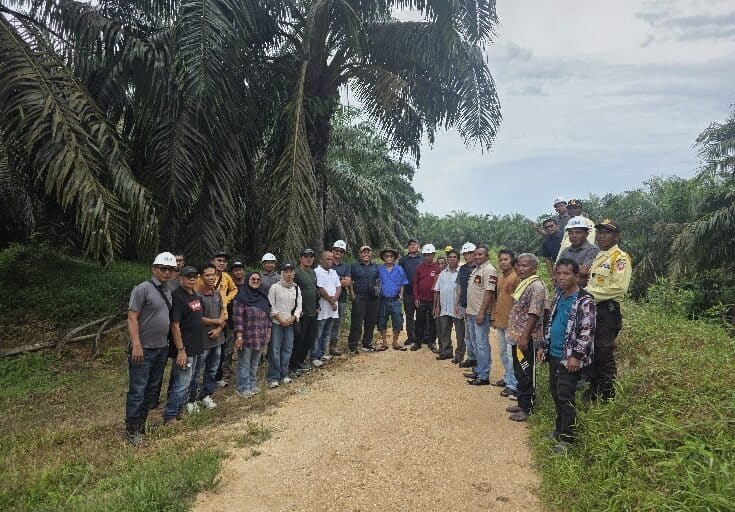
The implementation of the land grant agreement has seen the immediate mobilization of the community’s youth. Under the direction of traditional indigenous institutions, four young members of the Talang Parit have been appointed to oversee daily operations at the plantation. The roles are divided by gender and expertise, reflecting a modernized approach to traditional governance. Men serve as field supervisors or "mandors," while women manage the complex administrative tasks, including the meticulous recording of harvest data.
Ayu, a 26-year-old vocational school graduate and member of the Talang Parit community, is one of the individuals leading this administrative effort. Utilizing the Inecda plasma plantation office as a temporary base, Ayu and her colleagues have undergone intensive training provided by company staff. This training focused on the use of digital tools, specifically Microsoft Excel, to track plantation metrics such as the number of fresh fruit bunches (janjang), loose fruits (berondolan), and overall tonnage.
For Ayu, the opportunity represents more than just a job; it is a gateway to professional development. Having previously interned at a law firm in Pekanbaru and participated in various indigenous empowerment programs, she views this role as a stepping stone. With the income generated from the plantation management, Ayu intends to pursue higher education, hoping that her journey will inspire a broader trend of educational and economic advancement within the Talang Parit community.
Technical Training and Economic Aspirations
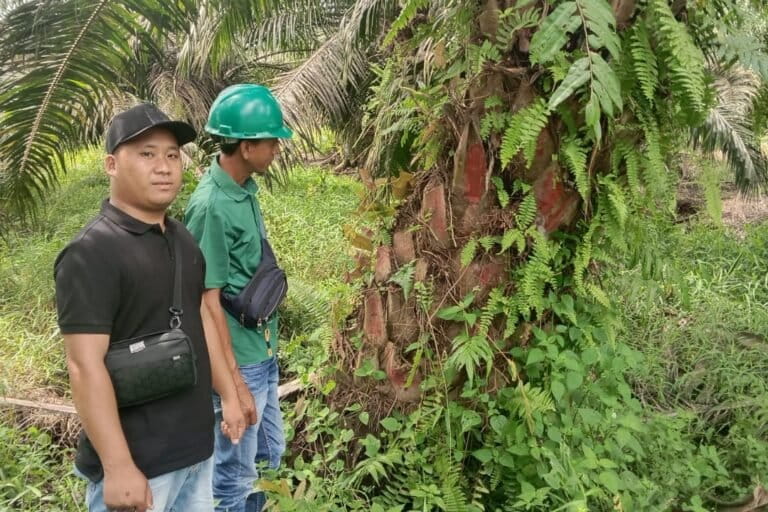
The physical management of the plantation is equally rigorous. Herianto, one of the youth supervisors, has been trained in the technical criteria for harvesting. His responsibilities include ensuring that only fruit meeting specific ripeness standards is harvested and overseeing the logistics of transporting the harvest to the processing mill. This level of oversight is crucial for ensuring transparency and maximizing the community’s returns.
Beyond the harvest cycles—which typically occur two to three times per month depending on fruit maturity—the community maintains a constant presence on the land. Security patrols are conducted regularly to protect the "pringgan" or boundary lines of the communal land. These patrols have become a necessity due to persistent issues with fruit theft. Even during periods of heavy rain and localized flooding, which recently submerged parts of the plantation for a week, the community continues to monitor the area to safeguard their newly reclaimed assets.
The Decades-Long Struggle for Recognition
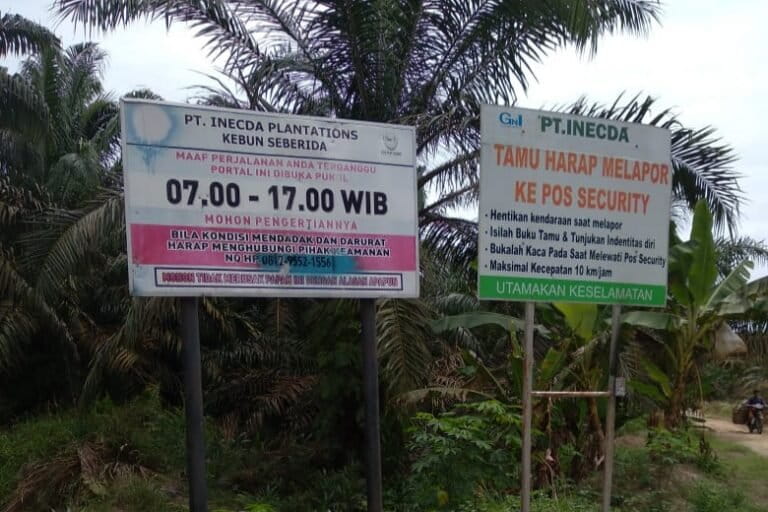
The current partnership is the culmination of a conflict that began in 1991. For 35 years, PT Inecda Plantation operated on approximately 6,000 hectares of land that the Talang Mamak community claimed as their ancestral territory. This overlap effectively severed the community’s access to vital forest resources and traditional livelihoods. Despite the passage of nine different regency administrations (Bupati) in Indragiri Hulu, the dispute remained unresolved for decades.
The turning point occurred in 2021 when the community, supported by the Aliansi Masyarakat Adat Nusantara (AMAN) and the ASM Law Office, filed a formal complaint with the Roundtable on Sustainable Palm Oil (RSPO). As a member of the RSPO, PT Inecda is bound by the organization’s Principles and Criteria, which require the respect of indigenous rights and the implementation of Free, Prior, and Informed Consent (FPIC).
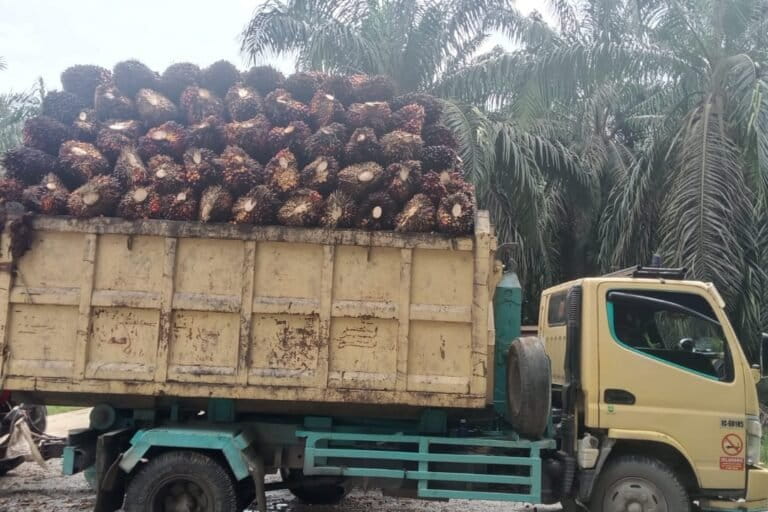
The RSPO’s independent investigation and subsequent rulings in September 2024 and March 2025 found the company in violation of these standards. The panel ordered a series of corrective actions, including participatory mapping of the ancestral territory and a revision of the company’s grievance procedures. While the company initially appealed the decision, the final ruling stood, compelling PT Inecda to enter into a binding settlement with the Talang Parit community.
The RSPO Intervention and Legal Chronology
The resolution of the Talang Parit case followed a specific legal and administrative timeline:
- 1991: PT Inecda Plantation begins operations, overlapping with 6,000 hectares of Talang Mamak ancestral land.
- 2013: AMAN Indragiri Hulu conducts initial participatory mapping of the territory.
- 2021: Formal complaint lodged with the RSPO regarding human rights and land tenure violations.
- September 2024: RSPO issues the first ruling, ordering participatory mapping and SOP revisions.
- March 2025: RSPO rejects the company’s appeal, finalizing the requirements for restitution.
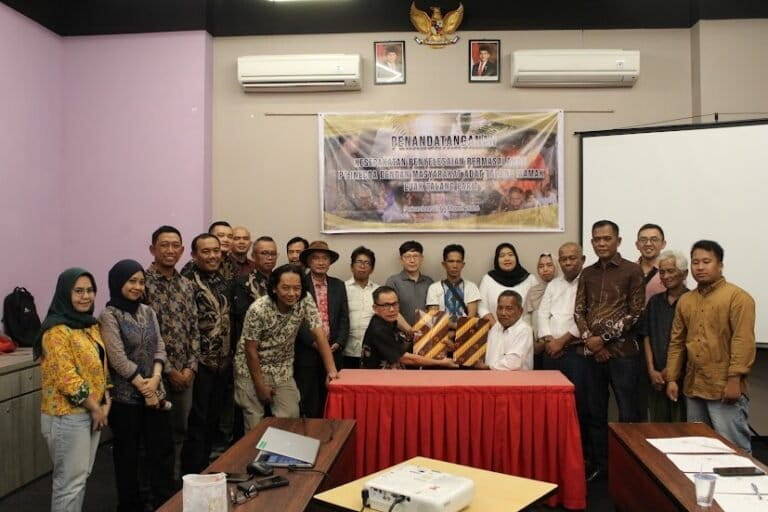
- March 11, 2026: A formal agreement is signed between Batin Irasan (Indigenous Leader) and Hendry T. (Operational Director of Inecda).
- May 2026: The first harvest under the new communal management model takes place.
A key component of this settlement was the conversion of the community’s demand for "plasma" plantations into a direct land grant (hibah). Under Indonesian law, plantation companies are required to facilitate the development of plasma plantations for local communities, usually covering 20% of the concession area. However, plasma schemes often involve significant debt burdens for communities. The land grant model provided the Talang Parit with immediate access to productive, mature palms without the associated debt of plantation development.
Financial Structure and Revenue Sharing Mechanisms
The economic model established for the Talang Parit is designed to ensure long-term sustainability. The revenue from the harvest is calculated based on the official palm oil prices set by the Riau Provincial Plantation Office. From the gross revenue, a 5% management fee is deducted by the company to cover administrative and staff costs, followed by deductions for operational expenses such as fertilizer and maintenance.
Muchlisin, the Legal Manager of Inecda Plantation, explained that this formula is intended to be transparent. For instance, if a harvest yields Rp 200 million, the community can expect to receive between Rp 120 million and Rp 130 million in net profit. These funds are channeled through a legally recognized communal business entity (badan usaha milik masyarakat adat), ensuring that the wealth remains within the community rather than being liquidated by individuals.
Andiko Sutan Mancayo, a senior lawyer at ASM Law Office, emphasized the value of this arrangement. He noted that the productive plantation land is currently valued at approximately Rp 250 million to Rp 300 million per hectare. By securing the land as a communal asset, the community avoids the pitfalls of individual plasma ownership, where land is often sold off during times of financial hardship.
Environmental Restoration and Cultural Preservation
Beyond the economic benefits of the palm oil plantation, the agreement includes a comprehensive Community Empowerment Program (PPM). PT Inecda has committed to providing Rp 150 million annually for social, educational, and cultural initiatives. This fund is distinct from the company’s standard Corporate Social Responsibility (CSR) budget and is specifically earmarked for the restoration of the indigenous territory.
A priority of the PPM is the rehabilitation of sacred sites and traditional forest areas, such as Pulai Berlayar, Badaran Gadang, and Badaran Kacik. These areas, which once teemed with biodiversity, will undergo ecological restoration, including the restocking of local fish species in the rivers. Lesmana Amiarsa, Sustainability Manager at Inecda, stated that the program aims to be sustainable and participatory, with planning and evaluation conducted in conjunction with the village head and the "Batin" (traditional leader).
Critical Perspectives on the Settlement
While the agreement is being hailed as a success, some indigenous rights advocates urge caution. Muhammad Arman, Director of Policy Advocacy, Law, and Human Rights at AMAN, pointed out that the land grant—while significant—represents only a fraction of the 6,000 hectares originally taken from the community. He questioned whether such a partial return truly constitutes "full restoration" of indigenous living space.
Arman argued that while the community has achieved a tactical victory, the broader struggle for the total recognition of ancestral domains continues. He cautioned that empowerment programs must remain truly participatory and that corporations must adhere strictly to the United Nations Guiding Principles on Business and Human Rights to avoid "tokenism."
A Global Precedent for Indigenous-Corporate Relations
The case of the Talang Mamak and PT Inecda is being watched closely by international observers. It represents one of the first instances globally where an RSPO complaint has resulted in the direct transfer of productive plantation assets to an indigenous community under communal management.
This model offers a potential blueprint for resolving land "land-grab" disputes in the global commodities sector. It demonstrates that when international certification bodies like the RSPO enforce their standards rigorously, and when indigenous communities are supported by competent legal and advocacy groups, it is possible to move beyond deadlock toward a functional, albeit complex, coexistence.
As the Talang Parit community continues to refine their management of the plantation, the focus will remain on ensuring that the economic gains are translated into lasting social improvements. For Ayu, Herianto, and the rest of the Talang Mamak, the goal is clear: to ensure that their ancestral land, once a source of conflict, becomes the foundation for a prosperous and self-reliant future.