Tyo Susilo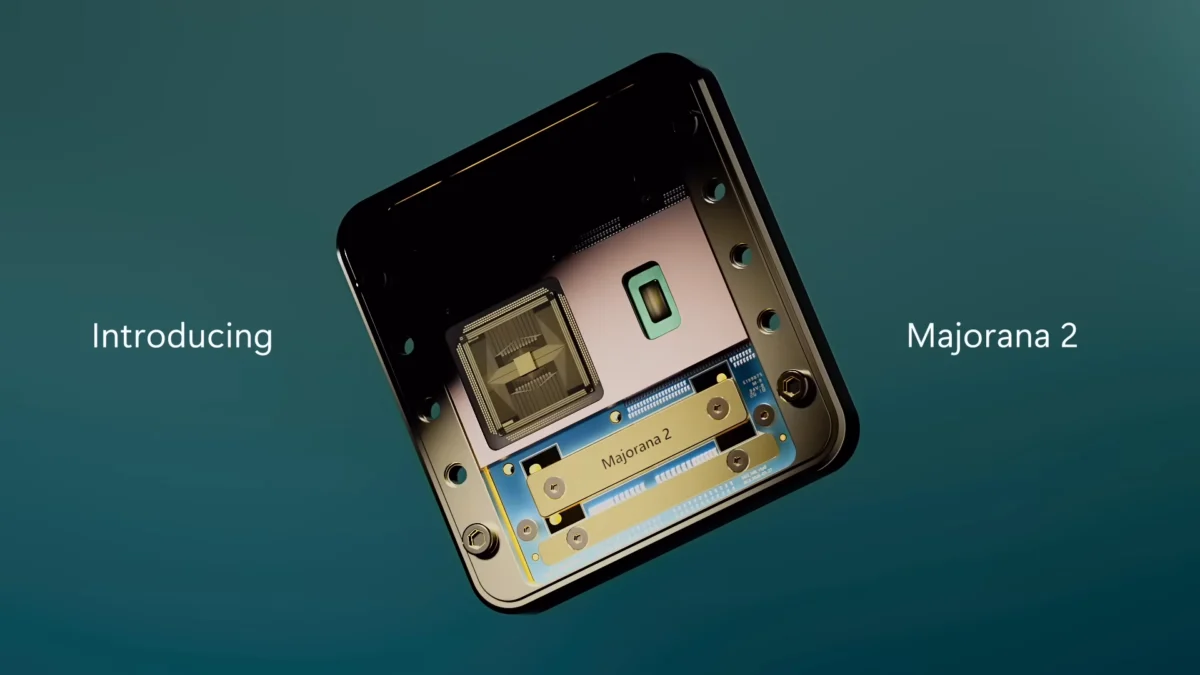
Microsoft has announced a significant advancement in its pursuit of practical quantum computing, unveiling its latest quantum chip, codenamed Majorana 2. This development marks a crucial step forward in overcoming one of the most persistent challenges in quantum computation: the inherent fragility of quantum information. The new chip is engineered to dramatically improve the stability of qubits, the fundamental units of quantum computation, potentially accelerating the realization of quantum computers capable of solving problems currently intractable for even the most powerful conventional supercomputers.
The core of this breakthrough lies in addressing decoherence, the phenomenon where quantum states lose their information due to interaction with the environment. For quantum computers to perform complex calculations reliably, qubits must maintain their delicate quantum states for extended periods. Microsoft claims that the Majorana 2 chip has achieved a remarkable leap in qubit stability, with individual qubits capable of preserving their information up to 1,000 times longer than in previous designs. This extended coherence time is paramount for enabling more complex quantum algorithms and unlocking the transformative potential of quantum computing.
A Bold Departure in Material Science: Lead Takes Center Stage
In a move that diverges significantly from the industry norm, Microsoft has opted for an unconventional material in the construction of its Majorana 2 chip: lead. While many leading quantum computing initiatives utilize aluminum superconductors, a material more readily integrated into existing semiconductor fabrication processes, Microsoft has embraced lead, a metal historically challenging to work with in chip manufacturing due to its reactivity.
This deliberate choice underscores Microsoft’s commitment to exploring novel pathways in quantum hardware. The difficulties associated with lead’s processing—its tendency to oxidize and its complex phase behavior—necessitated the development of specialized manufacturing techniques. Microsoft asserts that it has successfully navigated these intricate fabrication challenges, enabling the use of lead in a way that enhances qubit performance.
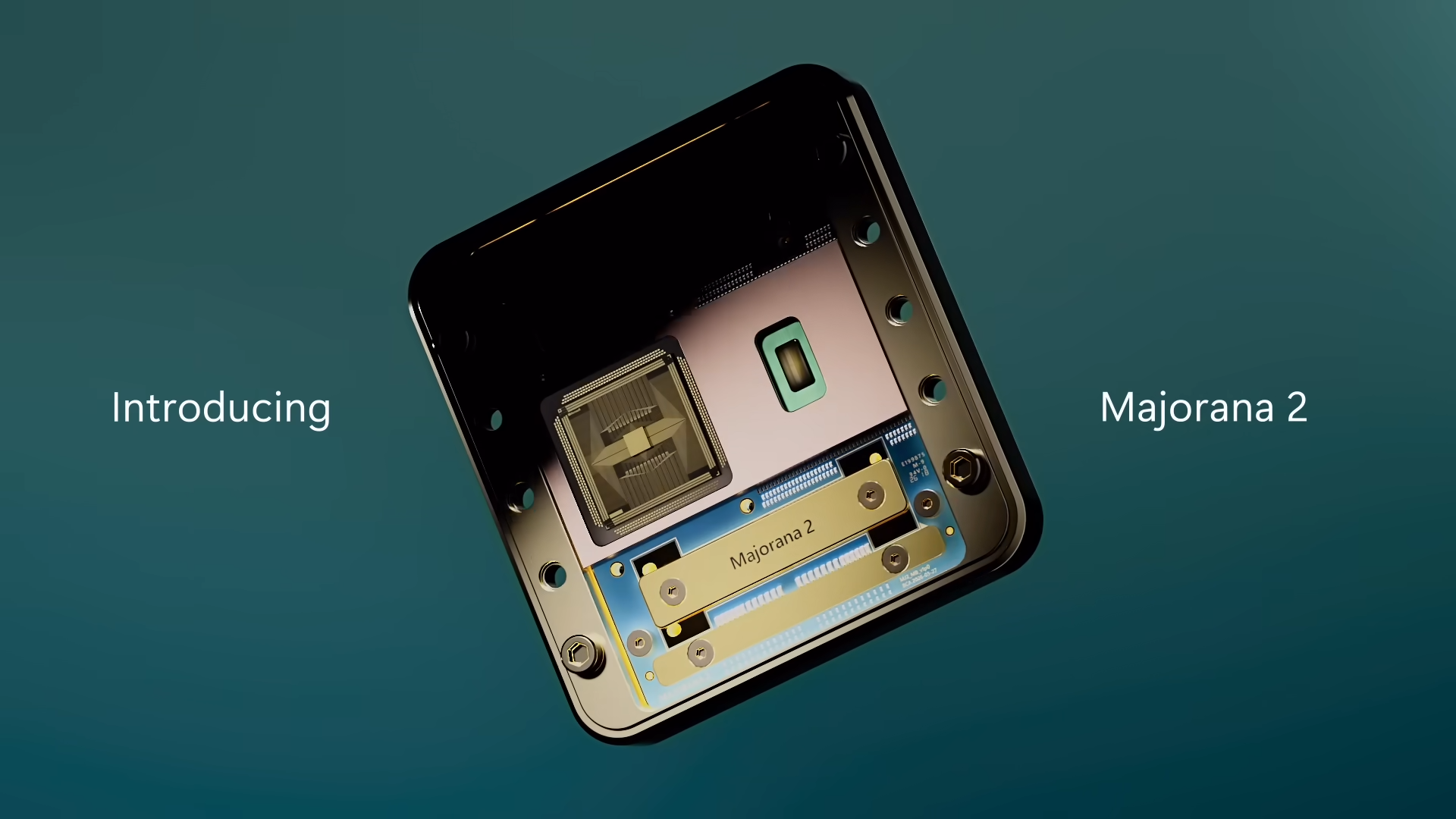
The reported outcome of this material innovation is substantial. According to Microsoft, qubits integrated into the Majorana 2 chip can now sustain their quantum state for an average of 20 seconds. In some experimental runs, this coherence time has even extended to a full minute. To contextualize this achievement, many current quantum computing systems struggle to maintain qubit coherence for more than microseconds. This exponential improvement in stability represents a paradigm shift, moving closer to the robustness required for practical, error-corrected quantum computation.
The Role of Artificial Intelligence in Accelerating Discovery
Microsoft’s progress with the Majorana 2 chip is not solely attributed to advancements in materials and fabrication. The company has also leveraged its sophisticated artificial intelligence (AI) capabilities to expedite the research and development process. Internal AI technologies were employed to explore and identify optimal material compositions and intricate chip designs. This AI-driven approach significantly accelerates the experimental cycles that would typically span years, allowing researchers to test a vast array of possibilities and pinpoint the most promising avenues for quantum hardware development more efficiently.
The integration of AI in scientific discovery, particularly in complex fields like quantum computing, is becoming increasingly vital. By automating the analysis of vast datasets and predicting the behavior of quantum systems, AI can identify correlations and insights that might be missed by human researchers, thereby compressing the timeline for breakthroughs.
Grounded in Theory, Facing Scientific Scrutiny
While Microsoft’s announcement is undeniably groundbreaking, its reception within the broader scientific community is marked by a degree of cautious optimism and calls for further validation. The Majorana 2 chip’s architecture is fundamentally based on the theoretical existence of Majorana quasiparticles. These are exotic entities predicted by physics that are their own antiparticles, a concept that has been a subject of intense theoretical and experimental investigation for decades.
Microsoft’s research team is confident in their assertion that these particles are indeed present and are the bedrock of their quantum computing technology. However, a segment of the scientific community remains unconvinced, seeking more transparent and independently verifiable evidence of their existence and role within the chip. The elusive nature of Majorana quasiparticles means that their detection and manipulation are exceptionally difficult, leading to ongoing debate among physicists.

The Path Towards Commercial Viability and Broader Implications
Despite the ongoing scientific debate surrounding the fundamental physics, Microsoft appears resolute in its ambitious timeline. The company is increasingly confident in its trajectory toward delivering a commercially viable quantum computer by 2029. Such an achievement would represent a monumental leap forward, with profound implications across numerous sectors.
The potential applications of a functional, large-scale quantum computer are vast and transformative:
- Drug Discovery and Development: Quantum computers could revolutionize pharmaceutical research by enabling highly accurate simulations of molecular interactions. This would drastically accelerate the discovery of new drugs and therapies, potentially leading to breakthroughs in treating diseases that are currently incurable or difficult to manage. The ability to model complex biological systems at the quantum level could unlock personalized medicine and novel treatment strategies.
- Advanced Materials Science: The design and discovery of new materials with bespoke properties—from superconductors to lightweight alloys—could be significantly accelerated. Quantum simulations can predict material behavior with unprecedented accuracy, paving the way for innovations in energy storage, catalysis, and structural engineering.
- Financial Modeling and Optimization: Complex financial systems, risk analysis, and portfolio optimization could be analyzed and managed with far greater precision. This could lead to more stable financial markets and innovative investment strategies.
- Cryptography and Security: Quantum computers pose a significant threat to current encryption methods, particularly those based on factoring large numbers. However, they also offer the potential for developing new, quantum-resistant cryptographic algorithms, ensuring future data security.
- Logistics and Supply Chain Management: Optimizing intricate logistical networks, such as global shipping routes or complex supply chains, could be achieved with unparalleled efficiency, leading to cost savings and reduced environmental impact.
- Artificial Intelligence and Machine Learning: Quantum computing could unlock new frontiers in AI by enabling more powerful machine learning algorithms, capable of processing and analyzing data in ways currently unimaginable. This could lead to more sophisticated AI systems with advanced reasoning and problem-solving capabilities.
A Historical Perspective on Quantum Computing Development
The journey toward practical quantum computing has been a long and arduous one, stretching back to the theoretical foundations laid by physicists like Richard Feynman in the early 1980s. Feynman posited that simulating quantum mechanical systems efficiently would require a quantum computer itself. This idea sparked decades of research into the principles of quantum mechanics and their application to computation.
Early theoretical work by David Deutsch, who developed the first quantum algorithm in 1985, and later by Peter Shor, who devised an algorithm capable of efficiently factoring large numbers (a task central to modern cryptography), demonstrated the theoretical power of quantum computation.
The development of physical qubits, the building blocks of quantum computers, has been a primary focus for researchers and corporations worldwide. Various physical implementations have been explored, including superconducting circuits, trapped ions, photonic systems, and topological qubits (which Microsoft’s Majorana efforts are closely related to). Each approach presents its own set of advantages and challenges, particularly concerning coherence times, scalability, and error rates.
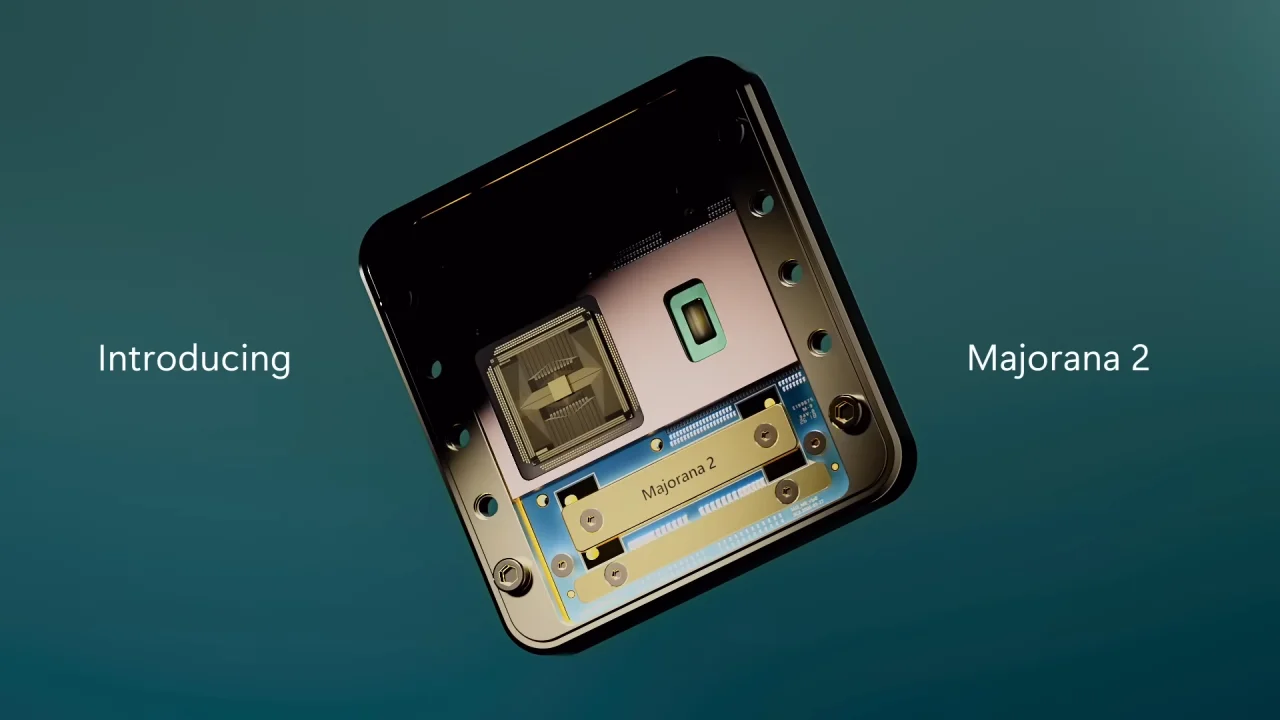
Microsoft’s pursuit of topological qubits, inspired by the theoretical work of Alexei Kitaev and others, aims to create qubits that are inherently more robust against environmental noise. The concept of Majorana fermions, which are their own antiparticles, is central to this approach, as their non-abelian statistics are theoretically resistant to local perturbations, thus offering a path to fault-tolerant quantum computation. The development of the Majorana 2 chip represents a tangible step in realizing this theoretical promise.
The Competitive Landscape and Future Outlook
Microsoft is not alone in the race to build a quantum computer. Other major players, including IBM, Google, Intel, and numerous startups, are investing heavily in quantum computing research and development. Each company is pursuing different technological pathways and material choices, contributing to a diverse and rapidly evolving landscape.
IBM, for instance, has been a leader in developing superconducting quantum processors and has a publicly available quantum computing roadmap that emphasizes increasing qubit counts and improving coherence. Google achieved a significant milestone in 2019 with its "quantum supremacy" demonstration, showcasing a quantum computer performing a specific task far faster than any classical supercomputer.
The progress announced by Microsoft with the Majorana 2 chip indicates a strong commitment to a specific, potentially more robust, approach to qubit design. The use of lead and the focus on topological qubits suggest a long-term strategy aimed at overcoming the fundamental instability issues that have plagued other quantum computing architectures.
As the 2029 target approaches, the world watches with anticipation. If Microsoft or any of its competitors can deliver on the promise of fault-tolerant, scalable quantum computers, the impact on science, technology, and society will be profound, ushering in a new era of computational power and problem-solving capabilities. The advancements with the Majorana 2 chip, particularly its enhanced qubit stability and novel material science approach, represent a compelling chapter in this ongoing technological revolution.