Nila Kartika Wati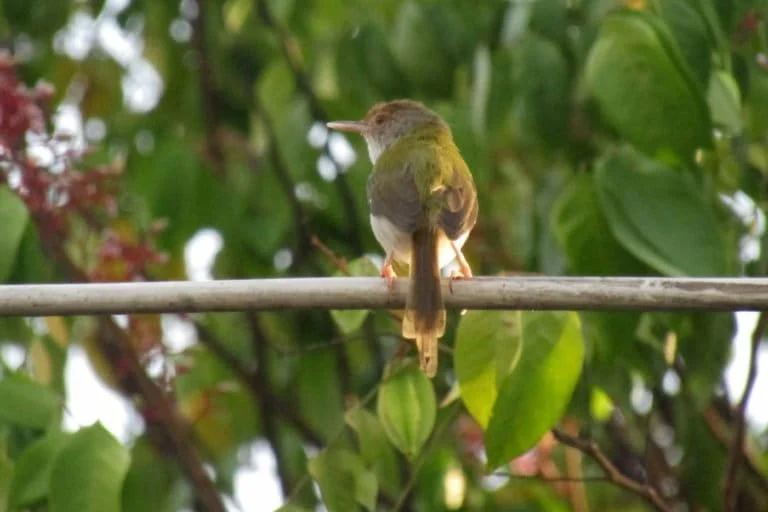
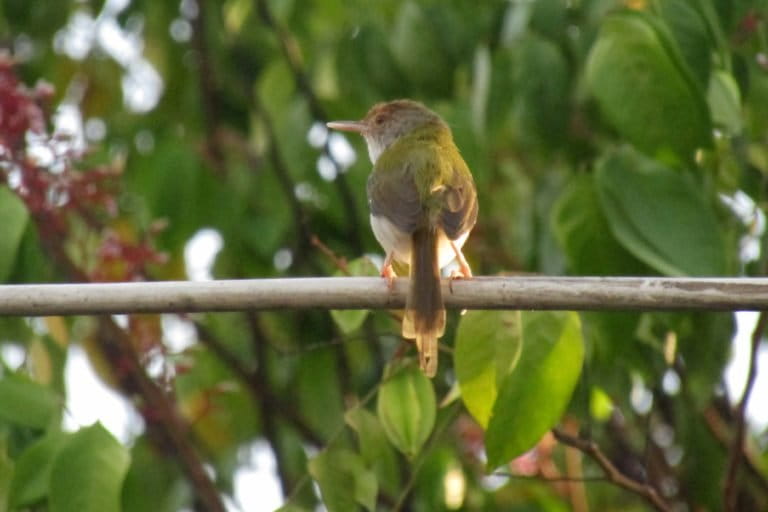
Measuring a mere 10 to 11 centimeters in length, the Common Tailorbird (Orthotomus sutortus) is a creature of perpetual motion, characterized by its restless energy and remarkable architectural skills. In the domestic gardens and backyards of Southeast Asia, this diminutive bird is a frequent visitor, darting between branches and weaving through bamboo thickets in a ceaseless search for sustenance. It is known for a peculiar habit: momentarily disappearing into the hollows of vegetation only to emerge seconds later, seemingly unfazed. When it rests, the bird transforms into a compact, spherical form, resembling a ping-pong ball. Despite being one of the most familiar avian species in residential areas, the Common Tailorbird—locally known in Indonesia as Cinenen Pisang—is increasingly becoming a victim of its own ubiquity, suffering from both scientific neglect and the escalating pressures of the illegal wildlife trade.
The Architectural Genius of the Common Tailorbird
The English name "Common Tailorbird" is a literal description of the species’ most extraordinary trait: its ability to construct intricate nests by "sewing" leaves together. This avian engineering feat involves piercing the edges of large, living leaves with its sharp, slender beak and drawing through fibers of plant down or spider silk to create a secure, cradle-like pouch. Within this green pocket, the bird builds a soft nest of grass and hair. This technique provides a highly camouflaged environment that protects eggs and fledglings from predators.
Afinna Aninnas, a researcher from the Zoothera Andromedae Birdwatching Group at Brawijaya University, highlights the sophistication of this process. According to Aninnas, the structural integrity and resourcefulness displayed by the Common Tailorbird offer more than just biological interest; they serve as a potential source of biomimetic inspiration for human architectural design. The use of tension, natural adhesives, and flexible materials to create a weather-resistant and predator-proof home reflects an evolutionary pinnacle of functional design.
Visually, the Common Tailorbird is a study in subtle elegance. It features an olive-green plumage on its back and wings, which blends seamlessly with the tropical foliage. Its underparts are a muted grayish-white, while its most distinguishing feature is a rust-colored or chestnut crown atop its head. Its beak is disproportionately long and pointed, a specialized tool perfectly adapted for gleaning small insects, caterpillars, crickets, and ant eggs from the undersides of leaves and deep within crevices. Furthermore, its song is disproportionately loud for its size—a repetitive, shrill "chwee-o, chwee-o" that makes the bird easy to locate even when it remains hidden in the brush.
Geographic Distribution and the Paradox of Abundance
The Common Tailorbird enjoys a vast geographical range that stretches across the Asian continent. It is found in abundance from the Indian subcontinent and Sri Lanka through Myanmar, Thailand, and Cambodia, reaching as far south as the Indonesian archipelago, particularly on the island of Java. Its habitat preferences are remarkably diverse, encompassing urban gardens, agricultural fields, scrublands, and secondary forests.
However, its very success as a generalist species has led to a phenomenon known as the "paradox of abundance." Because the bird is perceived as "common" and its population appears stable, it rarely attracts the attention of the scientific community or conservation NGOs. "The population is still considered plentiful, which often makes it less attractive to researchers who tend to focus on rare or endangered species," Aninnas explains.
This lack of academic scrutiny is problematic. Aninnas argues that the behavior of common birds, particularly their adaptive responses to human intervention and habitat fragmentation, holds critical data for understanding broader ecological health. As urban environments expand, the ways in which these birds navigate man-made landscapes provide a blueprint for urban biodiversity management. Without baseline studies on these "common" populations, sudden declines can go unnoticed until they reach a tipping point.
The Rising Threat of the Illegal Songbird Trade
While the Common Tailorbird is not currently listed as a protected species under Indonesian law or categorized as "Threatened" on the IUCN Red List, its safety is far from guaranteed. In recent years, the species has faced intensifying pressure from the "kicau mania" culture—a widespread social phenomenon in Indonesia where songbird singing competitions drive a massive demand for wild-caught birds.
The Common Tailorbird, prized for its loud and varied vocalizations, has become a staple in local markets. Unlike more expensive "trophy" birds, the Cinenen Pisang is affordable, making it accessible to a wide demographic of hobbyists. Furthermore, in rural areas, the bird is often targeted by children and casual hunters using slingshots or glue traps, viewed more as a pastime than a serious ecological threat. However, when multiplied across thousands of villages, this "casual" hunting contributes significantly to local population depletions.
The scale of this extraction was brought into sharp focus in October 2024, following a massive enforcement operation at the Port of Bakauheni in Lampung. Authorities intercepted a shipment containing over 6,500 wild birds intended for the markets of Java. Among the crates were thousands of small passerines, including the Common Tailorbird and its relative, the Prinia. This seizure was not an isolated incident. Data compiled between 2021 and 2023 reveals that at least 121,689 songbirds were seized from the illegal trade routes connecting Sumatra to Java. A significant portion of these were identified as "common" garden birds.
Analyzing the Logistics of Bird Trafficking in Indonesia
The Port of Bakauheni serves as a critical chokepoint in the illegal wildlife trade. As the primary gateway between the bird-rich forests of Sumatra and the high-demand urban centers of Java, particularly Jakarta, it is a frequent site for smuggling attempts. Traffickers often hide birds in cramped, poorly ventilated plastic crates stashed inside buses or vegetable trucks to evade detection.
The mortality rate in these shipments is staggering. Estimates suggest that up to 50% to 70% of birds die during transit due to stress, dehydration, and physical trauma. For every one bird that makes it to a hobbyist’s cage, several others likely perished in the process. The fact that thousands of Common Tailorbirds are being moved in a single shipment indicates a systematic, industrial-scale extraction that the species’ natural reproduction rates may not be able to sustain indefinitely.
The demand is fueled by the perception that wild-caught birds possess "purer" or "stronger" songs than those bred in captivity. This cultural preference creates a constant drain on wild populations. Even species that are currently numerous can face "local extinction" in specific regions, leading to a silent forest syndrome where the habitat remains intact, but the avian life that sustains its ecosystem has vanished.
Ecological Implications and the Need for a Shift in Perspective
The loss of the Common Tailorbird from its natural habitat carries significant ecological consequences. As insectivores, these birds play a vital role in natural pest control. By consuming vast quantities of caterpillars, leaf-hoppers, and other small invertebrates, they help maintain the health of both domestic gardens and agricultural crops. A decline in their population could lead to an increase in insect pests, potentially prompting a higher reliance on chemical pesticides by farmers and gardeners.
Furthermore, the Common Tailorbird serves as an "indicator species" for the health of urban and suburban ecosystems. Their presence suggests a certain level of habitat complexity—specifically the availability of diverse plant life and the absence of excessive chemical pollution. If a species as adaptable as the tailorbird begins to disappear, it serves as a warning sign that the environment is becoming inhospitable for a wide range of other, more sensitive organisms.
Conservationists are now calling for a re-evaluation of how "common" species are managed. The prevailing strategy of focusing resources exclusively on critically endangered species, such as the Bali Myna or the Javan Hawk-Eagle, may overlook the gradual erosion of the ecological foundation provided by common birds.
Conclusion: Toward a Proactive Conservation Model
The story of the Common Tailorbird is a cautionary tale of how easily the "ordinary" can become "extraordinary" once it is lost. To ensure that this architectural marvel remains a staple of the Asian landscape, several steps are necessary:
- Increased Research: Academic institutions must prioritize studies on the population dynamics and habitat requirements of common species to establish reliable baselines.
- Stricter Enforcement: The massive seizures at Bakauheni highlight the need for better surveillance and harsher penalties for those involved in the large-scale trafficking of non-protected but ecologically significant birds.
- Public Awareness: Education campaigns should target the "kicau mania" community to promote captive-bred alternatives and discourage the purchase of wild-caught birds.
- Habitat Protection: Maintaining green corridors in urban planning is essential for providing the "tailoring" materials and nesting sites these birds require.
As Afinna Aninnas and other researchers suggest, the time to act is while the species is still abundant. Waiting for the Common Tailorbird to reach the brink of extinction before implementing protection measures is a reactive and costly approach. By recognizing the intrinsic value of this small "seamstress" of the trees, society can preserve a vital link in the ecological chain and ensure that its nyaring (loud) and variatif (varied) song continues to echo in the gardens of the future. The pressure currently facing these birds is indeed "unusual," and it requires a similarly extraordinary commitment to conservation to overcome.