Nila Kartika Wati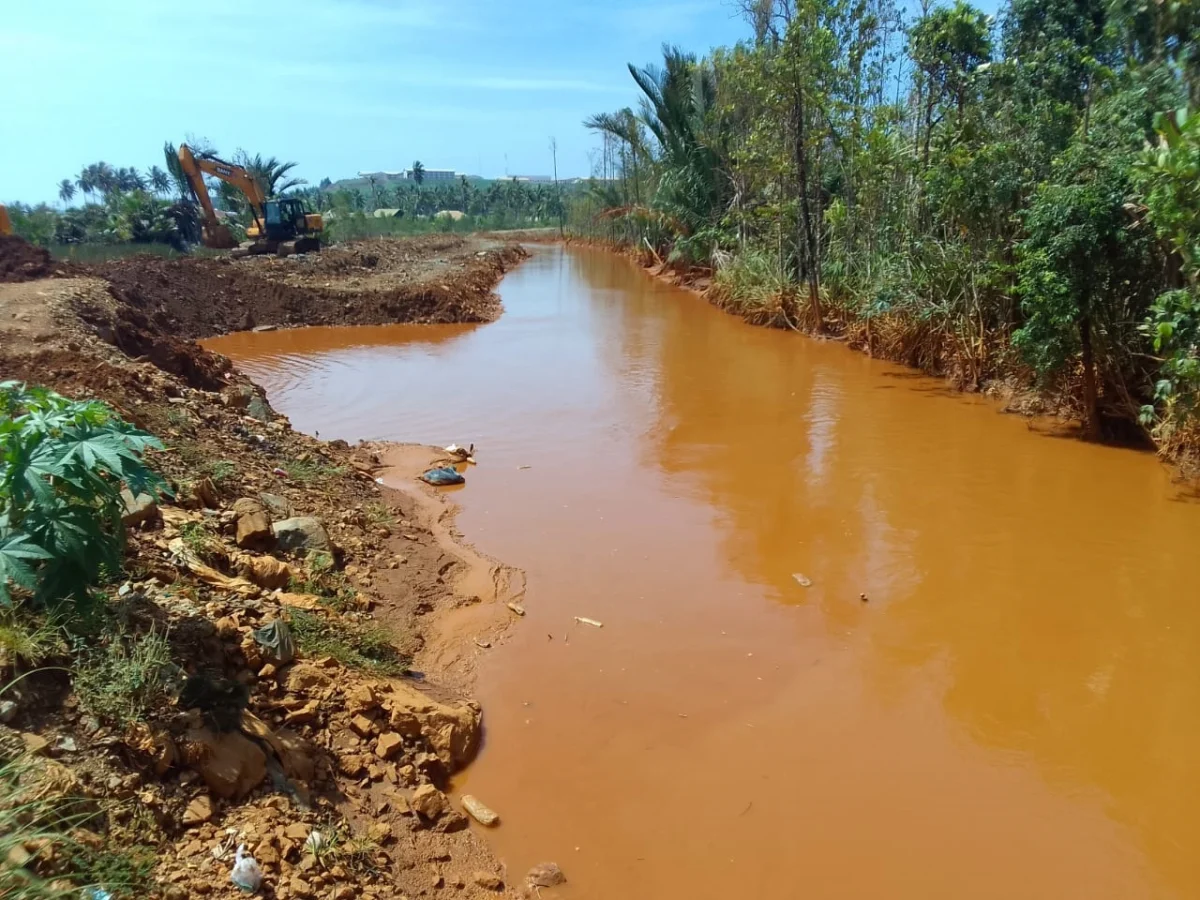
The arrival of massive nickel mining operations and integrated industrial zones on Obi Island, South Halmahera, North Maluku, has triggered a multi-dimensional crisis for the local population, ranging from the systemic destruction of food security to catastrophic environmental degradation. While the Indonesian government promotes nickel as a cornerstone of the global green energy transition, the residents of Kawasi Village and surrounding areas find themselves marginalized by the very industry that promised them prosperity. Instead of enjoying the fruits of investment, the community faces the loss of ancestral sago forests—a primary food source—and the contamination of vital water systems, prompting a high-level delegation of residents to seek intervention from state institutions in Jakarta.
In late May, representatives from Kawasi Village, supported by the Environmental Lawyers Coalition (Kapal), the Indonesian Forum for the Environment (Walhi) National, and Walhi North Maluku, arrived in the capital to file formal complaints. Their mission was to highlight the deteriorating conditions caused by the activities of PT Harita Nickel and its subsidiaries. The delegation met with several key bodies, including the National Commission on Human Rights (Komnas HAM), the National Commission on Violence Against Women (Komnas Perempuan), the Commission for the Protection of Indonesian Children (KPAI), the Ministry of Human Rights, and the Ministry of Environment. Their objective was clear: to demand justice for the destruction of their living space and livelihoods, which they argue have been sacrificed for a Project of National Strategic Importance (PSN).
![Terdampak Industri Nikel, Warga Obi Ngadu ke Jakarta [2]](https://indomgb.s3.amazonaws.com/wp-content/uploads/2022/12/22020311/Cemaran-tambang-di-kawasi-foto-Walhi-768x512.jpg)
The Silent Poison: Leaked Documents and Chromium-6 Contamination
At the heart of the residents’ grievances is the systematic pollution of the Tugaraci River and the surrounding marine ecosystem. For the people of Kawasi, this is not merely an environmental issue but a direct assault on their "lifeblood." Recent investigations involving leaked internal documents have shed light on a decade-long effort to conceal the extent of this contamination. A collaborative report by the Organized Crime and Corruption Reporting Project (OCCRP), Deutsche Welle (DW), and The Gecko Project revealed thousands of internal emails and documents from within Harita Nickel that suggest a deliberate suppression of environmental data.
The most alarming discovery involves the presence of Hexavalent Chromium (Cr6) in the Tugaraci River. Cr6 is a highly toxic chemical compound known to be carcinogenic, capable of causing lung cancer, stomach problems, skin irritation, and severe developmental issues in fetuses. For years, the Tugaraci River served as a primary source for the village’s daily needs, including bathing and, in some instances, drinking water. While Indonesian regulations set the threshold for Cr6 at 50 micrograms per liter, the leaked internal correspondence indicated that levels in the river were consistently two to three times higher than the legal limit.
Internal emails from as early as 2014 show that the company’s leadership was well aware of these violations. Tonny Gultom, the Director of Health, Safety, and Environment at the time, repeatedly warned staff and directors about the rising levels of Cr6. In one email, Gultom expressed concern that the findings could lead to a "Black PROPER" rating from the Ministry of Environment—the lowest possible grade, which usually results in legal enforcement, heavy fines, or even the closure of operations. Despite these internal alarms, the company allegedly chose to withhold this information from the local community. One leaked memo from a staff member even requested a government official to "postpone" notifying the public about the contamination, citing an "unfavorable situation."
![Terdampak Industri Nikel, Warga Obi Ngadu ke Jakarta [2]](https://indomgb.s3.amazonaws.com/wp-content/uploads/2026/06/01053601/Warga-Obi-Pengurus-WALHI-Maluku-UtaraWALHI-Nasional-dan-Pengacara-Lingkungan-Hidup-saat-mendatangi-Komas-HAM-di-Jakarta-foto-WALHI--e1780292246333-768x512.jpeg)
A Landscape Transformed: Floods, Silt, and Red Mud
Beyond the chemical contamination of the water, the physical landscape of Obi Island has been drastically altered to accommodate the nickel industry. Residents report that what were once predictable seasonal changes have turned into a cycle of "industrial disasters." Since 2023, Kawasi and Soligi villages have become prone to regular flooding, occurring as often as three times a month. These are not typical floods; they carry a thick, orange-brown sediment known as "red mud," which is a byproduct of the massive earth-moving operations required for open-pit nickel mining.
According to data compiled by Walhi North Maluku, the floods typically peak between June and July. In 2024, the intensity reached a breaking point, with floodwaters rising between one and three meters. When the water eventually recedes, it leaves behind a 15-centimeter layer of toxic silt in homes, schools, and agricultural plots. The socio-economic impact has been paralyzing. Approximately 199 families have been directly affected, including 126 women, 18 infants, and 41 school-aged children. The destruction of infrastructure and the contamination of clean water sources have brought local trade and social activities to a complete standstill.
Community leaders, such as Nurhayati Jumadi, argue that these floods are the direct result of human intervention in the island’s natural topography. The removal of forest cover and the redirection of natural waterways to serve industrial needs have stripped the land of its ability to absorb rainfall. "Our living space has been sacrificed for industrial lust," Nurhayati stated during her visit to Jakarta. She expressed a profound fear for the future of the island’s youth, questioning whether the next generation is expected to "build their homes in the abandoned pits of mines."
![Terdampak Industri Nikel, Warga Obi Ngadu ke Jakarta [2]](https://indomgb.s3.amazonaws.com/wp-content/uploads/2023/06/22012716/OBI-BANJIR-NII-768x470.jpeg)
The Paradox of the Green Transition and "Proper" Awards
The situation on Obi Island highlights a glaring contradiction in Indonesia’s environmental policy. While residents struggle with pollution and displacement, the companies involved continue to receive accolades for sustainability. In February 2025, two subsidiaries of Harita Nickel—PT Gane Permai Sentosa (GPS) and PT Trimegah Bangun Persada Tbk (TBP)—were awarded "Blue PROPER" ratings for 2024 by the Ministry of Environment. This rating is intended to signify that a company is in full compliance with environmental regulations.
For activists and residents, these awards are seen as a form of "greenwashing." Faizal Ratuela, an anti-mining campaigner with Walhi National, described the "Green" and "Blue" labels as "cosmetic" measures designed to beautify destructive operations. He argued that a corporation with a documented track record of ecosystem destruction and human rights violations should not be eligible for such certifications. This discrepancy has fueled a broader critique of the global energy transition. Critics argue that the push for electric vehicles (EVs) in the Global North is being fueled by "dirty" nickel from the Global South, where the environmental and social costs are externalized onto vulnerable communities.
The "Blue PROPER" status, according to Faizal, serves to legitimize the marginalization of local people. By providing a veneer of sustainability, it allows companies to maintain their standing in international markets and attract investment from global EV manufacturers who are increasingly under pressure to prove their supply chains are ethical. However, the reality on the ground in Obi tells a different story—one of lost sago forests, poisoned rivers, and a community whose fundamental rights are being eroded in the name of progress.
![Terdampak Industri Nikel, Warga Obi Ngadu ke Jakarta [2]](https://indomgb.s3.amazonaws.com/wp-content/uploads/2023/04/22013900/nikel-4-sungai.jpg)
Corporate Defense and the Path to Accountability
In response to the allegations and the residents’ grievances, Harita Nickel has maintained that it operates in full compliance with Indonesian law and international standards. Klaus Oberbauer, Sustainability Manager for the Harita Group, stated that the company respects the community’s right to express their views but emphasized that the issues are complex and should be viewed through "verifiable data." He pointed out that the company has voluntarily joined the Initiative for Responsible Mining Assurance (IRMA) to strengthen its transparency and responsible practices.
Tonny Gultom, now serving as Director of Health, Safety, and Environment, highlighted the company’s reclamation efforts, claiming that approximately 231.53 hectares of former mining land have been restored as of 2024. The company also asserts that third-party monitoring shows stable populations of flora and fauna within their operational areas. Harita insists that its "Blue PROPER" ratings are proof of its commitment to environmental stewardship and that it continues to manage runoff and water quality through the construction of sediment ponds and the use of ferrous sulfate to treat wastewater.
However, the residents of Obi Island are calling for more than corporate assurances. They are demanding a comprehensive and independent audit of PT Trimegah Bangun Persada’s environmental and human rights compliance. Their list of demands to the government is extensive:
![Terdampak Industri Nikel, Warga Obi Ngadu ke Jakarta [2]](https://indomgb.s3.amazonaws.com/wp-content/uploads/2022/12/22020311/Cemaran-tambang-di-kawasi-foto-Walhi.jpg)
- A Moratorium on Environmental Permits: An immediate halt to new permits and a temporary suspension of mining operations that pose an ongoing threat to the environment.
- Independent Investigation: The formation of a joint task force involving Komnas HAM and the Ministry of Environment to investigate the leaked reports of Cr6 contamination.
- Full Restitution: A legal mandate for the company to provide full compensation for material and immaterial losses, including the restoration of livelihoods and the rehabilitation of contaminated ecosystems.
- Security Reform: A demand for the police and military personnel stationed at the industrial site to cease any actions that intimidate residents or suppress their freedom of expression.
Broader Implications and the Future of Obi
The conflict on Obi Island is a microcosm of the challenges facing resource-rich nations in the 21st century. As Indonesia positions itself as a global hub for the nickel industry, the tension between economic development and environmental protection is reaching a boiling point. The case of Kawasi Village suggests that without rigorous oversight and genuine community engagement, the "green transition" risks reproducing the same patterns of exploitation and environmental ruin associated with the fossil fuel era.
The implications of this struggle extend far beyond the shores of North Maluku. Global consumers and regulators are increasingly looking at the "hidden costs" of the batteries powering modern technology. If the allegations of corporate cover-ups and systemic pollution on Obi Island are proven true, it could lead to significant legal and reputational risks for the entire Indonesian nickel sector. For the residents of Kawasi, the fight is about more than just policy; it is a struggle for the survival of their culture, their health, and their right to a habitable environment. As the government and state institutions weigh their response, the eyes of the international community remain fixed on this small island, waiting to see if justice will be served or if the "lifeblood" of Obi will be permanently sacrificed for industrial gain.