Nila Kartika Wati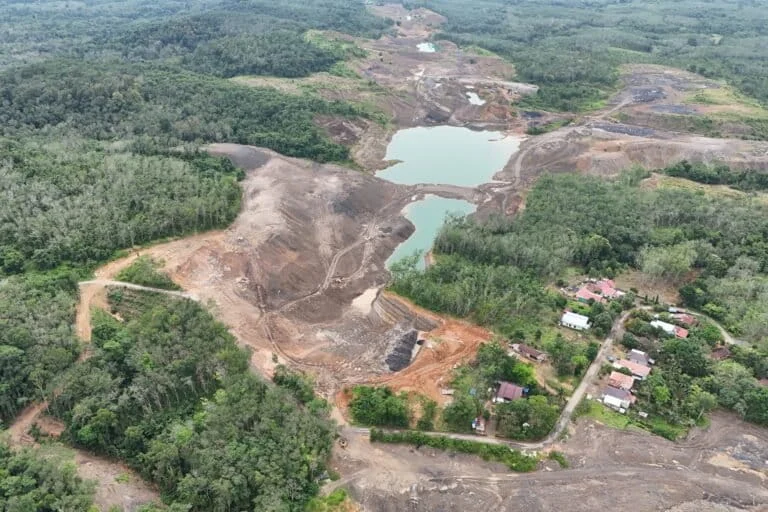
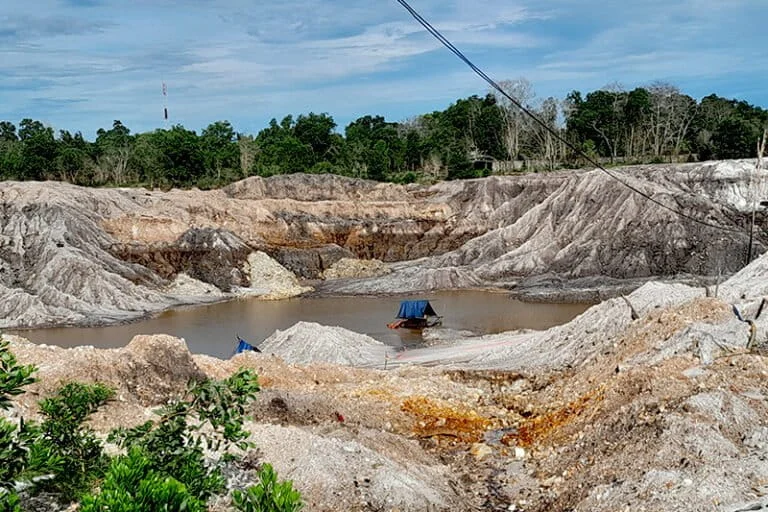
The landscape of the Mataraman District in Banjar Regency, South Kalimantan, has transformed into a theater of environmental lawlessness and systemic negligence following the 2020 bankruptcy of the regional government-owned enterprise, PT Banjar Intan Mandiri (BIM). What was once a regulated coal concession is now a sprawling expanse of illegal mining pits, where unidentified operators extract thousands of tons of coal daily under the shadow of alleged institutional indifference. Despite the visible destruction of public infrastructure and the clear distress of local communities, law enforcement and regional authorities have largely failed to provide a definitive response, leading to a state of pervasive "grey-zone" exploitation that threatens both the ecology and the social fabric of the region.
The Siege of Gunung Ulin: A Community Under Duress
For the residents of Gunung Ulin Village, the collapse of PT BIM did not signal the end of mining activity, but rather the beginning of a more chaotic and destructive era. Witnesses describe a relentless procession of heavy machinery and transport trucks that have effectively hijacked the village’s arterial roads. Local accounts suggest that hundreds of trucks operate in a high-frequency cycle, transporting an estimated 2,000 tons of coal daily through a one-way route originating from the northern sectors of the former concession.
This illicit logistical chain is not merely a matter of unauthorized transport; it is a structured operation. At a strategic four-way intersection in front of the Gunung Ulin Village Office, trucks are observed stopping briefly to pay an "iuran" or informal levy to a group of individuals stationed there. This fee, reportedly set at Rp15,000 per ton, acts as a toll for the use of village roads. The consequences of this heavy traffic are devastating for the local infrastructure. Over a dozen kilometers of downstream roads have suffered severe structural failure, characterized by deep ruts and collapsed shoulders that make civilian transit increasingly hazardous.
The impact extends beyond the asphalt. Residents report that the vibrations from the coal-laden trucks are powerful enough to shake the foundations of their homes, leading to chronic sleep deprivation and anxiety. Most of these operations occur under the cover of darkness, typically beginning after the Isha prayer, turning the quiet rural nights into a cacophony of industrial noise. Furthermore, the physical proximity of the mining pits to the roads has led to frequent landslides. At specific coordinates such as -3.387139, 114.971483—a critical access point for Desa Baru—the road has eroded to half its original width. During the rainy season, these paths become treacherous mud traps, posing a lethal risk to the hundreds of villagers, including schoolchildren and healthcare seekers, who must navigate these routes to reach the regency capital of Martapura.
From BUMD to Lawless Frontier: The Legacy of PT BIM
PT Banjar Intan Mandiri was originally established as a Regional Government-Owned Enterprise (BUMD) under the jurisdiction of the Banjar Regency. Its operations were governed by a Coal Mining Exploration and Exploitation Agreement (PKP2B) under SK IUP 059.K/40.00/MEM/2003, which was granted on April 28, 2003. At its peak, the concession spanned a massive 6,625 hectares. However, the company’s financial stability crumbled, leading to a declaration of bankruptcy in 2020.
Under Indonesian mining law, the expiration or revocation of a mining license should trigger a mandatory reclamation process, where the operator is required to restore the landscape and stabilize the environment. Instead, the exit of PT BIM created a power vacuum that was quickly filled by illegal syndicates. Spatial analysis using historical satellite imagery from November 2020 shows that while the company left behind four primary mining points—including three shallow excavations and one deep "void" that had filled with water—the activity post-2020 has escalated exponentially.
Rather than being filled or rehabilitated, these sites have been expanded. New, massive excavations have appeared across the former concession area. These pits are dangerously close to human activity: some are located just 200 meters from active rice fields, 150 meters from residential areas, and a mere five meters from inter-village roads. In some sectors, the mining has encroached within 10 meters of riverbanks, posing a direct threat to the local watershed and increasing the risk of chemical runoff into the water supply.
Quantifying the Environmental Catastrophe
The scale of the environmental degradation in the former BIM concession is staggering. Data from Global Forest Watch indicates that between 2021 and 2025, the area lost approximately 178 hectares of tree cover. To put this into perspective, this loss is equivalent to the size of 250 international-standard FIFA football pitches. Field observations conducted between January and June 2024 confirm that the illegal mining has metastasized toward the southwest, with gaping pits now scarring the landscape all the way to Bi’ih Village in the Karang Intan District.
The Indonesian Forum for the Environment (Walhi) South Kalimantan has been monitoring this situation since 2024. According to Raden Rafiq Sepdian Fadel Wibisono, the Executive Director of Walhi South Kalimantan, the surge in illegal activity is closely linked to a specific infrastructure project. Local reports suggest that the influx of heavy machinery and the proliferation of mining points began in earnest after the 1006/MTP District Military Command (Kodim) expanded a 4.7-kilometer road as part of the TNI Manunggal Membangun Desa (TMMD) program in 2020. While the program was intended to benefit the community, it inadvertently provided the necessary logistical access for illegal miners to penetrate deeper into the concession.
Allegations of Complicity and Institutional Deflection
One of the most concerning aspects of the Banjar coal crisis is the alleged involvement of security forces. Both Walhi and independent observers have documented the presence of motorcycles with military license plates at the entry portals of illegal mining sites, specifically at coordinates -3.407394, 114.959897. This has led to widespread suspicion that the operations are being protected or even supervised by "oknum" (rogue elements) within the security apparatus.
In response to these allegations, Lieutenant Colonel Bambang Prasetyo Prabujaya, Commander of Kodim 1006/Banjar, has issued a firm denial. He clarified that the road built under the TMMD program is not a private military road but a public asset. He explained that the presence of military personnel in the area is strictly for monitoring the condition of the road, which has been severely damaged by overweight coal trucks. "Because the road is damaged, I have asked my members to check it every day," he stated, adding that as a military commander, he lacks the legal authority to carry out arrests or mining enforcement, which falls under the jurisdiction of the police.
However, the police response has been equally evasive. Ipda Yusup, the Police Chief of Karang Intan, declined to provide details on the illegal mining, directing inquiries to the higher-level Resor Police. Meanwhile, AKP Alfian Noor, the Public Relations Officer for the Banjar Regency Police (Polres Banjar), claimed to have no knowledge of the long-standing illegal activities in his jurisdiction, stating in a brief message that the police "had not yet received information" regarding the mining issues.
The Administrative Stalemate and Economic Impact
The lack of coordination between different levels of government has created a "responsibility gap." Members of the Banjar Regency Regional House of Representatives (DPRD), such as Abdul Razak, have criticized the local government’s passivity. While the DPRD has held multiple meetings with relevant agencies to discuss environmental impacts, there has been little tangible action on the ground.
Heru Setiawan, the Head of the Development Administration Bureau for the Banjar Regency Secretariat, acknowledged the complexity of the situation. He noted that while the Regency Government has held coordination meetings and the Transportation Agency has conducted raids on coal trucks, their powers are limited. "We do not have the authority to manage the mining activities themselves," Setiawan explained. "Our authority is limited to the use of public roads and enforcing weight limits. It is a game of cat-and-mouse with the transporters."
This jurisdictional confusion benefits the illegal operators, who continue to drain the region’s natural resources without paying taxes, royalties, or environmental bonds. While the exact financial loss from the BIM concession is still being calculated, similar illegal operations in the region have been estimated to cost the state trillions of rupiah in lost revenue and environmental damage.
The Laundering of "Blood Coal": From Pits to Global Markets
A critical question remains: how does illegally mined coal from a bankrupt BUMD find its way into the formal economy? According to the Mining Advocacy Network (Jatam), illegal coal is rarely sold directly to end-users. Instead, it enters a sophisticated "laundering" chain.
The process typically involves three layers: the illegal miners, the traders (middlemen), and the legitimate buyers (power plants or exporters). Illegal coal from sites like Gunung Ulin is transported via public roads to the Mataraman-Sungai Ulin Ring Road, then moved onto the Ahmad Yani national highway. From there, it is often taken to private hauling roads and consolidated at "stockpiles" belonging to companies with valid Work Plan and Budget (RKAB) documents.
By mixing illegal coal with legally sourced coal at these stockpiles, the origin of the minerals becomes impossible to trace through physical inspection alone. The "blended" coal is then issued legitimate shipping documents (SKAB) and transported down the Barito River to be sold to domestic industries or exported abroad. Mustari Sihombing of Jatam Kaltim argues that this practice is easily detectable if authorities perform rigorous audits of RKAB documents. By comparing a company’s declared production capacity with its actual sales volume, the Ministry of Energy and Mineral Resources (ESDM) could identify companies that are "padding" their output with illegal coal.
Conclusion: A Call for Systemic Reform
The crisis in the former PT BIM concession is a microcosm of the broader challenges facing Indonesia’s mining sector. The transition from a regulated BUMD operation to a lawless extraction zone highlights the catastrophic failure of the post-mining transition process. When companies go bankrupt, the state must have robust mechanisms to secure the site and ensure reclamation, rather than allowing it to become a free-for-all for syndicates.
Without decisive intervention from the central government and a genuine commitment from law enforcement to purge internal "oknum" who may be facilitating these crimes, the people of Banjar will continue to bear the cost. The environmental scars—the 178 hectares of lost forest and the collapsing roads—are permanent reminders of a system that has prioritized short-term extraction over the long-term safety and prosperity of its citizens. The case of PT BIM serves as a stark warning: without accountability, the "black gold" of Kalimantan will continue to be a curse rather than a blessing for the communities that live above it.