Nasution Nanang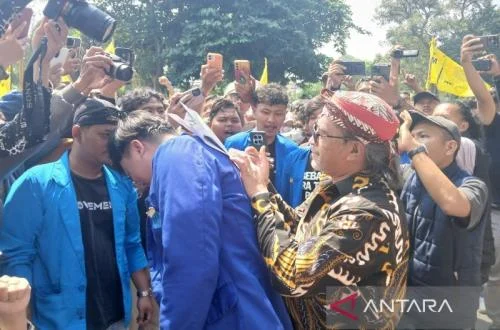
TEMANGGUNG, Central Java – In a significant move aimed at fostering greater transparency and accountability, Temanggung Regent Agus Setyawan has extended an invitation to university students to directly participate in overseeing the implementation of strategic central government programs within the region. This unprecedented invitation comes in direct response to a recent student demonstration where various pressing economic issues and concerns regarding a flagship national initiative were raised. The Regent’s proactive approach seeks to transform student activism into constructive engagement, ensuring that public policies deliver their intended benefits to the community while simultaneously strengthening democratic oversight at the local level.
The invitation from Regent Setyawan underscores a commitment to participatory governance, recognizing the critical role that an informed and engaged citizenry, particularly the youth, can play in enhancing the effectiveness and integrity of public administration. Speaking in Temanggung on Thursday, the Regent emphasized that involving students in the monitoring process is vital for verifying that programs are executed according to plan, that resources are utilized efficiently, and that the outcomes genuinely improve the welfare of the local population. This collaborative model is envisioned as a mechanism to not only detect potential inefficiencies or deviations but also to build trust between the government and its constituents. By opening the doors for direct student involvement, the local administration aims to cultivate a culture of open dialogue and shared responsibility for regional development.
Historically, Indonesian students have been at the forefront of social and political change, acting as a critical conscience for the nation. From the struggle for independence to the reformasi movement, student movements have consistently pushed for good governance, justice, and accountability. Regent Setyawan’s invitation taps into this rich legacy, proposing a shift from purely adversarial protest to a more integrated form of civic engagement. The proposed oversight mechanism could involve students participating in field visits, data collection, beneficiary surveys, and regular reporting, providing an independent layer of scrutiny over large-scale government projects. This direct involvement is expected to offer students invaluable practical experience in public policy analysis and implementation, nurturing a new generation of civic-minded leaders. Furthermore, the Regent pledged to officially forward all student aspirations pertaining to central government policies to the relevant national authorities, while immediately initiating discussions and follow-up actions for issues falling under regional jurisdiction. He reiterated his call for students to continue expressing their criticisms and suggestions respectfully, prioritizing constructive dialogue as the most effective path to resolving shared challenges and advancing regional prosperity.
The impetus for this novel engagement strategy arose from a recent demonstration organized by the Pergerakan Mahasiswa Islam Indonesia (PMII) Kabupaten Temanggung. The student activists gathered in front of the local regent’s office, articulating a range of grievances that they believe demand urgent attention from the central government. Their concerns spanned macroeconomic stability to the practical execution of specific social welfare programs, reflecting a deep apprehension about the current economic climate and its impact on ordinary citizens. PMII, a prominent national Islamic student organization with a long history of advocating for social justice and democratic principles, demonstrated its local chapter’s commitment to holding power accountable. The Temanggung chapter’s protest followed a well-established tradition of student activism, characterized by public rallies and the vocal articulation of societal concerns. The demonstration, while assertive in its demands, was conducted peacefully, culminating in the direct interaction with the Regent that led to the unprecedented invitation for collaboration.
Among the primary economic concerns highlighted by the students was the persistent weakening of the Indonesian rupiah against major foreign currencies, particularly the US dollar. This depreciation has significant implications for a developing economy like Indonesia, which relies on imports for essential goods and raw materials. A weaker rupiah makes imported goods more expensive, driving up production costs for industries and ultimately leading to higher consumer prices for everything from food to electronics. For instance, if the rupiah depreciates by, say, 5-7% within a short period, the cost of imported components for local manufacturers increases, which then gets passed on to consumers. This inflationary pressure directly erodes the purchasing power of households, making daily necessities less affordable. The students argued that this currency instability, influenced by global economic shifts such as interest rate hikes by the US Federal Reserve and fluctuating commodity prices, was exacerbating the financial strain on Indonesian families.
Another critical point of contention for the students was the recent increase in prices for non-subsidized fuel. While the Indonesian government maintains subsidies for certain types of fuel to protect lower-income groups, non-subsidized fuel prices are more directly exposed to global oil market fluctuations and the rupiah’s exchange rate. Increases in these prices have a cascading effect across the economy, impacting transportation costs for goods and services. Logistical expenses for businesses rise, leading to higher retail prices for almost all products. This phenomenon disproportionately affects small and medium-sized enterprises (SMEs) and middle-income households, who often bear the brunt of increased operational costs and diminished discretionary spending. The students’ protest highlighted that such price adjustments, while perhaps necessary from an economic management perspective, were being implemented without sufficient compensatory measures or clear communication, thereby compounding the financial burden on an already struggling populace.
Beyond these specific economic indicators, the PMII activists voiced broader criticisms of various central government economic policies that they perceived as increasingly burdening the community and leading to a significant decline in purchasing power. This critique likely encompasses issues such as tax policies, trade regulations, and investment strategies that, in the students’ view, have not adequately protected or stimulated the domestic economy for the benefit of ordinary citizens. They argued that the cumulative effect of these policies, coupled with inflationary pressures and stagnant wages for many, has resulted in a tangible reduction in the ability of households to afford basic necessities and maintain their quality of life. The students’ call was for a re-evaluation of these policies to prioritize social welfare and economic equity, ensuring that growth benefits all segments of society, not just a select few.
Perhaps the most specific and actionable criticism from the students focused on the implementation of the "Program Makan Bergizi Gratis" (Free Nutritious Meal Program). This program, a significant initiative associated with the incoming presidential administration, aims to provide nutritious meals to specific target groups, primarily schoolchildren, across the archipelago. While the program’s objective of addressing malnutrition and improving child health is widely laudable, the students raised serious concerns about its practical execution on the ground. They argued that the program, despite its noble goals, was "not yet fully targeted," implying that the selection of beneficiaries might be flawed or that the distribution mechanism was not reaching the most vulnerable populations effectively. This could manifest in scenarios where meals are delivered to schools in relatively affluent areas while genuinely food-insecure communities are overlooked, or where the criteria for eligibility are too narrow or too broad, leading to inefficiencies.
Furthermore, the PMII students explicitly warned of the "potential for deviation in its implementation." This critical concern points towards the possibility of mismanagement, corruption, or resource leakage within the program’s supply chain and delivery system. Such deviations could include issues with the quality or quantity of food provided, inflated pricing by suppliers, irregularities in procurement processes, or even the diversion of allocated funds. Given the vast scale and budget required for a national program of this nature, the potential for such pitfalls is significant if robust oversight mechanisms are not in place. The students’ critique, therefore, was not against the program’s concept but rather a call for stringent monitoring to ensure its integrity and effectiveness. They highlighted that without proper checks and balances, a well-intentioned program could fall short of its objectives and even become a source of public distrust.
The Regent’s direct engagement with the protesting students represents a crucial moment for local governance in Temanggung. By inviting them to collaborate rather than merely dismissing their concerns, Agus Setyawan has signaled a willingness to embrace a more inclusive and transparent approach to public administration. This move could set a precedent for other regions across Indonesia, demonstrating how local governments can constructively channel youth activism into productive partnerships for development and accountability. Student leaders from PMII, while acknowledging the positive gesture, are expected to approach this invitation with a degree of cautious optimism, seeking clear terms of engagement, defined roles, and tangible commitments from the local administration to ensure their involvement is meaningful and impactful, rather than merely symbolic. They will likely push for concrete mechanisms for reporting findings, ensuring follow-up actions, and safeguarding their independence as observers.
Experts in public policy and governance often advocate for such multi-stakeholder approaches to enhance accountability. Dr. Indah Lestari, a sociologist specializing in community development at a local university (illustrative example), noted that "involving civil society, especially youth organizations like PMII, can inject fresh perspectives and grassroots insights into government programs. Their direct observations from the field can provide invaluable real-time data that traditional bureaucratic monitoring might miss." She added that this collaborative model, if implemented effectively, could foster a stronger sense of shared ownership over development outcomes and reduce the trust deficit often observed between government and citizens. However, she also cautioned that "the success of such an initiative hinges on clear communication, mutual respect, and the government’s genuine commitment to acting upon the students’ findings, even if those findings are critical."
The challenges for student oversight are not insignificant. Students may lack the technical expertise required for in-depth program evaluation or the legal authority to enforce recommendations. Resource limitations, such as funding for transportation or access to necessary data, could also hinder their effectiveness. Moreover, navigating the complexities of bureaucratic structures and potentially encountering resistance from vested interests within the implementation chain will require resilience and strategic acumen. However, the opportunities far outweigh these challenges. Students bring unbiased perspectives, a strong sense of idealism, and a direct connection to the communities affected by these programs. Their presence can act as a deterrent to corruption and inefficiency, while their reports can serve as a vital feedback loop for policymakers. This initiative offers a chance for students to translate their academic knowledge into practical civic action, shaping real-world policy outcomes.
In conclusion, Regent Agus Setyawan’s invitation to PMII students to oversee strategic central government programs marks a progressive step towards strengthening democratic participation and accountability in Temanggung. It transforms a moment of dissent into an opportunity for constructive collaboration, recognizing the indispensable role of youth in nation-building. As Indonesia navigates complex economic challenges and rolls out ambitious social welfare initiatives like the "Program Makan Bergizi Gratis," such partnerships between local government and civil society are paramount. The success of this model in Temanggung could inspire similar initiatives across the archipelago, fostering a more transparent, accountable, and responsive governance landscape where the voices and efforts of all citizens contribute to the collective well-being and progress of the nation. The coming months will be crucial in demonstrating whether this pioneering effort can translate its promise into tangible improvements for the people of Temanggung and serve as a beacon for participatory governance elsewhere.