Nasution Nanang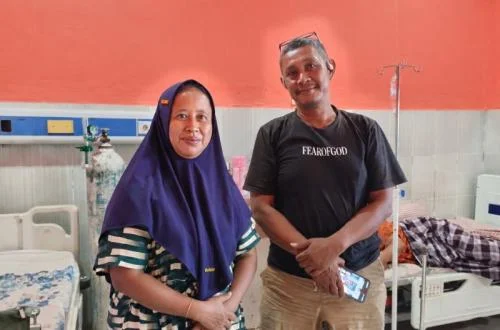
The enduring struggle with chronic illness often brings with it not only physical discomfort but also significant financial strain and emotional distress for patients and their families. However, for 67-year-old Yati Hapsari, a participant in Indonesia’s National Health Insurance (JKN) Program in Central Sulawesi, the recurring challenges of managing her severe Gastroesophageal Reflux Disease (GERD) are met with a reassuring sense of security. Her story stands as a compelling testament to the vital role played by BPJS Kesehatan, the Social Security Administering Body for Health, in providing accessible and consistent healthcare services across the archipelago. Through multiple hospitalizations and emergency interventions, Yati Hapsari, supported by the Luwuk Branch of BPJS Kesehatan, has experienced firsthand the program’s commitment to alleviating the burdens of illness, allowing her to focus on recovery rather than the formidable costs typically associated with such extensive medical care.
The Burden of Chronic Illness: Yati Hapsari’s Battle with GERD
Yati Hapsari’s medical history is marked by a persistent and often debilitating battle with GERD, a condition where stomach acid frequently flows back into the esophagus, causing irritation. For her, the disease manifests severely, leading to acute shortness of breath and intense chest pain, symptoms that have repeatedly necessitated urgent medical attention. Her son, Budi, recounted the harrowing experiences his mother has endured, including multiple hospital admissions for inpatient care and numerous visits to the Emergency Room (IGD). "My mother has been hospitalized repeatedly for GERD, which causes shortness of breath and chest pain. Several times, she even fainted," Budi shared from Luwuk. The recurring nature of her condition, often triggered by her long-standing habit of consuming spicy foods, underscores the complex interplay between lifestyle, disease management, and the critical need for continuous medical support. Budi highlighted that his mother’s health frequently deteriorated to life-threatening emergencies, making constant access to reliable and responsive healthcare indispensable for her survival and well-being.
The Lifeline: Jaminan Kesehatan Nasional (JKN) and BPJS Kesehatan
The peace of mind experienced by Yati Hapsari and her family is a direct outcome of Indonesia’s ambitious JKN program, launched in 2014. Established under Law No. 40 of 2004 concerning the National Social Security System (SJSN) and Law No. 24 of 2011 concerning BPJS, the JKN program represents a monumental effort to achieve universal health coverage for all Indonesian citizens. Administered by BPJS Kesehatan, this program aims to ensure that every individual, regardless of their socio-economic status, has equitable access to necessary healthcare services. Before JKN, Indonesia’s healthcare landscape was fragmented, with significant disparities in access and quality, particularly for those in lower-income brackets or remote areas. Out-of-pocket expenses often pushed families into poverty, creating a vicious cycle where illness led to financial ruin, and financial ruin prevented access to care.
The JKN program sought to dismantle these barriers by pooling funds from mandatory contributions (premiums) from employees, employers, and government subsidies for the poor and vulnerable. Its core principle is social solidarity, where the healthy contribute to the care of the sick. As of late 2023, BPJS Kesehatan has successfully enrolled over 267 million participants, covering more than 95% of the Indonesian population. This staggering reach underscores its foundational role in the nation’s public health infrastructure. The program covers a comprehensive range of services, from primary care to advanced specialist treatments, including hospitalizations, surgeries, and chronic disease management, all designed to ensure that financial concerns do not impede access to essential medical interventions.
Seamless Care Across Borders: A Testimony to JKN’s Network
One of the most remarkable aspects of Yati Hapsari’s experience, as narrated by her son, Budi, is the seamless continuity of care she received, even when referred to hospitals in different cities. "Aside from hospitals in Banggai Regency, my mother was also referred to hospitals in Palu City and Makassar City," Budi stated, highlighting the extensive referral system. "The service we received was equally excellent in all aspects, from the care itself, medical procedures, and equipment, to the facilities and infrastructure." This capability to maintain consistent quality across diverse geographical locations is a cornerstone of JKN’s design, specifically through its tiered referral system (Sistem Rujukan Berjenjang). This system guides patients through primary healthcare providers (Puskesmas or clinics) to secondary (general hospitals) and tertiary care facilities (specialized hospitals), ensuring appropriate treatment levels and efficient resource allocation.
The fact that Yati, starting her treatment journey in Luwuk, Banggai Regency, could be referred to provincial capital Palu, and then to the major regional hub of Makassar in South Sulawesi, without encountering any drop in service quality or administrative hurdles, speaks volumes about BPJS Kesehatan’s efforts to standardize its network. This cross-regional consistency is critical for patients requiring specialized or advanced treatments not available in their local areas. It ensures that patients in remote or less developed regions can still access top-tier medical expertise and facilities, a significant achievement in a vast archipelagic nation like Indonesia. This consistent quality across different facilities and regions is a testament to the robust protocols and continuous monitoring implemented by BPJS Kesehatan to ensure that all participating healthcare providers adhere to established service standards, thereby fostering trust and confidence among its millions of participants.
Beyond Financial Relief: The Value of Quality Service
While the alleviation of financial burden is undoubtedly a primary benefit of the JKN program, Budi’s satisfaction extends far beyond monetary savings. He emphasized the profound value derived from the quality of care and services received. In a healthcare system where out-of-pocket expenses for chronic conditions can quickly escalate into hundreds of millions of rupiah, JKN acts as a crucial safety net, protecting families from catastrophic health expenditures. However, Budi’s praise for the "well-given service," including the efficacy of medical actions, the quality of medical equipment, and the overall infrastructure, underscores a deeper appreciation for the program’s commitment to patient welfare. "As long as I have accompanied my mother, we have not experienced any obstacles or difficulties. Services have always been provided well, making us very satisfied with using JKN," he affirmed.
This feedback is invaluable for BPJS Kesehatan, as it validates their strategic investments in improving not just access, but also the quality of care delivered across their extensive network of partner hospitals and clinics. The standardization of services, from the procedural aspects of treatment to the availability of modern medical tools and comfortable facilities, is a complex undertaking. It requires continuous training for medical staff, regular audits of healthcare providers, and significant logistical coordination. Achieving such consistency, especially in diverse urban and rural settings, demonstrates BPJS Kesehatan’s dedication to its mandate and its responsiveness to the evolving needs of its participants.
Understanding GERD in the Indonesian Context
GERD, while often manageable, can severely impact quality of life, leading to complications like esophagitis, strictures, and even Barrett’s esophagus, a precursor to esophageal cancer, if left untreated. In Indonesia, dietary habits, often rich in spicy, fatty, and acidic foods, can contribute to its prevalence. The challenges in managing chronic conditions like GERD also include patient adherence to lifestyle modifications, as exemplified by Yati Hapsari’s difficulty in avoiding spicy foods. This highlights the need for comprehensive patient education alongside medical treatment, a role that BPJS Kesehatan’s primary care facilities are increasingly embracing. Globally, GERD affects a significant portion of the population, with varying prevalence rates influenced by diet, lifestyle, and genetic factors. The economic burden of GERD, including direct medical costs and indirect costs due to lost productivity, is substantial worldwide, making effective health insurance programs crucial for its management.
Official Perspectives and Program Achievements
While specific statements from BPJS Kesehatan officials regarding Yati Hapsari’s case were not provided in the original article, the positive experience resonates with the stated goals and achievements of the organization. BPJS Kesehatan consistently reiterates its commitment to providing equitable, quality, and sustainable health services to all participants. A BPJS Kesehatan spokesperson might emphasize that cases like Yati’s underscore the program’s success in protecting individuals from financial hardship while ensuring access to necessary, often life-saving, medical care. They would likely highlight the organization’s ongoing efforts to enhance service quality, expand its network of healthcare providers, and streamline administrative processes to ensure a seamless patient experience.
Official data frequently points to the massive scale of JKN’s operations, processing millions of claims annually and facilitating countless medical interventions, from routine check-ups to complex surgeries. These statistics, combined with positive participant testimonials, paint a picture of a program that has profoundly transformed Indonesia’s public health landscape. BPJS Kesehatan’s initiatives also include efforts to promote preventive care and early detection, aiming to reduce the incidence and severity of chronic diseases, thereby optimizing resource utilization and improving overall public health outcomes.
The Broader Implications: JKN’s Role in National Health Security
Yati Hapsari’s story transcends a mere personal anecdote; it serves as a microcosm of the broader societal impact of the JKN program. On a national scale, JKN contributes significantly to poverty reduction by shielding millions of families from the impoverishing effects of health-related financial shocks. It promotes social equity by ensuring that access to quality healthcare is no longer a privilege reserved for the wealthy but a right extended to all citizens. By fostering a healthier populace, JKN indirectly contributes to economic stability and productivity, as a healthy workforce is a productive workforce. The program also acts as a catalyst for strengthening the national healthcare infrastructure, driving investment in hospitals, clinics, medical equipment, and human resources across the country.
The JKN program has fundamentally reshaped Indonesia’s healthcare paradigm, moving from a predominantly out-of-pocket system to a comprehensive social insurance model. This shift not only provides direct benefits to patients but also fosters a more resilient and responsive healthcare ecosystem capable of addressing public health challenges more effectively. It embodies the nation’s commitment to social justice and the welfare of its citizens, demonstrating that with political will and robust administrative frameworks, universal health coverage is an attainable goal even for large, developing economies.
Challenges and the Path Forward for JKN
Despite its successes, the JKN program faces ongoing challenges. Ensuring the financial sustainability of the program in the long term, particularly with an aging population and increasing prevalence of chronic diseases, remains a critical concern. BPJS Kesehatan continuously works on optimizing its financial management, reviewing contribution rates, and improving efficiency. Another challenge lies in maintaining and uniformly improving service quality, especially in remote and underserved areas, where healthcare infrastructure and specialist availability can still be limited. Efforts are underway to strengthen primary care facilities and expand the network of specialized providers to bridge these gaps.
Furthermore, participant education, particularly regarding healthy lifestyle choices and adherence to medical advice (as seen in Yati’s case with spicy food), is crucial for effective disease management and reducing preventable readmissions. The program is also increasingly embracing digital transformation to streamline administrative processes, enhance patient experience, and improve data analytics for better policy formulation. Budi’s heartfelt wish, that "JKN continues to improve the quality of its services and increasingly reaches all segments of society, especially those with financial limitations," encapsulates the program’s enduring mission and the aspirations of its participants. The path forward for JKN involves continuous innovation, adaptive policy-making, and unwavering commitment to its core principle of universal health coverage.
In conclusion, Yati Hapsari’s experience with GERD and the JKN program is a powerful illustration of how a robust national health insurance scheme can transform the lives of ordinary citizens. It provides not just medical treatment, but also peace of mind, dignity, and a sense of security in the face of illness. Her journey, facilitated by BPJS Kesehatan’s extensive and standardized network, underscores the profound impact of a program dedicated to ensuring that health remains a fundamental right, accessible to all, irrespective of their location or financial standing. As Indonesia continues to develop, the JKN program remains a cornerstone of its social welfare architecture, striving towards a healthier, more equitable future for all its people.