Nila Kartika Wati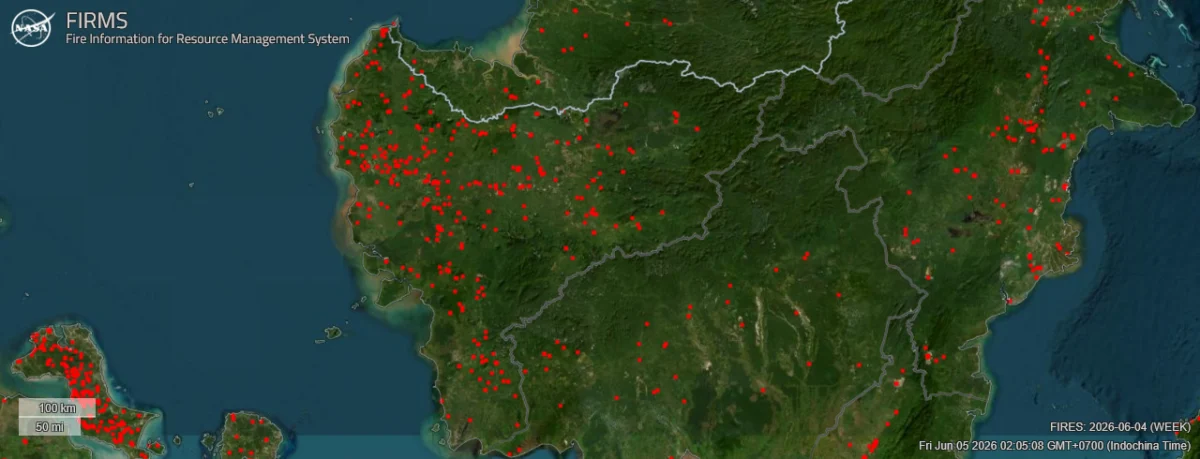
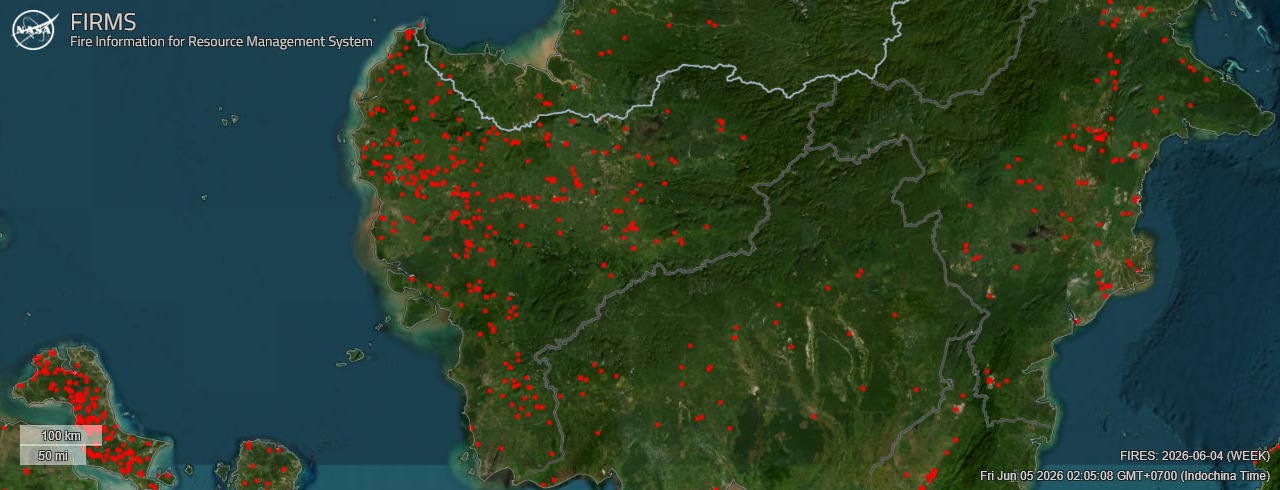
The onset of the 2026 dry season has triggered a massive resurgence of forest and land fires across the island of Kalimantan, with satellite monitoring services detecting a significant spike in hotspots within critical Peat Hydrological Areas (KHG). Between January and April 2026, a total of 9,853 hotspots were recorded across the region, with the vast majority concentrated in West Kalimantan. This early surge in fire activity has reignited national concerns over Indonesia’s peatland management, the impact of large-scale industrial concessions, and the government’s ability to move beyond reactive firefighting toward proactive ecological restoration.
Data compiled by environmental monitoring groups, including Pantau Gambut and the Indonesian Forum for the Environment (Walhi), reveals a troubling correlation between industrial activity and fire outbreaks. Of the nearly 10,000 hotspots detected in the first four months of the year, approximately 8,983 points—or 91% of the total—were located within corporate concession areas. Specifically, 6,571 hotspots were identified within Right to Cultivate (HGU) areas, typically used for palm oil plantations, while 2,412 points were found within forest utilization permit areas. These figures suggest that the primary drivers of the 2026 fire season are deeply rooted in the commercial exploitation of the landscape rather than natural climatic variability alone.
West Kalimantan: The Epicenter of the Crisis
West Kalimantan (Kalbar) has emerged as the most severely affected province in the early months of 2026, accounting for 9,270 of the recorded hotspots. Official data from the Ministry of Forestry indicates that between January and March 2026, the burned area in West Kalimantan reached 25,420.73 hectares. The environmental and human toll has already proven fatal; in February, a 67-year-old woman in Mempawah Regency, who suffered from a history of asthma, passed away following exposure to thick smoke from nearby peat fires.
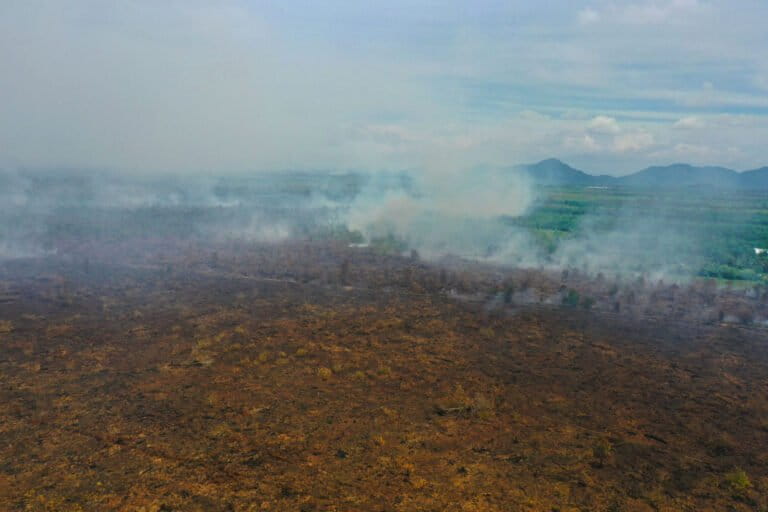
Environmental advocates argue that the intensity of the fires in West Kalimantan is a direct consequence of a failure in land-use governance. Indra Syahnanda, Head of Advocacy and Campaigns for Walhi West Kalimantan, noted that approximately 2,79 million hectares of Peat Hydrological Areas in the province have undergone a status change from protected zones to cultivation zones. This legal reclassification allows for the drainage and clearing of peatlands, which are naturally waterlogged ecosystems. When these areas are drained via industrial canals to facilitate agriculture or timber extraction, the water table drops, leaving the organic matter highly combustible. Syahnanda criticized the government’s approach as being "purely reactive," focusing on extinguishing flames rather than addressing the systemic degradation of the peat ecosystem.
Central Kalimantan and the Food Estate Legacy
In Central Kalimantan, environmentalists are bracing for a fire season that could be 20% more severe than the previous year. While the province recorded 438 hotspots in the first quarter, the risks are expected to escalate as the dry season intensifies. A major point of contention is the government’s "cetak sawah" or rice field expansion program, which serves as a continuation of the controversial Food Estate project. For 2026, the government has targeted the creation of 75,000 to 85,740 hectares of new rice fields, with the Ministry of Agriculture identifying up to 100,000 hectares of available land in the Kapuas and Pulang Pisau regencies.
Janang Palanungkai, Director of Walhi Central Kalimantan, warned that these agricultural expansion projects are increasingly encroaching upon deep peatlands. The process of "extensification"—opening up previously unmanaged lands for farming—is viewed by experts as a catalyst for future disasters. History provides a grim precedent: the Mega Rice Project of the 1990s, which sought to convert one million hectares of peatland into rice paddies, resulted in a permanent ecological imbalance. The thousands of kilometers of canals dug during that era continue to drain the Central Kalimantan peat domes, making them perennial fire hazards.
Academic research supports these concerns. Kitso Kusin, a researcher from the University of Palangka Raya, presented findings from a long-term study (2004–2021) showing a direct mathematical link between the decline of the groundwater table and fire frequency. His data shows that whenever the water level drops more than 80 centimeters below the surface, the risk of "subsurface" fires increases exponentially. Unlike surface fires, peat fires burn underground through layers of organic matter, producing the dense, toxic haze characteristic of Indonesian "karhutla" seasons. These fires are notoriously difficult to extinguish and can smolder for weeks, even after surface flames are put out.
South Kalimantan: Concessions and Ecological Vulnerability
In South Kalimantan, where 25 hotspots were recorded in the early months, the primary issue remains the overwhelming density of industrial permits. According to Raden Rafiq, Executive Director of Walhi South Kalimantan, roughly 51% of the province’s total land area is currently covered by industrial concessions. This high concentration of commercial land use has squeezed local communities and compromised the province’s natural defenses against floods and fires.
Peatlands act as a "natural sponge," absorbing excess water during the monsoon season to prevent floods and releasing moisture during the dry season to maintain humidity. However, the construction of industrial canals for palm oil and pulpwood plantations has disrupted this cycle. In regencies like Barito Kuala, the impact is felt acutely by local farmers. During the dry season, plantation companies often pump water from local rivers into their private canal systems to keep their crops hydrated, leaving traditional community rice fields parched. Conversely, during the rainy season, the loss of peat absorption capacity leads to more frequent and severe flooding.
Furthermore, Walhi South Kalimantan has raised alarms regarding the lack of corporate accountability. In 2023, the organization reported seven companies to the Ministry of Environment and Forestry (KLHK) for allowing fires to burn within their concessions. To date, only one of those reports has resulted in significant legal action. Critics point to a "double standard" in law enforcement, where small-scale local farmers are often prosecuted for using traditional fire-clearing methods, while large corporations with recurring fires on their land escape with minimal penalties. Observations on the ground suggest that some burned areas are quickly converted into palm oil plantations within months of a fire, leading to suspicions that fire is still being used as a cheap tool for land clearing under the guise of "accidental" outbreaks.
Meteorological Warnings and the 2026 Outlook
The Meteorological, Climatological, and Geophysical Agency (BMKG) has issued a stern warning regarding the 2026 climate outlook. Wiji Cahyadi, a senior official at the BMKG Climatology Station in South Kalimantan, predicted that the peak of the dry season will arrive significantly earlier than the historical average. In approximately 56% of the region, the dry season onset is expected to be 10 to 30 days ahead of schedule.

The BMKG forecast indicates that 91% of South Kalimantan will reach the height of its dry season between August and September 2026. This period is expected to be characterized by "below-normal" rainfall, meaning the environment will be even drier than in a typical year. The agency’s climate suitability index shows high-risk levels for forest fires starting in August, expanding to cover nearly the entire province by September. This meteorological timeline suggests a narrow window for the government and disaster management agencies to implement mitigation strategies before the crisis peaks.
Analysis of Policy and Long-term Implications
The recurring nature of the Kalimantan fires highlights a fundamental flaw in Indonesia’s environmental strategy. Despite international pressure and the establishment of the Peatland and Mangrove Restoration Agency (BRGM), the data from 2026 suggests that economic priorities—specifically the expansion of the "Food Estate" and the maintenance of palm oil interests—often override ecological safety.
The shift of Peat Hydrological Areas (KHG) from "protected" to "cultivation" status is a particularly contentious legal maneuver. By changing the designation of these lands, the state effectively bypasses strict conservation laws, allowing for the legal drainage of peat. Environmentalists argue that unless there is a total moratorium on new drainage canals and a legally mandated "rewetting" of all degraded peatlands, the cycle of fire and haze will continue regardless of how many firefighting helicopters are deployed.
The economic cost of these fires is also staggering. Beyond the immediate loss of timber and crops, the health impacts of the haze lead to billions of dollars in lost productivity and healthcare expenses. The death in Mempawah serves as a grim reminder that the "smoke season" is a public health emergency. Furthermore, the massive release of carbon dioxide from burning peatlands undermines Indonesia’s international commitments to climate change mitigation under the Paris Agreement.
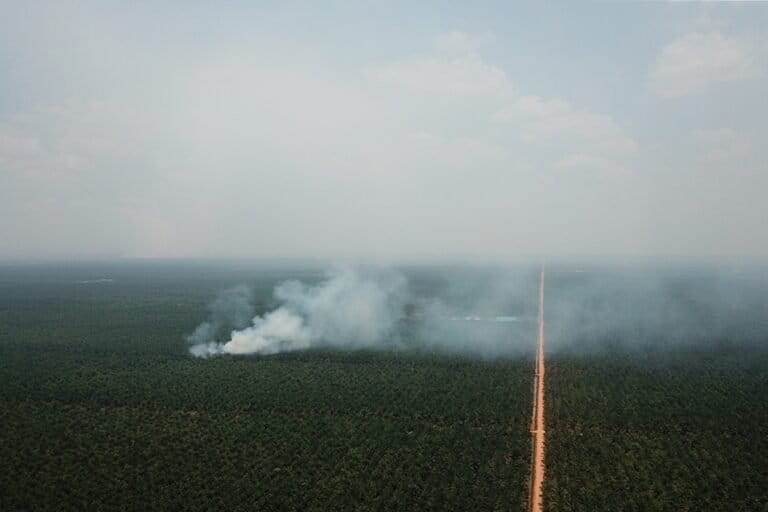
As Kalimantan enters the most dangerous months of 2026, the focus remains on whether the government will transition from a "reactive" firefighting stance to a "restorative" land management policy. The 91% concession-linked hotspot figure provides a clear roadmap for where enforcement and restoration efforts should be concentrated. Without a significant shift in how peatlands are governed, the "natural sponge" of Kalimantan will continue to serve as a tinderbox, threatening the lives, health, and future of millions across Southeast Asia.