Nasution Nanang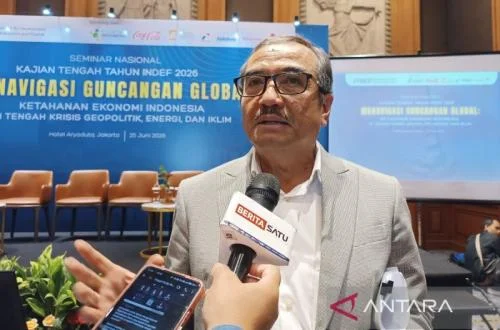
Indonesia possesses the potential to save a staggering IDR 200 trillion (approximately USD 13 billion) from its annual state budget by systematically eliminating "inclusion errors" in the distribution of fuel subsidies. This significant fiscal opportunity was recently underscored by M. Fadhil Hasan, a distinguished member of the National Energy Council (DEN), who articulated the critical need for a comprehensive overhaul of the current subsidy mechanism. His remarks, delivered in Jakarta, emphasize that such a reform would not only bolster the nation’s financial health but also create substantial fiscal space, allowing for the strategic reallocation of funds towards more effective social protection programs and public welfare initiatives that genuinely benefit the most vulnerable segments of society.
The Persistent Challenge of Misdirected Subsidies
For decades, fuel subsidies have been a cornerstone of Indonesia’s economic policy, primarily intended to shield low-income households from the volatility of global energy prices and ensure a degree of price stability for essential commodities. However, the open commodity subsidy model currently in place has inadvertently created a systemic flaw: "inclusion errors." As Fadhil Hasan elaborated, these errors occur when state assistance, originally designed for economically disadvantaged citizens, is instead disproportionately consumed by individuals who do not meet the criteria for low-income households. This structural inefficiency not only drains the state coffers but also exacerbates social inequality, as the benefits fail to reach their intended recipients.
The scale of this disparity is alarming. Data presented by Fadhil Hasan reveals a stark imbalance: the wealthiest 20 percent of the population currently appropriates more than 50 percent of the total government fuel subsidies and compensation. Delving deeper into this inequality, the top 10 percent of the richest citizens are estimated to receive fuel subsidies amounting to approximately IDR 2.5 million per capita annually. In stark contrast, the poorest 10 percent of the population benefits minimally, receiving a mere IDR 50,000 per capita per year through the combined subsidy and compensation schemes. This glaring discrepancy fundamentally undermines the very purpose of social safety nets, transforming a well-intentioned policy into a regressive mechanism that disproportionately favors the affluent.
Historical Context and the Fiscal Burden
Indonesia’s journey with energy subsidies is long and complex, marked by periods of extensive government intervention to manage commodity prices. Originating from a post-colonial era where state control over vital resources was paramount, fuel subsidies evolved into a critical political tool to maintain public order and economic stability. During times of high global oil prices, these subsidies ballooned, becoming a substantial burden on the state budget. Conversely, their removal or reduction has historically been met with public resistance and protests, driven by fears of inflation and erosion of purchasing power.
For instance, in 2022, facing soaring global energy prices exacerbated by geopolitical conflicts, the Indonesian government was compelled to significantly increase its energy subsidy budget, reaching an unprecedented IDR 502.4 trillion (approximately USD 33.5 billion). This massive allocation, primarily for fuel and electricity, highlighted the immense fiscal pressure exerted by untargeted subsidies. While a necessary measure to cushion the impact on the populace at the time, it also reignited debates within government, parliament, and expert circles about the sustainability and effectiveness of such broad-based support. The IDR 200 trillion potential saving identified by DEN underscores that a substantial portion of this colossal spending could be redirected more efficiently.
The National Energy Council (DEN), established by Law No. 30 of 2007, plays a crucial advisory role to the President in formulating national energy policy. Its mandate includes ensuring the availability of energy, promoting energy diversification, and fostering energy efficiency. Fadhil Hasan’s statements reflect DEN’s commitment to optimizing national energy resources and ensuring their equitable distribution, aligning with the broader national agenda for sustainable development.
The Economic and Social Implications of Misallocation
The misdirection of fuel subsidies carries multifaceted negative consequences beyond just fiscal drain. Economically, untargeted subsidies distort market prices, discouraging energy conservation and potentially fostering inefficient consumption patterns. They create an artificial price floor, which can deter investment in alternative energy sources and reduce the competitiveness of domestic industries that could thrive under more market-oriented pricing. Moreover, the opportunity cost of these misallocated funds is immense. The IDR 200 trillion that could be saved represents resources that could otherwise be invested in critical sectors such such as education, healthcare, infrastructure development, or direct poverty alleviation programs, all of which have a higher multiplier effect on economic growth and human development.
Socially, the current system perpetuates and even widens the gap between the rich and the poor. By allowing wealthier segments of society to consume subsidized fuel at rates far exceeding their low-income counterparts, the policy inadvertently transfers wealth upwards rather than downwards. This contravenes the fundamental principle of social justice and equity that underpins most government welfare programs. The statistics presented by DEN – where the richest receive 50 times more in per capita subsidies than the poorest – serve as a stark indictment of the current framework’s failure to achieve its core social objectives.
Proposed Solutions: Towards a Targeted Subsidy Scheme
Recognizing the urgency of this structural problem, Fadhil Hasan advocates for a fundamental shift in the distribution mechanism. He recommends transitioning from the current "open commodity subsidy" to a more "closed" or "targeted subsidy scheme." This approach would involve a precise identification of eligible beneficiaries and the direct delivery of assistance, thereby minimizing leakage and ensuring that aid reaches those who genuinely need it.
Key components of such a reform include:
- Robust Data Integration: The cornerstone of a successful targeted subsidy scheme is accurate and up-to-date socioeconomic data. Fadhil emphasizes the need to integrate distribution systems with the latest available social and economic data. Indonesia has made significant strides in this area with the establishment of integrated social welfare data (Data Terpadu Kesejahteraan Sosial – DTKS) and the Acceleration of Extreme Poverty Eradication Data (P3KE). Leveraging these databases, combined with sophisticated data analytics, can help identify and verify eligible households for direct assistance.
- Digitalization and Technology: Implementing digital platforms, such as dedicated smart cards, mobile applications, or direct bank transfers, can streamline the distribution process, enhance transparency, and reduce the scope for fraud. Such technologies would enable real-time monitoring of subsidy utilization and facilitate easier verification of beneficiaries.
- Phased Implementation: Given the sensitivity of fuel price adjustments and the potential for public backlash, a phased approach to reform would be prudent. This could involve piloting targeted schemes in specific regions, gradually expanding coverage, and combining subsidy reductions with enhanced social safety nets to cushion the impact on vulnerable groups.
- Public Education and Communication: A critical element of any successful reform is clear and consistent communication with the public. Explaining the rationale behind the changes, highlighting the long-term benefits of targeted assistance, and demonstrating how the savings will be reinvested into public services can help build public trust and acceptance.
Statements and Reactions from Related Parties (Inferred)
The call for subsidy reform is not new and resonates with various government bodies and expert communities.
- Ministry of Finance: The Ministry of Finance consistently champions fiscal prudence and efficiency. Officials from the Ministry have repeatedly voiced concerns over the escalating energy subsidy bill and advocated for more targeted spending to ensure fiscal sustainability. They would likely welcome DEN’s proposals as a pathway to reduce budget deficits and free up funds for productive investments.
- Ministry of Energy and Mineral Resources (ESDM): As the primary ministry responsible for energy policy implementation, ESDM would be at the forefront of designing and executing any new subsidy mechanism. They would likely focus on the operational aspects, including identifying eligible fuel types, distribution networks, and coordination with state-owned enterprises like Pertamina.
- Dewan Perwakilan Rakyat (DPR – Parliament): The DPR plays a pivotal role in budget approval and legislative oversight. Reforms of this magnitude would require parliamentary endorsement. While some factions might be cautious due to potential political sensitivities, the compelling economic arguments and the promise of improved social equity would likely garner broad support, especially if paired with robust social safety nets.
- Economists and Policy Analysts: The vast majority of independent economists and policy think tanks in Indonesia have long advocated for a shift away from untargeted energy subsidies. They consistently highlight the inefficiencies, regressive nature, and opportunity costs associated with the current system, echoing Fadhil Hasan’s concerns. They would likely emphasize the need for strong political will and careful implementation.
- Civil Society Organizations: While some civil society groups might initially express concern over potential price increases, many are also proponents of equitable resource distribution. If the reforms are clearly demonstrated to benefit the poor through more effective social programs, these organizations could become valuable allies in advocating for the changes.
Broader Impact and Future Implications
The successful implementation of a targeted fuel subsidy scheme and the unlocking of IDR 200 trillion in annual savings would have profound and far-reaching implications for Indonesia’s development trajectory.
- Enhanced Social Safety Nets: The redirected funds could significantly bolster existing social protection programs, such as the Family Hope Program (PKH), non-cash food assistance (BPNT), and universal health coverage (BPJS Kesehatan). This would directly address poverty and inequality, providing a stronger buffer for vulnerable households against economic shocks.
- Investment in Human Capital and Infrastructure: A substantial portion of the savings could be channeled into critical long-term investments. This includes improving the quality of education, expanding access to healthcare services, and developing essential infrastructure (roads, ports, digital connectivity) that are vital for sustained economic growth and regional development.
- Fiscal Resilience: Reducing the burden of untargeted subsidies would significantly enhance Indonesia’s fiscal resilience, making the state budget less susceptible to volatile global commodity prices. This improved fiscal health would also provide greater flexibility for the government to respond to future crises or pursue ambitious development agendas.
- Improved Market Efficiency: By allowing fuel prices to reflect market realities more accurately, the reforms would foster greater energy efficiency, encourage the adoption of more fuel-efficient technologies, and stimulate investment in renewable energy sources, contributing to Indonesia’s climate change mitigation efforts.
- Strengthening Governance and Transparency: The shift to a targeted, data-driven system would inherently demand greater transparency and accountability in public spending. This focus on verifiable beneficiaries and measurable outcomes could lead to overall improvements in public sector governance.
In conclusion, the call from the National Energy Council to reform Indonesia’s fuel subsidy distribution mechanism presents a monumental opportunity. By addressing the long-standing issue of inclusion errors, the nation stands to unlock vast financial resources that can be strategically reinvested to foster greater social equity, stimulate economic growth, and build a more resilient and prosperous future for all its citizens. The challenge now lies in translating this clear economic rationale into decisive policy action, requiring concerted efforts from the government, parliament, and broad public support.