Azin Asro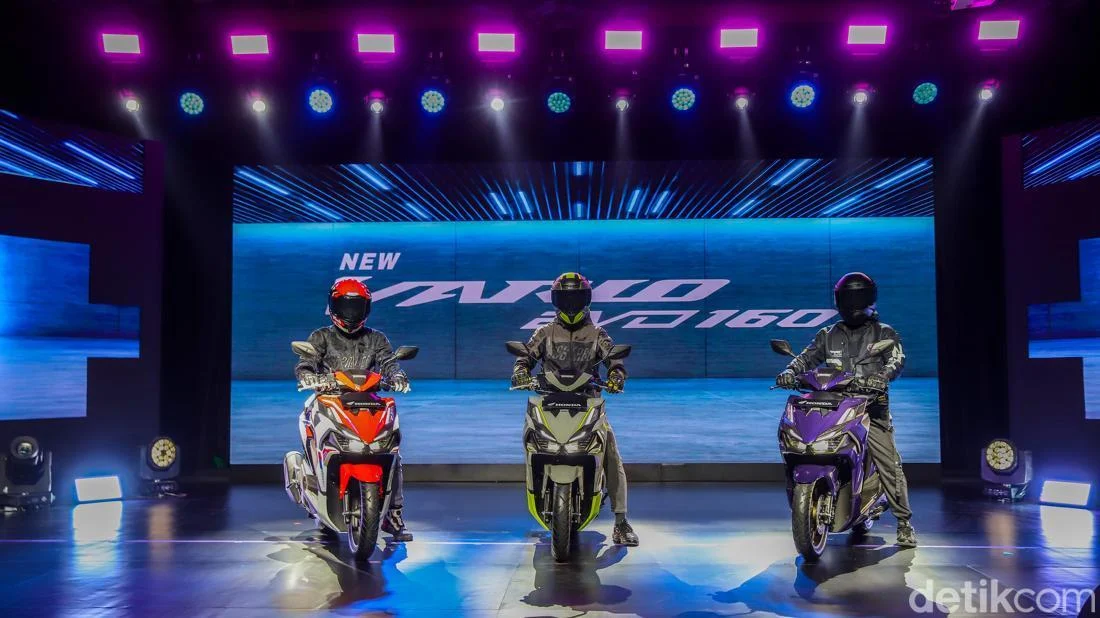
PT Astra Honda Motor (AHM) has officially updated its premium scooter lineup with the introduction of the Honda Vario Evo 160, a move designed to solidify its dominance in the highly competitive mid-range displacement segment in Indonesia. As the successor to the previous Honda Vario 160, the "Evo" iteration arrives with subtle yet strategic enhancements aimed at optimizing performance and maintaining the model’s reputation for fuel efficiency. Priced at a starting point of Rp 28,525,000 for the base variant, the Vario Evo 160 represents a significant pillar in Honda’s strategy to capture the urban commuter market that demands both stylistic flair and mechanical reliability. While cash purchases remain an option for many, the majority of Indonesian consumers lean toward credit financing, prompted by the accessibility of various down payment (DP) schemes and flexible tenures offered through authorized dealers like Wahana Honda.
Strategic Pricing and Comprehensive Financing Structures
The accessibility of the Honda Vario Evo 160 is largely dictated by its financial packaging. In the Greater Jakarta area, specifically through data provided by Wahana Honda, the On-The-Road (OTR) price for the entry-level variant is listed at approximately Rp 28,764,000. This slight variation from the base MSRP accounts for administrative fees, registration, and regional taxes. To cater to different economic brackets, the financing schemes are typically divided into three primary down payment tiers, which significantly influence the monthly commitment of the buyer.
For consumers opting for the lowest entry barrier, a down payment of Rp 3,100,000 is available. Under this scheme, the monthly installments are structured across several tenures, usually ranging from 11 to 35 months. A higher down payment of Rp 3,400,000 provides a middle ground, slightly reducing the interest burden and the monthly principal. For those looking to minimize their long-term debt, a down payment of Rp 3,800,000 is recommended. While these figures serve as a baseline, financial analysts note that these rates are subject to change based on the fluctuations of the benchmark interest rates set by Bank Indonesia and the specific credit scoring of the applicant.
The financing landscape for motorcycles in Indonesia is a critical driver of the automotive industry. With nearly 70% of two-wheeler purchases made via credit, the Vario Evo 160’s success is as much about its financial feasibility as it is about its engine displacement. Leasing entities such as FIF (Federal International Finance) and other multi-finance companies often provide additional insurance packages within these installments, covering total loss only (TLO) or comprehensive protection, adding another layer of value to the monthly expenditure.
Technical Enhancements and Performance Optimization
The "Evo" branding in the new Vario 160 suggests an evolution rather than a complete revolution, focusing on refining an already successful platform. At the heart of the vehicle lies the same 160cc, 4-valve, liquid-cooled eSP+ (enhanced Smart Power Plus) engine that powered its predecessor. However, Honda engineers have implemented a series of optimizations to the ignition system. By recalibrating the Electronic Control Unit (ECU) and fine-tuning the spark timing, the manufacturer has managed to extract a higher torque profile.
The Honda Vario Evo 160 now delivers a peak torque of 14 Nm, a slight but noticeable increase that improves the scooter’s "stop-and-go" capabilities in dense urban traffic. The maximum power output remains stable at 11.3 kW, allowing the vehicle to reach a top speed of approximately 109 km/h. This balance of power ensures that the scooter is not only capable of navigating city streets but also provides sufficient overhead for highway cruising.
A significant highlight of the Vario Evo 160 is its fuel economy. Despite the increase in displacement from the older 150cc generation, the 160cc eSP+ engine remains remarkably efficient. Utilizing the WMTC (World Motorcycle Test Cycle) Euro 3 method, the vehicle clocked a fuel consumption rate of 46.7 km/liter. This efficiency is achieved through the integration of the Idling Stop System (ISS), which cuts the engine during brief pauses, and the use of low-friction components within the engine block.
Chronology of the Vario Series Evolution
The journey of the Honda Vario in Indonesia began in 2006, when it was introduced as a liquid-cooled competitor to the then-dominant air-cooled scooters. Over nearly two decades, the Vario has undergone several transformative cycles.
- The 110cc Era (2006–2012): The original Vario introduced the concept of "Combi Brake System" (CBS) to the Indonesian masses, focusing on safety and ease of use.
- The 125cc Transition (2012–2015): With the introduction of the Vario 125 PGM-FI, Honda shifted toward fuel injection technology and larger storage capacities.
- The Dual-Tier Strategy (2015–2021): Honda expanded the lineup to include both 125cc and 150cc variants, catering to both budget-conscious and performance-oriented riders.
- The 160cc Revolution (2022–Present): The launch of the Vario 160 marked a shift to a larger frame and the eSP+ engine.
- The Evo Update (Current): The latest refinement focuses on ignition optimization and torque enhancement, signifying a maturity in the 160cc platform.
This timeline illustrates Honda’s commitment to incremental improvement. Each iteration has been a response to shifting consumer preferences, where the demand for "big scooter" aesthetics has merged with the necessity for "compact scooter" agility.
Market Positioning and Competitive Landscape
The Honda Vario Evo 160 occupies a unique niche in the Indonesian market. It sits between the entry-level Beat and Scoopy models and the premium maxi-scooters like the Honda PCX 160. Its primary rival remains the Yamaha Aerox 155. While the Aerox targets a younger demographic with its "super sports" scooter styling and wider tires, the Vario Evo 160 appeals to a broader audience that values a flat-deck floorboard for utility, combined with high-performance specs.
Industry analysts suggest that the Vario Evo 160’s pricing is a strategic move to hedge against rising production costs while remaining under the Rp 30 million psychological threshold for the base model. By offering an "Evo" version, Honda revitalizes interest in the model without the massive R&D costs associated with a full model change, allowing them to maintain competitive pricing against Yamaha’s Lexi LX 155 and Aerox 155 lineups.
Furthermore, the Vario Evo 160 utilizes the eSAF (enhanced Smart Architecture Frame). While the frame technology faced public scrutiny in previous years, AHM has doubled down on its benefits, citing weight reduction and improved agility. The "Evo" release serves as a silent reaffirmation of the frame’s role in the scooter’s performance dynamics, emphasizing that the lightweight structure is essential for achieving the 46.7 km/l fuel efficiency rating.
Official Perspectives and Consumer Implications
While official statements from PT Astra Honda Motor emphasize "customer satisfaction" and "technological progression," the underlying strategy is clearly one of market retention. In various press releases, AHM executives have noted that the Vario series is a "trendsetter" in the flat-deck scooter segment. The optimization of the ignition system is a direct response to feedback regarding low-end acceleration, which is vital for the Indonesian terrain characterized by frequent stop-lights and hilly urban landscapes.
From a consumer perspective, the Vario Evo 160 offers a compelling total cost of ownership (TCO). The combination of a relatively low down payment, high resale value (a hallmark of the Honda brand in Indonesia), and low fuel consumption makes it a rational choice for the "sandwich generation" and young professionals. The inclusion of modern features such as the Smart Key System, a USB charger in the console box, and a full digital instrument panel ensures that the vehicle does not feel dated compared to more expensive "maxi" alternatives.
Broader Economic Impact and Future Outlook
The release of the Vario Evo 160 is also a barometer for the health of the Indonesian manufacturing sector. As one of the largest motorcycle markets in the world, the production volume of the Vario series supports thousands of jobs across the supply chain, from local component manufacturers to dealership networks. The "Evo" update ensures that the assembly lines at AHM’s plants in Cikarang or Karawang remain optimized for high-volume output.
Looking forward, the Vario Evo 160 is likely to remain a top-three best-seller in the Indonesian market. As the country moves toward stricter emission standards, the optimization of the eSP+ engine in this model provides a blueprint for how internal combustion engines (ICE) can remain relevant alongside the burgeoning electric vehicle (EV) sector. For now, the Vario Evo 160 stands as a testament to the power of incremental engineering—providing just enough "evolution" to keep the market engaged while maintaining the core reliability that has defined the brand for decades.
In conclusion, the Honda Vario Evo 160 is more than just a minor update; it is a calculated financial and mechanical package designed to navigate the complexities of the Indonesian economy. With its competitive financing options, enhanced torque, and proven fuel efficiency, it continues to set the benchmark for what a modern urban scooter should be. Whether viewed through the lens of a monthly budget or a technical spec sheet, the Vario Evo 160 remains a formidable contender in the race for two-wheeled supremacy.