Nasution Nanang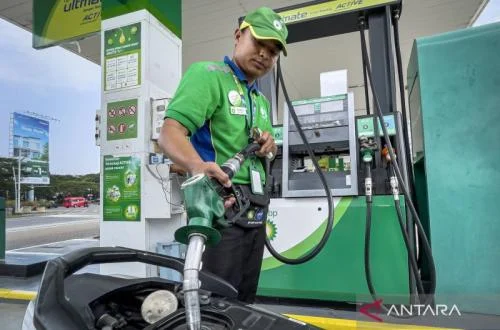
Jakarta, Indonesia – Fuel retailers BP-AKR and state-owned PT Pertamina (Persero) have simultaneously announced substantial price adjustments for various fuel products, most notably a significant reduction in diesel prices, set to take effect on July 1, 2026. This synchronized move by key players in the Indonesian fuel market signals a responsiveness to evolving global energy dynamics and aims to alleviate costs for consumers and industries relying on these essential commodities. The adjustments come after a period of volatility influenced by geopolitical tensions and fluctuating international crude oil benchmarks.
BP-AKR, a joint venture between British energy giant bp and PT AKR Corporindo Tbk, spearheaded the price cuts with a remarkable decrease in the price of its premium diesel product, BP Ultimate Diesel. The price for BP Ultimate Diesel will drop from Rp25,060 per liter to Rp21,340 per liter, marking a substantial reduction of Rp3,720 per liter. This adjustment applies exclusively to their diesel offering, while the prices for bp’s gasoline products, BP 92 and BP Ultimate, remain stable. BP 92 continues to be priced at Rp16,670 per liter, and BP Ultimate at Rp17,240 per liter. These gasoline products had previously seen price increases on June 10, 2026, with BP 92 rising from Rp12,390 per liter and BP Ultimate from Rp12,930 per liter.
Concurrently, PT Pertamina (Persero) followed suit by announcing its own adjustments for non-subsidized fuel varieties, also effective July 1, 2026. The state-owned energy company detailed price decreases for its premium diesel products, Pertamina Dex and Dexlite, as well as for its high-octane gasoline, Pertamax Turbo, across the Jabodetabek region (Jakarta, Bogor, Depok, Tangerang, and Bekasi), which often serves as a benchmark for national prices.
Pertamina Dex (CN 53), a high-quality diesel fuel, will see its price reduced from Rp24,800 per liter to Rp21,150 per liter. Similarly, Dexlite (CN 51), another non-subsidized diesel variant, will decrease from Rp23,000 per liter to Rp19,700 per liter. For gasoline users, Pertamax Turbo (RON 98) is set to drop from Rp20,750 per liter to Rp19,300 per liter. These significant reductions across premium diesel and high-octane gasoline categories are expected to be welcomed by both private vehicle owners and industrial consumers.
Stability in Subsidized and Key Non-Subsidized Fuels
Amidst these dynamic price shifts, several crucial fuel products, particularly those under government subsidy and some popular non-subsidized options, maintain their price stability. The price for Pertamax (RON 92), a widely used non-subsidized gasoline, remains at Rp16,250 per liter. Pertamax Green (RON 95), an environmentally friendlier option, also holds steady at Rp17,000 per liter. It is important to note that both Pertamax and Pertamax Green had experienced price increases on June 10, 2026, prior to the current round of adjustments. This earlier hike was implemented several months after the Indonesian government had temporarily held fuel prices steady despite a surge in global oil markets, attributed at the time to the geopolitical conflict involving the United States, Israel, and Iran.
Crucially, the government’s commitment to stabilizing prices for its subsidized and assigned fuel categories remains unwavering. Pertalite, the most widely consumed subsidized gasoline, continues to be sold at Rp10,000 per liter, a price point that has been maintained to ensure affordability for the general populace. Similarly, Biosolar, the subsidized diesel variant, holds its price at Rp6,800 per liter. These fixed prices for subsidized fuels underscore the government’s strategy to buffer a significant portion of the population from the direct impacts of international oil price fluctuations.
The Global Context: Geopolitical Tensions and Oil Market Dynamics
The recent price adjustments are deeply intertwined with the volatile landscape of global energy markets. The period leading up to mid-2026 has been marked by significant geopolitical events, most notably the protracted conflict involving the US, Israel, and Iran, as referenced in the earlier price increases. Such conflicts in critical oil-producing regions or along major shipping routes inherently introduce supply uncertainty, pushing crude oil prices upwards. Fears of disruptions to the Strait of Hormuz, a vital chokepoint for global oil trade, or potential impacts on regional oil fields, can trigger speculative buying and drive up benchmark prices like Brent Crude and West Texas Intermediate (WTI).
However, global oil markets are complex and respond to a multitude of factors. While geopolitical risks can spike prices, other elements such as global demand outlook, OPEC+ production decisions, inventory levels, and the strength of the U.S. dollar also play significant roles. The observed price reductions for diesel and some gasoline products suggest an easing of some of these upward pressures. This could be attributed to several factors: a de-escalation of specific tensions, a stabilization of supply chains, an increase in global crude output, or perhaps a revised outlook on global economic growth leading to slightly softer demand forecasts. For diesel specifically, global industrial activity, freight movement, and agricultural demands are key drivers. A slight cooling in global manufacturing or a rebalancing of supply could contribute to the observed price drops.
Indonesia’s Fuel Pricing Mechanism and Policy
Indonesia’s fuel pricing mechanism is a hybrid system that balances market dynamics with social welfare considerations. For non-subsidized fuels, such as BP Ultimate Diesel, Pertamina Dex, Dexlite, Pertamax Turbo, Pertamax, and Pertamax Green, prices are generally adjusted monthly based on international crude oil prices (e.g., Platts Singapore MOPS – Mean of Platts Singapore), the exchange rate of the Indonesian Rupiah against the US Dollar, and operational costs. This allows fuel retailers like BP-AKR and Pertamina to reflect global market conditions more directly.
In contrast, subsidized fuels like Pertalite and Biosolar are subject to government intervention. Their prices are set by the government and are typically kept stable for extended periods, even when international prices fluctuate significantly. The government absorbs the difference between the market price and the subsidized price through the state budget, a mechanism designed to protect the purchasing power of lower-income households and stabilize key economic sectors that rely on affordable fuel, such as public transportation and small businesses. This dual pricing system is a critical component of Indonesia’s energy policy, aiming to ensure energy security while managing economic stability and social equity.
Industry Reactions and Expert Commentary
While official statements from BP-AKR and Pertamina regarding the specific rationale for the July 1, 2026, price cuts were not immediately detailed beyond the published price lists, industry observers and economic analysts offer insights. A spokesperson for BP-AKR, speaking on background, might emphasize the company’s commitment to competitive pricing and responding to market signals to deliver value to its customers. "Our pricing strategy is dynamic and reflects the ongoing evaluation of global market conditions, operational efficiencies, and our dedication to offering competitive prices to Indonesian consumers," an inferred statement could suggest.
Similarly, Pertamina, as the national energy provider, would likely highlight its role in supporting the national economy. An inferred statement from a Pertamina representative might articulate, "These adjustments for our non-subsidized products demonstrate Pertamina’s responsiveness to global price movements and our continuous effort to provide quality fuels at fair prices. We remain vigilant in monitoring the international market to ensure energy availability and affordability for the Indonesian people, while maintaining the stability of our subsidized offerings."
Economists specializing in energy markets have largely welcomed the price reductions, particularly for diesel. Dr. Budi Santoso, an energy policy analyst at a leading Indonesian think tank, commented, "The significant drop in diesel prices by both BP-AKR and Pertamina is a positive development. Diesel is the lifeblood of many industries, including logistics, manufacturing, mining, and agriculture. Lower diesel costs will translate into reduced operational expenses for businesses, which could help temper inflationary pressures and potentially stimulate economic activity. It also indicates an improvement in global supply-demand balances for diesel, perhaps driven by increased refining capacity or a slight moderation in industrial demand."
Economic Implications for Consumers and Businesses
The price adjustments, especially the substantial cuts in diesel prices, carry broad economic implications for Indonesia. For consumers, particularly those owning diesel-powered vehicles or relying on public transport that uses diesel, these reductions offer immediate financial relief. Lower fuel costs can free up household disposable income, potentially boosting consumer spending in other sectors.
More profoundly, the impact on businesses that rely heavily on diesel is expected to be significant. The transportation and logistics sectors, which are fundamental to the Indonesian economy, will see their operational costs decrease. This could lead to more competitive pricing for goods and services, ultimately benefiting end consumers. Manufacturing companies, agricultural enterprises, and mining operations, which often utilize heavy machinery and generators powered by diesel, will also experience a reduction in their input costs. This could improve profit margins, encourage investment, and potentially contribute to job creation.
From a macroeconomic perspective, sustained lower fuel prices, particularly for diesel, can help mitigate inflation. Fuel costs are a major component of the Consumer Price Index (CPI), and their reduction can ease overall price pressures in the economy. This gives the central bank greater flexibility in its monetary policy decisions. However, the impact on inflation will also depend on the stability of other key commodity prices and the overall economic growth trajectory.
Competitive Landscape in Indonesian Fuel Retail
The synchronized price reductions by BP-AKR and Pertamina also highlight the evolving competitive landscape in Indonesia’s fuel retail sector. While Pertamina, with its extensive network and subsidized offerings, dominates the market, international players like BP-AKR and Shell provide premium non-subsidized options, fostering competition in that segment.
BP-AKR’s proactive and significant price cut for BP Ultimate Diesel positions it competitively against Pertamina’s premium diesel offerings. Such moves encourage market efficiency and innovation, as companies strive to attract and retain customers through pricing strategies, product quality, and service. This dynamic is beneficial for consumers, as it pushes fuel providers to optimize their operations and respond quickly to market shifts. The presence of multiple players ensures that price adjustments are not unilateral but often reflect broader market trends.
Looking Ahead: Future Outlook
The July 1, 2026, fuel price adjustments provide a snapshot of a dynamic energy market. Looking forward, several factors will continue to shape fuel prices in Indonesia. Global crude oil prices will remain a primary determinant, influenced by geopolitical developments, OPEC+ production quotas, the pace of global economic recovery, and the transition towards renewable energy sources. The strength of the Indonesian Rupiah against the US Dollar will also be critical, as crude oil is priced in dollars.
Domestically, the Indonesian government’s policy on fuel subsidies will play a pivotal role. Any changes to the subsidy mechanism or the price of subsidized fuels could have far-reaching economic and social consequences. Furthermore, the ongoing efforts to enhance domestic refining capacity and explore alternative energy sources will contribute to Indonesia’s long-term energy resilience and pricing stability. The market will keenly observe whether the current trend of easing global prices for diesel and certain premium gasoline products will persist, or if new external pressures will emerge, necessitating further adjustments in the months to come. The ability of both state-owned and private fuel companies to adapt to these evolving conditions will be crucial for maintaining energy security and supporting economic growth in Indonesia.