Nasution Nanang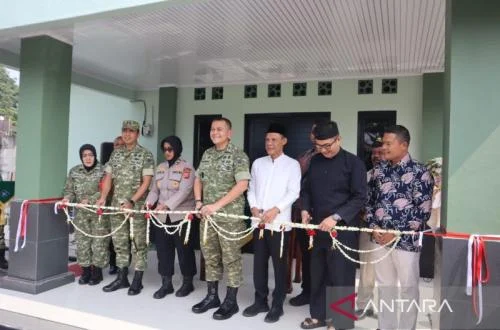
KABUPATEN BOGOR, West Java – The Bogor Regency Government, in a significant move to reinforce territorial security and foster community resilience, officially inaugurated two new Military District Commands (Koramil), Koramil Tamansari and Koramil Dramaga, on Monday. This strategic expansion represents a culmination of collaborative efforts across various sectors, underscoring a shared commitment to maintaining peace, stability, and facilitating comprehensive development within the expansive and strategically vital region of West Java. The establishment of these new commands is poised to enhance the local government’s capacity to address a myriad of challenges, from public order and disaster response to supporting grassroots development initiatives, by bringing state presence closer to the communities.
The inauguration ceremony, attended by key regional stakeholders, highlighted the robust spirit of gotong royong (mutual cooperation) that underpinned the entire project. Bogor Deputy Regent Jaro Ade articulated the profound gratitude owed to all parties involved in bringing the Koramil Tamansari and Koramil Dramaga facilities to fruition. He specifically acknowledged the indispensable contributions from the regional government, the Indonesian National Armed Forces (TNI), sub-district administrations, village authorities, the private sector, and the local communities themselves. "This is a tangible manifestation of synergy for the benefit of the community," Jaro Ade affirmed, emphasizing that such collective action is fundamental to achieving progress and ensuring public welfare. The Deputy Regent further elaborated that the role of a Koramil extends beyond conventional defense and security functions. He stressed its critical importance in bolstering territorial development (pembinaan teritorial) down to the sub-district and village levels. This comprehensive approach necessitates a continuous strengthening of the synergy among the regional government, TNI, the Indonesian National Police (Polri), and influential community and religious leaders, conceptualized as the "three pillars" of local governance.
The Strategic Importance of Koramil in Local Governance
The Koramil, an acronym for Komando Rayon Militer (Military District Command), serves as the lowest territorial command unit within the TNI structure, specifically operating at the sub-district (kecamatan) level. It is the frontline representation of the TNI’s presence and function in direct interaction with the civilian population. Each Koramil is typically responsible for several villages, with a dedicated non-commissioned officer, known as a Babinsa (Bintara Pembina Desa – Village Supervisory Non-Commissioned Officer), assigned to each village. The Babinsa acts as the direct liaison between the military and the community, playing a multifaceted role that includes security monitoring, facilitating communication, assisting in local development projects, and acting as an early warning system for social and security issues.
Bogor Regency, with its vast geographical expanse, diverse population exceeding 5 million, and strategic location bordering the capital city of Jakarta, presents a complex tapestry of development opportunities and inherent challenges. The region encompasses bustling urban centers, burgeoning industrial zones, significant agricultural areas, and popular tourist destinations, including the iconic Puncak area. This diversity necessitates a robust and localized security framework capable of responding swiftly and effectively to various contingencies. The establishment of Koramil Tamansari and Koramil Dramaga is particularly pertinent given the specific characteristics of these sub-districts. Tamansari, nestled near Mount Salak, is known for its tourism potential and rural communities, while Dramaga, home to the prestigious IPB University, experiences significant population mobility and urban growth. These distinct profiles underscore the need for tailored security and territorial development approaches, which the new Koramils are designed to provide.
The Doctrine of "Three Pillars" and its Operationalization
Deputy Regent Jaro Ade placed particular emphasis on the indispensable nature of the "three pillars" collaboration at both the sub-district and village levels. At the sub-district level, this triad comprises the Camat (sub-district head), the Danramil (Commander of the Koramil), and the Kapolsek (Head of the Police Sector). Descending to the village level, the collaboration involves the Kepala Desa (village head), the Babinsa, and the Bhabinkamtibmas (Bhayangkara Pembina Keamanan dan Ketertiban Masyarakat – Police Non-Commissioned Officer for Community Security and Order Development). This framework is not merely administrative; it is an operational doctrine designed to ensure seamless coordination and joint problem-solving.
"Good communication and unity are key in resolving various issues within the community and overseeing all government development programs," Jaro Ade stated, articulating the core philosophy behind this collaborative model. This integrated approach allows for a comprehensive understanding of local dynamics, enabling more effective and context-sensitive responses to security threats, social conflicts, natural disasters, and the implementation of public services. For instance, in the event of a natural disaster such as a landslide or flood – common occurrences in parts of Bogor Regency – the rapid and coordinated response of these three pillars is crucial for evacuation, relief efforts, and subsequent recovery. Similarly, in addressing issues like public health campaigns, agricultural development, or maintaining public order during community events, the joint efforts of the village head, Babinsa, and Bhabinkamtibmas provide a robust network for outreach and enforcement. This integrated model is a cornerstone of Indonesia’s decentralized governance, empowering local authorities with the necessary resources and coordination mechanisms to effectively serve their constituents.
Broadening the State’s Presence: A Message from the Military Leadership
Brigjen TNI Thomas Rajuni, Commander of Korem 061/Suryakancana (Military Resort Command 061/Suryakancana), further elaborated on the profound significance of the new Koramils. He unequivocally stated that the construction of Koramil Tamansari and Koramil Dramaga transcends mere physical infrastructure. "The construction of this Koramil is not just about building a building, but about building the presence of the state closer to the community," Thomas asserted. This statement encapsulates the broader strategic vision: to make the state’s protective and developmental arm more accessible and responsive to the needs of its citizens at the grassroots level. It is a commitment to ensuring that government services, security assurances, and opportunities for participation are not distant abstractions but tangible realities for every resident.
Brigjen Thomas Rajuni emphasized that the Koramil, as the spearhead of the TNI in the region, is mandated to cultivate a sense of safety and comfort among the populace. More importantly, it is expected to actively contribute to finding solutions for various community challenges. This vision positions the military as a partner in development and a problem-solver, moving beyond a purely defensive posture. He reiterated the imperative of continually strengthening synergy among the TNI, Polri, local government, and all societal elements. This unified front is essential not only for safeguarding regional security and order but also for elevating the quality of services rendered to the community. This holistic approach ensures that security is not an isolated concern but an integral component of overall human development and welfare.
Chronology and Collaborative Funding
The journey to establishing Koramil Tamansari and Koramil Dramaga reflects a structured process of needs assessment, planning, and collaborative execution. While specific dates for each stage were not detailed, the typical timeline for such projects involves several phases:
- Needs Assessment (Initial Phase): Identification of areas requiring enhanced security presence due to population growth, strategic importance, or specific local challenges. This phase often involves consultations between the TNI, local government, and community representatives.
- Feasibility Study and Site Selection: Identifying suitable land plots, considering logistical access, community integration, and operational efficiency. For these projects, the land was likely provided or facilitated by the local government.
- Budgeting and Resource Mobilization: This is where the gotong royong truly shines. Funding for construction typically comes from a combination of sources:
- Regional Government Budget (APBD): Allocations for public infrastructure and security support.
- TNI Internal Funds: For operational equipment and personnel.
- Private Sector Contributions: Local businesses often contribute as part of their Corporate Social Responsibility (CSR) initiatives, recognizing that a stable environment benefits their operations.
- Community Support: In-kind contributions, volunteer labor, or direct donations from local communities.
- Construction Phase: Overseen by local government public works departments, often with military engineering support or supervision, ensuring adherence to building codes and functional requirements.
- Personnel Deployment and Training: Selection and deployment of Danramil, Babinsa, and administrative staff, followed by orientation on local specifics and coordination protocols.
- Inauguration Ceremony: The official opening, marking the operational readiness of the facilities and their integration into the local governance structure.
The emphasis on collaborative funding and execution underscores a broader trend in Indonesia where national development and security initiatives are increasingly seen as shared responsibilities, rather than solely the domain of central government or military. This decentralized approach leverages local knowledge, resources, and community engagement, leading to more sustainable and impactful outcomes.
Implications for Security, Development, and Public Trust
The inauguration of the new Koramils carries significant implications across multiple dimensions:
Enhanced Security and Public Order: The most direct impact is the strengthening of security apparatus at the grassroots. With a more localized military presence, response times to security incidents, potential threats, and public disturbances are expected to improve. This proactive presence can deter criminal activity, facilitate early detection of social unrest, and provide immediate support during emergencies. For residents of Tamansari and Dramaga, this translates into a heightened sense of safety and confidence in the authorities.
Facilitating Local Development: Beyond security, the Koramils are instrumental in supporting government development programs. Babinsas often assist in data collection for social welfare programs, help monitor infrastructure projects (e.g., road construction, irrigation systems), and participate in community health initiatives. Their presence can ensure that development aid reaches its intended beneficiaries and that projects are executed efficiently, free from interference. This direct engagement fosters trust and transparency, vital for sustainable development.
Disaster Preparedness and Response: Bogor Regency is susceptible to various natural disasters. The new Koramils will serve as crucial coordination points for disaster management efforts. Working with local police and civil defense, they can assist in early warning dissemination, evacuation logistics, distribution of aid, and post-disaster recovery operations. Their local knowledge and organizational capacity are invaluable in mitigating the impact of such events.
Strengthening Civil-Military Relations: By actively engaging with communities and addressing their needs, the Koramils play a pivotal role in fostering positive civil-military relations. This approach builds bridges between the armed forces and the civilian population, dispelling any historical perceptions of aloofness or detachment. When the military is seen as a partner in community building, it enhances public trust and strengthens national cohesion.
Bolstering Democratic Governance: The "three pillars" model, reinforced by these new facilities, strengthens the foundations of democratic governance at the local level. By ensuring effective coordination among elected officials (village heads, sub-district heads), law enforcement (police), and the military, it promotes a balanced and integrated approach to local administration. This collaborative framework ensures that local concerns are addressed through a multi-agency lens, fostering more inclusive and representative decision-making.
The establishment of Koramil Tamansari and Koramil Dramaga in Bogor Regency is more than just an expansion of military infrastructure; it is a strategic investment in the holistic well-being and security of the region. It exemplifies a forward-thinking approach to governance, where collaboration, community engagement, and a localized state presence are recognized as essential ingredients for achieving sustainable development and enduring stability. As these new commands become fully operational, they are expected to serve as vital hubs, connecting the state with its citizens and empowering communities to thrive in a secure and supportive environment.