Nila Kartika Wati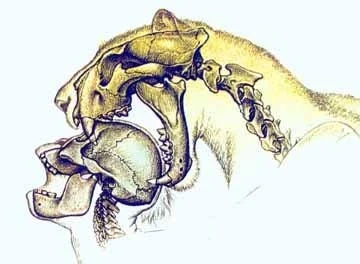
Long before the rise of modern civilization and the establishment of Homo sapiens as the dominant species on Earth, the survival of human ancestors was constantly threatened by a diverse array of formidable predators. Among the most specialized and terrifying of these ancient threats was Dinofelis, a genus of machairodont (saber-toothed) cat that roamed the landscapes of Africa, Eurasia, and North America between 5 million and 1.2 million years ago. Often referred to by paleontologists as the "false saber-tooth" due to the unique shape of its canines, Dinofelis is increasingly recognized not just as a contemporary of early hominids, but as a specialized predator that may have specifically targeted human ancestors, thereby playing a pivotal role in the evolutionary trajectory of the human race.
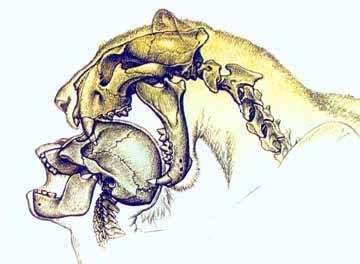
The physical attributes of Dinofelis distinguished it from both the more famous Smilodon (the classic saber-toothed tiger) and the modern big cats we recognize today, such as lions and leopards. While Smilodon possessed elongated, blade-like canines designed for shearing through soft tissue, Dinofelis featured taring—or canine teeth—that were a middle ground between the long, fragile sabers of its cousins and the conical teeth of modern felines. These teeth were stout, exceptionally strong, and slightly flattened. Archaeological evidence suggests that this dental morphology was perfectly adapted for a specific, lethal purpose: puncturing the thick, protective bone of a primate’s skull.
The Anatomy of a Specialized Hominid Hunter
Paleontological reconstructions of Dinofelis depict a predator of significant power and agility. Standing approximately 70 centimeters tall at the shoulder and weighing up to 120 kilograms—roughly the size of a modern jaguar but with a more robust, lion-like build—Dinofelis possessed exceptionally powerful forelimbs. These limbs were likely used to pin down prey with overwhelming force, preventing escape while the cat delivered a precision strike to the head or neck.
Unlike modern lions or mountain lions, which often kill through suffocation by biting the throat—a process that can take several minutes and allows for the possibility of the prey’s escape or intervention—Dinofelis was built for the "instant kill." Its unique dental structure allowed it to bite through the top of a skull, penetrating the brain in a single, decisive motion. This method of predation was particularly effective against primates, including early members of the human lineage such as Homo habilis and Paranthropus.
The fossil record supports this grim reality. In various sites across South Africa, most notably in the Swartkrans cave system, researchers have discovered the fossilized remains of early hominids bearing distinct puncture marks. These wounds, often found in pairs on the cranium, match the spacing and diameter of Dinofelis canines with chilling precision. This evidence led Professor C.K. Brain, a pioneer in the field of African cave taphonomy, to identify Dinofelis as a "specialist primate predator" in his seminal 1981 work, The Hunters or the Hunted? An Introduction to African Cave Taphonomy.
A Global Presence and a Diverse Diet
While its interactions with human ancestors are of particular interest to evolutionary biologists, Dinofelis was a versatile and widespread predator. Its remains have been identified in a variety of environments, ranging from the humid forests of Southeast Asia to the open grasslands of North America and the rugged terrains of Europe. This adaptability suggests that while it may have specialized in primates where they were abundant, it was also capable of taking down a wide range of megafauna.
Isotopic analysis of fossilized remains and the proximity of other animal bones suggest that Dinofelis hunted juvenile mammoths, mastodons, and various species of ancient ungulates. However, the recurring presence of hominid and baboon remains in "Dinofelis dens"—often located in deep, inaccessible caves—suggests a preference for primates. These caves likely served as the predator’s larder, where it would drag its kills to consume them away from the competition of larger scavengers like giant hyenas or other machairodonts.
The chronology of Dinofelis’s reign spans several geological epochs, beginning in the late Miocene and continuing through the Pliocene until its eventual extinction in the early Pleistocene. For nearly four million years, this "terrible cat" (the literal translation of its name) was a constant shadow in the lives of our ancestors, exerting a relentless selective pressure that would eventually force a radical change in hominid behavior.
The Evolutionary Arms Race: From Prey to Predator
The relationship between Dinofelis and early humans was not merely one of victim and victimizer; it was an evolutionary arms race. In his influential book Songlines, author Bruce Chatwin posited that the existential threat posed by Dinofelis and similar predators was one of the primary catalysts for the development of human intelligence and technology.
Faced with a predator that could strike from the darkness and end a life in a single bite, early hominids were forced to adapt or face extinction. This pressure likely contributed to several key developments in the human lineage:
- Tool and Weapon Manufacture: The need to defend against a powerful, fast-moving predator spurred the creation of the first defensive weapons. The transition from using found stones to crafting sharpened wooden spears and stone-tipped projectiles allowed early humans to keep predators at a distance.
- Social Cohesion and Communication: Survival against a specialist hunter required sophisticated group coordination. The need to maintain watch, sound alarms, and organize collective defense likely accelerated the development of complex social structures and early forms of language.
- Controlled Use of Fire: Fire provided a dual advantage; it acted as a physical barrier that most predators, including Dinofelis, would fear to cross, and it illuminated the darkness, stripping the "stealth hunter" of its greatest advantage.
As hominids became more proficient with weapons and fire, the dynamic began to shift. The hunted became the hunters. Evidence suggests that as Homo erectus and later species became more dominant, they began to actively compete with Dinofelis for territory and resources. Some researchers hypothesize that the eventual extinction of Dinofelis around 1.2 million years ago was not solely due to climate change, but was hastened by the rising prowess of the human race, which began to systematically eliminate predators that posed a direct threat to their survival.
Inferred Scientific Perspectives and Implications
While the "specialist primate hunter" theory remains widely accepted, modern paleontologists continue to refine our understanding of Dinofelis through advanced technology. Recent 3D dental microwear analysis and biomechanical modeling have provided deeper insights into the cat’s hunting style. These studies confirm that while Dinofelis had a bite force lower than that of modern lions of similar size, the concentration of force at the tips of its specialized canines was significantly higher, supporting the skull-crushing hypothesis.
The psychological impact of Dinofelis on the human psyche is another area of intense academic speculation. Some evolutionary psychologists argue that our innate, often irrational fear of the dark and the "monster in the shadows" may be a vestigial memory—a genetic imprint left by millions of years of being hunted by nocturnal predators like Dinofelis. This "predator archetype" appears in the mythologies and folklore of nearly every human culture, often taking the form of a great, fanged beast that haunts the periphery of human settlements.
Conclusion and Broader Impact
The story of Dinofelis is more than a footnote in paleontological history; it is a fundamental chapter in the story of humanity. The existence of this specialized killer highlights the extreme conditions under which our ancestors survived and thrived. By providing a lethal challenge, Dinofelis inadvertently served as a forge, tempering the early human spirit and driving the innovations in tool-making and social organization that define our species today.
As we look at the fossilized remains of this ancient cat, we are reminded that the dominance of the human race was never guaranteed. It was earned through millions of years of adaptation in the face of predators that were faster, stronger, and better equipped for killing. The extinction of Dinofelis marked the end of an era where humans were primarily prey, signaling the beginning of a new epoch where the "terrible cats" of the world would eventually find themselves at the mercy of the very primates they once hunted.
Today, Dinofelis remains a subject of fascination for scientists and the public alike, serving as a powerful symbol of the prehistoric world—a world where the line between life and death was often determined by the strength of a skull and the speed of a saber-tooth’s strike. Through the study of this magnificent predator, we gain not only knowledge of a lost species but a deeper appreciation for the resilience and ingenuity of the human lineage.