Nila Kartika Wati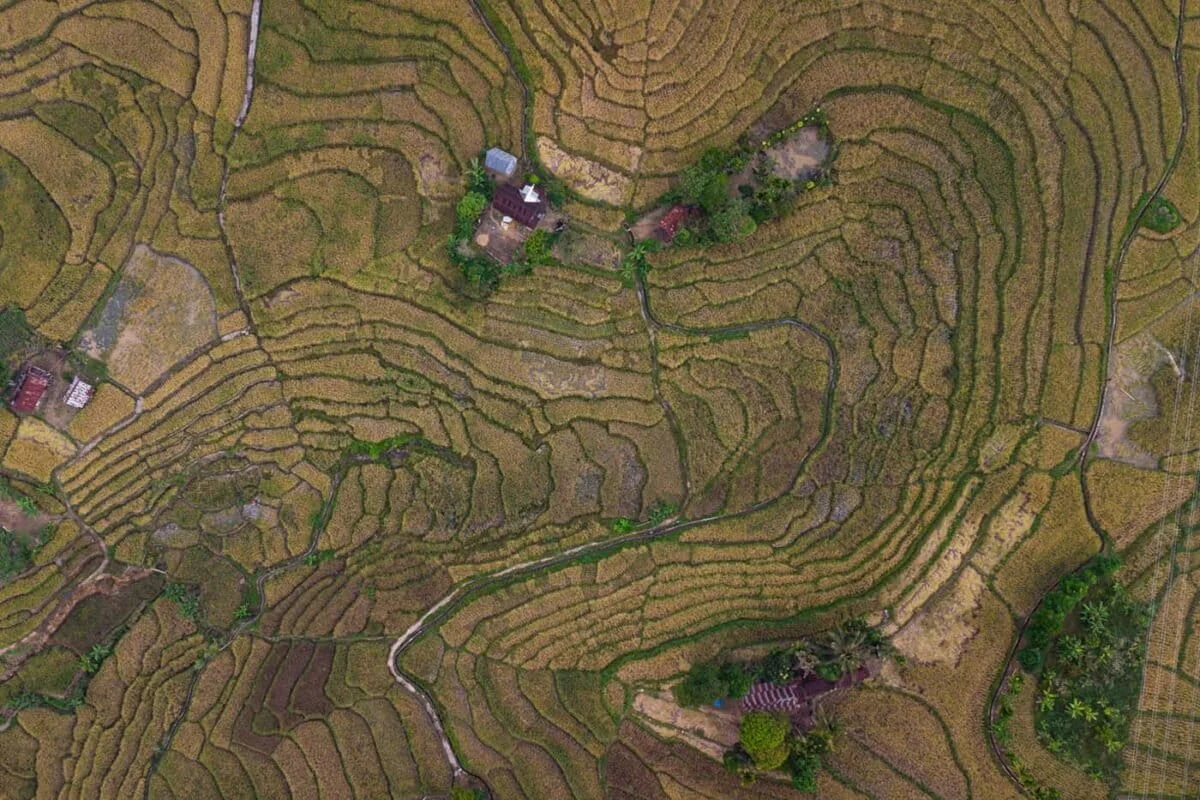
The Indonesian archipelago is currently grappling with a severe climate-driven crisis as the Badan Meteorologi, Klimatologi, dan Geofisika (BMKG) reports that an atmospheric drought is intensifying across the nation. According to the agency’s latest forecast released on September 14, 2026, the period from September 15 to 21, 2026, will be dominated by exceptionally dry air, exacerbating conditions for approximately 81 percent of the country’s designated seasonal zones. With over 1,637 monitoring stations reporting "extreme" drought—defined as more than 60 consecutive days without rainfall—the intersection of a prolonged El Nino phenomenon and seasonal aridity has pushed the nation’s agricultural sector into a state of emergency.
The current meteorological data indicates that the dry spell is not merely a seasonal variation but a structural challenge for national food production. As of mid-September 2026, the Ministry of Agriculture has confirmed that approximately 50,000 hectares of rice paddies have been compromised by water scarcity. These impacts are most acute in rain-fed agricultural regions and upland areas where irrigation infrastructure remains underdeveloped, leaving farmers with few alternatives as their conventional crops fail to withstand the lack of moisture.

A Chronology of Environmental Degradation
The escalation of the current climate crisis can be traced back to the onset of the latest El Nino cycle, which began manifesting in the second quarter of 2026. By mid-September, the dry conditions had already begun to trigger secondary disasters, most notably the widespread ignition of forest and land fires. Satellite monitoring on September 13, 2026, identified 627 high-confidence hotspots in Kalimantan alone, followed by 200 in the Maluku and Papua regions, 104 in Sulawesi, and 86 in Sumatra. These fires have not only destroyed valuable ecosystems but have also initiated the spread of transboundary haze, further complicating the public health and economic landscape.
The BMKG has warned that this pattern of drought is projected to persist well into the first quarter of 2027. This duration presents a significant threat to the national food supply chain, particularly for staple crops such as rice and maize, which require consistent water cycles that are currently absent. The reliance on these water-intensive, short-term crops is increasingly viewed by climate experts as a vulnerability in the face of shifting global weather patterns.
The Breadfruit Paradigm: A Shift Toward Climate-Resilient Agriculture
As the agricultural sector faces these unprecedented challenges, attention is shifting toward "neglected and underutilized species" (NUS) that offer inherent resistance to climate stress. Among these, the breadfruit tree (Artocarpus altilis) has emerged as a promising, albeit under-researched, candidate for enhancing national food sovereignty. Unlike traditional staple crops that require constant soil moisture and frequent replanting, breadfruit is a perennial tree with a robust root system capable of enduring prolonged droughts.
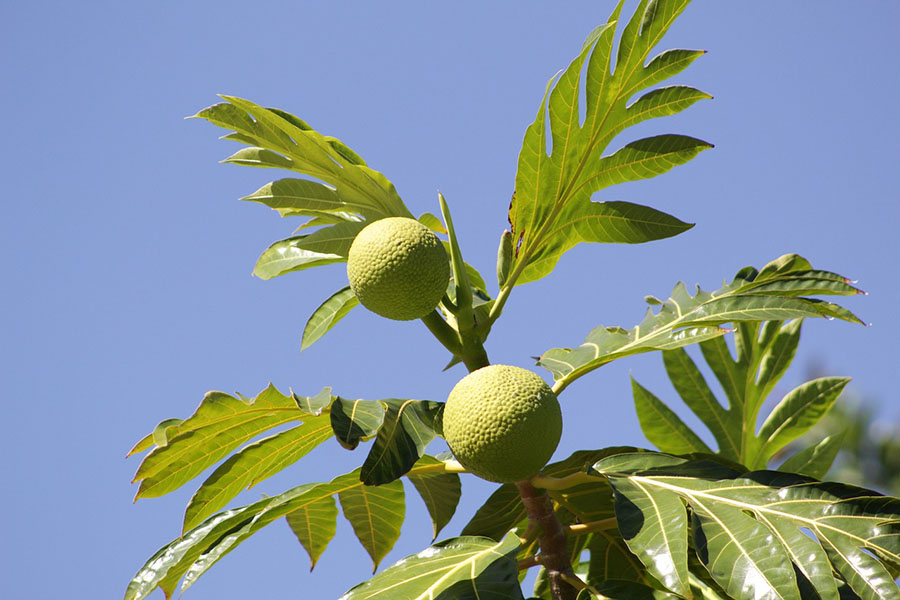
A pivotal study published in the 2024 edition of the Agrosilvopasture-Tech journal by a research team at the University of Pattimura, led by Amat Reniwurwarin, analyzed the resilience of breadfruit in the Kei Islands, Maluku. The region, characterized by an arid climate with annual rainfall as low as 200–400 millimeters and a six-month dry season, provides an ideal "living laboratory" for studying drought tolerance. The researchers concluded that breadfruit trees in this region not only survive but thrive under extreme environmental pressures, indicating a high degree of physiological adaptability to water-stressed conditions.
This finding is bolstered by more granular spatial analysis conducted by researchers at the University of Indonesia. A study published in Frontiers in Plant Science in April 2024 utilized the WorldClim database to map potential breadfruit cultivation areas across Central Java. The team, led by Suyud Warno Utomo, determined that roughly 9,737 square kilometers of land in Central Java—nearly 30 percent of the province—is currently suitable for breadfruit production. Projections suggest that this suitability could expand further eastward by 2070, even under conservative global warming scenarios, underscoring the long-term viability of the crop in a warming world.
Global Comparative Analysis: Breadfruit versus Cereal Staples
The argument for diversifying into breadfruit is supported by international research, including a notable study from Northwestern University published in PLOS Climate in August 2022. The research, titled "Potential of Breadfruit Cultivation to Contribute to Climate-Resilient Low Latitude Food Systems," performed a global assessment using six distinct climate models. The findings were stark: while yields for wheat, rice, and maize are projected to decline significantly due to rising global temperatures, breadfruit stands as a remarkably stable alternative.
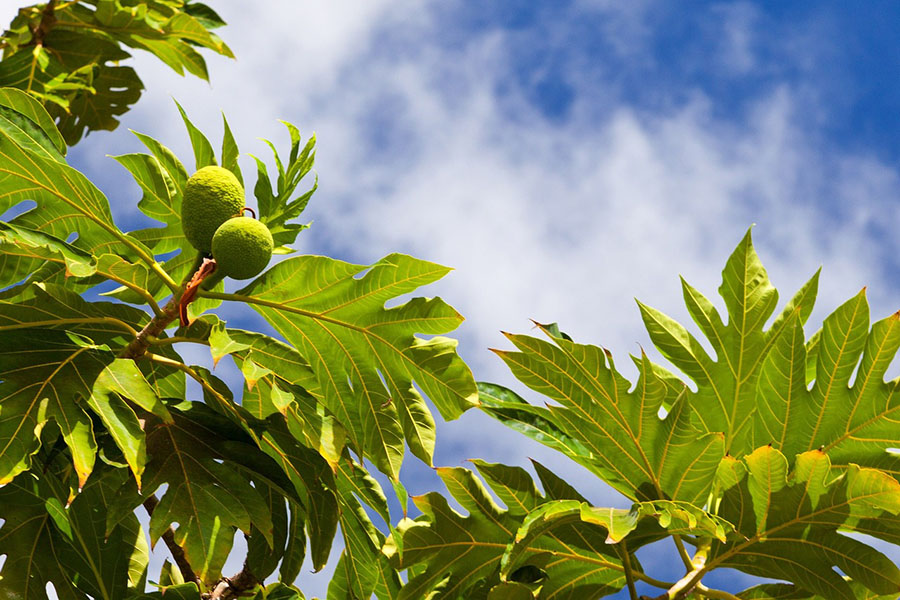
The comparative advantages are multifaceted:
- Longevity and Carbon Sequestration: A single breadfruit tree can produce fruit for over 50 years. This longevity allows the tree to act as a carbon sink, sequestering atmospheric carbon dioxide throughout its long lifespan, whereas annual crops provide minimal long-term carbon storage.
- Input Efficiency: Once established, breadfruit trees require significantly less water, synthetic fertilizer, and pesticide compared to industrial rice farming. This reduces the agricultural burden on local water tables and prevents the chemical runoff often associated with monoculture farming.
- Low Maintenance: As a perennial, breadfruit eliminates the need for seasonal land preparation and annual seed sowing, drastically reducing the labor and energy costs required to sustain a harvest.
- Resilience: The study noted that once a breadfruit tree reaches maturity, it can endure severe drought conditions for 3 to 4 months without suffering significant yield loss, a threshold that conventional staples would fail to meet.
Policy Implications and the Path Forward
The integration of breadfruit into Indonesia’s national food policy would represent a fundamental shift from reactive crisis management to proactive climate adaptation. Currently, the Indonesian government’s focus remains largely on immediate interventions, such as the deployment of water pumps and emergency subsidies for affected rice farmers. While necessary, these measures are temporary stopgaps.
Experts suggest that a more sustainable strategy would involve the promotion of agroforestry systems that integrate breadfruit alongside existing crop varieties. By diversifying the landscape, farmers can buffer their income against the failure of any single crop. Furthermore, because most commercially grown breadfruit varieties are seedless and propagated via clonal methods, there is minimal risk of the species becoming invasive, making it a safe choice for reforesting degraded lands or diversifying community-led farms.
Internationally, institutions like the Breadfruit Institute at the National Tropical Botanical Garden (NTBG) in Hawaii have already begun advocating for breadfruit as a primary tool for food security in the tropics. Their research mirrors the findings of Indonesian academics, emphasizing that the "breadfruit solution" is not just a theoretical model but a practical, scalable application for nations facing the sharp edge of climate change.
Conclusion: Addressing the 2027 Outlook
With the BMKG’s latest assessment predicting that the current dry cycle will continue to influence national climate conditions through early 2027, the urgency for a structural shift in agricultural practice has never been greater. The current loss of 50,000 hectares of farmland serves as a sobering reminder of the fragility of the nation’s reliance on weather-dependent staple crops.
The evidence is clear: while breadfruit cannot replace the global demand for rice overnight, it represents a critical component of a diversified, climate-resilient food strategy. By leveraging both the existing traditional knowledge in places like the Maluku Islands and the cutting-edge predictive modeling provided by modern climate science, Indonesia has the opportunity to fortify its food sovereignty against the encroaching risks of an unpredictable climate. The transformation of Indonesia’s agricultural landscape, from vulnerable monocultures to robust, perennial-based agroforestry, remains the most viable pathway to ensuring that the nation can feed its population, regardless of the severity of the droughts to come.