Nila Kartika Wati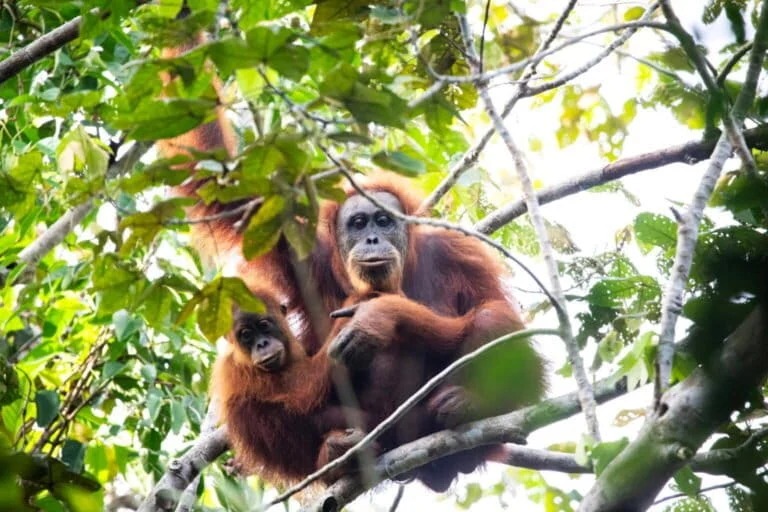
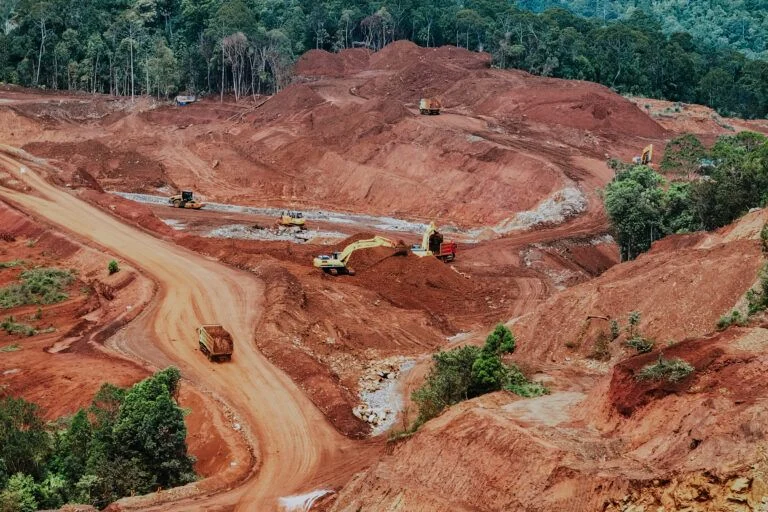
The rapid expansion of road networks and the relentless encroachment of deforestation have systematically dissected the tropical rainforests of Sumatra, creating isolated islands of biodiversity that threaten the survival of the critically endangered Tapanuli orangutan (Pongo tapanuliensis). As their arboreal highways are severed by human infrastructure, these primates are increasingly forced to descend to the forest floor to traverse fragmented landscapes. This behavioral shift exposes them to lethal risks, including vehicular collisions, illegal poaching, and escalating human-wildlife conflict. Conservationists are now turning to specialized engineering solutions—artificial arboreal bridges—to reconnect these fractured ecosystems and safeguard the future of one of the world’s rarest great apes.
The Shrinking Wilderness of Batang Toru
In the heart of the Batang Toru Ecosystem in North Sumatra, the Yayasan Ekosistem Lestari (YEL) is spearheading a critical project to install arboreal bridges designed specifically for the Tapanuli orangutan. The urgency of this intervention is underscored by alarming satellite data regarding the Hutaimbaru corridor. Analysis reveals that forest cover in this vital passage plummeted from 9,958 hectares in 2004 to approximately 8,981 hectares by 2024. Over the past two decades, more than 1,700 hectares of essential orangutan habitat have vanished, creating a precarious bottleneck for a species already struggling with a total population estimated at fewer than 800 individuals.
The Hutaimbaru corridor is not merely a patch of trees; it is a biological lifeline. It serves as the primary artery connecting orangutan populations in the western and eastern blocks of the ecosystem. When this connectivity is severed, the genetic exchange between populations is halted. Over time, this isolation increases the probability of inbreeding and local extinction, as the demographic vitality of the species requires a wide, interconnected range to maintain healthy, resilient populations.
"Our primary objective is to restore the functional connectivity between the western and eastern blocks so that the corridor can once again serve as a viable transit zone for these animals," explains Julius Paolo Siregar of the Yayasan Ekosistem Lestari. However, conservationists emphasize that these structures are a tactical response, not a comprehensive solution. The gold standard for primate conservation remains the preservation of intact, natural forest corridors. Artificial bridges are strictly a mitigation measure intended for locations where natural canopy gaps—caused by highways, steep terrain, or industrial development—cannot be avoided.
Lessons from Pakpak Bharat: A Case Study in Adaptation
While the Batang Toru project is in its planning and assessment phases, the Yayasan Tangguh Hutan Khatulistiwa (TaHuKah) in the Pakpak Bharat Regency has already provided a blueprint for success. In this region, roughly 350 Sumatran orangutans (Pongo abelii) were found to be living in three distinct forest pockets separated by a network of roads.
Starting in 2023, the organization embarked on a systematic installation of canopy bridges. The placement of these bridges was not arbitrary; it was determined through rigorous field analysis, focusing on the proximity to established nests, the presence of fruit-bearing trees, and the structural integrity of the anchor trees on either side of the gap.
The results of the monitoring period, spanning from March 2025 to March 2026, offer a compelling narrative of ecological adaptation. During this timeframe, 14 different arboreal species were documented using the bridges, recording a total of 374 successful crossings. The orangutans themselves, known for their cautious nature, were slower to adapt. It was not until December 2025 that an orangutan was observed approaching the structure. The individual initially stepped onto the edge, hesitated, and retreated—a testament to the high level of cognitive caution characteristic of the species. Only six days later did the same individual successfully navigate the entire length of the bridge.

Lina Rita Silaban, a lead researcher at TaHuKah, reflects on the patience required for such projects. "Orangutans are exceptionally intelligent and risk-averse creatures. It took nearly two years from the initial construction phase until we witnessed the first successful full crossing," she notes. The data further suggests that design matters: ladder-style structures proved more attractive to the heavier, larger-bodied orangutans, while lighter rope-based designs were favored by smaller arboreal primates.
Biomechanics and Engineering Challenges
The success of canopy bridges is inextricably linked to the biological understanding of orangutan locomotion. Nadine Adrianna Sugianto, representing the Borneo Orangutan Survival Foundation (BOSF), explains that in their natural habitat, orangutans rarely move in a single plane. Instead, they rely on a complex, multi-modal form of locomotion. They frequently move by hanging with all four limbs simultaneously—a technique known as suspensory behavior—while using the momentum of their own body weight and the elasticity of branches to swing across gaps.
Translating this into an engineering challenge requires a departure from rigid infrastructure. A bridge for a great ape cannot be a static, stationary walkway. It must be a dynamic, semi-flexible structure that provides multiple points of contact. Furthermore, it must be engineered to support the substantial weight of an adult orangutan, which ranges from 30 to 90 kilograms.
"For wild-scale applications, we are dealing with significant structural requirements," says Sugianto. "An adult orangutan requires a bridge that is far more robust than what might be used for smaller primates. The guiding principle for our designs is to maximize suspension, minimize compression, and provide a high density of grip points. We need the structure to feel as close to a natural vine or branch as possible to encourage use."
Implications for Future Conservation
The implementation of canopy bridges represents a sophisticated shift in conservation strategy, moving from passive protection to active landscape management. However, these structures must be viewed as part of a broader, integrated conservation strategy. The limitations of the approach are clear: a bridge cannot restore the nutritional diversity of a lost forest or the complex social interactions that occur within a continuous canopy.
When evaluating the long-term impact, experts suggest that the following factors are critical:
- Data-Driven Placement: Bridges must be positioned based on telemetry and visual monitoring of existing orangutan movement patterns. Installing bridges in areas not frequented by the species is a waste of limited conservation resources.
- Restoration and Reforestation: The bridges are only as effective as the habitat they connect. If the forest on either side of the gap is degraded, the bridge becomes a path to nowhere. Active restoration of native fruit trees at both ends of the bridge is essential to encourage movement.
- Long-term Monitoring: As seen in the Pakpak Bharat project, success is not immediate. Continuous observation is required to determine which designs are most effective and to identify any unforeseen risks, such as the potential for predators to wait near these crossing points.
- Community Engagement: Local communities are the primary stakeholders in the landscapes where these bridges are built. Ensuring that local populations understand the importance of these structures and are involved in their maintenance is vital for preventing vandalism or unauthorized infrastructure development near the bridges.
The plight of the Tapanuli orangutan serves as a stark reminder of the cost of unchecked industrial expansion. With their habitat shrinking by nearly 20% in certain corridors over the last two decades, the margin for error has vanished. The use of arboreal bridges provides a pragmatic, evidence-based pathway to mitigate the worst impacts of fragmentation. While these engineering feats cannot replace the majesty of an undisturbed rainforest, they represent a vital tool in the conservationist’s arsenal, offering a way to stitch together a landscape that has been torn apart, one crossing at a time.
As the Yayasan Ekosistem Lestari moves forward with its plans in the Batang Toru ecosystem, the global conservation community will be watching closely. The success of these initiatives will not only provide a lifeline for the Tapanuli orangutan but will also serve as a vital case study for managing wildlife connectivity in human-dominated landscapes across the globe. By prioritizing ecological function and combining it with the careful application of biomechanical engineering, it is possible to create a future where human infrastructure and great ape populations can coexist, however uneasily, in an increasingly crowded world.