Nila Kartika Wati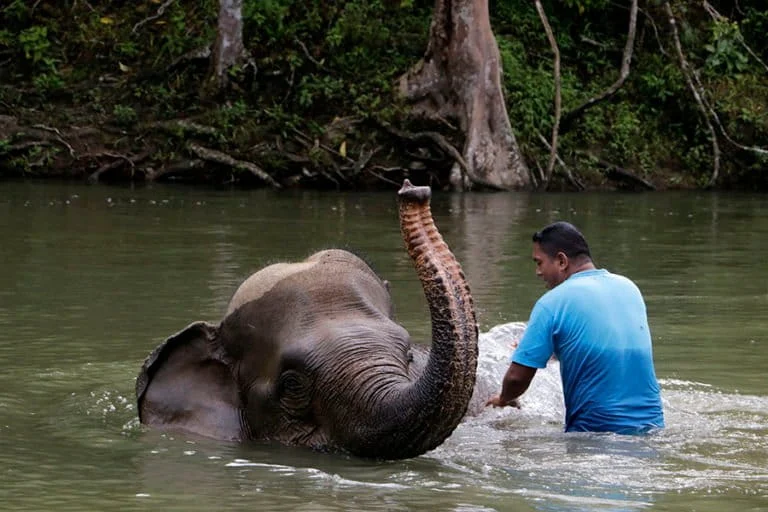
At the Malang Creative Center, a unique scene unfolded recently that bridged the gap between environmental advocacy and social inclusion. Kak Acan, adorned in a vibrant elephant costume, commanded the attention of 50 children with disabilities. As he wove the tale of Gogo and Gigi—two elephant calves separated by the harrowing sound of poachers’ gunfire—the room remained hushed. Beside him, Kak Arum performed a vital role, translating the emotional narrative into sign language, ensuring that deaf participants were fully immersed in the journey of the two calves as they navigated forests, rivers, and treacherous thickets to reunite with their herd.
This storytelling session, held in commemoration of World Elephant Day, was not merely a theatrical performance. It was a calculated effort by the Difabel Pecinta Alam (Difpala), Lingkar Sosial, and Geopix to cultivate a new generation of environmental stewards from within the disability community. By transforming complex conservation science into a relatable narrative about family and home, the organizers bypassed the "heavy" academic approach, opting instead for an experiential learning model that resonates with young minds regardless of their physical or sensory capabilities.
The Power of Inclusive Conservation
The central message of the performance—that an elephant’s true home is the vast forest, not the confined space of a zoo—serves as a poignant reminder of the current state of biodiversity in Indonesia. According to Kertaning Tyas, the advisor for Lingkar Sosial, the strategy of using storytelling is intentional. "World Elephant Day serves as a critical momentum to increase public awareness regarding the survival of Indonesian elephants and their natural habitats," Tyas stated. By involving children with disabilities in these discussions, the program effectively dismantles the notion that conservation is an exclusive pursuit for able-bodied experts.
This initiative is part of a broader shift in how environmental NGOs engage with local communities. Difpala, an organization known for its outdoor activities including mountain clean-ups and reforestation projects, has been instrumental in expanding the scope of inclusive environmentalism. Their program, "Tuli Mendongeng" (Deaf Storytelling), has evolved into a comprehensive movement that now links the preservation of wild animals to the broader ecosystem. In Lawang, East Java, the group has established an "inclusive forest school" at Mount Wedon, a sanctuary where young people with disabilities engage in hands-on learning, playing, and contributing to the restoration of their local environment.
The Ecological Significance of the Sumatran Elephant
Beyond the emotional appeal of the narrative, there is a hard, scientific reality regarding the role elephants play in the archipelago’s ecosystem. Annisa Rahmawati, a Senior Wildlife Campaigner at Geopix, emphasizes that elephants are the "gardeners of the forest." As mega-herbivores, they facilitate the regeneration of forest cover by consuming vast amounts of vegetation and distributing seeds across miles of territory through their dung.
"They are the original farmers of the forest," Rahmawati explains. "Without these giants, the composition of the forest floor and the rate of tree regeneration would change drastically, leading to a loss of biodiversity that would affect every other species in that ecosystem."
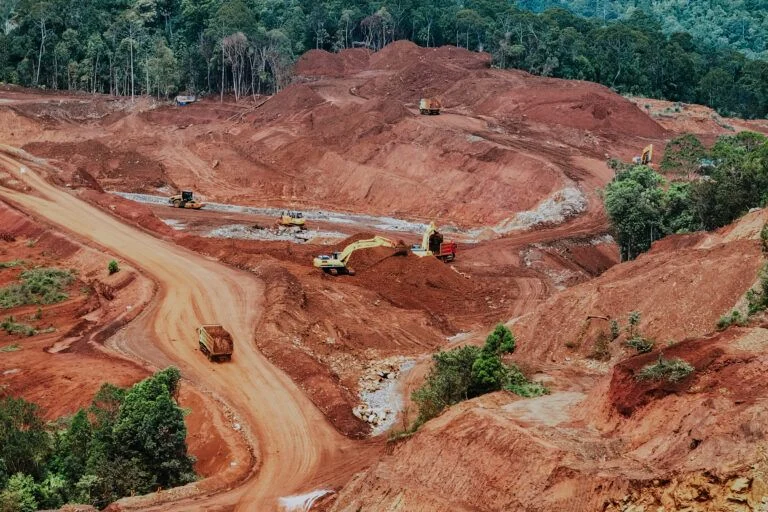
Historically, elephants have held a place of reverence in Nusantara’s culture, appearing in ancient stone carvings, royal regalia, and indigenous folklore. However, this cultural legacy is currently threatened by rapid land-use changes. Habitat fragmentation, human-elephant conflict, and the relentless demand for illegal ivory have pushed the species toward the brink of local extinction.
A Declining Population: A Statistical Reality
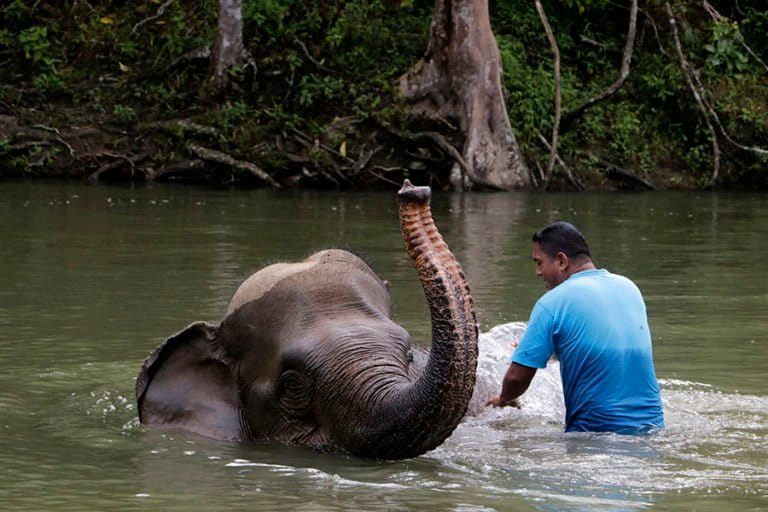
The data surrounding the Sumatran elephant (Elephas maximus sumatranus) is sobering. In the 1980s, the population was estimated to be between 2,800 and 4,800 individuals. By 2019, data from the Forum Konservasi Gajah Indonesia indicated a drastic decline, with only 1,087 to 1,606 individuals remaining in the wild.
Burhanuddin, a prominent conservation expert from IPB University, notes that the species has suffered a population loss of more than 70 percent within just three generations. This loss is not uniform but concentrated in isolated pockets across Sumatra, specifically in the provinces of Aceh, Riau, Jambi, Bengkulu, and Lampung. These populations are increasingly "islanded," cut off from their traditional migration corridors by palm oil plantations, logging concessions, and human settlements.
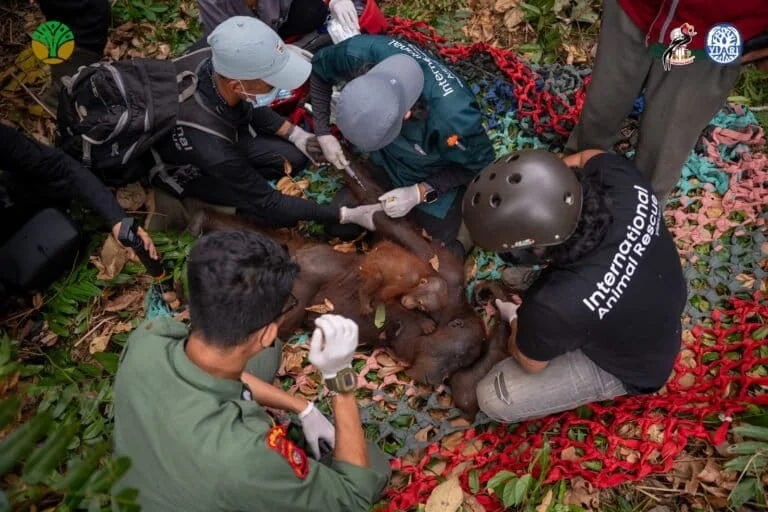
The plight of the elephant is further complicated by biological vulnerabilities. Recent collaborative research conducted by the Faculty of Veterinary Medicine at Universitas Gadjah Mada and the Eijkman Institute for Molecular Biology has uncovered alarming health trends among captive and wild populations. Genetic screenings have revealed high incidences of parasitic, bacterial, viral, and fungal infections, suggesting that the stress of habitat loss and environmental degradation is weakening the immune systems of these animals.
Implications and Future Strategies
The implications of these findings are clear: conservation efforts can no longer be limited to the boundaries of protected forests. While national parks and wildlife reserves are essential, they are insufficient if they do not include the corridors that connect these fragmented populations. The survival of the Sumatran elephant depends on a "landscape-level" approach that integrates human-dominated areas—such as community forests and plantations—into the conservation framework.
The "inclusive forest school" model championed by Difpala and their partners offers a blueprint for this integration. By teaching the next generation to value the forest, regardless of their physical abilities, these organizations are building a constituency for conservation that is both resilient and diverse. The strategy of using storytelling to simplify complex ecological concepts is not merely an educational tactic; it is a way to socialize conservation values into the fabric of daily life.
As the program organizers look to the future, they hope to scale this model of inclusive conservation across other regions of Indonesia. The success of the event at the Malang Creative Center proves that when barriers to information are removed—through sign language interpretation, creative staging, and community-led initiatives—the message of environmental protection can reach audiences that were previously left out of the conversation.
Ultimately, the fight to save the elephant is a fight for the integrity of the Indonesian landscape. The fate of Gogo and Gigi, while fictional, reflects the very real, very urgent need for human societies to rethink their relationship with the natural world. If the next generation, including those with disabilities, is empowered to act as guardians of the forest, there remains a glimmer of hope that the decline of the Sumatran elephant can be reversed, ensuring that these "farmers of the forest" continue to roam the jungles for centuries to come.
Chronology of Recent Conservation Efforts
- 1980s: Historical peak of modern elephant population estimates (2,800–4,800 individuals).
- 2019: Critical threshold reached; population estimated to have dropped to roughly 1,000–1,600 individuals.
- 2020–2023: Increased focus on genomic research and disease monitoring in Sumatran elephant populations.
- Recent Months: Launch of "Inclusive Forest School" programs and expansion of the "Tuli Mendongeng" initiative.
- World Elephant Day (August 12): The collaborative event at Malang Creative Center signifies a new emphasis on disability-inclusive conservation outreach.
The convergence of biological research, community outreach, and inclusive education marks a turning point. As organizations like Lingkar Sosial and Geopix continue to push for a more holistic approach to wildlife protection, the narrative of the Sumatran elephant is being rewritten—not just as a tale of impending loss, but as a movement toward a shared, inclusive future where humans and wildlife coexist within the same protected landscapes.