
 Nila Kartika Wati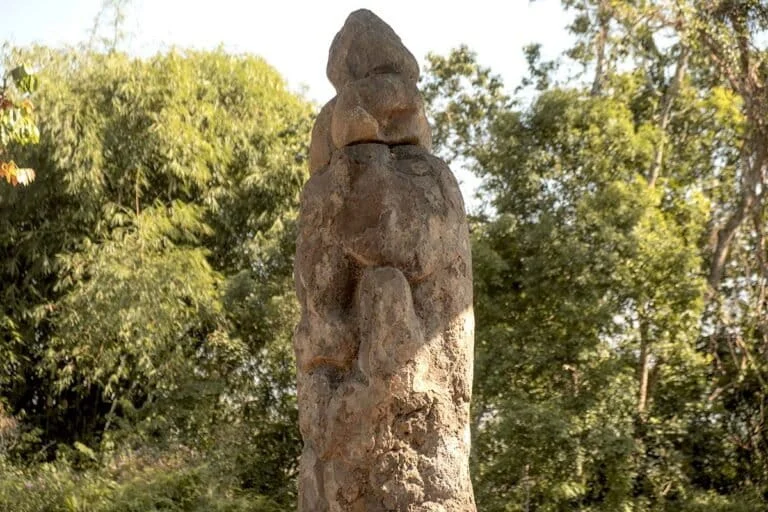
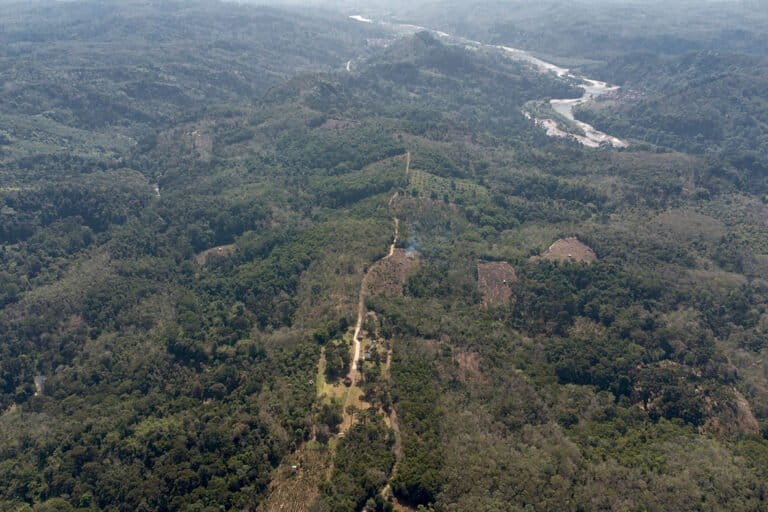
The journey to the Tinggi Hari megalithic site winds through the undulating landscape of the Gumay Hills in Lahat Regency, South Sumatra, where modern roads climb away from dense settlements into a terrain that has held human secrets for thousands of years. As one ascends, the majestic Bukit Barisan mountain range unfolds on the horizon, anchored by the imposing silhouette of Mount Dempo, which serves as the spiritual and geographical sentinel of the Pasemah plateau. Beneath these heights, the valleys are cradled by the Liem and Lematang rivers, creating a riparian network that has sustained civilizations since the prehistoric era. It is within this natural sanctuary that ancient human populations carved a complex legacy into stone, creating one of the most significant archaeological landscapes in Southeast Asia.
The Scope of the Pasemah Megalithic Landscape
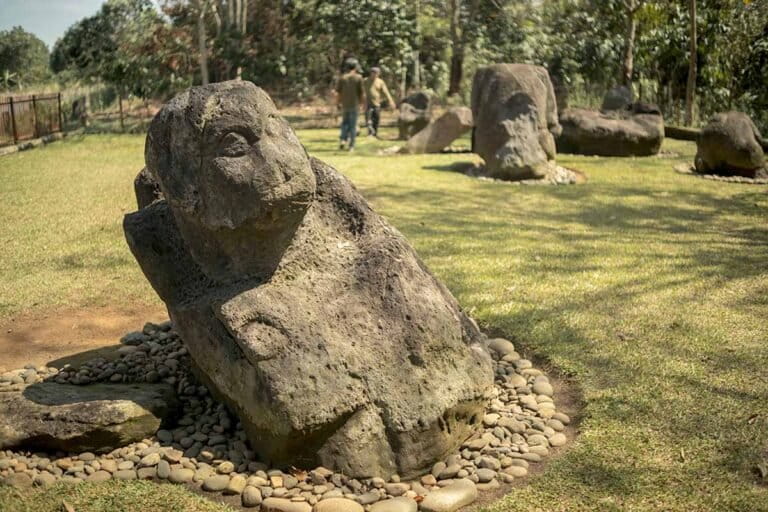
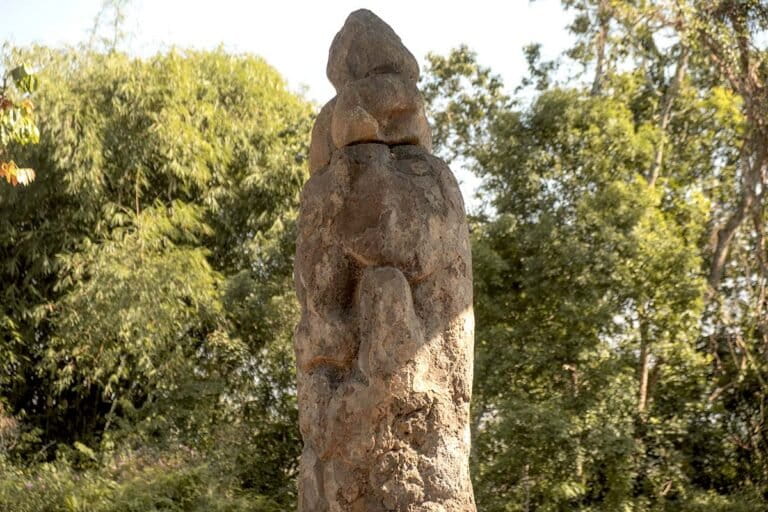
The Pasemah megalithic culture is not merely a collection of isolated stones; it is a sprawling, 8,000-hectare archaeological province that encompasses the administrative regions of Lahat, Pagaralam, and Empat Lawang. Within this vast area, researchers have documented approximately 1,165 megalithic artifacts. This catalog of antiquity includes 85 anthropomorphic statues, 25 stone chambers (dolmens), and hundreds of stone mortars, grinding stones, and other ritualistic objects.
The Tinggi Hari site, divided into three distinct sectors, sits at an elevation of roughly 400 meters above sea level. These sites serve as a primary window into the daily and spiritual lives of a people who lived in a delicate balance with their environment. The artifacts found here—ranging from monoliths and tetraliths to intricate stone engravings—reveal a society that was highly organized, artistically sophisticated, and deeply rooted in the physical geography of their homeland.
Chronology and Cultural Context
While the popular perception of megalithic culture is often relegated to the distant prehistoric past, modern archaeological dating suggests a much more nuanced timeline. Research conducted by the National Research and Innovation Agency (BRIN) at sites such as Kota Raya Lembak has identified cultural layers dating back to the 10th century AD. This discovery is pivotal, as it confirms that the megalithic tradition in the Pasemah Highlands was not a fleeting phenomenon but a persistent cultural practice that overlapped with the rise of the Srivijaya Empire and the subsequent spread of Hindu-Buddhist influences in the archipelago.
The presence of megalithic artifacts alongside evidence of classical-era civilization suggests a continuous evolution of human society in the region. This longevity indicates that the Pasemah plateau served as a vital cultural corridor, where indigenous traditions of ancestor worship and environmental stewardship persisted even as the socio-political landscape of the broader Indonesian archipelago shifted toward the maritime empires of the middle ages.
The Vitality of Water: A Life-Giving Philosophy
Arguably the most striking characteristic of the Pasemah megalithic sites is their spatial relationship with water. As noted by Mario Andramartik, a member of the Lahat Regency Cultural Heritage Expert Team, the distribution of these sites is never accidental. Whether positioned on the crests of hills or in the low-lying valley corridors, the megaliths are consistently situated in close proximity to rivers, ponds, or lakes.
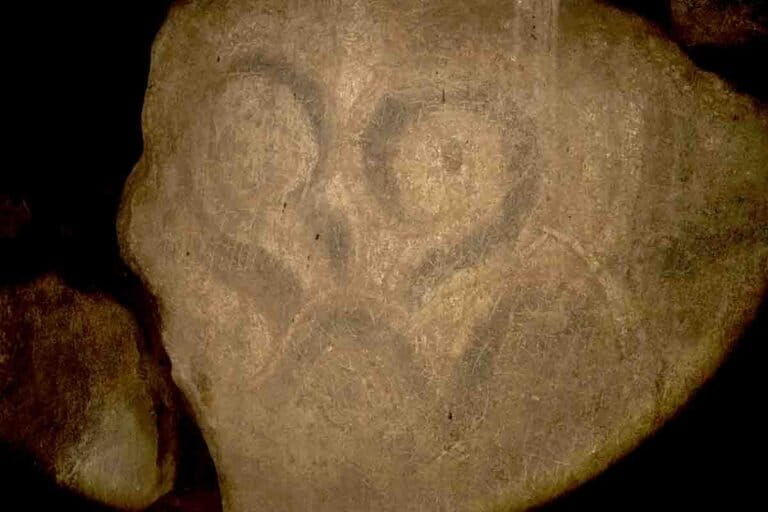
This strategic placement reflects a profound prehistoric understanding of ecology. For the Pasemah people, water was not merely a utility; it was the foundation of existence. Arqueologist Sondang M. Siregar of the BRIN Research Center for Environment, Maritime, and Sustainable Culture points to the presence of petroglyphs and engravings on riverine rock formations as evidence of a "river-centric" culture. These engravings, often found on the very banks of active streams, suggest that the inhabitants did not just utilize the water—they integrated their artistic and religious lives into the riverine landscape. They likely performed rituals, engaged in daily labor, and conducted communal gatherings in these spaces, treating the river as a sanctified artery of the community.
Harmony with the Wild: Animal Symbolism
The artistic output of the Pasemah civilization is defined by its anthropomorphic statues, many of which depict humans in association with animals. The carvings frequently feature figures interacting with tigers, elephants, buffalo, snakes, and crocodiles. These animals are shown in various states: being carried, ridden, or standing guard alongside human figures.
Analysts argue that these depictions signify a deeply harmonious, if not reverent, relationship with the surrounding fauna. In the worldview of the Pasemah inhabitants, the natural world was not a resource to be conquered but a force to be respected. The inclusion of predatory animals in stone art likely served a dual purpose: it reflected the practical reality of living in close proximity to dangerous wildlife and reinforced the belief that certain animals held spiritual significance. By creating stone representations of these creatures, the society sought to maintain a protective barrier, ensuring the safety of their villages and the continued fertility of their lands through ritualized appeasement.
The Role of Ancestry and Social Structure
The human figures carved into these stones provide vital clues about the social hierarchy of the time. Among the most iconic are the statues of mothers cradling their children. According to researchers, these images underscore the importance of lineage and the role of women as the guardians of the next generation. The megalithic tradition was, at its heart, a practice of ancestor veneration. The residents of the Pasemah highlands believed that the deceased continued to influence the living, providing blessings for agricultural success, protection from disaster, and the prosperity of the community.
This belief system necessitated a permanent, physical connection to the ancestors, which was achieved through the creation of durable stone monuments. By establishing these sites, the community created a "permanent residence" for the spirits of their forefathers, ensuring that the legacy of the family unit remained unbroken across generations.
Preservation Challenges and Policy Implications
Despite the historical and cultural significance of the Pasemah megalithic sites, their protection remains a significant challenge. Of the 101 registered sites across Lahat, Pagaralam, and Empat Lawang, only a handful have received official status as protected cultural heritage sites. The vast majority exist on private or state-owned land, leaving them vulnerable to the pressures of agricultural expansion, infrastructure development, and potential illegal excavation.
Mario Andramartik emphasizes that the megaliths serve as a natural barrier against industrial encroachment. Where these stones stand, the land is often preserved; were they to be removed or forgotten, these areas would likely be converted into plantations, housing estates, or mines. This reality has turned the archaeological mission into a conservation mission. The ongoing efforts to secure "National Cultural Heritage" status for these sites are driven by the understanding that the Pasemah region holds the highest density and quality of megalithic art in Indonesia.
The implications of failing to protect these sites would be a permanent loss of historical identity for the region. As the research continues, there is a growing consensus among scholars that these sites must be leveraged for sustainable tourism and community education. By integrating the local population into the stewardship of these sites, the government can transform these "silent stones" into living assets that support the local economy while ensuring the physical integrity of the artifacts.
Future Research and Scientific Significance
The study of the Pasemah megaliths is currently at a turning point. As modern dating techniques become more refined, the ability to sequence the development of these sites becomes more precise. Future research is expected to focus on the migration patterns of the people who built these monuments and the extent to which their cultural practices influenced—or were influenced by—the surrounding civilizations of the Sumatran interior.
The work of researchers like Sondang M. Siregar and the community advocacy led by figures like Mario Andramartik represent a holistic approach to archaeology: one that values not just the physical relic, but the environmental context in which it was created. As we gain a clearer picture of the Pasemah megalithic civilization, it becomes increasingly evident that these ancient people were not isolated primitives, but a sophisticated, environmentally-conscious society that laid the groundwork for the cultural complexity of modern South Sumatra.
The preservation of this landscape is therefore not just an academic endeavor; it is an obligation to a past that continues to speak through the stones of the Gumay Hills. With continued investment in site management, research, and public awareness, the Pasemah megaliths can stand as a testament to the endurance of human ingenuity, serving as a bridge between the distant, mysterious past and the urgent, sustainable future.









