
 Nila Kartika Wati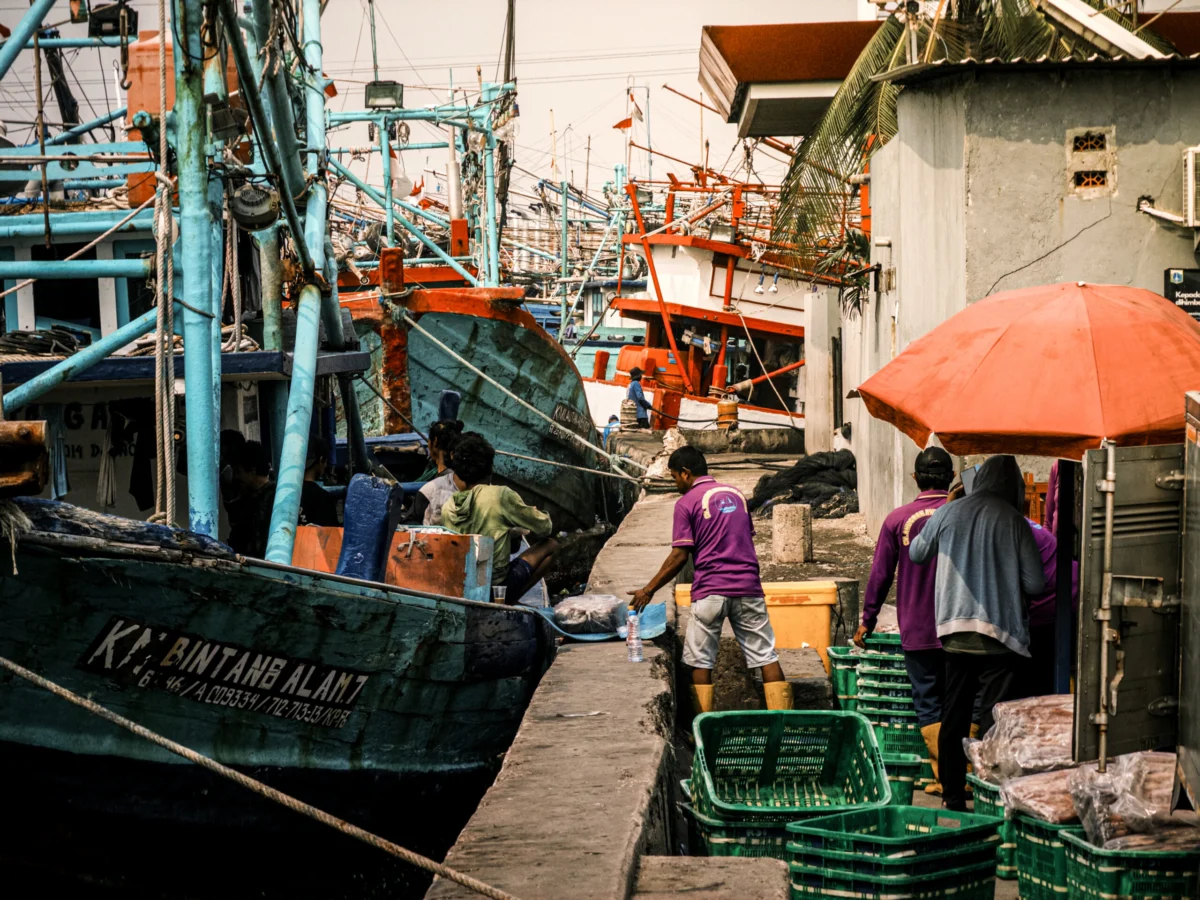
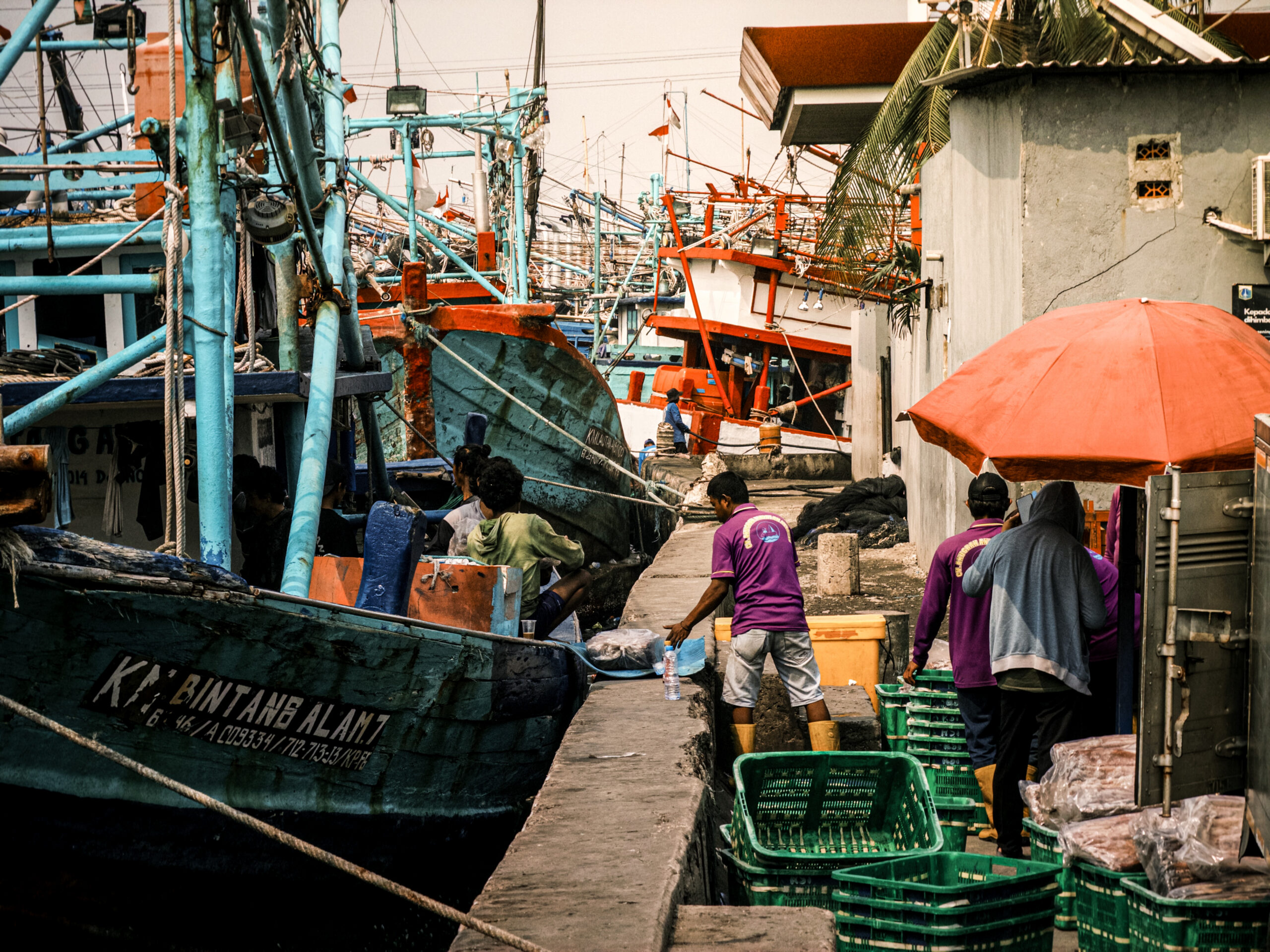
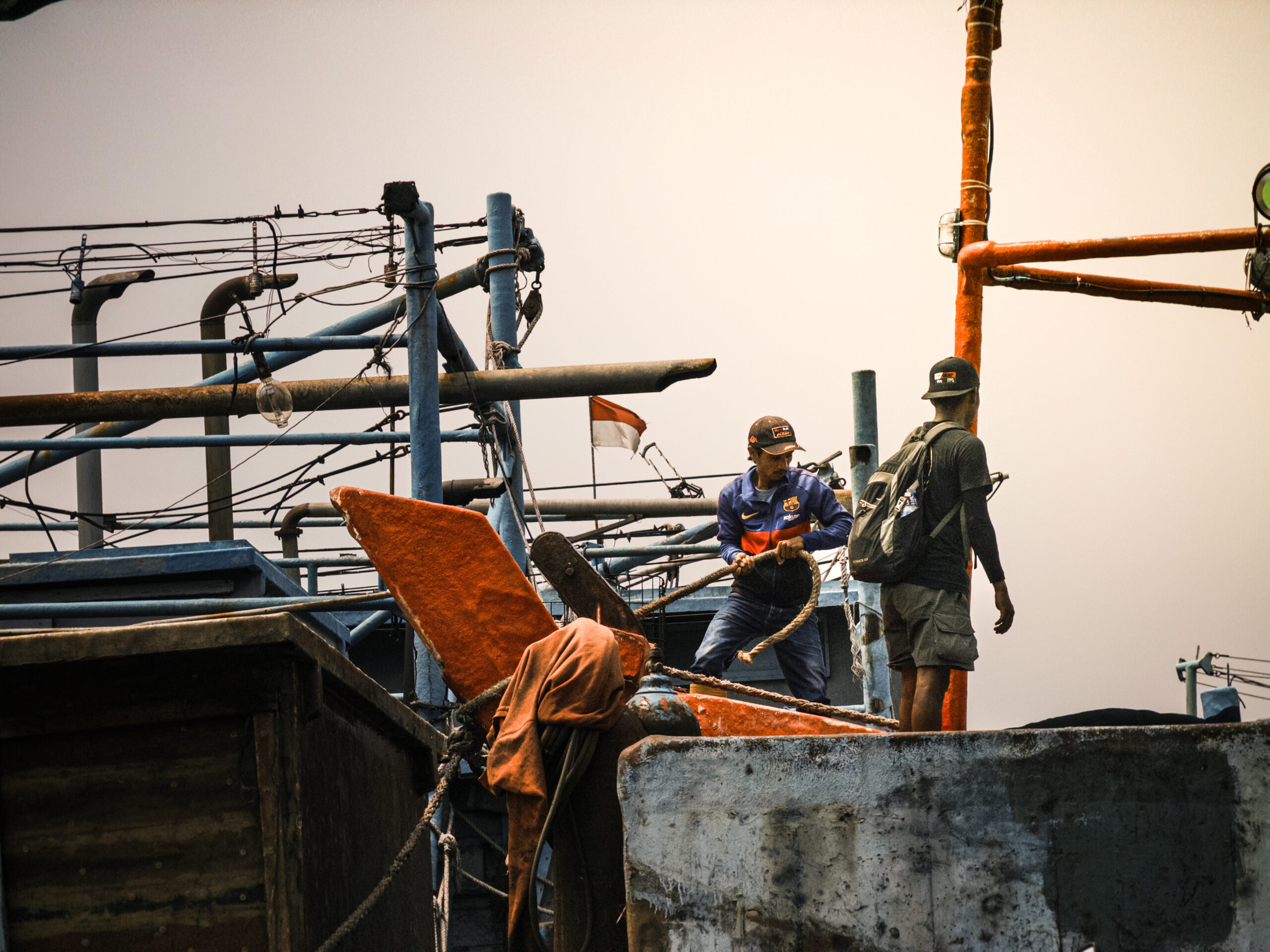
At the Muara Angke Fishery Port in North Jakarta, the rhythm of life is dictated by the sea, but for many crew members, the reality of their employment is governed by a cycle of debt and coercion that borders on modern-day servitude. Beneath the veneer of a vital industry that sustains the national economy, thousands of fishers—referred to as Awak Kapal Perikanan (AKP)—find themselves trapped in a precarious existence characterized by meager wages, physical abuse, and predatory financial practices. Recent investigations reveal that the maritime sector, particularly within the squid-fishing industry, is rife with systemic wage theft, where the promise of a livelihood is often replaced by a suffocating burden of unexplained debt.
The narrative of exploitation begins long before a vessel leaves the harbor. For workers like "Rajasa" and "Raga," pseudonyms used to protect their identities, the descent into financial distress starts with the recruitment process. Often scouted through informal channels—ranging from social media groups to predatory labor brokers—these workers are lured by the promise of steady income. However, the reality is a stark contrast to the initial sales pitch. Candidates are frequently required to wait for weeks or months for their ship to depart. During this idle period, they are provided with "advance" payments, known as kasbon, which are marketed as startup capital for equipment and personal needs. In practice, these payments function as a debt trap.
A critical analysis of this system shows that the kasbon is rarely a transparent loan. For many, a promised advance of IDR 6 million is reduced to a mere IDR 1 million after the deduction of "administrative fees" and "recruitment costs." By the time the vessel weighs anchor, the worker is already significantly indebted to the boat owner or the broker. This debt acts as a tether, ensuring that the worker is not only committed to the voyage but also legally and financially bound to the vessel until the debt is cleared, a condition that effectively strips them of their agency.
The Anatomy of Labor Abuse at Sea
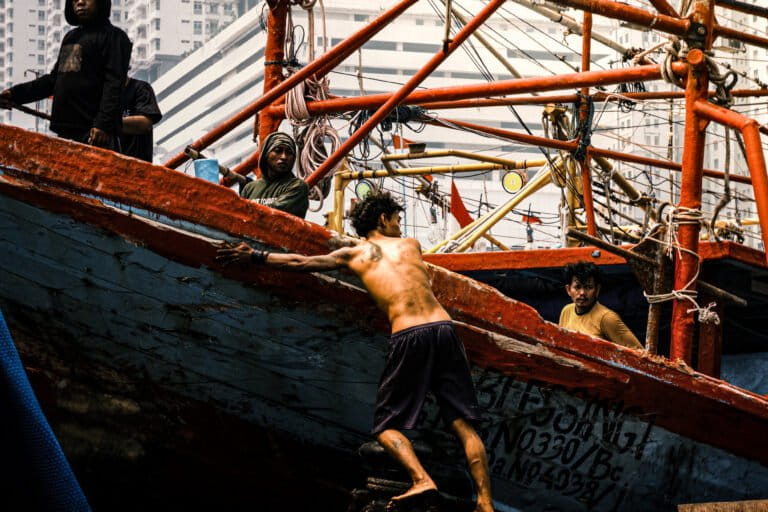
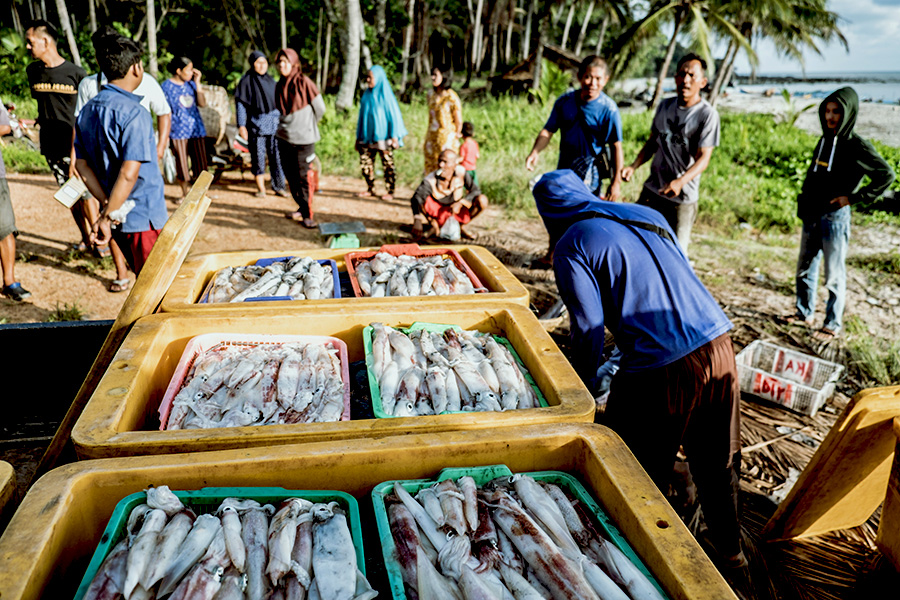
Once at sea, the working conditions for these laborers are grueling. Investigations conducted in the waters of the Flores Sea and the regions surrounding Sulawesi and East Nusa Tenggara document work shifts that frequently exceed 14 to 15 hours daily. Under the intense glare of 2,000-watt industrial lights used to draw squid to the surface, workers report chronic exhaustion, severe eye strain, and physical degradation.
The financial structure of the industry is built on a "share-based" model that is consistently manipulated against the interests of the crew. While a base daily wage—often as low as IDR 30,000 to IDR 35,000—is promised, the bulk of earnings are tied to catch-volume premiums. However, when the haul is insufficient, the workers are not only denied their premiums but are also subjected to verbal and physical retribution. The testimony from crew members is chilling: captains, under pressure to meet production quotas, frequently resort to violence. "You have to be ready to be cursed at if the catch is low," Rajasa noted. Instances of physical assault, including being punched or threatened with being thrown overboard, are reportedly common, creating an environment of fear that prevents the workers from reporting their conditions to authorities.
The Myth of Net Profit and "Netto Semu"
The exploitation extends beyond the deck hands to the captains themselves, illustrating a top-down corruption of the labor system. The case of Sanjar, a captain of the KM Bahari Jaya, provides a harrowing look at what is known as "netto semu" (false net profit). Despite a verbal agreement promising a daily wage and a percentage of the total catch, Sanjar found himself owing the vessel owner nearly half a billion rupiah after 133 days at sea.
This debt was manufactured through a labyrinth of charges. The vessel owner deducted costs for dock repairs, spare parts, mechanic fees, and even the cost of the fishing equipment itself—all of which, under maritime law and international conventions like the ILO’s C188, should be the responsibility of the shipowner. Furthermore, the practice of "tendoan," or carrying over debt from previous, unrelated voyages, ensures that the worker is perpetually in the red. Even when a worker earns a significant amount, the debt is simply recalculated to ensure the employer retains the capital.
Regulatory Failures and the Oversight Gap
The systemic nature of these abuses points to a profound failure in regulatory oversight. While the Ministry of Marine Affairs and Fisheries (KKP) and the Ministry of Manpower have established legal frameworks to protect fishers, the implementation remains largely ineffective.
A primary issue is the discrepancy between the Written Labor Agreements (PKL) and the actual terms of employment. In many cases, documents signed by port authorities reflect a standard minimum wage, yet these documents are either superseded by private, oral agreements or simply ignored. Andang Setiawan, the Head of the Port Authority (Syahbandar) at Muara Angke, has acknowledged the difficulty of oversight. He noted that agreements are often made after the official paperwork is filed, leaving the government in the dark about the true terms of labor. "Sometimes the PKL is submitted, but after the trip, there is another agreement between the crew and the ship, and we don’t know about it," he explained.
However, critics argue that the lack of resources and personnel is no excuse for the absence of enforcement. Siti Wahyatun, a public lawyer with Destructive Fishing Watch (DFW) Indonesia, classifies this as "systemic wage theft." According to DFW research, the reliance on informal recruitment and the lack of standardized, transparent contracting allow shipowners to treat labor as a disposable asset.
Broader Implications and the Path Toward Reform
The implications of these findings are severe. Not only does this practice constitute a violation of basic human rights, but it also threatens the sustainability of the Indonesian maritime industry. The reliance on coerced labor creates a distorted market where competitive, fair-wage operations are undercut by those who rely on exploitation.
To address this, legal experts and maritime advocates are calling for several immediate reforms:
- Strict Enforcement of the 2008 Shipping Law: The government must enforce Article 223 of Law No. 17/2008, which clearly states that ship maintenance and operational costs are the responsibility of the owner, not the crew.
- Digitalized Recruitment: Transitioning recruitment from informal brokers to a centralized, government-monitored digital system would significantly reduce the influence of predatory labor traffickers.
- Mandatory Transparency: Contracts must be standardized and verified by third-party auditors. The practice of "tendoan" (carrying over debt) must be legally prohibited and strictly penalized.
- Inter-ministerial Coordination: The current cooperation agreement between the Ministry of Manpower and the KKP must be operationalized. This requires joint task forces that conduct routine, unannounced inspections of vessels upon their return to port.
- Legal Recourse for Workers: Establishing a simplified grievance mechanism that allows workers to report abuse without fear of retaliation or the loss of their remaining earnings is essential.
Tasya Nur Ramadhani of the Indonesia Ocean Justice Initiative (IOJI) emphasizes that the state’s absence in these matters is a direct contributor to the vulnerability of the fishers. "The state must be present," she asserts. Without the imposition of severe sanctions for vessel owners who violate these standards, the cycle of debt and exploitation will continue to thrive in the shadows of Indonesia’s ports.
The situation in Muara Angke is not an isolated incident; it is a symptom of a larger, systemic malaise within the maritime labor sector. As the industry faces increasing international scrutiny regarding human rights standards, the Indonesian government faces a pivotal moment. Either it reforms the governance of its fishing fleet to ensure the dignity and financial security of its workers, or it risks further isolating its maritime industry from global markets that increasingly demand ethical supply chains. For men like Rajasa and Raga, the change cannot come soon enough; their lives and livelihoods depend on the sea, but it is the legal and moral framework on land that will ultimately determine their fate.









