
 Nila Kartika Wati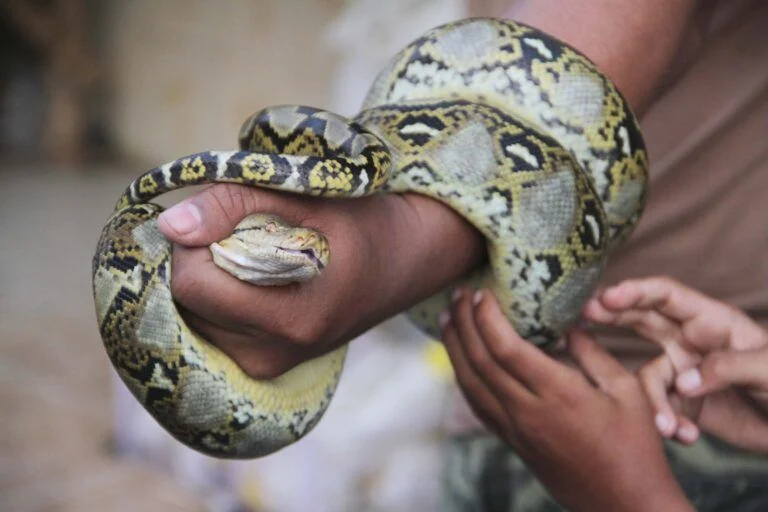
The tranquility of Pulau Taliabu, an island regency in the North Maluku province of Indonesia, has been shattered by a series of lethal encounters between humans and reticulated pythons. In June 2026, two separate, harrowing incidents resulted in the deaths of local villagers, igniting a wave of anxiety that has permeated the island’s communities. These events have prompted urgent questions regarding the intersection of rapid industrial development, the degradation of natural ecosystems, and the increasingly frequent appearance of apex predators in areas once considered safe for human activity.
A Chronology of Fatal Encounters
The first incident occurred in the village of Ratahaya, where Elizabeth Yamalu, a local resident, set out to relocate livestock tethered approximately 400 meters from her home. When she failed to return, her husband, Menjamin Lanto, initiated a search. He discovered his wife in a horrific state, ensnared within the coils of a massive python. Despite efforts to intervene, the incident proved fatal.
Barely a week later, the terror migrated to the neighboring village of Padang. A local resident, venturing into a garden area to tend to crops, was ambushed and killed by another python. These back-to-back fatalities have transformed the island’s atmosphere from one of rural peace to pervasive apprehension. Residents report that large pythons are no longer confined to the deep forest; they are increasingly being sighted in agricultural plots, the periphery of residential zones, along riverbanks, and even in the vicinity of local government administrative buildings.
Local Sentiment and the Shift in Wildlife Behavior
For the older generation on Taliabu, these encounters are unprecedented. Yulius Lait, a respected customary leader from the village of Natang Kuning, expressed a sentiment shared by many of his peers. Having lived on the island for decades, Lait maintains that the current frequency of python sightings and their aggressive proximity to human settlements is an anomaly. "Throughout my life, from my youth until now, I have never seen snakes appearing in such numbers," Lait stated. "And certainly, none that would go so far as to prey on humans."
This fear is not merely anecdotal. The shift in predator behavior has caused a decline in outdoor economic activities, with many farmers hesitant to visit their fields during dawn or dusk, the peak activity times for reticulated pythons.
Environmental Degradation and Habitat Fragmentation
The rise in human-wildlife conflict has prompted observers to examine the environmental trajectory of Taliabu. The Jaringan Pemantau Independen Kehutanan (JPIK) in North Maluku has provided data that frames the issue within a broader context of land-use change. According to JPIK records, Taliabu experienced a significant reduction in forest cover between 2001 and 2025, with approximately 38,257.4 hectares of forest cleared or transformed.
Irsandi Hidayat, Coordinator of JPIK North Maluku, suggests that the clearing of forests—driven by mining concessions and the expansion of timber operations—has fundamentally disrupted the island’s ecological architecture. "When the range of movement for wildlife is constricted, animals are forced out of their natural habitats," Hidayat explained. "This loss of space inevitably brings apex predators like pythons closer to human-populated areas, as their natural corridors are fragmented and their food sources are depleted."
Scientific Perspectives on Predator Displacement
Ecologists and wildlife experts offer several theories for the increased sightings, with the consensus leaning toward a "bottom-up" pressure on the ecosystem. Yeni Purnamasari, representing the Natural Resources Conservation Agency (BKSDA) for the Maluku and North Maluku region, noted that the reduction of prey species within the forest is a primary driver for behavioral shifts in predators.

"When a python’s natural prey—such as wild pigs, deer, or smaller mammals—diminishes due to habitat loss, the snake is forced to venture further afield to secure sustenance," Purnamasari stated. However, she admitted that the BKSDA lacks a comprehensive census of the python population on Taliabu. Without baseline data on population density or established habitat maps, the agency cannot definitively conclude that these events are a result of a population explosion or a simple shift in territorial ranges.
Official Responses and Industry Defense
The regional government is under mounting pressure to provide answers. Qomar Arif Madi, Head of the Environmental Agency (DLH) of Taliabu, emphasized that the government is currently in the data-collection phase. The strategy involves mapping the exact coordinates and timestamps of every python sighting and overlaying this data with mining concession boundaries, logging sites, and protected forest zones.
"We cannot jump to the conclusion that mining activities are the sole catalyst," Madi stated. "We require verified, comparative data to establish a causal link between industrial land use and the proximity of these predators to our villages."
In response to the allegations, PT Adidaya Tangguh, one of the companies operating in the region, has formally denied that their mining activities are responsible for the increased snake sightings. A company representative suggested that extreme weather patterns, specifically prolonged heatwaves, might be a contributing factor, as pythons may seek cooler environments near human settlements or water sources found in residential areas.
Much. Hidayah Marasabessy, a forestry lecturer at Khairun University, provides a nuanced perspective. He argues that while land-use change is a major disruptor of wildlife corridors, climate variability cannot be ignored. "Habitat destruction and the depletion of the prey base are undeniably the most significant factors," Marasabessy remarked. "However, extreme temperature fluctuations also alter the metabolism and movement patterns of cold-blooded animals. We are likely looking at a convergence of anthropogenic and environmental stressors."
Broader Implications and Future Mitigation
The tragedy on Taliabu serves as a sobering case study on the risks associated with rapid land-use conversion in biodiversity-rich regions. The conflict highlights a critical gap in regional planning: the failure to integrate wildlife management and ecological impact assessments into industrial development permits.
As the government continues its investigation, several implications remain clear:
- Need for Ecological Monitoring: There is an urgent requirement for a systematic survey of wildlife on Taliabu to understand the population health of large reptiles.
- Community Safety Measures: Local authorities must develop protocols for reporting and safely relocating snakes, rather than relying on reactive measures after a conflict has already occurred.
- Sustainable Land Management: The correlation between mining/logging and wildlife displacement necessitates a review of how land concessions are managed in proximity to human settlements.
- Long-term Data Integration: The government’s effort to map sightings against land-use data is a positive step, but it must be followed by a policy shift that prioritizes ecological connectivity.
For the residents of Ratahaya and Padang, the data, while important for future policy, offers little comfort for the loss of their neighbors. The situation on Taliabu remains tense. As the island grapples with the dual pressures of economic development and the loss of natural forest security, the need for a sustainable coexistence strategy between human industry and the island’s indigenous wildlife has never been more pressing.
The incident has catalyzed a regional conversation about the hidden costs of resource extraction. While the immediate focus remains on ensuring the safety of villagers, the long-term challenge for Taliabu will be reconciling its industrial aspirations with the ecological reality that the island’s forest is not merely a resource, but a complex, interconnected home for both humans and the wildlife that, when pushed to the margins, inevitably returns to challenge human expansion.









