
 Nila Kartika Wati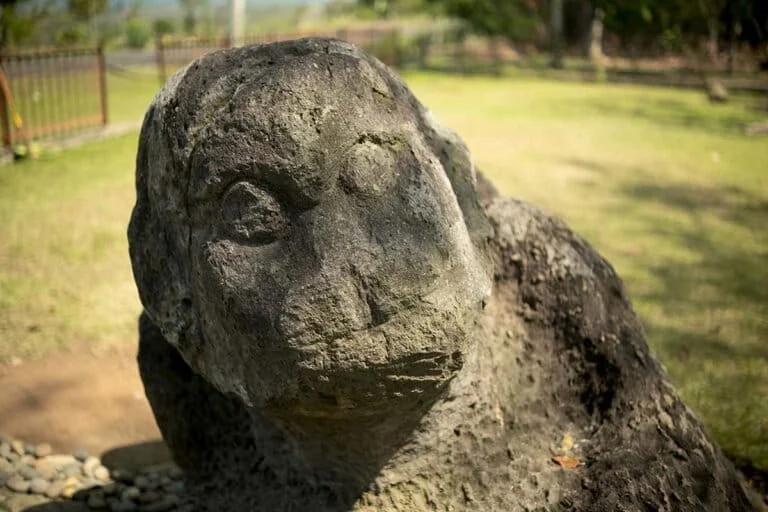
The winding road leading to the Tinggi Hari megalithic site ascends through the rolling hills of the Gumay region in Lahat Regency, South Sumatra, offering a vantage point over a lush valley carved by the Liem and Lematang rivers. It is within this dramatic topography that one of Indonesia’s most significant archaeological treasures lies hidden: a sprawling landscape of stone carvings, menhirs, and stone mortars that bear witness to the sophisticated Pasemah megalithic culture. This region, encompassing parts of Lahat, Pagaralam, and Empat Lawang, serves as a silent gallery of a civilization that flourished centuries ago, leaving behind a legacy etched in stone.
The Landscape of the Pasemah Megaliths
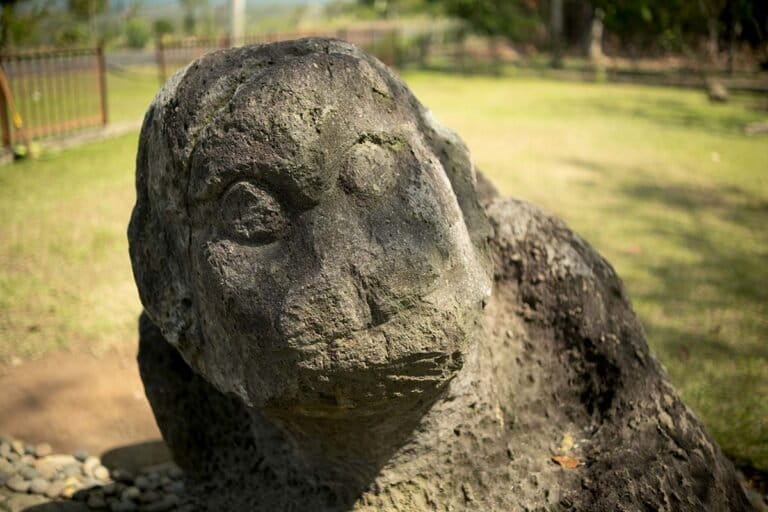
The Tinggi Hari complex is not a singular entity but a tripartite site consisting of Tinggi Hari I, II, and III. These sites form the backbone of a vast megalithic landscape that spans the highlands of South Sumatra. According to archaeological surveys, the region houses approximately 1,165 megalithic artifacts, including 85 stone statues and 25 stone chambers (bilik batu). The density of these remains suggests that the Pasemah highlands were a major hub of human activity, religious practice, and social organization during the late prehistoric to early historic periods.
The physical distribution of these artifacts is a subject of intense academic scrutiny. Mario Andramartik, an expert from the Lahat Regency Cultural Heritage Preservation Team, notes that the strategic placement of these monuments is far from coincidental. "The megalithic sites in the Pasemah region are predominantly situated in close proximity to water sources, whether they be rivers, irrigation ponds, or lakes," Andramartik explains. This spatial pattern underscores the existential reliance of the ancient Pasemah people on hydrologic systems, viewing water not merely as a resource for survival, but as a central element of their spiritual and social geography.
Life Along the Riverbanks: An Archaeological Perspective
The intimate relationship between the Pasemah people and their environment is further illustrated by the artistic manifestations found on boulders lining the riverbanks. Archaeologists, including Sondang M. Siregar of the National Research and Innovation Agency (BRIN), posit that these riverside locations were hubs of communal activity. The presence of intricate carvings and petroglyphs in such accessible, scenic locations suggests that the inhabitants integrated their artistic expression into their daily routines.
"They clearly enjoyed a life centered around the flow of the rivers," Siregar notes. This artistic tradition, characterized by dynamic depictions of human figures and fauna, provides a window into the worldview of a people who saw themselves as part of a larger, interconnected ecosystem. The rock art is not merely decorative; it serves as a historical record of social structures, environmental interaction, and mythological beliefs.
The Harmony of Humanity and Fauna
One of the most distinctive features of the Pasemah megalithic art is the recurrent portrayal of animals. Statues frequently depict humans interacting with elephants, tigers, water buffalo, snakes, and crocodiles. These representations vary in nature, with animals appearing alongside humans, being ridden, or being carried.
This iconography suggests a sophisticated level of ecological consciousness. "These carvings reflect a profound, harmonious relationship between the humans of that era and the wildlife surrounding them," says Andramartik. In the context of ancient animistic or ancestor-worship belief systems, the inclusion of these animals likely held deep symbolic significance. Some researchers argue that specific animals were totemistic, representing clan identities or the protective spirits of the landscape.
Furthermore, the statues depicting maternal figures—specifically mothers cradling children—highlight the importance of the family unit and the role of women in the transmission of cultural knowledge. These statues are not merely aesthetic; they are foundational to understanding the social fabric of the Pasemah culture, where lineage and the preservation of future generations were paramount.
Chronology and Cultural Context
While the Pasemah megalithic tradition has often been categorized broadly as "prehistoric," recent scientific evidence has refined our understanding of its timeline. Radiocarbon dating of samples taken from the Kota Raya Lembak site has provided a crucial breakthrough, placing the activity at these sites as late as the 10th century AD.
This finding is particularly significant because it indicates that the megalithic culture in the Pasemah highlands coexisted with the height of the Kedatuan Sriwijaya, a powerful maritime empire that dominated the region from its base near the Musi River. This evidence challenges the traditional, linear view of historical progression in Sumatra, suggesting that traditional megalithic practices persisted alongside—and perhaps even interacted with—the more centralized, Buddhist-influenced civilization of Sriwijaya. It indicates a pluralistic cultural landscape where indigenous traditions thrived in the interior highlands while the lowland empires controlled trade and maritime networks.
Anthropological Characteristics: The Austro-Melanesian Link
The physical features of the human statues provide further clues to the population’s ancestry. Analysis of the facial structures—often characterized by long, rounded faces, curly hair, prominent eyes, flat noses, and thick lips—aligns more closely with Austro-Melanesian phenotypes than those of the later Austronesian migrations. This suggests that the Pasemah region may have served as a repository for older, indigenous populations who maintained their distinct cultural identity and artistic traditions for centuries, even as larger migratory groups moved through the Indonesian archipelago.
The Challenge of Preservation
Despite their historical and cultural importance, the Pasemah megalithic sites face significant threats from environmental degradation and human encroachment. Out of the 101 identified sites, only six have been formally designated as official cultural heritage sites. This designation gap poses a challenge for long-term conservation.
"Protecting these sites is equivalent to protecting the landscape itself," argues Mario Andramartik. He emphasizes that the megaliths cannot be viewed in isolation; they are deeply embedded in the ecology of the hills and valleys. The current status of the sites allows for limited protection, but there is an urgent need for broader research and conservation efforts to ensure that the knowledge embedded in these stones is not lost to time or neglect.
The preservation of these sites is not merely a matter of academic interest; it is essential for the identity of the local communities. The megaliths are tangible links to a complex ancestral past, and their study offers a rare opportunity to map the development of human civilization in the interior of Sumatra.
Implications for Future Research
The ongoing study of the Pasemah megaliths represents a vital frontier in Indonesian archaeology. Future research must prioritize a multidisciplinary approach, combining geomorphology, ethnography, and advanced dating techniques to better understand how these sites were integrated into the broader history of the Indonesian archipelago.
The implication of these findings is that the highlands of South Sumatra were far from isolated. Instead, they were part of a dynamic, interconnected network that bridged the gap between early indigenous societies and the more complex polities of the classical period. As researchers continue to uncover new sites and refine their understanding of the existing ones, the Pasemah megaliths stand as a testament to the enduring human desire to leave a mark on the earth—a legacy that continues to command respect and wonder thousands of years later.
In conclusion, the megalithic sites of Tinggi Hari and the surrounding Pasemah region are more than just archaeological curiosities. They are the remnants of a vibrant society that thrived through a profound connection to their natural environment. From the strategic selection of river-adjacent locations to the intricate stone depictions of human-animal harmony, the Pasemah culture offers invaluable insights into the resilience and complexity of ancient human life in Southeast Asia. Protecting this heritage is a responsibility that requires both local vigilance and national commitment, ensuring that these silent sentinels of history remain to tell their stories to generations to come.









