
 Nila Kartika Wati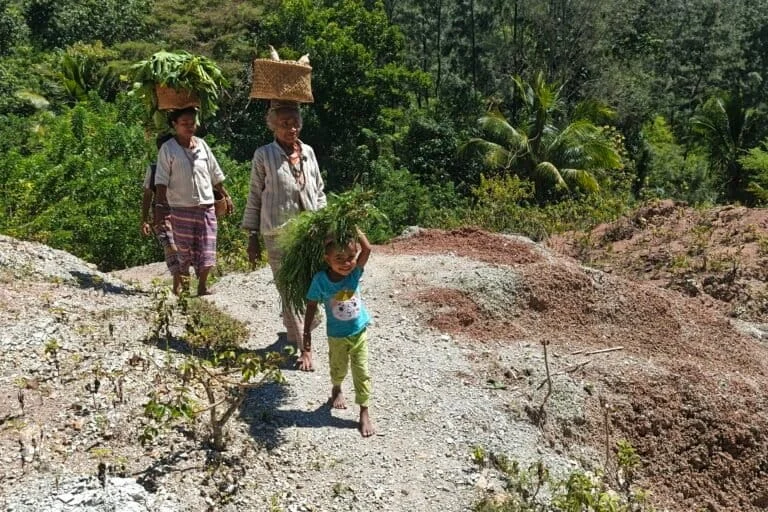
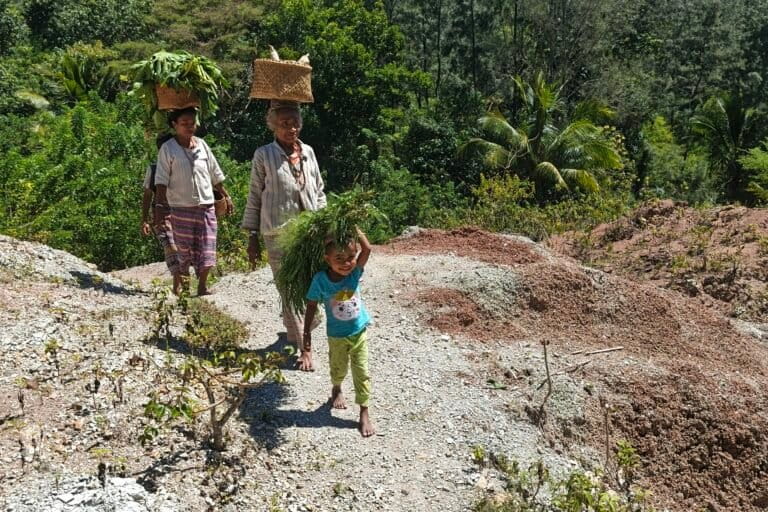
Deep within the rugged terrain of the Kie District in the South Central Timor Regency, East Nusa Tenggara, Indonesia, the Boti people stand as a living testament to the efficacy of traditional ecological knowledge. As global climate patterns become increasingly erratic and the threat of prolonged drought looms over the archipelago, the Boti community has successfully navigated these challenges by anchoring their survival in ancestral wisdom. For the Boti, the forest is not merely a resource; it is an extension of their identity. "The forest is our mother," says Muke, an indigenous woman of the Boti tribe. "If our mother is wounded, we feel the pain ourselves."
The Philosophy of Interconnectedness and Survival
The Boti people’s resilience is rooted in a profound, non-extractive relationship with their environment. Their approach to food security is built upon the principle of diversification, a practice that contrasts sharply with the monoculture-heavy industrial agriculture that has dominated much of modern global food systems. By utilizing a sophisticated intercropping system, the Boti ensure that they are never dependent on a single crop. Their fields are a mosaic of maize, sorghum, cassava, pumpkins, bananas, and various legumes.
Seo Neolaka, another indigenous woman from the community, articulates the rationale behind this diversity: "We cannot plant just one type of crop. If one fails, we have the others to rely on." This strategy serves as a biological insurance policy against the unpredictable climate. When heavy rains lead to pest outbreaks or crop failure, the community’s diverse harvest ensures that there is always a fallback, mitigating the risk of famine. Furthermore, the Boti employ a cyclical system of seed saving; during times of abundant harvest, a portion is meticulously preserved to serve as the foundation for the next planting season, ensuring the continuity of indigenous genetic varieties.
Chronology of Traditional Conservation
The preservation of the Boti landscape is not a reactive response to modern climate change but a centuries-old tradition that has been passed down through generations of the Boti monarchy, led by the Usif (King). While contemporary global efforts to mitigate climate change often struggle with enforcement and community engagement, the Boti system of conservation is woven into the very fabric of their daily social and political life.
The history of the Boti people is marked by a deliberate resistance to the encroachment of modern agricultural practices that prioritize short-term yield over long-term soil health. Over the last several decades, as neighboring regions in East Nusa Tenggara have faced severe degradation due to deforestation and unsustainable land-use patterns, the Boti territory has remained a bastion of dense vegetation and healthy topsoil. Their land-use management involves strict, community-enforced regulations regarding tree felling and wood harvesting. These rules are not perceived as external impositions but as essential communal obligations—a mechanism of community-based conservation that treats the health of the ecosystem as synonymous with the health of the individual.
Data and Environmental Context
The effectiveness of the Boti model is underscored by regional data regarding food insecurity and climate vulnerability in East Nusa Tenggara. According to various reports from the Indonesian Ministry of Agriculture and independent environmental assessments, the province frequently ranks among the highest in Indonesia for rates of malnutrition and agricultural vulnerability. The region is characterized by low annual rainfall and long dry seasons, which have been exacerbated by the El Niño-Southern Oscillation (ENSO) phenomena.
In contrast to the broader provincial data, the Boti community reports a high degree of food security. Their agricultural success is attributed to "ecological adaptation," a concept currently being studied by researchers as a potential model for other arid regions. While industrial farming in the region often relies on chemical fertilizers and irrigation, which can lead to soil salinization and depletion, the Boti maintain soil fertility through natural organic methods and minimal soil disturbance.
The importance of water management is similarly institutionalized. The Boti calendar includes a specific observance known as neon oe, or "Water Day." This day serves as a critical annual reminder for the community to refrain from polluting local water sources and to avoid clearing land in protected watersheds. This practice ensures that water retention remains high, providing a buffer against the hydrological stress common in the surrounding Timor Tengah Selatan regency.
Official Responses and Academic Perspectives
The success of the Boti people has not gone unnoticed by agricultural experts and NGOs. Agnes Natalya, the Coordinator of Agricultural Extension for the Kie District, has pointed to the Boti community as a successful case study in climate adaptation. "The success of the Boti Indigenous Community in facing long-term drought is due to effective food diversification," Natalya noted. "They prioritize local seeds and manage their natural resources through customary regulations that are far more effective than many top-down policies."
Siti Maimunah, the Director of the Mama Aleta Fund—an organization dedicated to supporting indigenous women leaders in environmental defense—emphasizes that the Boti model proves that "ecological adaptation based on collective experience is the most robust defense against the threat of crop failure." Maimunah argues that the Boti example challenges the conventional wisdom that high-tech, industrialized farming is the only path to food security. Instead, she posits that indigenous knowledge provides a blueprint for "regenerative resilience," where the ecosystem is treated as a partner rather than a factory.
Broader Implications and Policy Analysis
The implications of the Boti model extend far beyond their village borders. As the global community grapples with the cascading effects of climate change, the Boti experience suggests that policy frameworks must shift toward protecting the autonomy of indigenous communities. The traditional knowledge possessed by the Boti is not merely historical; it is a dynamic, evolving science of survival.
However, this resilience faces external pressures. The encroachment of commercial interests, the lure of urban migration for the youth, and the lack of legal recognition for customary land rights in some parts of Indonesia pose significant threats to the sustainability of the Boti way of life. For the Boti model to serve as a wider solution, it requires:
- Formal Land Tenure: Legal recognition of indigenous customary territories is essential to prevent commercial exploitation of forests that are currently protected by community law.
- Knowledge Integration: Agricultural extension services should treat indigenous practitioners as experts, facilitating a two-way exchange of information rather than a unidirectional transfer of modern technology.
- Genetic Diversity Protection: Supporting the use and distribution of indigenous, drought-resistant seeds is critical for building regional climate resilience.
Molo Benu, a female leader within the Boti community, provides a summary of their economic philosophy: "Because nature gives us a little, we eat only what we need. But if nature gives us a lot, we store the rest." This logic of moderation and accumulation for times of crisis is an economic principle that stands in stark contrast to the consumption-driven growth models that have driven global climate instability.
Conclusion: A Blueprint for the Future
The Boti community offers a compelling narrative of defiance against the inevitability of climate-driven poverty. Their success is a result of a symbiotic relationship with the land, where cultural identity, agricultural practice, and environmental conservation are inseparable. As the world searches for solutions to the escalating climate crisis, the Boti model demonstrates that the most effective technologies for sustainability are often those that have been refined over generations.
The preservation of the Boti way of life—including their forests, water sources, and indigenous agricultural methods—is not merely a matter of cultural heritage. It is a strategic imperative for local and national food security. Protecting the Boti people means protecting the knowledge that allows them to thrive in an environment that is increasingly hostile to conventional agriculture. As policy makers and climate scientists look to the future, the lessons from the Boti are clear: true food sovereignty is found in the soil, the forest, and the collective wisdom of those who have understood the limits of nature for centuries. The Boti do not just live in their environment; they maintain it, and in doing so, they maintain themselves.









