
 Nila Kartika Wati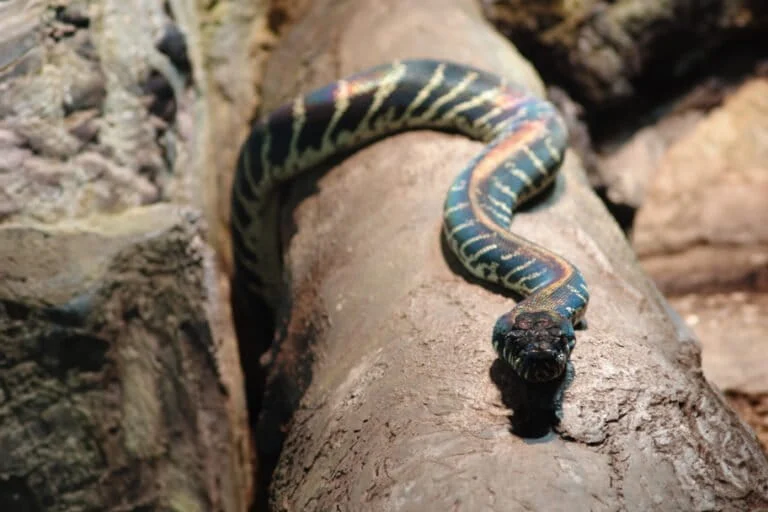
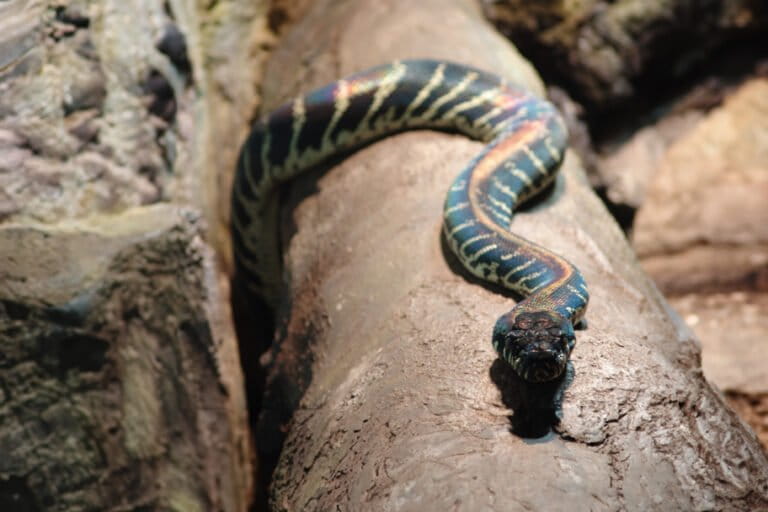
Deep within the mist-shrouded peaks of the Papuan highlands lies a creature of ethereal beauty and elusive nature: the Boelen’s python (Simalia boeleni). Often referred to in its native Indonesian as the sanca bulan, this serpent is distinguished by a slender, muscular build and a velvety, obsidian-black skin that erupts into an iridescent spectrum of colors when kissed by sunlight. Despite its status as a crown jewel for herpetologists and collectors worldwide, the very qualities that make it a biological marvel—its rarity, aesthetic appeal, and remote habitat—have conspired to turn the Boelen’s python into a primary target for the illicit global wildlife trade.
The Geography of Seclusion
The Boelen’s python is an inhabitant of high-altitude ecosystems, primarily thriving in the rugged, inaccessible mountain ranges of New Guinea, which includes both the Indonesian provinces of Papua and the sovereign nation of Papua New Guinea. Hari Suroto, a senior researcher at the National Research and Innovation Agency (BRIN) of Indonesia, notes that the species occupies a highly fragmented range. Known habitats include the formidable Baliem Valley, the Star Mountains (Pegunungan Bintang), the regions surrounding Lake Wissel, and the pristine slopes of the Arfak Mountains.
The terrain in these regions is characterized by steep slopes, dense primary forests, and high humidity, conditions that have historically protected the python from widespread human encroachment. However, these same geographic barriers have hindered scientific study. "The Boelen’s python is an exceptionally difficult species to document," Suroto explains. "Their remote and rugged environment makes field research a logistical challenge, leaving significant gaps in our understanding of their life history, reproductive habits, and precise population density."
Biological Profile and Growth Trajectory
Measuring between 1.5 and 3 meters in length, the Boelen’s python is not the largest member of the python family, but it is among the most structurally elegant. Unlike many snakes that exhibit rapid juvenile growth, the Boelen’s python is a slow-maturing species. It can take between four to six years for an individual to reach its maximum physical dimensions.
Beyond its size, the species undergoes a fascinating ontological color shift. Juveniles are often born with lighter, reddish-brown hues that darken significantly as they age, eventually maturing into the signature deep, iridescent black that gives them their local name—a reference to the "moonlight" shimmer on their scales. Behaviorally, they are described as shy and non-aggressive. They are rarely known to bite unless subjected to extreme provocation or stress, a temperament that unfortunately makes them easier for poachers to handle during capture and transport.
A Chronology of Commercial Exploitation
The intersection of the Boelen’s python with international commerce is a history marked by regulatory shifts and persistent illegal demand. According to academic research published by Alamsyah Herlambang, Fajrin Shidiq, and Amir Hamidy in 2019, the commercial trade of the species has been a persistent issue for over three decades.
The timeline of trade regulation is as follows:
- 1989–2000: Indonesia initiated a formal legal framework for the trade, setting an annual export quota of 120 individuals captured from the wild. During this period, the species was managed under a harvest-for-export model.
- 2001–2018: Recognizing the potential for population collapse, Indonesian authorities ceased the issuance of wild-capture quotas. Since then, the only legal pathway for the trade of Boelen’s pythons involves specimens bred in captivity or those strictly regulated under the Convention on International Trade in Endangered Species of Wild Fauna and Flora (CITES).
- 2019–Present: Despite the suspension of wild-capture permits, illegal trade routes have persisted, fueled by a thriving underground market that operates largely outside the purview of environmental oversight.
The Economics of Illicit Demand
The primary driver behind the continued poaching of the Boelen’s python is the staggering profit margin associated with its rarity. In the local markets of Papua, an hatchling can be acquired by middlemen for approximately 2 million Indonesian Rupiah (roughly $130 USD). By the time these snakes are smuggled into the capital, Jakarta, the price inflates to between 8 million and 12 million Rupiah.
However, the most significant price escalation occurs in the international exotic pet market. Researchers tracing the illicit supply chain have identified instances where individual hatchlings are sold for as much as $6,000 USD in overseas markets. This extreme price disparity serves as a powerful economic incentive for local hunters and organized smuggling networks to continue harvesting from the wild, regardless of the species’ legal protection.
Regulatory Framework and Protection Status
On paper, the Boelen’s python is afforded significant legal protection. It is listed under Appendix II of CITES, an international agreement between governments intended to ensure that international trade in specimens of wild animals and plants does not threaten their survival. Additionally, it is classified as a protected species under Indonesian national law.
Despite these designations, the efficacy of the law is frequently undermined by the practicalities of enforcement. "The protection of this species cannot rely on legislation alone," note the authors of the 2019 study. "Effective conservation requires a multi-tiered approach that includes rigorous monitoring from the point of origin in the highlands to the final point of sale in urban or international markets."
The challenge is compounded by the "collector effect." As a species becomes rarer, its perceived value in the eyes of private collectors increases. This creates a feedback loop: rarity drives up price, which in turn intensifies the pressure to capture the remaining wild individuals, further driving down the population and creating a vicious cycle of endangerment.
Environmental Implications and Research Gaps
The degradation of habitat is perhaps a more insidious threat than direct hunting. Deforestation for agriculture, mining exploration, and infrastructure development in the Papuan highlands threatens to destroy the specific micro-habitats upon which the Boelen’s python relies. Because the snake is so sparsely distributed, the destruction of even a small patch of forest can result in the loss of a significant portion of a local sub-population.
Furthermore, the lack of comprehensive data on the species creates a "conservation paradox." Because the snake is so difficult to find, it is rarely the focus of intensive conservation funding or community-based awareness programs. Without baseline data on birth rates, juvenile survival, and the impact of climate change on mountain ecosystems, conservationists are struggling to formulate a strategy that addresses the long-term viability of the species.
The Path Forward: Challenges to Conservation
The protection of the Boelen’s python requires a departure from traditional "paper-based" conservation. Expert consensus suggests that the following steps are essential to preventing the species from sliding toward extinction:
- Strengthening Local Surveillance: Empowering local indigenous communities in the highlands to act as stewards of their environment, providing them with alternative livelihoods that do not depend on the extraction of rare wildlife.
- Enhanced Border and Trade Monitoring: Utilizing modern forensic techniques and intelligence-led investigations to track the movement of illicit wildlife products through transit hubs in Jakarta and other major Indonesian transport centers.
- International Cooperation: Strengthening the collaboration between Indonesian authorities and CITES enforcement agencies in destination countries to close the loopholes that allow illegally sourced pythons to be sold under the guise of "captive-bred" status.
- Scientific Investment: Allocating dedicated resources for long-term field studies that utilize non-invasive technology, such as camera traps and environmental DNA (eDNA) sampling, to better understand the population dynamics of the snake without disrupting its natural behavior.
Conclusion
The Boelen’s python stands as a symbol of the unique biodiversity of Papua. Its survival is intrinsically linked to the preservation of the vast, untamed wilderness of the New Guinea highlands. While the snake’s remote nature once acted as a natural shield, the reach of the modern illicit market has rendered distance obsolete.
The future of the Boelen’s python now rests on the ability of the international community and Indonesian authorities to bridge the gap between policy and practice. Protecting this species is not merely about preserving a rare reptile; it is about maintaining the ecological integrity of one of the world’s last remaining frontiers. As the pressure from the exotic pet trade continues to mount, the window of opportunity to implement effective, ground-level protection is rapidly closing. Without immediate and sustained intervention, the iridescent shimmer of the sanca bulan may soon vanish from the dark, high-altitude forests that have been its home for millennia.









