
 Nila Kartika Wati
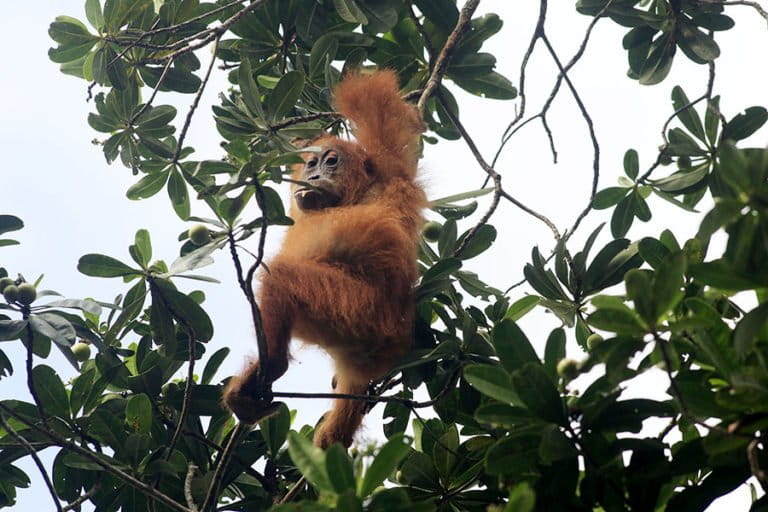
Deep within the lush, verdant canopy of the Suaq Belimbing research station in Aceh, a young Sumatran orangutan (Pongo abelii) gingerly maneuvers a neesia fruit. The fruit, a challenging, rugby-ball-shaped delicacy related to the durian, presents a significant hurdle for an inexperienced juvenile. The orangutan turns the fruit, bites at its tough exterior, and wedges it between sturdy tree branches. Using its feet as secondary hands, it works methodically to breach the shell. This display of early problem-solving is not merely play; it is a critical rite of passage that defines the survival trajectory of one of the world’s most intelligent primates.
New research published in the journal Science on September 24, 2026, has unveiled the intricate mechanisms behind how orangutans master their complex dietary "curriculum." Led by researcher Revathe Thillaikumar of the Max Planck Institute of Animal Behavior, the study provides a comprehensive look at the developmental milestones of 21 orangutans, tracked from birth until they reached independence at approximately 8.5 years of age.
The Dynamics of Learning: Observation vs. Exploration
The transition to adulthood for an orangutan is a grueling eight-year apprenticeship under the guidance of a mother. Because the rainforest environment is unforgiving—containing thousands of plant species, many of which are toxic or require specialized tools to process—the margin for error is razor-thin. If a juvenile fails to distinguish between edible and hazardous flora, the consequences are fatal.
The study, which analyzed over 4,700 hours of observational data and nearly 7,000 distinct behavioral records, suggests that young orangutans utilize a dual-pathway learning strategy: social observation and individual experimentation. Researchers observed that, on average, juvenile orangutans engage in social learning—specifically a behavior known as "peering"—up to five times more frequently than they attempt to navigate the environment alone.
"Peering" involves the juvenile positioning itself in close proximity to a knowledgeable adult, usually the mother, to observe the precise technique required to extract seeds, peel fibrous skins, or crack open hard husks. This high frequency of social learning serves as a safety mechanism. For a "naive" juvenile, trial-and-error in a jungle full of potential toxins is a high-risk endeavor. By watching a parent, the juvenile gains critical information without the energetic cost or the physical danger associated with accidental consumption of non-nutritive or poisonous material.
The Catalyst of Curiosity
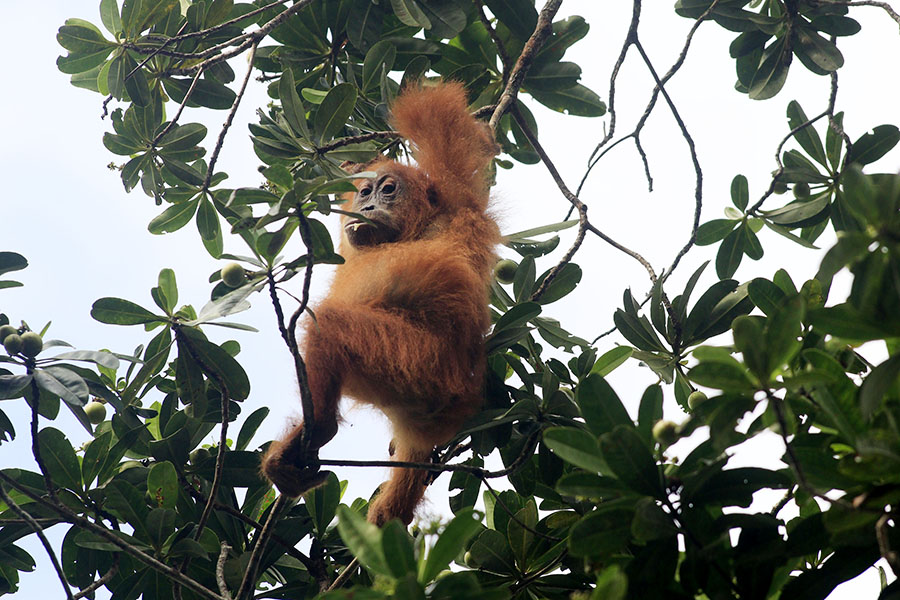
While observation is the primary method of gathering data, it is not the end of the learning process. The research findings indicate that social observation acts as a catalyst for subsequent individual exploration. Following an intensive session of peering, juveniles typically increased their own exploratory behavior for the next two and a half hours.
This implies that observation does not merely result in passive mimicry. Instead, watching an expert provides the "blueprint" that emboldens the juvenile to experiment with the environment independently. The study found a striking correlation between the breadth of a juvenile’s diet upon reaching independence and their combination of social and individual learning. Those who balanced high levels of observation with active, independent exploration demonstrated a dietary repertoire three times wider than those who relied on only one method or had limited exposure to learning opportunities.
Caroline Schuppli, a core member of the research team, noted that for growing individuals who cannot afford to miss a meal, observing a panout—specifically their mother—is the most reliable survival strategy. However, the ultimate "ecological competence" required for a solitary life is only achieved when the juvenile transitions from being a student to an investigator.
Maternal Strategy and the Social Dimension of Solitude
While the Suaq Belimbing study focused on diet, a concurrent study published in the Proceedings of the National Academy of Sciences (PNAS) in October 2026 adds a crucial layer to our understanding of orangutan development: the role of social play. Orangutans are famously the most solitary of all great apes, yet this new research suggests that their social lives are more carefully curated than previously assumed.
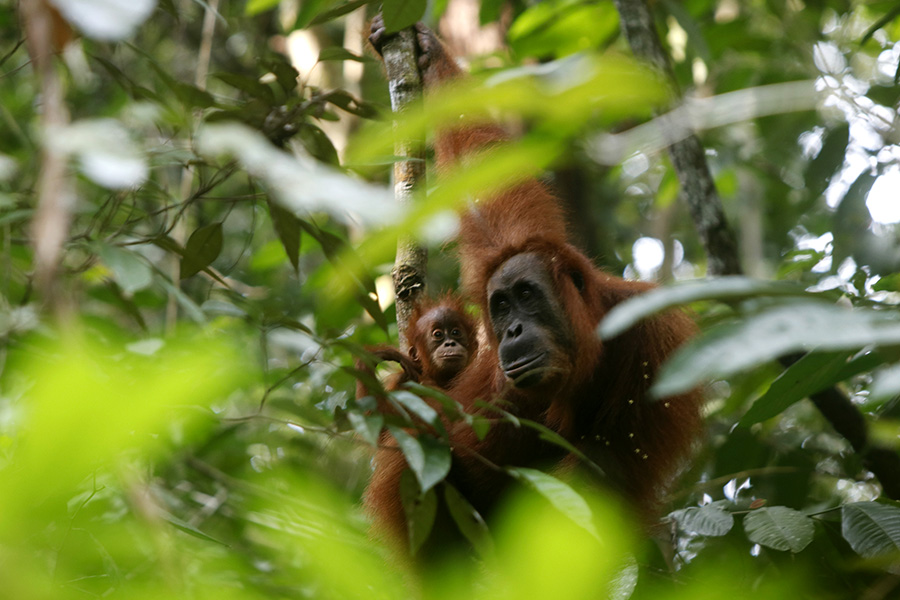
Studying 31 mother-infant pairs at the Tuanan research site in Central Kalimantan, researchers discovered that maternal ranging strategies are intentionally designed to facilitate social interaction. Mothers of Bornean orangutans (Pongo pygmaeus) were observed adjusting their travel routes specifically to increase the likelihood of encountering other orangutans.
This "social networking" comes at a significant metabolic cost. The study found that on days when mothers facilitated these meetings, they spent more time traveling and less time foraging for food. This indicates that maternal care in orangutans extends beyond basic provisioning and protection; it includes the deliberate expenditure of energy to ensure the offspring gains social experience.
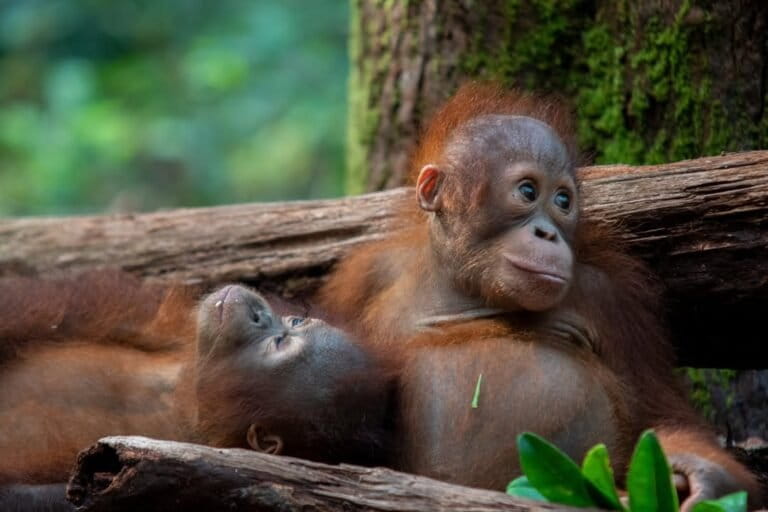
Opportunities for play are rare, occurring on only about 6% of the days tracked—roughly once every 20 days—with an average duration of only 20 minutes per encounter. Despite the scarcity of these events, the fact that mothers prioritize them suggests that social play is an essential component of the developmental curriculum, perhaps serving to refine social intelligence, motor skills, or stress regulation in an otherwise solitary species.
Implications for Conservation
The synthesis of these two studies paints a vivid picture of the orangutan as a species that relies heavily on a prolonged, culturally transmitted education. This has profound implications for conservation efforts. The "knowledge gap" created by habitat loss is often overlooked in conservation discourse. When forest cover is fragmented or destroyed, the social structure that allows for the transmission of survival knowledge—the mother-offspring bond and the opportunity for peer-to-peer interaction—is severed.
If a juvenile orangutan is orphaned or displaced from its home range, it loses more than just a source of food; it loses its access to the "curriculum" necessary for life. Without the mother to demonstrate how to harvest the neesia fruit or where to find seasonal resources, the young orangutan lacks the accumulated knowledge of its ancestors.
A Call for Habitat Preservation
The research conducted in both Aceh and Central Kalimantan highlights that the forest is not merely a static resource; it is an active classroom. The ability of an orangutan to thrive in the wild is the product of eight years of intense training, observation, and exploration.
The findings from the Suaq Belimbing and Tuanan stations emphasize that protecting individual orangutans is insufficient if the habitat that sustains their social and educational systems is not also protected. The loss of primary forest represents a loss of the behavioral legacy of the species. As researchers continue to map the cognitive development of these primates, it becomes increasingly clear that the survival of the orangutan is inextricably linked to the integrity of the ecosystem that allows their young to learn, play, and eventually, to survive as independent masters of the forest.
The two studies, while focusing on different aspects of development, provide a unified warning: the future of these great apes depends on our ability to maintain the complex, long-term social environments that their development requires. In the struggle to save the Sumatran and Bornean orangutans, we are not just saving an animal; we are preserving a multi-generational process of learning that has been honed over millions of years of evolution.









