
 Nila Kartika Wati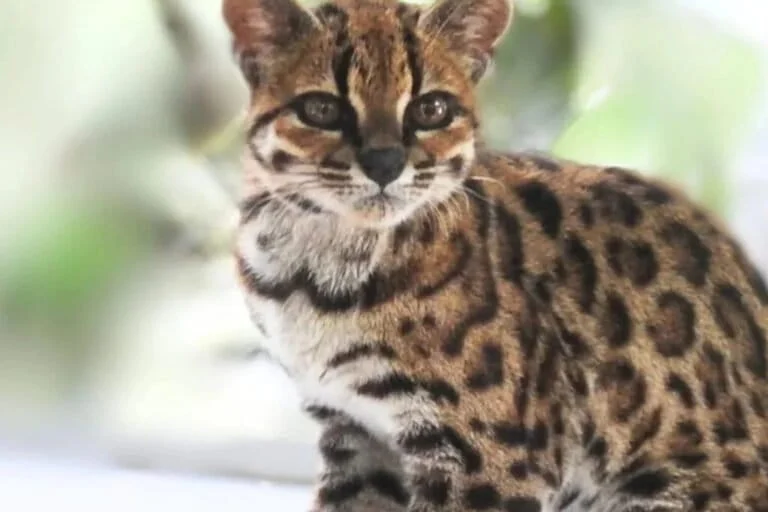
In the dense, mist-shrouded forests of the Bolivian Yungas, a small, unassuming feline has spent nearly a decade living in obscurity, unaware that its very existence was challenging the foundational understanding of South American wildcat taxonomy. What began as a case of mistaken identity—a wild creature rescued and raised as a domestic house pet—has culminated in a landmark scientific revelation. On September 17, 2026, researchers published findings in the journal Current Biology confirming the discovery of Leopardus tilcayo, a distinct species of wild cat that had been hiding in plain sight, masked by its superficial resemblance to its distant cousins.
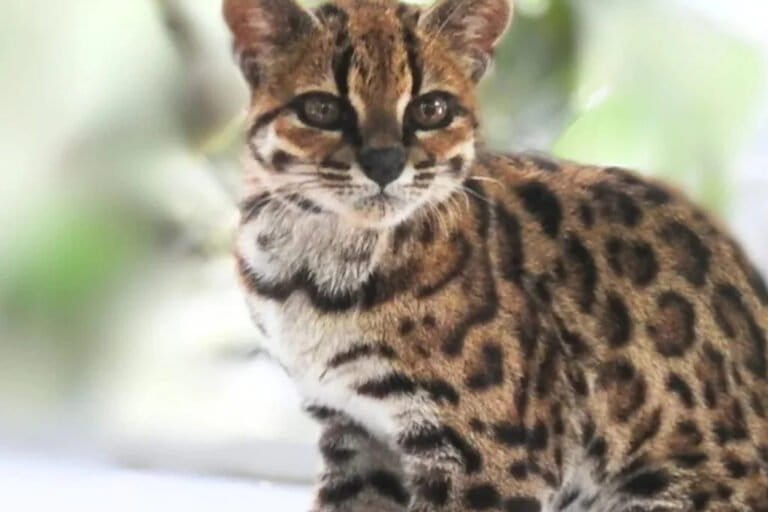
The journey to this discovery started in 2016, when a resident living near the Yungas forest perimeter discovered an orphaned kitten. Assuming the animal was merely a stray domestic cat, the resident took it home. Over the following year, however, the cat exhibited behavioral traits fundamentally incompatible with those of Felis catus. Its agility, nocturnal disposition, and temperament eventually prompted the owner to surrender the animal to the Senda Verde Wildlife Sanctuary. Named "Tigrino" by the sanctuary staff, the cat became a fixture at the facility, yet it remained a biological enigma for years.
A Journey from Domestic Mistake to Scientific Milestone
The initial assessment of Tigrino was conducted by Bolivian biologist Paola Nogales-Ascarrunz. Given the cat’s physical features—a narrow face, short rounded ears, and a coat adorned with distinct spots—Nogales-Ascarrunz tentatively classified the animal as Leopardus tigrinus, commonly known as the oncilla or little spotted cat. For several years, this classification held, despite lingering questions regarding the cat’s specific morphology.
The turning point occurred in 2019. During a comparative study, Nogales-Ascarrunz examined photographs of Tigrino alongside reference samples of small spotted cats from Brazil. The discrepancies became impossible to ignore: the spots on the Bolivian cat were notably larger, more irregular in shape, and lacked the symmetry common to the Leopardus tigrinus species found in other parts of the continent. Recognizing that they might be dealing with an undocumented evolutionary lineage, Nogales-Ascarrunz initiated a formal collaboration with researchers Jonas Lescroart and Eduardo Eizirik. The team embarked on a rigorous genomic investigation to determine whether the phenotypic differences observed in Tigrino were merely individual variations or indicators of a distinct species.
Genomic Analysis and Evolutionary Divergence
The research team performed a comprehensive genomic analysis on 38 individuals representing the genus Leopardus. This sample set included eight museum specimens sourced from various South American nations, providing a robust baseline for comparison. The results of the genetic sequencing provided a clear, if surprising, conclusion: the Bolivian cat possessed a unique genetic signature that had been isolated from other small spotted cat lineages for approximately 1.4 million years.
In the realm of evolutionary biology, a divergence of over one million years is significant, providing ample evidence to classify the animal as a distinct species. The discovery of Leopardus tilcayo—named in honor of the local moniker used by the communities in the Yungas region—demonstrates that even in the 21st century, the biological diversity of the Neotropics remains partially veiled. The study highlights a critical scientific reality: physical appearance is often a deceptive indicator of genetic heritage. In this case, convergent evolution—where different species develop similar traits due to shared environmental pressures—led to the misidentification of a creature that had been diverging on its own evolutionary path for over a millennium.
Insights into the Life of the Tilcayo
Currently, Tigrino remains the only known living specimen of Leopardus tilcayo. At 10 years of age, he serves as a living laboratory for biologists. While observations are limited, researchers have begun to piece together the lifestyle of this elusive predator. Analysis of his diet, specifically the presence of rodent remains in his feces, suggests that L. tilcayo is a specialized hunter of small mammals. Camera trap data from the region further indicates that the species is primarily nocturnal, an adaptation that likely serves as both a hunting strategy and a means of avoiding larger predators and human encroachment.
The 2026 study did more than just identify the tilcayo; it also provided a clearer picture of the broader Leopardus genus. The researchers successfully identified five distinct lineages within the group of small spotted cats and formally described a new subspecies, Leopardus tigrinus antisuyo, native to the Peruvian Yungas. These findings have effectively triggered a taxonomic reassessment that will necessitate changes in how conservationists categorize and protect these animals.
The Urgency of Conservation in the Yungas
The identification of Leopardus tilcayo is not merely an academic exercise; it carries profound implications for conservation policy. The International Union for Conservation of Nature (IUCN) has been provided with the study’s findings, which are expected to lead to a formal re-evaluation of the species’ conservation status. Because the tilcayo was previously lumped in with the broader, more widespread population of Leopardus tigrinus, it was never identified as a species in immediate danger. Now that it is recognized as a unique entity with a presumably restricted habitat, it is likely that the tilcayo will be classified as highly threatened or endangered.
The habitat of the Leopardus tilcayo, the Yungas forest, is a biodiversity hotspot currently under siege. The region faces mounting pressure from anthropogenic factors, including rapid deforestation, the expansion of agricultural frontiers, illegal mining, and frequent forest fires. The fragmentation of this habitat is the single greatest threat to the survival of the species.
"The discovery of this cat serves as a sobering reminder," notes Dr. Eduardo Eizirik, a lead contributor to the study. "It tells us that we are losing species to extinction before we have even had the chance to name them or understand their role in the ecosystem. The tilcayo has been revealed, but we are in a race against time to ensure it does not disappear from the wild before we can effectively protect its home."
Implications for Future Biodiversity Research
The discovery of the Leopardus tilcayo underscores a broader shift in how modern biology approaches the classification of rare species. By combining field observations, museum specimen data, and advanced genomic sequencing, researchers are uncovering "cryptic species"—animals that look identical to known species but are genetically distinct.
The immediate next steps for the scientific community involve extensive field surveys. Researchers hope to determine the current population density of L. tilcayo in the Yungas and identify specific geographic corridors that are critical for the species’ survival. The goal is to establish a protected buffer zone that allows for the movement of the cats between undisturbed forest patches. Furthermore, the discovery has energized local conservationists in Bolivia, who are now advocating for more stringent protections for the Yungas ecosystem, citing the presence of a newly discovered, unique feline as a flagship for broader forest conservation efforts.
Ultimately, the story of Tigrino—the kitten found near a forest road that turned out to be a scientific breakthrough—serves as a compelling narrative about the mysteries that still exist within our natural world. It proves that the preservation of wild spaces is not just about protecting known, iconic animals, but about safeguarding the vast, largely unexplored genetic library that resides within the world’s most vulnerable ecosystems. As researchers continue to monitor the lone individual in the Senda Verde sanctuary, the world watches with bated breath, hoping that the Leopardus tilcayo will not remain a "solitary" species in the record books, but will instead be found thriving in the hidden, verdant depths of its ancestral forest home.









